
 By Lina Irawan
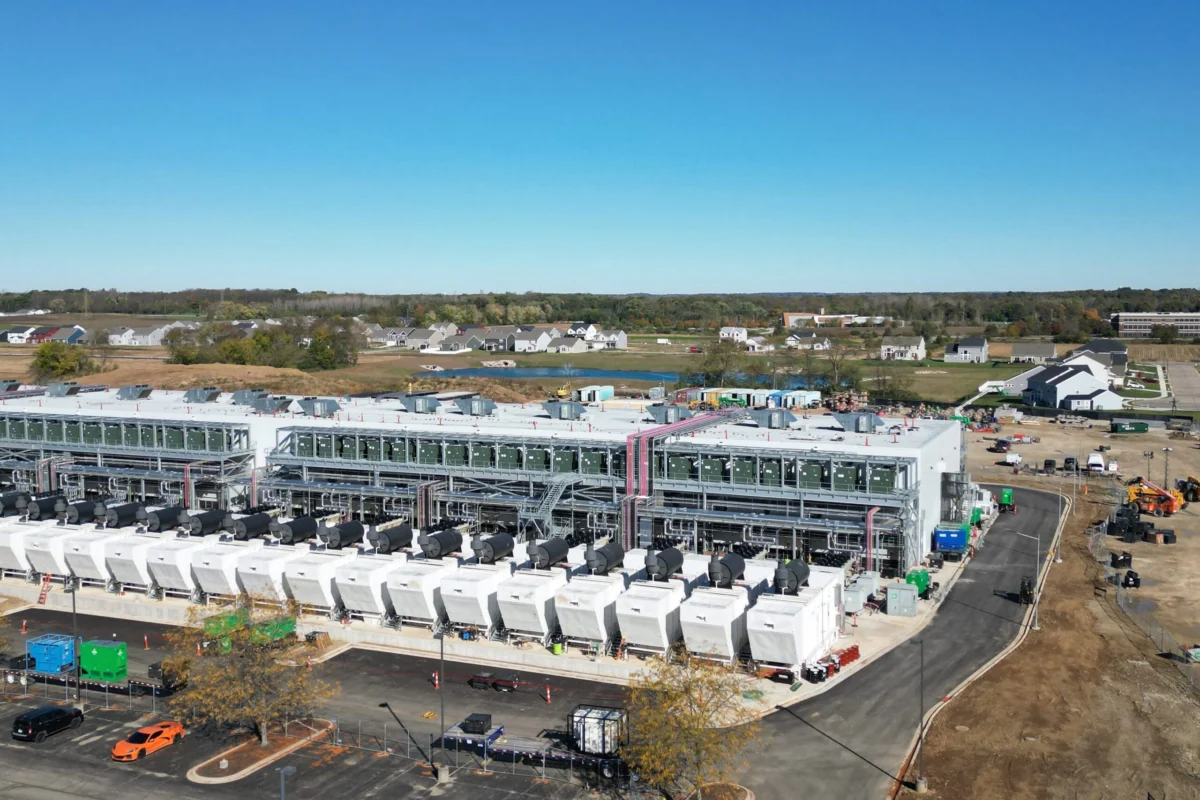
On Tuesday, Slok zeroed in on the burgeoning costs and questionable returns associated with AI, specifically highlighting a notable slowdown in token spending growth. He argued emphatically that the demand curve for computational power—the underlying engine of AI—is not only flat but also highly sensitive to price changes. This assertion directly contradicts the widespread belief that the hunger for AI compute resources is insatiable, irrespective of cost. Slok’s analysis suggested that, far from being a growth catalyst, AI was increasingly functioning as a significant cost center for most companies investing in the technology, with tangible productivity returns proving elusive.
"The core economic flaw in the AI bull case is that the marginal cost of producing compute exceeds the marginal benefit it delivers to users, raising questions about claims of unlimited demand for data centers," Slok explained in his note. This fundamental imbalance, he elaborated, challenges the very premise of a perpetually expanding AI infrastructure. He stressed that the true demand for compute and data centers is not dictated by raw processing capacity or power availability, but rather by the economic value and returns that firms can genuinely extract from these investments. "How much compute and how many data centers are needed depends on the returns firms are able to generate with that compute. So far, the AI payoff for firms has been slow to materialize, implying a growing reluctance to pay for AI services," he concluded, pointing to a potential ceiling in the seemingly endless capital expenditure spree. Companies, he argued, would only be willing to pay a premium for compute if it translated into demonstrable revenue growth, enhanced profits, or substantial cost savings—outcomes he found largely absent at scale. His concluding remark on this point, "Maybe that will come in the future. Maybe not," underscored the deep uncertainty he perceives in the market’s current euphoria.
The implications of Slok’s Tuesday assessment are profound. For years, the narrative around AI has been one of exponential growth and unavoidable adoption, fueling massive investments in specialized hardware, data centers, and energy infrastructure. Companies like Nvidia, a bellwether for the AI chip market, have seen their valuations soar on the back of anticipated, seemingly limitless demand for their graphics processing units (GPUs). However, if the marginal benefit of compute is indeed failing to keep pace with its marginal cost, the economic rationale for continued, unrestrained investment begins to crumble. This could lead to an oversupply of compute capacity, a decline in prices, and ultimately, a significant repricing of assets across the AI value chain. The historical parallel often drawn is with the dot-com bubble, where massive investments in internet infrastructure far outstripped the immediate profitability of internet-based businesses, leading to a painful market correction. Slok’s warning suggests a similar dynamic might be at play, where the infrastructure build-out is racing ahead of proven, profitable applications.
Building on this skepticism, Slok then sounded the alarm on Thursday regarding what he termed "circularity" in AI token spending. This phenomenon refers to a problematic financial dynamic where AI companies themselves are involved in financing deals, either by providing capital or guaranteeing debt for other entities that also happen to be their primary customers. This creates an ecosystem where growth metrics might be artificially inflated, as revenue generation is not necessarily driven by genuine market demand but rather by inter-company financial arrangements. Such practices, he suggested, raise serious questions about the sustainability and organic nature of reported growth.
Slok extended this concern to the venture capital (VC) landscape, noting a significant reliance of AI startups on VC funding to cover their substantial compute expenses. He highlighted a striking statistic: "80% of the top 1% of AI spenders are VC-backed." This implies that a substantial portion of the high-end demand for AI compute services is not being met by organic earnings from these startups, but rather by fresh injections of venture capital. In essence, these companies are paying their compute bills with investor money, rather than through revenue generated from delivering tangible, profitable services. This circular financing model can create a feedback loop, where VCs fund startups that then spend that money on compute from larger AI infrastructure providers, some of whom may also be VC-backed or have similar reciprocal arrangements. This risks creating a "financial mirage," where growth appears robust but lacks the underlying economic sustainability of genuine, profitable business operations. Such structures have historically been a hallmark of speculative bubbles, where capital flows are more about maintaining appearances and valuations than reflecting actual economic productivity. The danger lies in the potential for this intricate web of financing to unravel if investor sentiment shifts or if the promised returns fail to materialize, leading to a cascade of defaults and valuation corrections.
Slok’s warnings culminated on Saturday with an even broader assertion: AI has "delivered zero financial payoff" to U.S. companies outside of a select group of "hyperscalers." He specifically referenced the "Magnificent Seven" tech giants—Apple, Microsoft, Alphabet (Google), Amazon, Nvidia, Meta Platforms, and Tesla—which have indeed shown rising profit margins and revenue per worker. However, for the vast majority of the S&P 500, Slok found no such corresponding improvement. This indicates a profound disconnect, where the perceived benefits of AI are concentrated within a handful of colossal firms, while the broader corporate landscape struggles to translate AI investments into tangible financial gains.
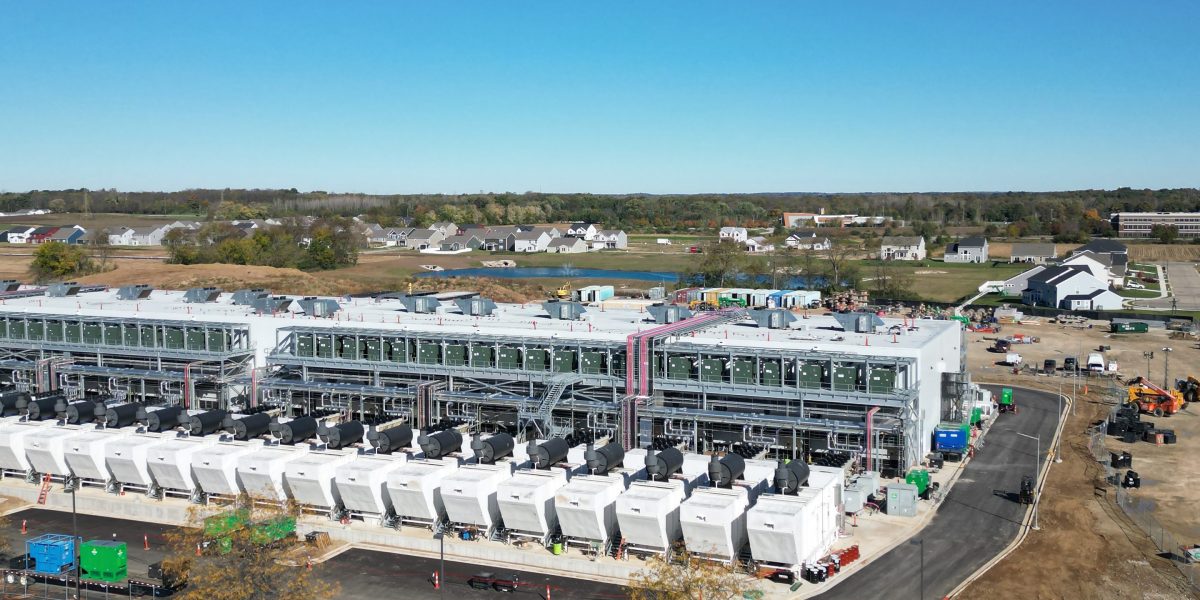
Echoing his earlier critiques, Slok reiterated that Corporate America, for the most part, neither desperately needs nor is willing to pay premium prices for the latest AI models. Even as AI technology becomes more accessible and commoditized, mainstream companies face significant hurdles in leveraging it to boost their financial results. He attributed this struggle to a deeper, more qualitative issue: "AI may be a great calculator, but in business, intelligence is mostly judgment." This profound observation highlights the limitations of current AI, which, despite its analytical prowess, often lacks the nuanced understanding of human context, accountability, trust, culture, unwritten rules, ethical trade-offs, and fairness—all critical elements that shape reputational risk and ultimately drive revenue growth and profit margins in the real business world. The integration of AI into complex human-centric processes, therefore, is not a straightforward technological upgrade but a fundamental challenge involving organizational change, ethical considerations, and a deep understanding of human decision-making. Slok’s argument suggests that without addressing these qualitative gaps, AI’s widespread economic impact will remain constrained.
Slok’s series of critical notes arrived amidst a noticeable downturn in AI-related stocks, particularly within the crucial chip sector. Market observers have begun to question the sustainability of the "capital expenditure orgy," as it has been dubbed, that has characterized the AI boom. Projections indicate that hyperscalers alone plan to funnel an estimated $800 billion into AI infrastructure this year, with next year’s capital expenditure potentially topping a staggering $1 trillion. This immense spending, while fueling the growth of chipmakers and data center operators, is raising concerns about potential overinvestment if the ultimate economic returns don’t justify the outlay.
The market’s anxieties are compounded by emerging financial pressures on key players. Meta Platforms, for instance, a leading hyperscaler with ambitious AI spending plans ($135 billion-$145 billion this year), has already accumulated substantial debt. The company recently announced the issuance of a new class of shares, partly to help CEO Mark Zuckerberg manage a potential wealth tax in California. More tellingly, the cost of insuring Meta’s debt against default, measured by five-year credit default swaps (CDS), touched a record high on Thursday, widening 7.6 basis points to 114.79 basis points. A widening CDS spread signals increased perceived risk by investors, indicating growing concern about a company’s ability to meet its debt obligations.
The pressure is even more acute on smaller AI infrastructure providers, often referred to as "neoclouds." CoreWeave, a company specializing in high-performance compute for AI workloads, has seen its stock plummet over 30% this month. Its five-year credit default swaps have shot up to an alarming 1,145 basis points, reflecting severe market apprehension about its financial stability. These individual company struggles paint a clearer picture of the broader economic fragility Slok has been warning about.
Further amplifying these concerns, Mark Habib, S&P Global’s Head for Digital Infrastructure, flagged the prevalence of "interconnected financing structures" between hyperscalers and various data center projects or smaller AI companies. During a roundtable in London, Habib warned, "It is safe to assume that there is more (debt) out there that we are not seeing." He further elaborated, "If it’s not reported, then it’s not part of the disclosure by the hyperscalers. Also, if we are not rating the transactions where this liability may accrue, then the fact of the matter is that we might not have the visibility." This lack of transparency regarding the true extent of debt and financial interdependencies within the AI ecosystem presents a systemic risk. If these hidden liabilities are substantial, any significant market correction or slowdown in AI spending could trigger a domino effect, leading to widespread financial instability across the sector.
In summary, Torsten Slok’s recent barrage of warnings offers a stark counter-narrative to the prevailing AI hype. His analysis systematically dissects the economic underpinnings of the AI boom, revealing potential vulnerabilities ranging from a misaligned cost-benefit curve for compute to unsustainable circular financing and a lack of tangible financial payoff outside a select few tech giants. As AI-related stocks tumble and financial indicators like credit default swaps flash warning signs, the market appears to be slowly but surely internalizing the complexities and economic realities that lie beneath the surface of the technological marvel. The debate over AI’s true economic impact and sustainable growth trajectory is far from over, but Slok’s incisive critiques have undoubtedly shifted the conversation from unbridled optimism to a more cautious and economically grounded assessment. The question remains whether the future will validate the current massive investments, or if the market is headed for a reckoning where "judgment" ultimately triumphs over raw computational power.
