
 By Lina Irawan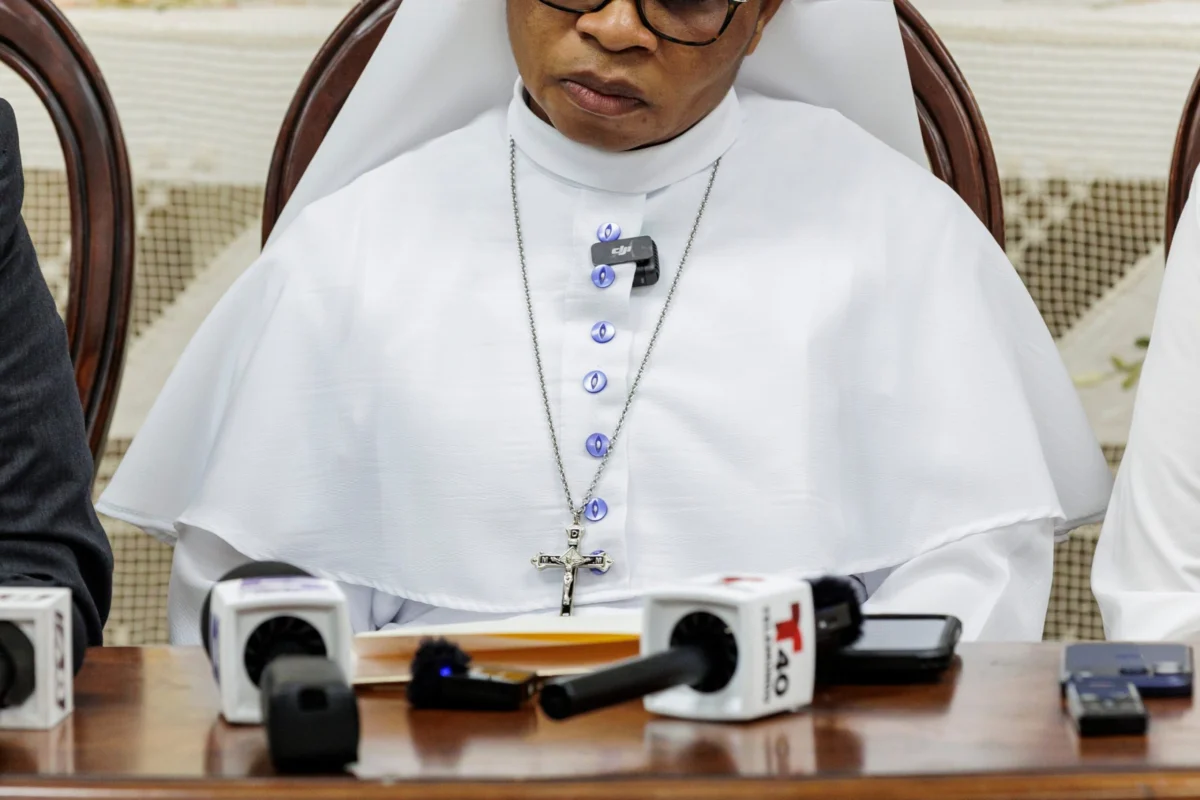
McAllen, Texas – In a chilling account that sent ripples through communities and ignited fresh debate over U.S. immigration enforcement, Sister Leticia Ugboaja, a dedicated nun with deep ties to the South Texas community, recounted the terrifying moments last month when she was abruptly taken into immigration custody. On a solemn Thursday, speaking publicly for the first time since her June 28 detention, Sister Ugboaja described how two armed men approached her as she walked to Sunday Mass in her traditional habit, triggering a cold sweat and profound confusion. "Honestly, in that moment, I did not understand what was going on, what was happening to me," the 56-year-old nun told a packed news conference at Our Lady of Sorrows Church in McAllen, her voice steady but laden with the lingering trauma of the experience.
Sister Ugboaja, a member of the Daughters of Mary Mother of Mercy, was on her way to serve as an Extraordinary Minister of Holy Communion when U.S. Immigration and Customs Enforcement (ICE) officers intercepted her. The scene, she described, was surreal: a routine Sunday morning transformed into a nightmare, her mind still contemplating the day’s Bible readings, her possessions limited to her rosary and cellphone. The image of a nun in full religious attire being apprehended by armed agents starkly contrasted with the traditional reverence accorded to religious figures, immediately drawing widespread condemnation and raising questions about the proportionality and targets of immigration enforcement under the then-Trump administration.
Her attorney, Carlos M. Garcia, who sat beside her at the press conference, provided crucial details about her immigration status. Sister Ugboaja has for years been granted protection from removal to her native Nigeria, a status known as "withholding of removal" under the Convention Against Torture (CAT). This protection is granted when there is a high probability that an individual would face torture if returned to their home country, even if they do not meet the stricter criteria for asylum. In 2019, an immigration judge had indeed denied her application for asylum but affirmed her protection from removal, acknowledging the grave dangers she would face in Nigeria. Garcia stressed that Sister Ugboaja, a registered nurse who had worked for a decade as a certified nursing assistant in Edinburg before her current role at South Texas Health System, had diligently complied with every legal requirement and possessed valid authorization to work in the U.S.
The swift public outcry following her detention played a pivotal role in her release just hours later. Parish officials at Our Lady of Sorrows Church quickly leveraged social media to publicize her case, drawing immediate attention from local advocates and eventually, members of Congress. This rapid mobilization underscored the power of community advocacy and political intervention in challenging controversial immigration enforcement actions. However, the incident was far from isolated; it served as a stark example of the unusually aggressive tactics that had become characteristic of immigration enforcement during the Trump presidency. The administration had made mass deportations a central pillar of its agenda, leading to increased ICE raids and arrests, often targeting individuals who, like Sister Ugboaja, had established lives and legal protections within the U.S.
Sister Ugboaja’s decision to speak out, she emphasized, was not merely for herself but for the countless others navigating the complex and often unforgiving U.S. immigration system. "There are many others in this same situation, people who have been given some form of protection under our laws, who have followed every rule asked of them, and who still live with uncertainty," she stated, her voice resonating with a plea for fundamental human dignity and due process. Despite her gratitude to those who facilitated her release, she affirmed, "that does not mean I can stay quiet about what happened to me, or about what is still happening to others." Her experience, she argued, highlights a systemic issue where individuals with established legal standing and deep community ties can still be subjected to arbitrary detention and the constant threat of removal.
The lack of clarity surrounding her detention further compounded the injustice. According to Garcia, Sister Ugboaja was given minimal explanation for her apprehension. He revealed that the U.S. government intended to remove her not to Nigeria, but to a "third country." This pointed to the Trump administration’s controversial "third-country removal policy," often referred to as Asylum Cooperative Agreements (ACAs). These agreements, primarily established with Central American nations like Guatemala, El Salvador, and Honduras, aimed to divert asylum seekers from the U.S. to these countries, purportedly allowing them to seek protection there.
The policy was met with fierce criticism from immigration lawyers, human rights organizations, and international bodies, who argued that it violated international law, jeopardized the safety of vulnerable individuals, and failed to uphold due process. Critics highlighted that many of these designated "safe third countries" themselves lacked robust asylum systems, faced significant human rights challenges, and were often unsafe for the very populations they were meant to protect. The Department of Homeland Security (DHS), however, defended these agreements, claiming they were a mechanism to address the burgeoning backlogs in U.S. immigration courts and discourage what they termed "meritless" asylum claims. The specific third country to which Sister Ugboaja was to be removed was not disclosed, deepening concerns about transparency and the legality of such actions. Neither DHS nor ICE responded to requests for comment regarding Sister Ugboaja’s case, maintaining a consistent pattern of silence on individual detentions, which often fuels public distrust and accusations of unaccountability.
Sister Ugboaja’s contributions to her community extend beyond her religious vocation. As a registered nurse, her role is particularly significant in the South Texas border region, an area that has faced immense pressures, including the ongoing COVID-19 pandemic. Her dedication to healthcare, a profession on the front lines of public service, made her detention even more perplexing and disturbing to many. Her commitment to service, both spiritual and medical, paints a picture of an individual deeply embedded in and contributing positively to American society.
The emotional and spiritual impact of her detention was profound. Sister Ugboaja recounted how she pleaded with the officers to allow her to attend Mass and receive Holy Communion, a central sacrament in Catholic practice, especially for a nun. Her pleas were denied. "For me, a nun, not to go to Mass on Sunday, not to receive Communion, it was very, very heartbreaking for me," she expressed, conveying the deep spiritual distress caused by being forcibly separated from her sacred duties and community worship. This denial of religious observance further underscored the perceived lack of respect for her vocation and personal liberty during her apprehension.
Despite her release and the outpouring of support, Sister Ugboaja’s legal journey is not over. She faces an upcoming check-in appointment with ICE on Tuesday, a routine but often anxiety-inducing step for individuals in the immigration system. Such appointments can lead to further scrutiny, new directives, or even renewed detention, leaving individuals in a perpetual state of uncertainty. Her case thus serves as a powerful testament to the precarious lives led by many immigrants, even those with established legal protections, under a system that can be unpredictable and opaque.
The incident involving Sister Ugboaja resonates with broader historical and ethical considerations regarding the treatment of religious figures and institutions in matters of immigration. Churches and religious organizations have long played a vital role in providing sanctuary and aid to immigrants and refugees, often placing them at odds with government policies. The detention of a nun in her habit, while on her way to Mass, not only shocked the public but also reignited discussions about the boundaries of state power and the sanctity of religious freedom. It forced a critical examination of whether the aggressive enforcement tactics of the time had become indiscriminate, overlooking humanitarian considerations, established legal protections, and the very fabric of community life.
Ultimately, Sister Ugboaja’s experience transcends a single incident; it has become a potent symbol of the human cost of complex and often punitive immigration policies. Her bravery in speaking out, despite her ongoing vulnerability, provides a crucial voice for those who remain unheard. Her story calls for a more compassionate and just immigration system, one that respects due process, upholds established protections, and acknowledges the invaluable contributions of individuals like her to the fabric of American society. The debate her detention sparked continues to underscore the urgent need for comprehensive immigration reform that balances national security with human rights and dignity.
