
 By Titik Puspa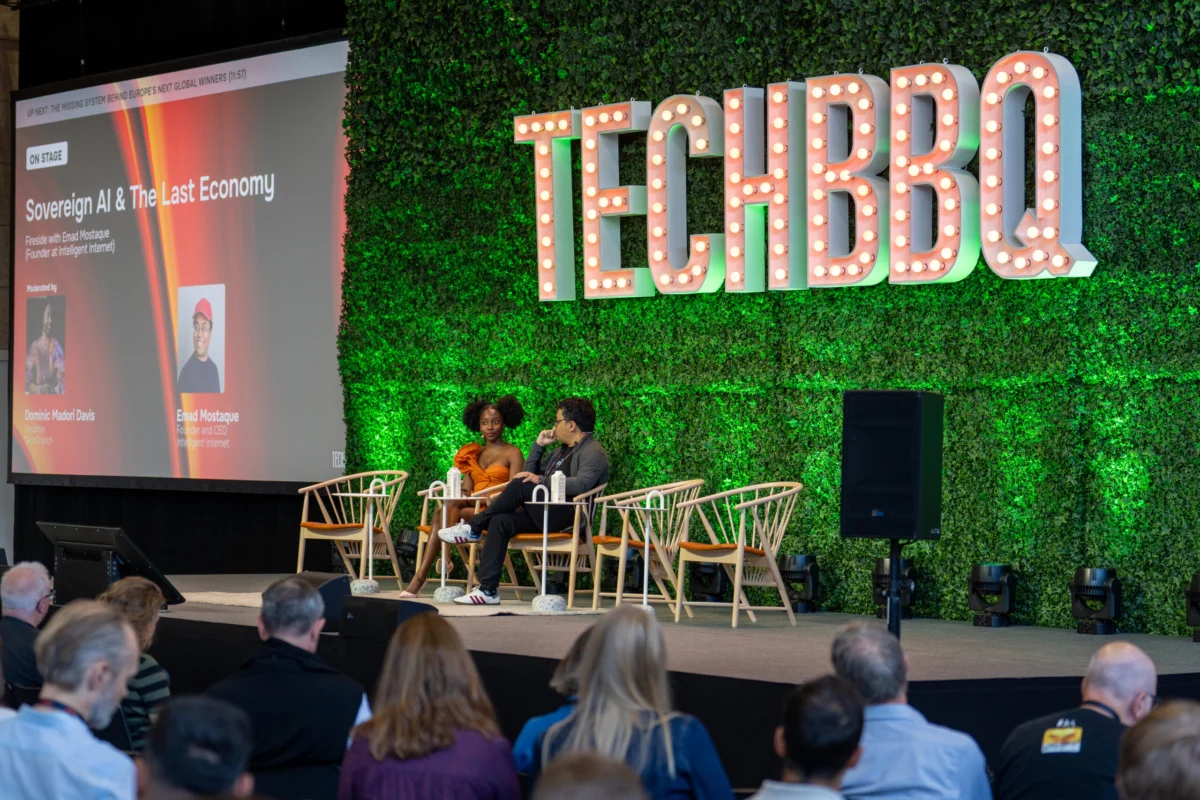
Copenhagen – Amidst the vibrant energy of TechBBQ, Europe’s premier tech conference, a palpable undercurrent of concern and strategic deliberation flowed through the halls, cocktail hours, and after-parties. The discourse among investors, founders, and operators from across the continent wasn’t merely about the "what" of Artificial Intelligence – the innovative applications and transformative capabilities. Instead, the burning question echoed from every corner: "Who should control it?" This deep dive into AI sovereignty, a theme that perfectly encapsulated this year’s conference motto, "Emerging from Agency," was ignited by a recent, stark reminder of Europe’s potential vulnerability. The temporary unavailability of Anthropic’s advanced AI models, Mythos and Fable, to users outside the United States earlier this year, sent ripples of unease through the European tech ecosystem.
This incident, while seemingly a technical glitch, served as a powerful catalyst for a continent-wide introspection. It compelled stakeholders to move beyond the passive consumption of AI technology, often leased from dominant players in the U.S. and China, and to seriously contemplate the implications of truly owning the foundational models and the intricate infrastructure that underpins this AI revolution. The desire for self-reliance, for a European-centric approach to AI development and deployment, became a central narrative at TechBBQ.
The differing reactions to the Anthropic outage highlighted the spectrum of perspectives within the European tech landscape. One startup executive, whose software team relies heavily on external AI models, described the Mythos and Fable incident as a significant disruption, underscoring the precariousness of depending on other geopolitical powers for critical technological components. Conversely, another executive adopted a more laissez-faire attitude, acknowledging the potential for future headaches but deeming the current situation "pretty much OK." This dichotomy reflects a broader challenge: balancing immediate operational needs with long-term strategic imperatives for technological independence.
Ellen de Brever, an angel investor and head of partnerships at the Novo Nordisk Foundation Cellerator, articulated the profound significance of the conference’s theme. "TechBBQ’s theme of agency felt particularly timely this year," she stated during the conference, which concluded on August 27th. "As the conversation shifted from what AI can do to what we’re actually willing to let it do." This sentiment resonated throughout the event, which featured a diverse array of discussions ranging from the future of women’s health innovation to the burgeoning collaboration between Nordic and African tech ecosystems, and strategies for bolstering growth capital within Europe. While AI was an omnipresent thread, de Brever noted, "the debates weren’t about smarter machines, but about human judgment and who gets to stay in the driver’s seat." She further elaborated, "The age of AI agents isn’t really a story about machines gaining agency. It’s a story about humans deciding what to give up."
This philosophical shift was powerfully amplified during a session featuring Meredith Whittaker, President of Signal. In a discussion moderated by this publication, Whittaker offered a trenchant critique of the prevailing AI paradigm, particularly concerning the integration of AI assistants and agents into operating systems, citing ChatGPT’s move into platforms like iMessage as a prime example. Whittaker did not shy away from her concerns, unequivocally stating that the current AI era is rapidly evolving into a sophisticated "data collection apparatus." She warned that AI labs are employing sophisticated marketing tactics to distract the public from the "collateral consequences" of this insatiable appetite for data. Her message was clear: "There is still a huge market need for privacy. And particularly with the sovereignty concerns, we will have customers here." Whittaker’s perspective underscored the growing demand for privacy-preserving technologies and the potential for a robust market to emerge, driven by the very sovereignty concerns that were dominating conversations at TechBBQ.
Adding another critical layer to the discourse on AI sovereignty was Emad Mostaque, co-founder of Stability AI and Intelligent Internet. In a panel discussion, Mostaque delved into the profound economic and personal implications of an increasingly agentic workforce. He defined sovereignty as "the ability to resist power being exerted over you," and highlighted the alarming concentration of power within a select few AI labs. His stark prediction: "Inevitably, every country will be run by AI, and the person that controls the AI controls the country." This assertion painted a vivid picture of a future where geopolitical power dynamics could be fundamentally reshaped by control over advanced AI systems, raising urgent questions about democratic governance and national autonomy.
Mia Negru, the advocacy and engagement director for the nonprofit Life With Artificials, shared her profound reflections following Mostaque’s panel. She articulated a vision that extended far beyond mere technological advancement, suggesting that the confluence of intelligent agents performing cognitive tasks and robots handling physical labor could herald a transformation of unprecedented scale. "If intelligent agents perform cognitive work and robots increasingly perform physical work, we may be approaching something much bigger than another technological revolution," Negru communicated in a post-panel message. "We may have to rethink ownership, work, democracy, economic participation, and eventually even who gets to participate in society." Her words served as a stark reminder that the ethical and societal implications of AI extend to the very fabric of human existence and societal structures.
While the panels grappled with weighty issues of control, data, and societal impact, the informal networking opportunities provided a crucial space for human connection and lighter exchanges. A rooftop barbecue, co-hosted by Lovable, Nvidia, OpenAI, AWS Startups, and HSBC, offered a relaxed setting for conversations about Denmark’s burgeoning tech hubs. Similarly, a gathering at the cocktail bar Bird, hosted by London’s Ada Ventures, provided a platform for discussions, including one with a health tech founder about the surge in innovation within the women’s brain health sector. The culminating speakers’ dinner, held on a picturesque island in the heart of Copenhagen, brought together international press for an evening of shared experiences, complete with fire dancers, followed by an after-party that saw attendees lingering until the bar tab closed, a testament to the strong bonds being forged.
Amidst the discussions of artificial intelligence and its complex implications, the enduring value of human interaction was not lost. De Brever aptly summarized this sentiment: "In a room full of conversations about machines, the most memorable moments still come from the simplest thing. Human connection, face-to-face, building relationships, sharing ideas, and reminding each other of what technology can never quite replace." This observation served as a poignant reminder that even in an era increasingly defined by advanced technology, the fundamental human need for connection and collaboration remains paramount.
The overarching sentiment at TechBBQ was one of proactive engagement. Europe, it seems, is moving beyond simply observing the AI revolution to actively shaping its trajectory. The conversations centered on sovereignty were not just about preventing foreign control but about fostering a robust, independent European AI ecosystem. This involves not only investing in research and development but also establishing clear regulatory frameworks, ethical guidelines, and a commitment to data privacy. The focus on "Emerging from Agency" suggests a continent determined to reclaim its narrative, to ensure that the future of AI is one that aligns with European values and serves the interests of its citizens, rather than being dictated by external forces. The journey towards AI sovereignty is undoubtedly complex, fraught with economic, technological, and geopolitical challenges, but the dialogue initiated and amplified at TechBBQ signals a resolute commitment to navigating this critical path. The question of who controls AI is no longer a hypothetical future scenario; it is a present imperative that will define Europe’s role and influence in the coming decades.
