
 By Rifan Muazin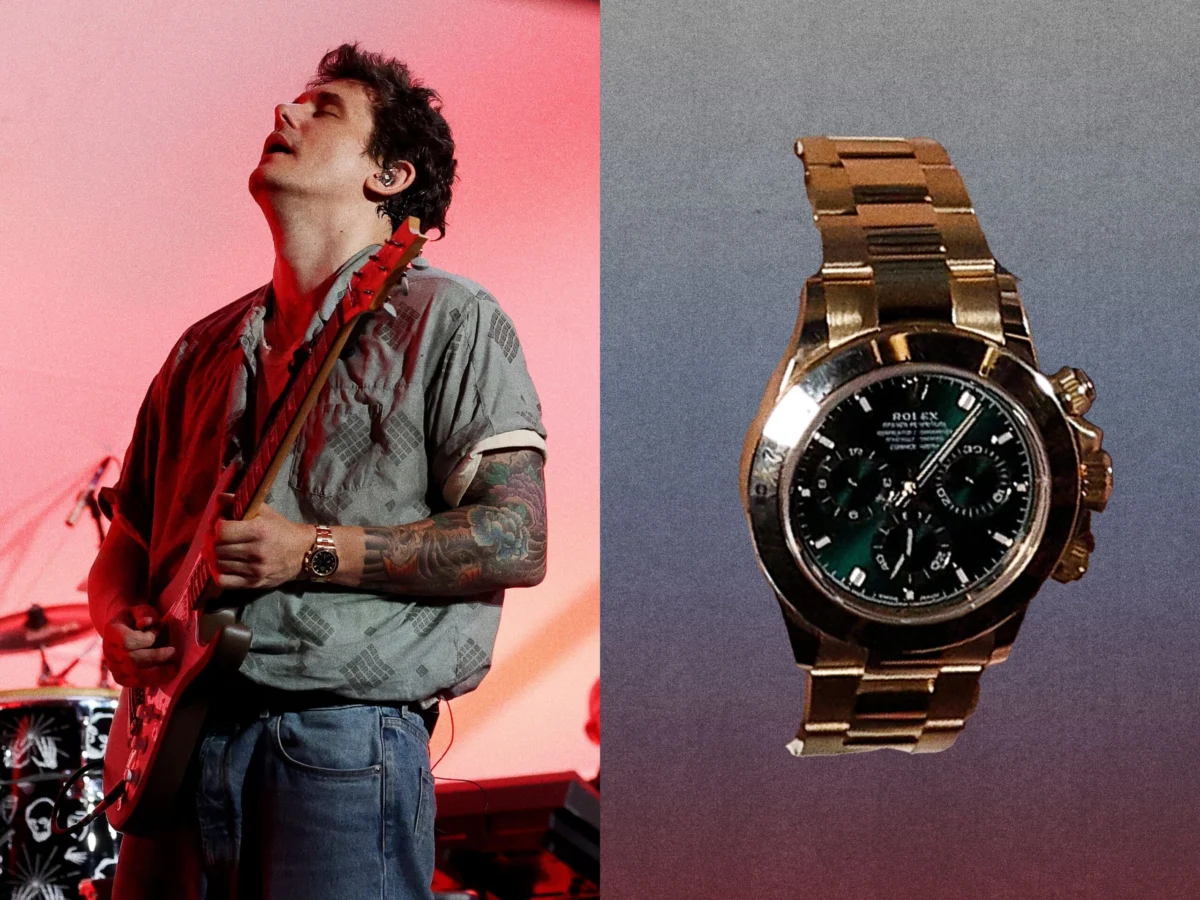
Imagine being so far down the Rolex rabbit hole, so heavily crowned, that you have your own Daytona named after you—or, at least, nicknamed after you, as if you were a modern-day Paul Newman. That is precisely the status John Mayer achieved when he single-handedly transformed an overlooked yellow-gold version of the Cosmograph Daytona into one of the most sought-after timepieces on the planet. The watch in question, the reference 116508 with a striking green dial, was famously dubbed a "sleeper hit" by Mayer during a 2019 episode of Hodinkee’s Talking Watches. At the time, the watch was sitting in authorized dealer cases, largely ignored by a market obsessed with stainless steel "professional" models. Mayer’s endorsement acted as a catalyst, sparking a phenomenon now known in the horological world as the "Mayer Effect."

The "Mayer Effect" is a testament to the power of celebrity influence within the secondary watch market. When the reference 116508 debuted at Baselworld in 2016, it carried a retail price of approximately $34,650. However, after Mayer’s public praise, the watch’s value took off into the stratosphere. On the secondary market, prices quickly doubled and then tripled, hitting peaks between $70,000 and $100,000, depending on the condition and the inclusion of the original box and papers. For a brief period during the luxury watch boom of 2021 and early 2022, some examples even flirted with the $120,000 mark.
Mayer brought the iconic watch back into the spotlight this week during a live performance for SiriusXM at The Stephen Talkhouse in Amagansett, New York. The 40mm yellow-gold timepiece remains a masterclass in bold aesthetics. Featuring a matching yellow-gold Oyster bracelet, a fixed tachymeter bezel, and a bright green sunray dial with tone-on-tone totalizers, it is a watch that demands attention from a distance. Its rise to fame is particularly ironic considering that in 2016, collectors were so preoccupied with the launch of the steel-and-ceramic reference 116500LN that they completely overlooked the precious metal variants.

The narrative of the "Mayer Daytona" took a turn in 2023 when Rolex officially discontinued the reference 116508, replacing it with the updated reference 126508. While the new version retains the green dial, Rolex introduced several subtle but significant design changes. The "John Mayer 2.0" features contrasting gold rings around the subdials, shifting the aesthetic from a monochromatic "St. Paddy’s Day" vibe to something slightly more traditional and refined. Furthermore, the original sunray finish was replaced with a lacquered dial to reduce glare, and the case was slightly redesigned with more symmetrical lugs to accommodate the new Calibre 4131 movement. This movement incorporates the Chronergy escapement and a more decorative oscillating weight, marking a technical evolution over the venerable Calibre 4130 found in Mayer’s original.
While Mayer was holding court in the Hamptons, the tennis world’s elite were gathering at Arthur Ashe Stadium for the US Open, providing a different kind of horological showcase. Roger Federer, the retired maestro of the court and arguably Rolex’s most prestigious brand ambassador, was spotted during a practice session with Italian player Lorenzo Musetti wearing the Oyster Perpetual 41 with the "Jubilee" dial. This model was one of the most polarizing and discussed releases from the 2024 Watches and Wonders exhibition in Geneva.

The "Jubilee" dial—also available in 36mm and 31mm—is a vibrant departure from Rolex’s typically conservative design language. It features the letters of "ROLEX" spelled out in a variety of bright colors across a semaphoric grid pattern. This design follows the footsteps of the "Celebration" dial, which featured colorful "bubbles" against a turquoise background. While purists often scoff at these whimsical designs, they represent a strategic move by Rolex to capture "horological mindshare" through wearable mechanical pop art. For Federer, a man whose career was defined by classical elegance, wearing such a loud and playful watch suggests a shift in how high-profile collectors view the Oyster Perpetual—no longer just an entry-level model, but a canvas for avant-garde expression.
The US Open stands as a premier venue for watch spotting, and this year, the stands were just as impressive as the court. Model Kaia Gerber was seen sporting one of the definitive "It" watches of the modern era: the Panthère de Cartier. The Panthère is a timepiece that transcends mere horology, functioning more as a piece of high-fashion jewelry. Originally launched in 1983, it became the quintessential accessory of the 1980s, worn by everyone from Princess Diana to Madonna. After a brief hiatus from production, Cartier relaunched the collection in 2017, and it has since reclaimed its throne on the wrists of style icons like Taylor Swift and David Jonsson.

Gerber’s choice, the Mini model, measures a delicate 25.15 mm x 18.51 mm. Despite its small stature, the watch is packed with Cartier’s signature design DNA, including the square case, the smooth bezel secured by visible screws, and the blue cabochon sapphire set into a hexagonal crown. The Panthère’s resurgence highlights a broader trend in the industry: a move away from bulky, oversized sports watches toward smaller, more integrated "jewelry-watches" that offer comfort and versatility. Its five-link bracelet is renowned for its suppleness, making it a preferred choice for those who want a dress watch that feels like a second skin.
In stark contrast to the dainty Panthère, rapper 50 Cent opted for sheer presence and technical bravado. Appearing at events for Planet Hollywood and Apple Music, the mogul wore the Hublot Big Bang Unico King Gold in 44mm. Hublot has long been a brand that thrives on "The Art of Fusion," and the Big Bang Unico is the flagship of that philosophy. The "King Gold" used in the case is a proprietary alloy developed by Hublot that is redder than traditional 18K gold, achieved by increasing the copper content and adding platinum to ensure the color remains stable over years of wear.

The Big Bang Unico features a skeletonized dial that offers a view of the HUB1280 Unico manufacture movement, an automatic flyback chronograph with a column wheel visible from the dial side. Despite its massive 44mm proportions, 50 Cent carries the watch with an ease that makes it look almost understated—a feat considering the watch’s satin-finished surfaces and industrial architecture. Hublot’s continued relevance in hip-hop culture is cemented by its unapologetic boldness and its commitment to material science, qualities that resonate with 50 Cent’s "larger-than-life" persona.
Finally, the week in watches was rounded out by a display of pure opulence from Nicole Kidman. Attending the European premiere of Practical Magic 2, the longtime Omega ambassador wore a rare 24mm Constellation in white gold, a piece that blurs the line between timekeeping and high jewelry. The watch is encrusted with a staggering 1,762 diamonds, covering every visible surface from the bezel to the links of the integrated bracelet.

The dial of Kidman’s Constellation is a work of art in its own right. Crafted from white mother-of-pearl, it features a "supernova" pattern where diamonds radiate outward from the iconic Constellation star at the six o’clock position. While the watch is powered by a high-precision quartz movement—often preferred in high jewelry pieces to maintain a slim, elegant profile—it surprisingly boasts a water resistance of 100 meters. This blend of delicate gemstone setting and robust engineering is a hallmark of Omega’s Constellation line, which has been a staple of the brand since 1952. The "claws" or griffes on the side of the case, originally designed to hold the sapphire crystal and gasket in place to ensure water resistance, have become the defining aesthetic feature of the collection.
This week’s roundup of celebrity timepieces illustrates the diverse landscape of modern watch collecting. From John Mayer’s ability to influence market trends with a single interview to the playful experimentation of Rolex’s "Jubilee" dials, and from the jewelry-centric elegance of Cartier and Omega to the technical maximalism of Hublot, the luxury watch market remains a vibrant intersection of culture, investment, and personal style. Whether on a concert stage, a tennis court, or a red carpet, these watches serve as more than just tools for telling time; they are symbols of legacy, influence, and the enduring allure of mechanical craftsmanship.
