
 By Titik Puspa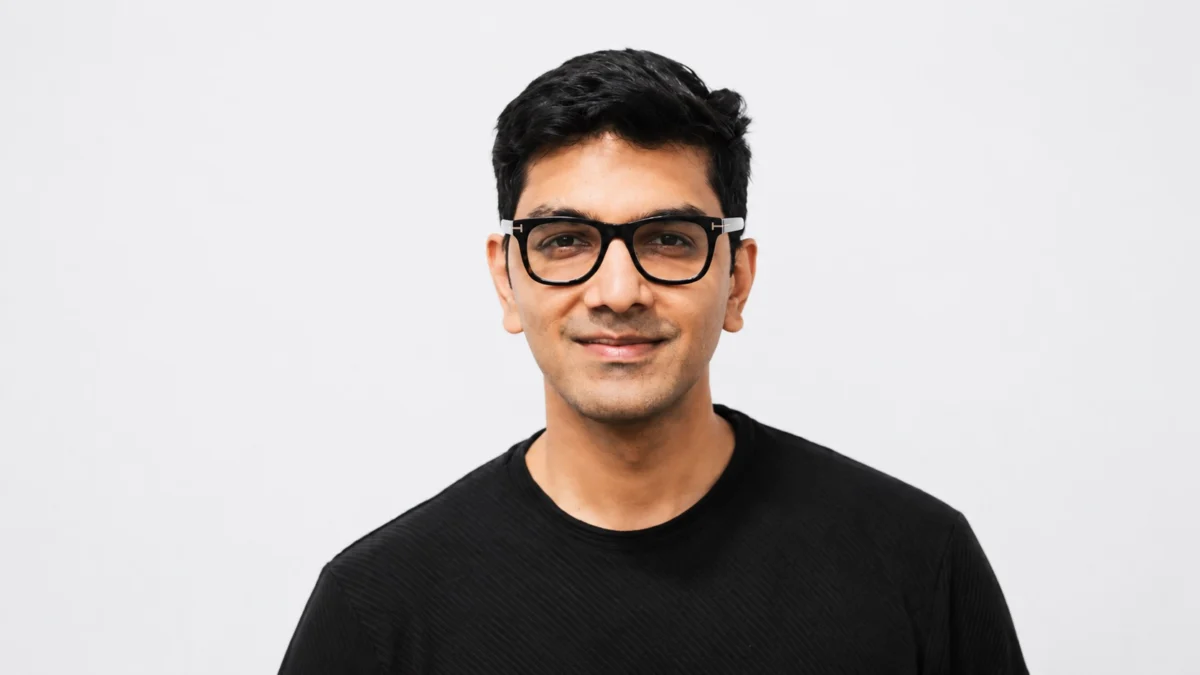
The race to redefine human-computer interaction through artificial intelligence is heating up, with a burgeoning ecosystem of startups vying for dominance. From discreet wearables to sophisticated smart glasses, companies are experimenting with novel form factors designed to seamlessly integrate AI into our daily lives. In this dynamic landscape, Aina, a Bengaluru- and San Francisco-based startup, is making its ambitious debut. The company, whose name translates to "mirror" in Hindi, has just announced a significant milestone: securing $5.5 million in seed funding to propel its mission of creating intuitive and powerful AI interfaces.
This substantial investment was spearheaded by Redstart Labs, backed by Infoedge India, and 360 ONE, with crucial participation from MIXI Global Investments, Antler, and the Blume Founders Fund. The round also attracted a distinguished cohort of individual investors, including Kunal Shah, the newly appointed head of WhatsApp, Razorpay co-founders Harshil Mathur and Shashank Kumar, and Tikhon Bernstam, the founder of Scribd. This blend of institutional and high-profile angel backing underscores a strong belief in Aina’s vision and its potential to disrupt the burgeoning AI hardware market.
Aina’s journey began under the moniker "Project Mirage," a testament to its early exploratory phase. At the helm is Apoorv Shankar, a seasoned entrepreneur with a deep understanding of hardware innovation. Shankar’s prior experience includes a pivotal role as VP of Hardware at Ultrahuman, a prominent smart ring manufacturer. Before his tenure at Ultrahuman, he founded LazyCo, a hardware interface design startup that developed a range of innovative gadgets, notably a control ring that allowed users to interact with devices like smartphones. Ultrahuman’s acquisition of LazyCo brought Shankar into their fold, where he honed his expertise before embarking on his entrepreneurial venture with Aina.
Shankar’s departure from Ultrahuman was driven by an insatiable curiosity about the evolving landscape of AI interfaces. "I left Ultrahuman last year because I was just super curious about the space of AI interfaces," he shared with TechCrunch. He acknowledged the impact of early market entrants like Rabbit and Humane, admitting to his own "disappointments" with their initial offerings. However, these nascent products ignited his excitement for the very concept of dedicated AI interfaces becoming a tangible reality. "However, I was just excited that we are seeing interfaces being a thing now. And as an engineer turned product designer, this was the hottest thing I could imagine myself building," Shankar elaborated, highlighting his passion for bridging the gap between engineering prowess and user-centric design.

Aina’s initial foray into the market is marked by the introduction of its first product, Dune. Described as a three-key, context-aware "macro" keyboard, Dune is essentially a compact keypad designed to streamline user interactions with their digital environment. Its core functionality revolves around executing pre-set shortcuts and commands, offering a tangible solution for enhancing productivity. In meeting scenarios, Dune can intuitively control microphones and cameras, and its context-aware nature allows it to trigger specific shortcuts or scripts based on the active application the user is viewing. This ability to adapt and respond to the user’s immediate workflow positions Dune as a versatile tool for professionals and power users alike.
The company’s initial product development also encompassed two other intriguing devices: Radiance and Shift. Radiance is envisioned as a tabletop remote specifically engineered for video calls. It features a tactile dial for volume control and dedicated buttons for managing microphone and camera feeds, activating AI notetaking functionalities, adjusting voice modulation, and seamlessly joining meetings. Shift, on the other hand, is a more minimalist innovation – a single-tap "agentic" button. The concept behind Shift is to empower users to trigger AI agents with a simple press, enabling the automation of repetitive tasks. This device connects to a user’s phone, acting as a conduit for invoking sophisticated AI-driven actions.
However, through early testing and user feedback, Aina identified Dune as the most compelling and popular of the three initial concepts. This user signal led the company to strategically prioritize Dune for its initial launch. Recognizing the potential to consolidate the functionalities of Radiance and Shift into a more streamlined experience, Aina decided to bundle these advanced features into the Dune keypad. "But in early testing, Aina found Dune was the most popular of the three and realized it could bundle features of the other two devices into the keypad. That signal from users is why the company decided to ship Dune first," Shankar explained. This user-centric approach underscores Aina’s commitment to developing products that resonate with real-world needs, aiming to "learn, in the wild, what kind of tasks users actually want to automate."
The insights gleaned from the development and testing of Dune, Radiance, and Shift will undoubtedly inform Aina’s future product roadmap. While the company remains tight-lipped about the specifics of its next device, it has indicated plans to initiate testing with a select group of users in the coming weeks. Shankar offered a glimpse into the philosophy guiding their next innovation, hinting that it will transcend the limitations of passive "context capture" gadgets. He contrasted this with "always-listening" devices or meeting notetakers that merely record ambient information. Instead, Aina’s forthcoming product is being designed as an "action-oriented device" that leverages existing contextual data from a user’s devices to actively control and invoke AI agents.
"I think you have enough context, you have in your phone and your laptop all the time, and we haven’t even started using that well. We are building an action-oriented device that will use the context to help you control and trigger workflows," Shankar stated, emphasizing a shift from passive observation to active command and automation. This strategic pivot suggests a move towards a more proactive and empowering AI interaction model, where the hardware acts as a sophisticated controller for intelligent agents.

The burgeoning demand for hardware specifically designed to control and trigger AI agents is a direct consequence of the increasing adoption of AI coding tools. As developers and knowledge workers increasingly integrate AI-powered coding assistants like Claude Code and OpenAI’s Codex into their workflows, the need for dedicated control mechanisms has become apparent. This trend is evidenced by recent market developments. Just this past week, OpenAI unveiled a custom keypad designed in collaboration with Work Louder for its Codex platform, catering to the specific needs of AI developers. The market is already populated with a diverse array of solutions, from specialized keyboard manufacturers to DIY enthusiasts creating their own macro controllers.
Furthermore, industry rumors suggest that OpenAI is actively developing a smart speaker equipped with an integrated AI assistant, positioning it as a direct competitor to devices like the Rabbit R1, which has positioned itself as a primary gateway for invoking AI agents. Qualcomm, a key player in the semiconductor industry, has also revealed its involvement in exploring over 40 diverse devices designed for AI interaction, underscoring the broad industry-wide interest in this emerging hardware category.
With no single dominant form factor having yet emerged – whether it be rings, pins, glasses, keypads, or speakers – the market is ripe for continued innovation and significant investment. The multitude of hardware bets and funding rounds currently underway all grapple with a fundamental question: what does the future of controlling artificial intelligence truly look like? Aina, with its recent funding and a clear vision for action-oriented AI interfaces, appears poised to contribute significantly to answering this critical question, aiming to carve out its distinct identity within this rapidly evolving and intensely competitive technological frontier. The company’s focus on user-driven development and its strategic pivot towards agent control suggest a promising path forward in the quest to democratize and simplify our interactions with advanced AI.
