
 By admin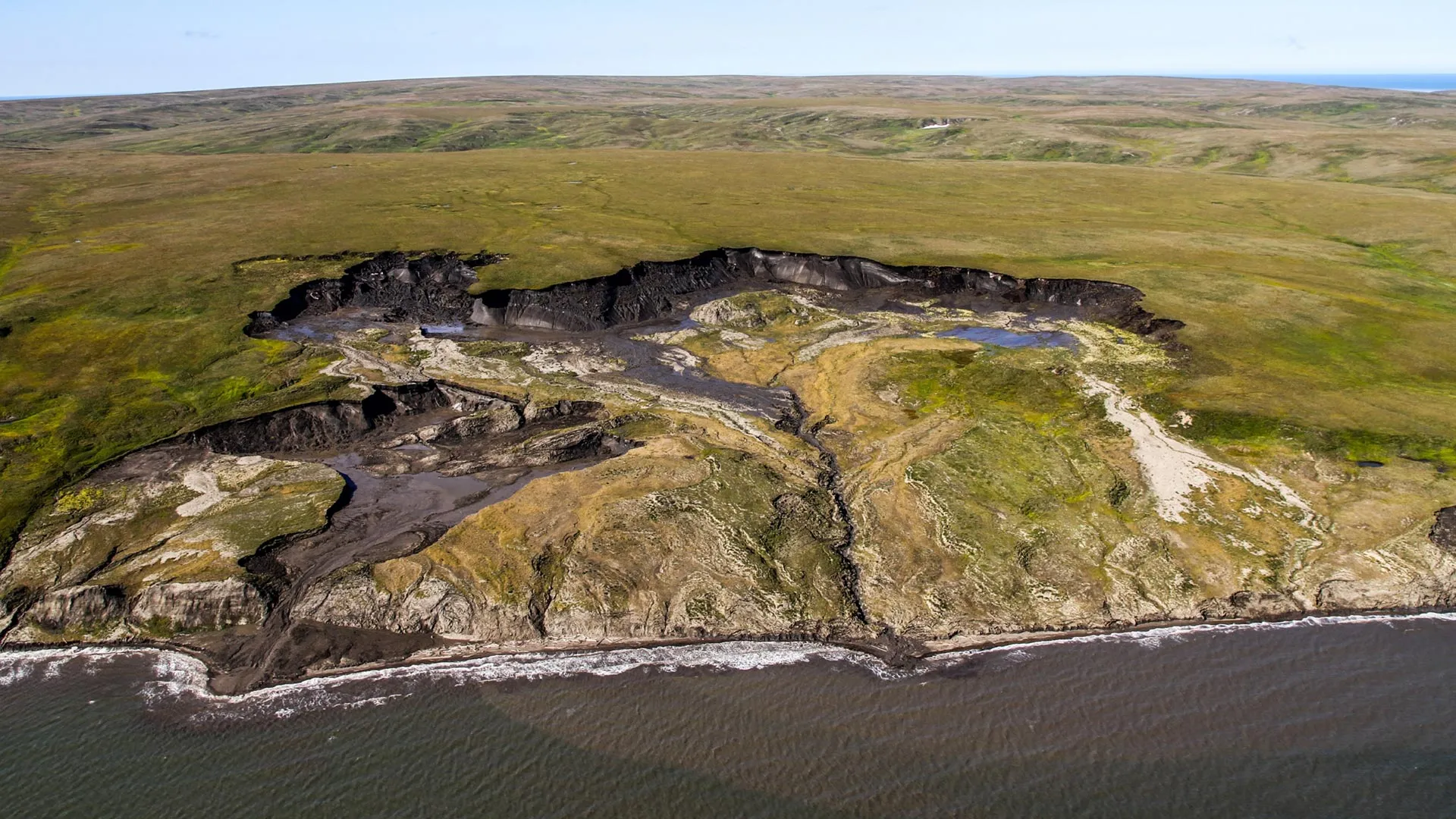
For a long time, scientists have grappled with a significant knowledge gap: understanding precisely how much of this newly mobilized permafrost carbon re-enters the atmosphere as greenhouse gases and how much remains trapped, or sequestered, within the ocean’s depths. Filling this void is crucial for accurate climate modeling and predicting future warming scenarios. Addressing this critical uncertainty, a pioneering team of researchers from the Alfred Wegener Institute, Helmholtz Centre for Polar and Marine Research (AWI), and MARUM – Centre for Marine Environmental Sciences at the University of Bremen, has undertaken an in-depth investigation into this complex process. Their study focused on the permafrost coast of Qikiqtaruk, also known as Herschel Island, in the Canadian Arctic, a region experiencing some of the most dramatic environmental changes on the planet.
Through meticulous analysis of sediment cores extracted from the seafloor, the research team made a pivotal discovery: a substantial amount of carbon originating from the land-based permafrost is not immediately released but rather preserved in the marine sediments. Furthermore, their investigation unveiled a fascinating aspect of marine microbial behavior: these microscopic organisms act as "selective eaters," exhibiting a distinct preference for fresher, more readily available carbon derived from the ocean’s own biological productivity over the older, more recalcitrant carbon released from thawing permafrost. These groundbreaking findings, which shed new light on the fate of Arctic permafrost carbon, were subsequently published in the prestigious scientific journal Nature Geoscience, providing an important foundation for refining our understanding of Arctic climate feedback loops.
Vast Carbon Stores Are Beginning to Thaw, Unleashing a Climate Wildcard
The sheer scale of carbon stored within permafrost ecosystems is staggering. Scientists estimate that terrestrial permafrost across the Arctic holds approximately 1,300 gigatonnes of organic carbon, primarily derived from the remains of plants and animals that have accumulated over tens of thousands of years and been preserved in a frozen state. To put this into perspective, this amount is roughly twice the carbon currently present in the Earth’s atmosphere. An additional 400 gigatonnes of organic carbon are sequestered in ocean sediments and river deltas within the Arctic region, further underscoring the immense global significance of this frozen carbon reservoir.
The planet’s climate is undergoing rapid transformation, but nowhere is this more pronounced than in the Arctic. A phenomenon known as "Arctic Amplification" means that the Arctic is warming at a rate two to three times faster than the global average. This accelerated temperature rise is directly responsible for the widespread thawing of permafrost, transforming previously stable frozen ground into unstable, often waterlogged, terrain. Concurrently, the Arctic’s extensive coastlines, much of which are composed of ice-rich permafrost, are experiencing unprecedented rates of erosion. As these frozen barriers collapse, vast quantities of carbon that were once securely locked within the soil are liberated, finding their way into the Arctic Ocean through a combination of riverine discharge and direct coastal degradation.
"Consequently, up to 0.02 gigatonnes of this ancient carbon are entering the sea each year," explains Dr. Manuel Ruben, the lead author of the study from the Alfred Wegener Institute. This annual influx, while significant, is projected to escalate dramatically. "According to forecasts, this outflow could rise by a staggering 70 to 150 percent by the year 2100," Dr. Ruben cautions. The critical question, however, has remained largely unanswered: "However, how much of this is released back into the atmosphere as a greenhouse gas and how much is stored in the seabed has, until now, been largely unknown." Resolving this profound uncertainty is paramount. Scientists urgently need to determine the ultimate fate of this mobilized carbon to accurately estimate how the thawing of permafrost will influence global climate trajectories and to inform mitigation strategies.
Sediment Cores: Unlocking the Secrets of Carbon’s Marine Journey
To systematically investigate the fate of this permafrost-derived carbon, the research team embarked on an ambitious fieldwork campaign, collecting numerous sediment cores from various locations off the coast of Herschel Island. These cylindrical samples of the seafloor act as geological archives, meticulously preserving layers of deposited material over extended periods, in this case, roughly 50 years. By carefully analyzing these layers, scientists can reconstruct the history of sediment accumulation and the types of organic matter deposited over time.
The analysis of these cores yielded crucial insights, indicating that only a relatively small fraction of the substantial quantities of carbon swept into the ocean from thawing permafrost becomes part of the active carbon cycle – the dynamic process where carbon is exchanged between the atmosphere, oceans, land, and living organisms. This suggests a significant degree of carbon sequestration within the marine environment.
"Although the sea here carries away huge quantities of organic carbon from the coast, surprisingly little of it ends up in the ocean’s active carbon cycle," Dr. Manuel Ruben elaborated on this key finding. He further quantified the process: "Microorganisms convert around ten percent of the organic carbon from the sediments into gases, which rise into the water and can then enter our atmosphere." This implies that while some carbon is indeed converted into greenhouse gases, the vast majority – approximately 90 percent – of the permafrost carbon that reaches the seabed remains buried, essentially sequestered for potentially long periods. This discovery suggests a more complex, and perhaps less immediately alarming, picture than previously feared regarding the direct atmospheric impact of seabed-deposited permafrost carbon.
Chemical Clues Track Microbial Activity and Carbon’s Origin
The researchers employed a multi-faceted analytical approach to unravel the intricate processes occurring within the seafloor sediments. Beyond simply measuring the accumulation rates of permafrost material, they delved into the chemical composition of the sediment cores. A particularly insightful technique involved studying the dissolved inorganic carbon found within the tiny, interconnected spaces between sediment particles, known as pore water. These measurements served as a crucial proxy, directly indicating the amount of carbon dioxide (CO2) that microorganisms had released as a byproduct of consuming organic material within the sediments. Higher concentrations of dissolved inorganic carbon in the pore water signal more intense microbial respiration.
To pinpoint the exact origin of the organic material being consumed by these microorganisms, the team utilized a sophisticated method: isotopic analysis of the pore water. Carbon exists in different isotopic forms, primarily carbon-12 (¹²C), carbon-13 (¹³C), and carbon-14 (¹⁴C). The ratios of these isotopes provide unique "fingerprints" that can reveal the source and age of organic matter.
"Carbon isotopes represent our atomic indicators that can identify the food source of the microorganisms," explains Prof. Gesine Mollenhauer, a geochemist at the AWI and co-spokesperson for ‘The Ocean Floor – Earth’s Unexplored Interface’ cluster of Excellence. She elaborated on the utility of specific isotopes: "The ¹³C isotope, for example, tells us whether they have consumed carbon from land or from the sea. By way of the ¹⁴C isotope, we were able to determine whether the single-celled organisms preferred old organic carbon from permafrost or fresh organic carbon from algae remains." This powerful isotopic tracing allowed the scientists to meticulously track the journey of carbon from its terrestrial origin in permafrost to its ultimate fate within the marine sediments and to discern the dietary preferences of the resident microbial communities.
"Gourmet" Bacteria Prefer Fresh Carbon, Offering a Glimmer of Hope
The isotopic analysis yielded a particularly intriguing result: the microorganisms dwelling within the sediment exhibited a clear preference in their dietary choices. "The sediment is home to ‘gourmet’ bacteria that apparently prefer fresh carbon stemming from, for example, more recent algal remains over the ‘old’ carbon from permafrost deposits," explains Gesine Mollenhauer. This "gourmet" behavior suggests that these marine microbes are not indiscriminate consumers; rather, they selectively target organic matter that is more labile, meaning it is easier to break down and assimilate. Fresh marine organic carbon, primarily from phytoplankton and other recent biological production, typically has a different chemical structure and higher nutritional value compared to the ancient, often degraded, and chemically recalcitrant organic carbon released from permafrost. The older permafrost carbon has been subjected to long periods of freezing and geological processes, making it less energetically favorable for microbial consumption.
This finding carries significant implications for our understanding of Arctic carbon cycling. Because the sediment-dwelling microbes preferentially consume fresh marine material, the older, more stable carbon released from thawing permafrost may contribute less to immediate atmospheric greenhouse gas levels than scientists had previously feared. This offers a potentially mitigating factor in the complex feedback loop between permafrost thaw and climate change, suggesting that the ocean’s seabed acts as a more effective long-term sink for this ancient carbon than initially thought.
However, the researchers are quick to inject a note of caution, emphasizing that the full picture of permafrost carbon’s fate is still unfolding and incredibly complex. "However, we do need further research here," warns Prof. Mollenhauer. "This is because some of the organic carbon from the permafrost may already have been broken down before it reaches the seabed." This highlights the possibility that a portion of the carbon could be respired into greenhouse gases in the water column or in nearshore environments before it even settles into the sediments, underscoring the need for continued, comprehensive studies across the entire land-to-ocean continuum.
Coastal Carbon Could Reshape Arctic Ecosystems and Local Livelihoods
The movement of vast quantities of carbon from thawing land into the Arctic Ocean has implications that extend far beyond its contribution to greenhouse gas emissions. This influx of terrestrial material has the potential to fundamentally alter the chemistry and biology of coastal waters, which are vital for supporting rich and unique food resources upon which local Indigenous communities heavily rely.
One immediate impact is the introduction of sediment released by the accelerating coastal erosion. This influx of particulate matter can significantly reduce the amount of sunlight penetrating the water column, a critical factor for marine life. Freshly eroded fragments make the coastal ocean turbid and cloudy, while dissolved organic carbon (DOC) released from permafrost can also darken the water, further hindering light penetration.
This loss of light has cascading effects on the Arctic marine food web. It directly impacts single-celled organisms such as algae (phytoplankton), which form the base of the food chain. Algae require sunlight for photosynthesis to produce biomass and oxygen. A reduction in primary production at this foundational level can have severe consequences for the entire ecosystem, affecting the availability of food for zooplankton, which are then consumed by larger organisms, ultimately impacting fish populations, crustaceans, seals, and other marine mammals that are crucial for the subsistence and cultural heritage of Arctic communities. Changes in water chemistry, including potential localized acidification or altered nutrient regimes from permafrost thaw, could further stress these sensitive ecosystems.
Recognizing the multifaceted impacts of these rapid environmental changes, the researchers plan to delve deeper into these connections during the international ‘Arctic Pulse’ campaign, scheduled for 2027. This ambitious initiative will involve coordinated observations utilizing state-of-the-art research platforms, including the German research icebreaker Polarstern, AWI research aircraft, and established land-based monitoring sites. The overarching goal of ‘Arctic Pulse’ is to develop a holistic understanding of how the rapid environmental transformation of the Arctic is reshaping its unique and fragile ecosystems, from the permafrost landscapes to the depths of the ocean.
Improving Arctic Climate Models: A Foundation for Future Predictions
"Our study shows, more precisely than ever before, how much carbon is safely stored in the seabed – and just how much of the decomposed material actually originates from the old permafrost," states Dr. Manuel Ruben, emphasizing the significance of their findings. The detailed quantification and isotopic tracing provided by this research are not merely academic exercises; they represent a crucial step forward in refining our predictive capabilities.
"This provides an important foundation for climate models that can predict the consequences of permafrost thawing for the global climate," Dr. Ruben concludes. By integrating these new insights into complex Earth system models, scientists can develop more accurate projections of future greenhouse gas concentrations, global temperature trajectories, and the broader impacts of Arctic change. While the study offers a glimmer of hope by suggesting a substantial sequestration capacity of the Arctic seabed for permafrost carbon, it simultaneously underscores the immense complexity of the Arctic carbon cycle and the urgent need for continued, integrated research to fully comprehend the intricate feedback loops that will ultimately determine the pace and extent of future climate change. Understanding these processes is not just a scientific endeavor; it is essential for informing policy decisions and developing effective strategies to adapt to and mitigate the profound challenges posed by a warming Arctic.
