
 By admin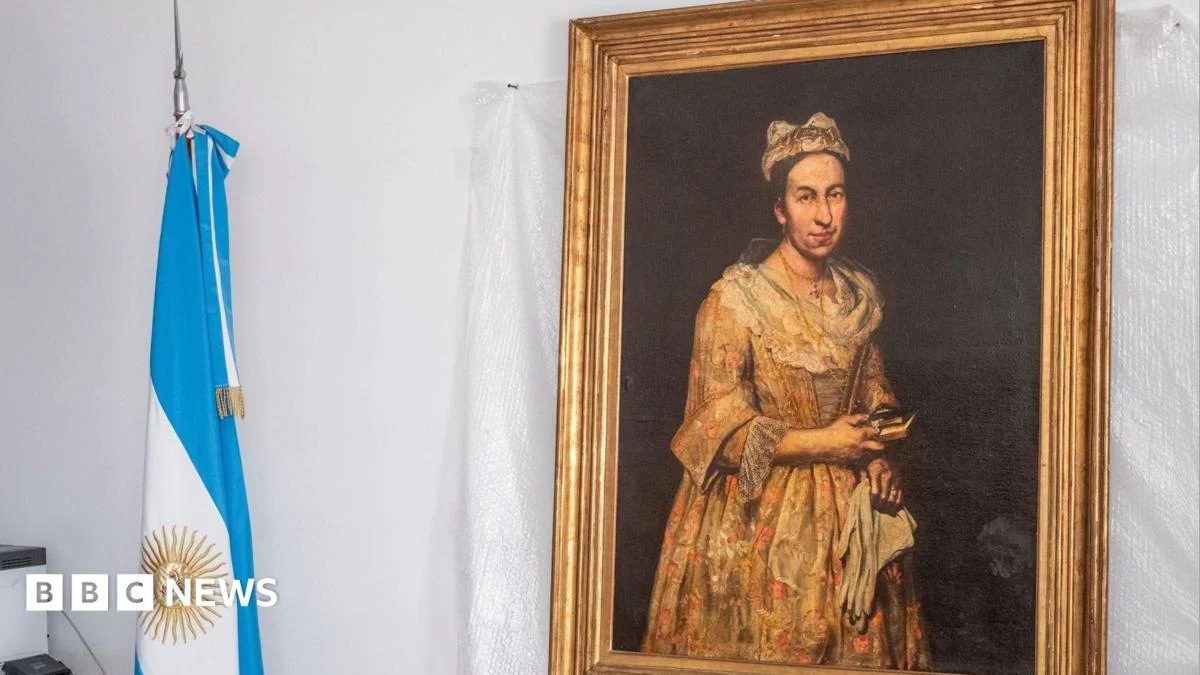
The late-baroque masterpiece, known as "Portrait of a Lady," a captivating work of art that had vanished for eight decades, has finally been located and its rightful ownership re-established. The painting’s remarkable journey from the opulent collections of pre-war Europe to the dusty corners of a South American estate is a poignant reminder of the devastating impact of Nazi art looting during World War II. Its rediscovery, facilitated by the digital age and the keen eye of investigative journalism, has culminated in a legal victory for the heir, ensuring that this significant piece of cultural heritage is returned to its rightful custodians.
The painting’s re-emergence into public consciousness occurred when it was spotted in photographs accompanying the listing of a property for sale near Buenos Aires, Argentina. The house in question belonged to Patricia Kadgien, the daughter of a notorious Nazi fugitive who had sought refuge in Argentina following the conclusion of the Second World War. This fortuitous sighting initiated a chain of events that would lead to the painting’s recovery and a subsequent legal battle over its ownership. Crucially, Ms. Kadgien has now formally agreed to surrender the painting, a decision that appears to have been influenced by a plea bargain, wherein she will not face prosecution for her alleged role in concealing the artwork from authorities. This agreement marks a significant step towards rectifying a historical injustice.
"Portrait of a Lady" was not an isolated casualty of the Nazi regime’s rapacious appetite for art. It was one of over a thousand invaluable artworks that were systematically plundered from the extensive and esteemed collection of Jacques Goudstikker, a prominent Jewish art dealer. Goudstikker’s collection, amassed over a lifetime of dedicated acquisition and expertise, represented a significant cultural and financial treasure trove. The Nazi invasion of the Netherlands in 1940 triggered the swift and brutal confiscation of his entire inventory, scattering these masterpieces across the Third Reich and beyond. The sheer scale of this operation underscores the methodical and systematic nature of Nazi plunder, a crime against culture that left indelible scars on the art world and on the lives of countless individuals and families.
The rightful heir to Goudstikker’s legacy, and therefore to "Portrait of a Lady," is his daughter-in-law and sole heir, Marei von Saher. Ms. Von Saher has expressed a profound commitment to reclaiming every piece of art stolen from her father-in-law’s collection, a mission she views as not only a legal imperative but also a moral obligation to restore Jacques Goudstikker’s tarnished reputation and preserve his enduring artistic legacy. Her intention for "Portrait of a Lady" is to ensure it serves a higher purpose than mere private ownership. According to reports from the Argentine newspaper Clarin, Ms. Von Saher intends to facilitate a temporary loan of the painting to the Holocaust Museum of Buenos Aires. This exhibition aims to leverage the painting’s compelling story to educate the public about the pervasive issue of Nazi art theft, its historical context, and its lasting consequences. By placing the artwork in a museum setting, Ms. Von Saher hopes to foster greater awareness and understanding of the profound cultural and human losses inflicted by the Nazi regime.
The initial recognition of "Portrait of a Lady" occurred in August 2025, a date that highlights the recent nature of this discovery and subsequent legal proceedings. The Dutch newspaper Algemeen Dagblad (AD) played a pivotal role in bringing the painting to light, identifying it on an estate agent’s website advertising a property in the picturesque coastal town of Mar del Plata, Argentina. The image that captured the attention of the AD journalists showed the painting hanging prominently above a verdant green sofa in the living room of Patricia Kadgien. This seemingly ordinary domestic scene belied the extraordinary provenance of the artwork. Patricia Kadgien’s father, Friedrich Kadgien, was not merely a fugitive but a figure of considerable influence within the Nazi hierarchy. He served as a top adviser to Hermann Göring, one of Adolf Hitler’s most powerful deputies and a voracious collector of looted art. Göring himself was directly responsible for the plunder of thousands of works of art across Europe, amassing a personal collection that rivaled those of major museums. The connection between Friedrich Kadgien and Göring immediately raised red flags regarding the legitimacy of any art in the Kadgien family’s possession, particularly one with such a significant and suspicious history.
The legal framework governing the restitution of Nazi-looted art is complex and often fraught with challenges. International conventions and national laws, such as the Washington Conference Principles on Nazi-Confiscated Art, provide guidelines for the restitution of artworks to their rightful owners or their heirs. However, the passage of time, the destruction of records, and the intricate web of sales and transfers can make tracing and proving ownership exceedingly difficult. In cases like that of Jacques Goudstikker, the sheer volume of looted art and the systematic nature of the confiscation present a monumental task for recovery efforts. The story of "Portrait of a Lady" exemplifies the dedication and perseverance required by individuals and organizations committed to achieving justice for victims of Nazi art theft.
The legal ruling in favor of Marei von Saher is a significant victory, not just for her family, but for the broader movement to reclaim and preserve cultural heritage that was despoiled during the Nazi era. The court’s decision underscores the principle that stolen property, regardless of how long it has been in possession of another party, should be returned to its rightful owner. The agreement with Patricia Kadgien, while allowing her to avoid prosecution, also signifies a tacit acknowledgment of the painting’s illicit origins and the imperative of its restitution. This outcome reinforces the legal and ethical obligations to address historical injustices, even decades after the events have transpired.
The role of investigative journalism in this discovery cannot be overstated. The Algemeen Dagblad’s meticulous work in identifying the painting and its potential connection to Nazi looting served as the catalyst for further action. In an era where vast amounts of information are disseminated digitally, the ability to discern significant details from seemingly mundane online content is a crucial skill for uncovering hidden histories. The estate agent’s listing, intended for a commercial transaction, inadvertently became a portal to a forgotten chapter of wartime atrocities.
The background of Jacques Goudstikker’s collection is crucial to understanding the significance of "Portrait of a Lady." Goudstikker was renowned for his discerning eye and his deep knowledge of Old Master paintings. His gallery in Amsterdam was a prestigious institution, attracting collectors and connoisseurs from around the world. The Nazis, under the direction of figures like Göring, targeted such collections not only for their monetary value but also for their symbolic significance. The systematic appropriation of Jewish property was a cornerstone of Nazi ideology, aimed at both enriching the regime and denigrating and persecuting Jewish communities. Goudstikker’s personal tragedy, fleeing his homeland and dying in exile, further compounds the historical injustice.
Marei von Saher’s unwavering commitment to her father-in-law’s legacy is a testament to the enduring power of family and the importance of historical memory. Her stated goal of recovering "every single artwork" highlights the immense challenge faced by heirs of looted collections. Each recovered piece represents a small but significant victory against the forces that sought to erase cultural heritage and historical truth. The temporary loan to the Holocaust Museum of Buenos Aires is a thoughtful and impactful decision. It ensures that the painting’s story is told in a context that is both educational and commemorative, resonating with the museum’s mission to educate future generations about the horrors of the Holocaust and its far-reaching consequences.
The involvement of Hermann Göring in the Nazi art plunder is a chilling reminder of the extent of the regime’s criminal enterprise. Göring, second only to Hitler in power and influence, was a fervent art enthusiast who used his position to amass a colossal private collection of stolen art. His agents scoured occupied territories, seizing paintings, sculptures, and other artifacts from museums, private collections, and individuals. The Nazi regime’s art looting was not a haphazard affair but a highly organized and systematic operation, aimed at consolidating power, enriching key figures, and propagating Nazi ideology. The fact that Friedrich Kadgien, Patricia Kadgien’s father, served as a top adviser to Göring directly implicates the Kadgien family in the broader network of Nazi art theft and concealment.
The legal precedent set by this ruling is likely to have a ripple effect, potentially encouraging other heirs of looted art to pursue restitution claims. The successful recovery of "Portrait of a Lady" demonstrates that even after decades, and despite significant obstacles, justice can be achieved. It serves as a beacon of hope for those who continue to search for lost family heirlooms and for the broader effort to restore the integrity of art historical records and collections that were so brutally disrupted. The story of "Portrait of a Lady" is a powerful narrative of loss, recovery, and the enduring fight for justice, a story that will now be told through the painting itself, exhibited for the world to see and learn from.
