
 By admin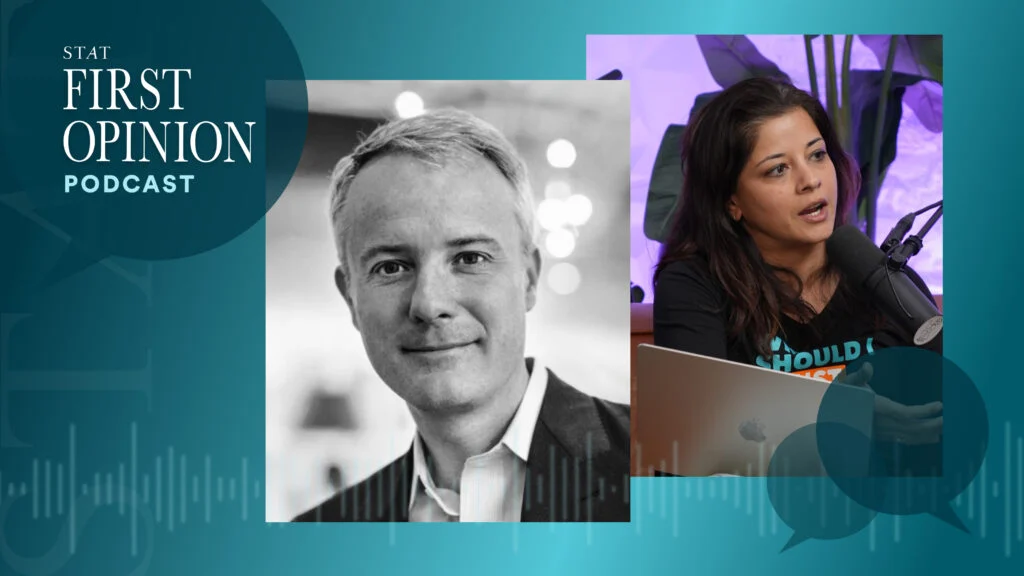
The landscape of American public health is currently undergoing a seismic shift, characterized by a profound breakdown in trust between scientific institutions and a significant portion of the populace. In late 2025, an unlikely scene unfolded at the Children’s Health Defense (CHD) Conference in Austin, Texas: Dr. Craig Spencer, a renowned emergency physician and public health advocate known for his work during the Ebola and COVID-19 crises, was seen engaging in deep, respectful conversations with anti-vaccine activists and supporters of the "Make America Healthy Again" (MAHA) movement. This encounter was not a confrontation, but a deliberate experiment in radical listening facilitated by the podcast "Why Should I Trust You?" hosted by veteran journalists Brinda Adhikari and Tom W. Johnson. As the nation grapples with a fragmented information ecosystem, the work of Adhikari and Johnson offers a blueprint for how dialogue—rather than dismissal—might be the only viable path forward for the future of medicine.
The genesis of "Why Should I Trust You?" lies in a recognition that the traditional methods of public health communication have failed. Brinda Adhikari, an Emmy-winning executive producer who previously ran Jon Stewart’s "The Problem," and Tom W. Johnson, a documentary veteran known for Showtime’s "The Circus," launched the project after being approached by Maggie Bartlett, a virologist at Johns Hopkins University. Bartlett’s observation was simple yet devastating: the public no longer trusted the experts. What began as an inquiry into communication strategies evolved into a long-form podcast that serves as a neutral ground for the "A-list" of both mainstream public health and the ascending MAHA movement.
The MAHA movement, which gained significant political momentum leading into the 2024 and 2025 election cycles, represents a complex coalition of parents, health enthusiasts, and skeptics who feel betrayed by the medical establishment. According to data from the Kaiser Family Foundation (KFF), nearly four in ten American parents now align with the core principles of MAHA, which emphasize individual liberty, skepticism of the industrial food complex, and a demand for greater transparency in vaccine safety. This is no longer a fringe minority; it is a substantial segment of the electorate that feels the current medical system is "captured" by corporate interests.
Adhikari and Johnson’s approach to this divide is rooted in the journalistic tradition of relationship-building. Unlike the rapid-fire soundbites of cable news or the polarized vitriol of social media, their podcast allows for "supersized" episodes that often exceed 90 minutes. This length is intentional. It allows guests like Del Bigtree, a prominent vaccine skeptic, or Dr. Pierre Kory, a leading figure in the alternative COVID-19 treatment movement, to move past their practiced talking points and reveal the "logic ladder" behind their beliefs. Simultaneously, it provides mainstream figures like Dr. Paul Offit or Dr. Jay Bhattacharya the space to explain the nuances of policy and the rigors of the scientific method without being reduced to a caricature of "the establishment."
One of the most illuminating examples of this dialogue occurred during a debate over the hepatitis B birth dose vaccine. In a typical media environment, the conversation would be framed as a binary: either the vaccine is a life-saving necessity or a dangerous overreach. However, on "Why Should I Trust You?", the discussion between Dr. Paul Offit and Dr. Michael Mina revealed a more sophisticated internal tension within the pro-vaccine community. Offit argued for the categorical safety and necessity of the birth dose to prevent vertical transmission from mother to child, especially when maternal status is unknown. Mina, conversely, suggested that public health must be adaptable; if a mother is known to be negative and the family is likely to return for follow-up care, perhaps delaying the dose could be a gesture of goodwill to rebuild trust with skeptical parents. This "intellectual wrestling match" highlights the podcast’s goal: to show that even within science, there is room for disagreement and nuance.
The podcast also tackles the legislative and corporate dimensions of health trust. In a recent episode featuring Democratic Representatives Chellie Pingree and Jim McGovern alongside MAHA activist Kelly Ryerson (known as the "Glyphosate Girl"), the hosts explored the bipartisan concern over pesticide use and corporate liability. The discussion centered on glyphosate and the legal "liability shields" that protect manufacturers from lawsuits. This episode demonstrated that the MAHA movement often overlaps with traditional progressive concerns regarding environmental toxins and corporate accountability. By finding these points of convergence, the podcast identifies "shared pain"—the feeling that the system is not working for the average person—which can serve as a bridge between seemingly irreconcilable camps.
The challenges of this work are immense. Adhikari and Johnson are frequently accused of "platforming" misinformation by the public health side, while the MAHA side often views them with suspicion as potential agents of the mainstream media. The hosts navigate this by maintaining a strict adherence to factual inquiry. When a guest makes a claim that contradicts established data, the hosts intervene not with a "gotcha" moment, but by presenting the counter-study and asking the guest to reconcile the two. This prevents the conversation from devolving into a shouting match while ensuring the audience is presented with a full spectrum of information.
The stakes of these conversations were heightened following a violent incident at the CDC headquarters in 2025. The shooting, which targeted the exterior of the building, marked a turning point in the rhetoric surrounding public health workers. Adhikari and Johnson noted a shift in the tone of their interviews following the event. Public health officials, who had previously spent much of their time apologizing for "unintended consequences" of pandemic-era policies, began to speak more forcefully about the dangers of cutting scientific funding and the risks of dismantling advisory committees like the ACIP (Advisory Committee on Immunization Practices). The power dynamic has also shifted; with MAHA leaders now holding significant influence within federal agencies like the Department of Health and Human Services (HHS), the "skeptics" have become the "establishment," forcing both sides to re-evaluate their positions.
A particularly viral moment for the show involved Dr. Kirk Milhoan, the former chair of the ACIP. In an interview that was widely clipped on social media, Milhoan appeared to express hesitation regarding the necessity of the polio and measles vaccines. The backlash was swift, but Adhikari and Johnson invited him back for a second, lengthy interview to clarify his position. Milhoan argued that his comments were taken out of context and that his primary concern was the protection of individual rights within the public health framework. This incident underscored the hosts’ belief that short clips are often the enemy of truth. By refusing to post "clickbait" snippets on TikTok or X (formerly Twitter), the podcast protects the integrity of the dialogue and honors the complexity of the subjects.
Ultimately, the success of "Why Should I Trust You?" is measured not in minds changed, but in the restoration of humanity. The hosts recount the story of Aaron Everitt, a staunch supporter of Robert F. Kennedy Jr., who attended a public health conference and later wrote about his evolving perspective. Everitt noted that while his policy positions remained largely the same, he no longer saw public health workers as "faceless bureaucrats" out to destroy liberty. Instead, he saw a group of people genuinely trying to solve impossible problems with limited resources.
As the United States moves further into the mid-2020s, the "trust crisis" remains the greatest threat to national health. If the public refuses to engage with medical expertise, the results will be measured in rising rates of preventable disease and a further degradation of the social fabric. Brinda Adhikari and Tom W. Johnson do not claim to have all the answers, but they have identified the essential first step: showing up, sitting down, and asking the question that gives their show its name. In a world of digital silos and ideological echo chambers, the simple act of staying in the room for a two-hour conversation may be the most radical—and necessary—medical intervention of our time. By fostering a space where an ER doctor can talk to an anti-vaccine parent without vitriol, the podcast proves that while convictions may not waver, the walls of distrust can at least be breached. The future of public health depends not just on better data, but on the courage to listen to those who have lost faith in it.
