
 By Rifan Muazin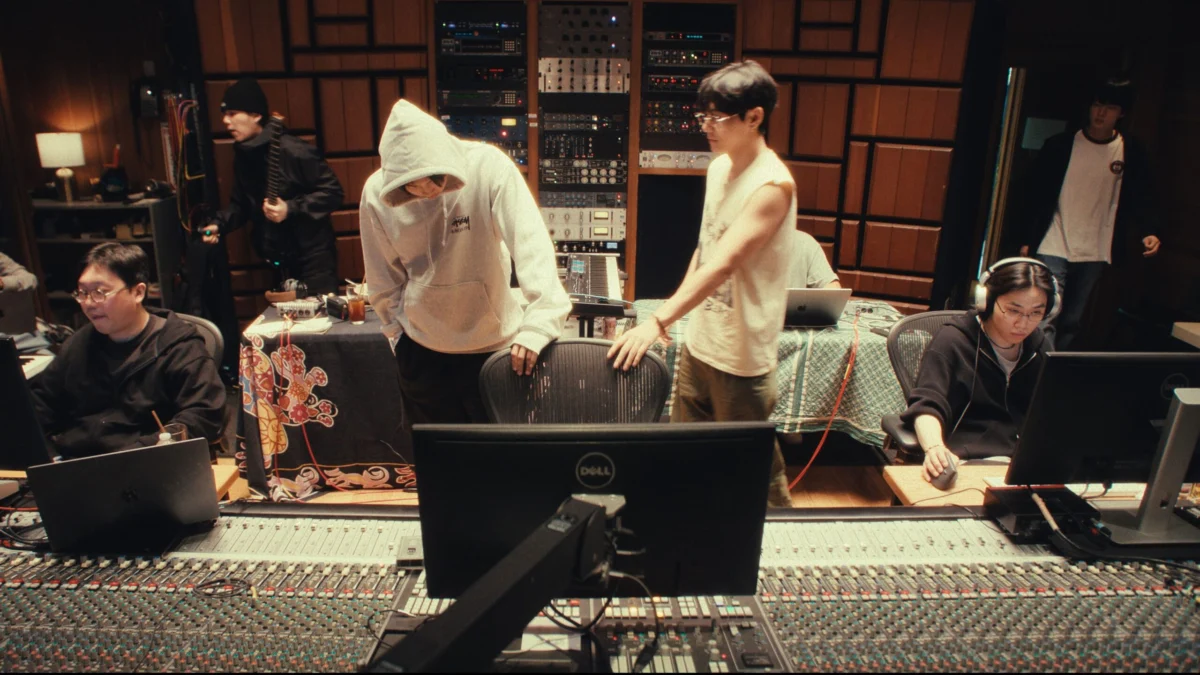
Over the past decade, Vietnamese-American filmmaker Bao Nguyen has carved out a distinctive niche in the documentary landscape, building a reputation for crafting incisive, compulsively watchable films that do more than merely profile their subjects—they unpack the very fabric of cultural phenomena. Nguyen’s filmography suggests a deep preoccupation with the intersections of identity, history, and the mechanics of fame. In last year’s The Stringer, he meticulously interrogated the authorship of the iconic “Napalm Girl” photograph, exploring its profound implications on the American perception of the Vietnam War. In 2020’s Be Water, he untangled the complex legacy of Bruce Lee, situating the martial arts legend within the stifling context of systemic racism in mid-century Hollywood. Even his more "pop" leaning projects, such as The Greatest Night in Pop—which chronicled the frantic, star-studded creation of “We Are the World”—and Live From New York!, a four-decade retrospective of Saturday Night Live, demonstrate his ability to find human vulnerability within the gargantuan machinery of the entertainment industry.
Nguyen now brings these formidable storytelling skills to BTS: The Return, a buzzy Netflix documentary that captures the world’s biggest musical act at a historic crossroads. The film follows the seven members of BTS—RM, Jin, Suga, j-hope, Jimin, V, and Jung Kook—as they navigate their high-stakes reunion following a period of mandatory South Korean military service. Far from the frictionless hagiography that defines many contemporary pop music documentaries, The Return functions as a raw, unfiltered snapshot of a band in transition. It finds the members wrestling with existential questions of authenticity, relevance, and nationalism while laboring under the immense pressure of delivering Arirang, their first full-length studio album in nearly six years. Released today, exactly one week after the album’s global debut, the documentary provides a vital, perfectly timed context to the group’s latest artistic statement.
The narrative heart of the documentary is perhaps best exemplified by a sequence involving the creative struggle over a sample of the traditional Korean folk song “Arirang.” The track in question, titled “Body to Body,” becomes a microcosm for the band’s larger internal debates. As the camera rolls, the members engage in a genuine, high-stakes discussion regarding the length and placement of the sample. The tension is palpable: if the sample is too long, it risks appearing tokenistic or overly nationalistic; if it is too short, its cultural impact might be diluted. This discourse eventually reaches a climax in a boardroom meeting with Hybe chairman and founder Bang Si-hyuk, who argues passionately for the historical power and significance of the longer version. It is a rare glimpse into the democratic—and often difficult—creative process of a group that is frequently dismissed by Western critics as a "manufactured" product of the K-pop machine.
In a recent interview with GQ, Nguyen reflected on the long road to bringing this project to fruition. His interest in BTS was sparked not by their chart-topping statistics, but by the mythic quality of their relationship with their global fanbase, known as ARMY. Nguyen recalled attending one of the band’s SoFi Stadium shows in 2021, an experience he described as "surreal and emotional." Observing the long, tearful conversations between the band and the crowd as the members prepared for their military hiatus, Nguyen saw a narrative arc that transcended pop music. "It felt almost Homeric," Nguyen told GQ. "BTS was Odysseus, and ARMY was Penelope, longing for the return."
This vision of the band as figures in a modern odyssey eventually reached the leadership at Hybe. While initial discussions were stalled by the necessary secrecy surrounding South Korean military enlistment, the timing eventually aligned as the members began to complete their service. Nguyen was approached with a unique proposition: to document the group’s return to the studio and their efforts to redefine themselves for a new era. At the time, Nguyen was deep in post-production for The Stringer, but the opportunity to document this specific "snapshot in time" was too significant to pass up. He was particularly interested in avoiding a standard retrospective. Instead, he wanted to capture the "pressure, tension, and questions" that come with being at the top of the world while trying to find a new way forward.

One of the most striking aspects of The Return is its visual intimacy. To achieve this, Nguyen and his cinematographer, Caleb Heller, employed a "fly-on-the-wall" approach, often using long Zoom lenses to remain as unobtrusive as possible. However, Nguyen also introduced a more personal element by providing the seven members with their own camcorders. This allowed the group to document their own lives outside the official filming schedule, evoking the aesthetic of family home movies. This technique pays off in a moving scene where the band gathers in a home theater to watch archival footage of their younger selves. As they watch their trajectory from rookies to global icons, the "family" dynamic of the group becomes undeniable, offering a poignant counterpoint to their global celebrity.
The documentary also delves into the unique burden BTS carries as "cultural ambassadors." Unlike Western pop stars, who largely represent only themselves, BTS operates under the weight of representing an entire nation’s soft power on the world stage. Nguyen noted that this sense of duty—or "privilege," depending on the perspective—is a recurring theme in the film. The debate over the "Arirang" sample was not just about music; it was about how to honor their Korean heritage while maintaining their status as global pop innovators. RM, the group’s leader, articulates this struggle in the film, stating, "We have to decide what to keep and what to change. We’re doing a lot of experiments to try to find out what makes us special, what makes us BTS."
Earning the trust of seven individuals with distinct temperaments and solo career trajectories was a "slow burn" for Nguyen. He utilized letter-writing to explain his creative intentions, emphasizing that he wasn’t making a film about them, but rather with them. This collaborative spirit eventually led to moments of genuine vulnerability and camaraderie. Nguyen recounted shooting dinner scenes at the group’s house where the members would notice his hunger and insist he join them at the table. "I’m making a movie here," he would laughingly decline, though the experience clearly left an impression. The resulting film is a testament to that hard-won trust, capturing the group not as icons, but as seven young men navigating the complexities of adulthood and artistic evolution.
The film also contains several "winks" to the dedicated ARMY fanbase. The opening sequence, featuring Jin entering a room with a simple "hello," serves as a subtle nod to a viral moment that has been extensively analyzed by fans. Yet, Nguyen is quick to point out that the film is designed to be accessible to those outside the fandom as well. He hopes that viewers who are new to BTS will come away with a profound respect for their work ethic, their passion, and the universal human experience of "returning to yourself."
In the broader context of Nguyen’s work, BTS: The Return fits into his ongoing exploration of cultural iconography. Whether he is examining a Pulitzer Prize-winning photograph or the world’s most famous boy band, Nguyen is ultimately interested in why society chooses to celebrate certain figures and what those choices reveal about our collective identity. "By looking at what we celebrate today through culture, it allows us to look at how we connect to the past," Nguyen explained. For him, the story of BTS is a modern mythology—a tale of longing, resilience, and the enduring power of human connection.
As BTS enters this new chapter with the release of Arirang and The Return, the documentary stands as a definitive record of a pivotal moment. It captures the "liminal space" of their journey—the bridge between who they were before their hiatus and who they are becoming now. In a world of carefully curated social media presence and polished PR statements, Nguyen’s film offers something far more valuable: a glimpse into the creative soul of a group that, despite having conquered the world, is still searching for its next horizon. For ARMY, it is a celebration of a long-awaited homecoming; for the uninitiated, it is a masterclass in the intersection of pop culture and human spirit. Through Nguyen’s lens, the "Return" of BTS is not just a comeback—it is a reclamation of their place in the global cultural canon.