
 By Titik Puspa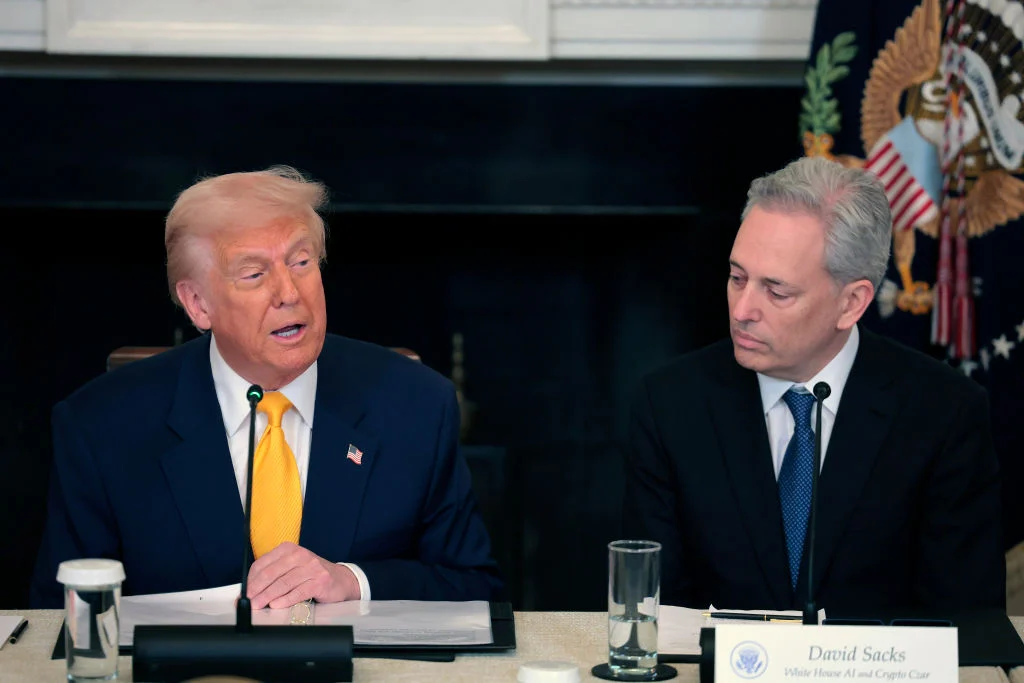
David Sacks, a prominent entrepreneur and investor, has concluded his tenure as Donald Trump’s special government employee focused on Artificial Intelligence and cryptocurrency. His 130-day stint, during which he served as a de facto “AI and crypto czar,” has come to an end, marking a significant shift in his role within the administration. Sacks confirmed this transition in a recent interview with Bloomberg, revealing that he will now co-chair the President’s Council of Advisors on Science and Technology (PCAST) alongside senior White House technology adviser Michael Kratsios. This new position, while still advisory, broadens Sacks’ purview to encompass a wider spectrum of technological issues, moving him from a direct policy-shaping role to a more strategic, recommendation-focused one.
"I think moving forward as co-chair of PCAST, I can now make recommendations on not just AI but an expanded range of technology topics," Sacks stated during a video interview with Bloomberg. "So yes, this is how I’ll be involved moving forward." This statement signifies a strategic pivot, allowing him to leverage his expertise across a more diverse technological landscape.
The implications of this transition are substantial. As AI czar, Sacks enjoyed a more direct line to President Trump and a more immediate influence on policy formulation. His new role as co-chair of PCAST places him within a federal advisory body. While PCAST plays a crucial role in studying complex issues, producing comprehensive reports, and submitting recommendations to higher authorities, it does not possess direct policymaking authority. This means Sacks will operate from a position further removed from the immediate levers of power in Washington D.C. compared to his previous role.
The President’s Council of Advisors on Science and Technology, with a lineage stretching back to the Franklin D. Roosevelt administration, has evolved significantly over the decades. Sacks, however, emphasized the unprecedented caliber of the current PCAST iteration, describing it as having "the most star power of any group like this" ever assembled. His assertion is difficult to dispute when examining the initial 15-member roster. This elite group includes titans of the technology industry such as Jensen Huang, CEO of Nvidia; Mark Zuckerberg, CEO of Meta; Larry Ellison, co-founder of Oracle; Sergey Brin, co-founder of Google; Marc Andreessen, a renowned venture capitalist; Lisa Su, CEO of AMD; and Michael Dell, founder of Dell Technologies, among other influential figures. The sheer concentration of wealth and technological acumen within this council is remarkable, underscoring the high-level attention being directed towards critical technological advancements.
Sacks indicated that the council’s agenda will be multifaceted, addressing key areas such as Artificial Intelligence, advanced semiconductors, quantum computing, and nuclear power. A primary focus in the immediate future will be to bolster President Trump’s national AI framework, which was released just last week. Sacks articulated that this framework is designed to address what he described as a fragmented and often contradictory regulatory environment at the state level. "You’ve got 50 different states regulating this in 50 different ways," he explained to Bloomberg, "and it’s creating a patchwork of regulation that’s difficult for our innovators to comply with." This initiative aims to create a more cohesive and supportive regulatory landscape for technological innovation within the United States.
The timing of this transition, and whether Sacks’ recent public statements played a role, remains a subject of subtle speculation. Earlier this month, during an episode of his popular podcast "All In," Sacks publicly advocated for the administration to seek a resolution to the U.S.-backed conflict with Iran. He detailed a series of escalating potential scenarios, including attacks on oil infrastructure in neighboring countries, the destruction of vital desalination plants, and the alarming possibility of nuclear use by Israel. His call was for a diplomatic and measured disengagement. In response to these remarks, President Trump told reporters that Sacks had not discussed the war with him, a statement that highlighted a potential disconnect between Sacks’ public commentary and his official advisory capacity. The ongoing U.S.-Iran conflict, which has been in effect for approximately 27 days at the time of this report, is a complex geopolitical issue with profound implications for global stability.
When pressed by Bloomberg regarding his podcast commentary, Sacks adopted a conciliatory stance, stating, "I’m not on the foreign policy team or the national security team." He clarified that his remarks on the podcast represented his personal views and not those of the administration. This distinction is crucial, emphasizing the boundaries of his advisory role and separating his personal opinions from official government positions.
Reflecting on the historical role of PCAST, it is essential to acknowledge its fluctuating influence across different administrations. While some iterations have been highly productive and impactful, others have had a more marginal effect. The Obama administration’s PCAST, for instance, is often cited as a benchmark for productivity, producing 36 reports over eight years. Notably, two of these reports led to tangible policy changes, including an FDA regulation that facilitated the market entry of over-the-counter hearing aids.
In contrast, President Trump’s first-term PCAST experienced a protracted period of formation, taking nearly three years to name its initial members. It produced a limited number of reports and left a less discernible mark on policy. President Biden’s PCAST, on the other hand, was characterized by a strong academic bent, comprising Nobel laureates, MacArthur fellows, and members of the National Academy. While it issued a modest number of reports, its tenure concluded with the administration’s end.
The current PCAST, under Sacks’ co-chairmanship, represents a departure from previous models. It is largely composed of individuals drawn directly from the executive leadership of the very companies that are at the forefront of technological development. This composition suggests a deliberate effort to integrate cutting-edge industry insights into the advisory process.
With his departure from the AI and crypto czar role, Sacks is now free to fully re-engage with his entrepreneurial and investment activities. A spokesperson for Craft Ventures, the firm he co-founded and where he remains a partner, has not yet responded to inquiries regarding his immediate future plans. This development follows TechCrunch’s reporting last year on the ethics waivers Sacks obtained, which permitted him to maintain financial stakes in AI and cryptocurrency companies while simultaneously advising the federal government on policy in these sectors. This arrangement drew significant scrutiny and criticism from ethics experts and lawmakers alike, raising questions about potential conflicts of interest and the blurring lines between public service and private financial interests. The question of how Sacks will navigate these ethical considerations in his new, broader advisory role on PCAST will undoubtedly be a point of interest for observers of technology policy and government ethics.
