
 By Lina Irawan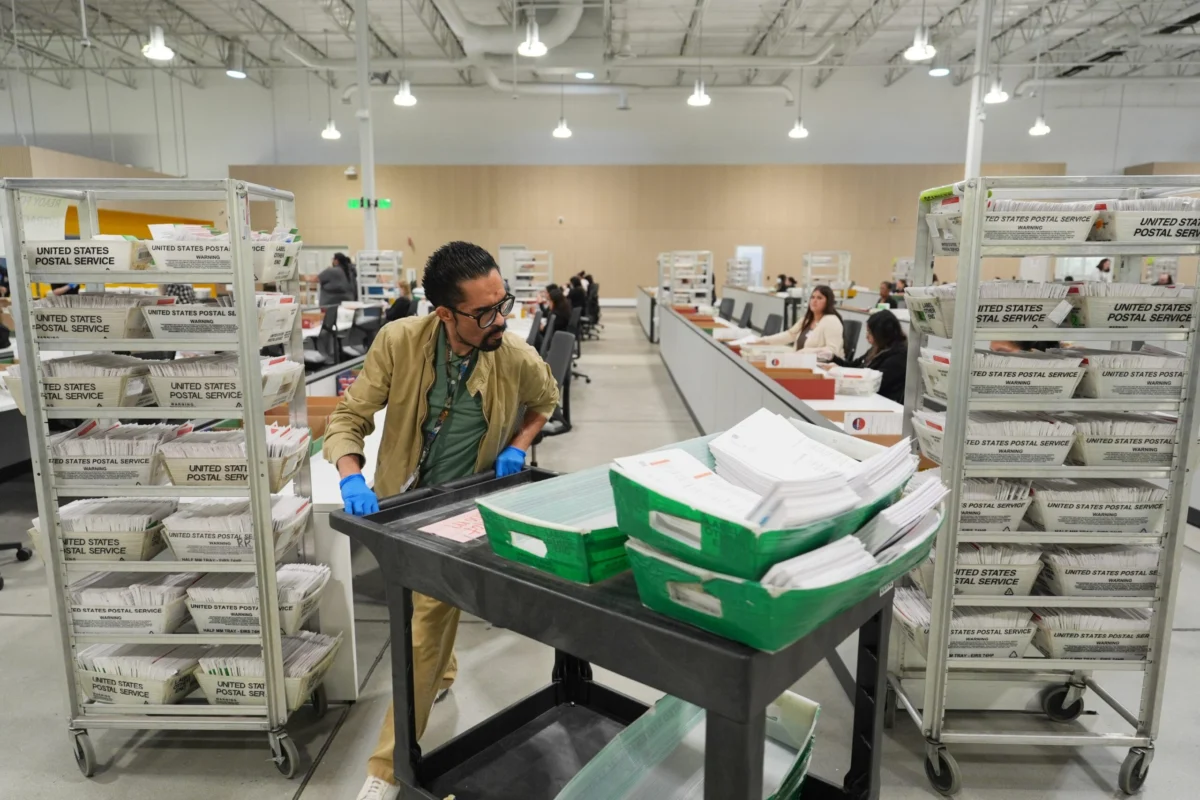
Nearly 150,000 California voters had their mail-in ballots rejected for the state’s June 2026 primary, marking a significant increase from recent election cycles. This surge in disqualifications occurs despite California’s ongoing legislative efforts to streamline the voting process, expand access, and ultimately boost voter participation while ensuring every eligible ballot is counted. The data, compiled by the Secretary of State’s office, reveals a complex interplay of voter behavior, logistical challenges, and evolving postal service policies that are inadvertently disenfranchising a notable segment of the electorate.
California has long garnered a reputation, often bordering on notoriety, for its ponderously slow vote counts. These protracted processes can stretch for weeks, sometimes even months, post-Election Day, drawing criticism and fueling skepticism. This slowness is largely an unintended consequence of a series of well-intentioned reforms enacted over the years. These changes, designed to enhance turnout and make voting more convenient, have paradoxically done little to significantly increase participation while simultaneously complicating the counting process. Among the most prominent of these reforms is the universal mail-in ballot system, where every registered voter automatically receives a ballot. Furthermore, the state allows mail-in ballots to be counted if they arrive at an election office up to seven days after Election Day, provided the envelope bears a postmark dated on or before Election Day. This generous weeklong grace period was specifically implemented to mitigate issues of mail delivery delays and maximize ballot inclusion.
Yet, even with such accommodating provisions, the primary driver behind the higher rejection numbers in the June 2026 primary was late-arriving ballots. According to the comprehensive data released by the Secretary of State’s office, a staggering 148,241 mail ballots were rejected in the June election. This represents a rejection rate of 1.73% of all mail ballots cast, a noticeable uptick from previous primaries. In terms of raw numbers, this figure is considerably higher than the 2024 primary, which saw 108,982 mail ballots rejected, or a rate of 1.56%. The 2022 primary recorded 105,818 voided mail ballots, a rate similar to 2024, further emphasizing the distinct increase observed in 2026.
The category of "lateness" alone accounted for a substantial 93,479 rejected ballots in June 2026, making it by far the largest reason for disqualification. This number represents a significant jump from approximately 70,000 late rejections in the 2022 primary and around 76,000 in the 2024 primary. While it’s important to note that overall turnout in the 2026 June primary was higher compared to those earlier elections, the proportional increase in late rejections remains a critical point of concern.
Kim Alexander, president of the nonpartisan California Voter Foundation, articulated a crucial distinction regarding these late rejections. "Ballots rejected due to lateness are caused primarily by being postmarked too late to count, not because they arrived too late to count," Alexander clarified in an email. This highlights a nuanced problem: it’s not just the physical delivery time, but the official postal stamp that dictates eligibility. Alexander suspects this issue, coupled with evolving postal procedures, might also be connected to a late surge in ballot submissions during the June primary. The election featured a particularly wide-open and often chaotic race for governor, which may have led many voters to delay their decisions and subsequently, their ballot submissions, until the final days leading up to Election Day. This last-minute rush could overwhelm postal services and contribute to delayed postmarks.
Rejection rates have historically fluctuated in California, influenced by various factors including election type, voter engagement, and procedural changes. However, the growing number of ballots set aside specifically for lateness in the 2026 primary, when compared to recent electoral cycles, "does really demand the question why this is happening," commented Mindy Romero, director of the Center for Inclusive Democracy, a nonpartisan research group dedicated to understanding and improving democratic participation. This rising trend suggests systemic issues beyond individual voter error, pointing towards potential weaknesses in the voting infrastructure or external factors impacting the process.
Lawmakers Concerned About USPS Postmark Changes
A significant external factor under scrutiny is the U.S. Postal Service (USPS) and recent changes to its mail-processing protocols. In January 2026, a bipartisan group of U.S. senators, predominantly Democrats, collectively penned a letter to the USPS, expressing deep alarm that new mail-processing adjustments could adversely affect postmark dates for mail-in ballots during a critical election year, especially one that will determine control of Congress.
The updated agency policy indicates that postmarks might no longer precisely reflect the initial day the Postal Service received a piece of mail. Instead, the postmark could indicate the day the mail was handled at one of its centralized processing centers. Compounding this issue, the USPS has undertaken recent consolidations of these processing centers, making them increasingly distant from certain communities. This geographical shift has the potential to introduce further delays in the application of official postmarks, pushing them past crucial election deadlines, even if a voter dropped their ballot in a mailbox well before Election Day.
The concerns are not isolated to California. In April 2026, two prominent Wisconsin Democrats, U.S. Senator Tammy Baldwin and Governor Tony Evers, publicly urged the Postal Service to address severe delays that led to hundreds of ballots arriving after Election Day in their state’s primary. While not directly related to the California rejections, these instances underscore a broader national anxiety among election officials and lawmakers regarding the reliability of postal services for election mail. Furthermore, in June 2026, a federal judge halted an executive order issued by former President Donald Trump that aimed to create a federal voter list and restrict who could receive a mail ballot. While this legal action pertains more to voter eligibility than ballot rejection mechanisms, it reflects the intense political climate surrounding mail-in voting and ongoing efforts to shape its future.
Anticipating potential complications, California election officials had proactively urged voters earlier in 2026 to mail their ballots well in advance of Election Day, specifically warning that the impending Postal Service changes could lead to slower mail delivery and processing times. This foresight, however, did not fully prevent the significant number of late rejections, suggesting that either the message did not reach all voters effectively or the postal delays were more pervasive than anticipated.
Examining the geographic distribution of ballot rejections in California, some counties experienced disproportionately high rates in June 2026. Tulare County, situated in the agriculture-heavy Central Valley, recorded the highest mail ballot rejection rate at 3.52%. It was closely followed by Alpine County, a sparsely populated region south of Lake Tahoe, and Merced County, also in the Central Valley, both of which notched a 3.36% rejection rate. These regional disparities could be attributed to various factors, including differences in local postal service infrastructure, socioeconomic demographics, access to alternative voting methods like drop boxes, or the effectiveness of local voter education campaigns. Rural areas, in particular, may face longer mail transit times due to fewer processing centers and less frequent mail pickup.
Beyond Lateness: Other Reasons for Rejection
While lateness was the dominant factor, other issues also contributed significantly to the 2026 June primary’s rejection count. Nearly 44,000 ballots were set aside because the voter’s signature on the return envelope did not adequately match the signature on file with county election officials. This "signature mismatch" is a common reason for rejection, often affecting elderly voters whose signatures may change over time, or first-time voters whose initial registration signature might differ from their current one. California, like many states, has a "ballot curing" process where voters are notified of a signature discrepancy and given an opportunity to correct it, but this process relies on voters receiving and responding to the notification in time.
Additionally, over 8,300 ballots were rejected simply because there was no signature whatsoever on the returned ballot envelope. This often points to simple oversight or a lack of understanding of the ballot return instructions. In 743 instances, a mail ballot was voided because the voter had already cast a ballot, typically either in person or via an earlier submitted mail ballot. This indicates robust system checks in place to prevent double voting. Other, less frequent reasons for rejection included a ballot being missing from the return envelope entirely, or the unusual circumstance of multiple ballots being sent back in a single envelope.
It is important to note that the data released by the Secretary of State’s office did not break down the uncounted ballots by party registration, leaving open questions about the partisan impact of these rejections. However, historical analyses often show that certain demographics, including younger voters, first-time voters, and those from lower-income backgrounds, can be disproportionately affected by procedural issues, including late submissions or signature challenges.
National Context and the Integrity of Mail Voting
California’s challenges with vote counting and ballot rejections exist within a broader national context, particularly concerning the integrity and efficiency of mail-in voting. While states like Florida and Texas, with their large populations, are often lauded for their ability to quickly finalize vote counts, California remains a national laggard. This perception of inefficiency has made the state a target for political criticism. Following the June 2026 primary, former President Donald Trump seized upon California’s reputation for slow vote counting to renew his long-standing criticism of the state’s electoral processes. Concurrently, the Republican administration’s Department of Justice launched an investigation into Los Angeles County’s elections, though the specific focus and findings of that investigation remain to be seen.
Despite these political attacks and the current challenges, there is no credible indication of widespread problems with the fundamental security of mail voting itself. Mail-in voting has steadily gained popularity across the political spectrum, appealing to both Democrats and Republicans for its convenience and accessibility. A comprehensive report published by the Brookings Institution in 2025 unequivocally found that the number of cases of mail voting fraud was minuscule—approximately four cases per 10 million mail ballots cast. This robust evidence consistently refutes claims of widespread fraud, underscoring that the issues California faces are primarily logistical and administrative, rather than indicative of systemic insecurity.
To address the escalating rejection rates and enhance voter confidence, California officials may need to consider several strategic interventions. Enhanced voter education campaigns, clearly articulating mailing deadlines and the critical importance of timely postmarks, could be invaluable. These campaigns should explicitly warn voters about potential USPS delays and encourage submission well in advance. Furthermore, increased advocacy with the USPS for clearer policies regarding election mail handling, or even dedicated election mail processing, could help mitigate future issues. Expanding the network of secure ballot drop boxes and increasing the availability of early in-person voting options would also reduce reliance on the postal service, offering voters more flexible and reliable submission methods. Finally, a thorough review of the existing ballot curing processes, exploring ways to make them more efficient and accessible for voters to correct discrepancies, is essential to ensure that every eligible vote ultimately counts.
The significant spike in rejected mail-in ballots for California’s June 2026 primary serves as a critical reminder of the ongoing challenges in balancing voting accessibility with the accurate and efficient counting of every vote. As California continues to champion voter access through reforms like universal mail-in ballots, it must also proactively address the logistical complexities and external factors that inadvertently disenfranchise nearly 150,000 voters in a single primary election. The integrity of the electoral process hinges not only on making it easy to vote but also on ensuring that every valid ballot cast is ultimately counted.
