
 By admin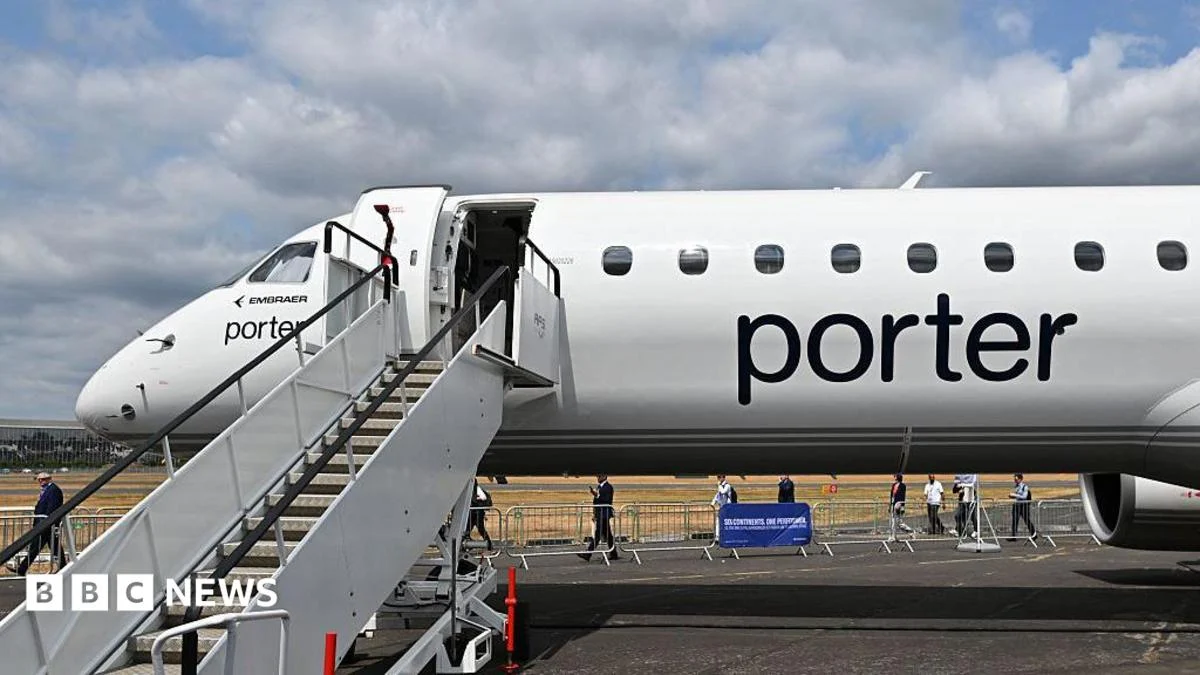
A routine Porter Airlines flight bound for Toronto from Victoria on August 6th was dramatically pulled back to the terminal, not by mechanical failure or weather, but by a child’s refusal to buckle their seat belt. This singular act of defiance, described by the airline as a "young child was standing in their seat and would not secure their seat belt," triggered a cascade of events, including a significant delay that ultimately forced the entire flight’s passengers to be rebooked for the following day due to a midnight runway closure. The incident has not only disrupted travel plans but has also ignited a passionate and polarized debate across Canada and beyond regarding the delicate balance between child passenger safety, parental responsibility, and airline operational protocols.
Porter Airlines, in its official statement, highlighted the unsuccessful attempts by both the accompanying parent and the flight crew to resolve the situation. "Attempts by the accompanying parent and crew to address this were unsuccessful," the airline stated. This lack of resolution directly impacted flight operations. "The aircraft could not take off in this unsafe condition, so the crew elected to return to the terminal and have the two passengers disembark." The decision, while seemingly drastic, is firmly rooted in established aviation safety regulations. Unrestrained occupants, particularly children, pose a significant risk during critical flight phases such as takeoff and landing.
Child aviation safety expert Lia Tuso, speaking to the BBC, unequivocally supported the Porter crew’s decisive action. Her perspective underscores the critical importance of seat belt compliance for all passengers, irrespective of age. "Unrestrained children can become projectiles," Tuso explained, drawing a stark parallel to unsecured luggage. In the event of unexpected turbulence, severe braking, or sudden maneuvers, loose objects and unbuckled individuals can be violently propelled through the cabin, inflicting serious injury upon themselves and other passengers. The forces experienced during an emergency deceleration can be immense, far exceeding a child’s ability to brace themselves or remain stationary. Tuso’s comments emphasize that the crew’s primary responsibility is the safety of everyone on board, and their decision was a proactive measure to prevent a potentially catastrophic situation.
The incident quickly became a focal point for online discussions, fracturing public opinion on the extent of airline tolerance for traveling families and the degree of parental enforcement required for air travel regulations. A vocal segment of commentators argued that the disruption was a direct consequence of overly permissive parenting, with some suggesting that a more stringent approach, including physical discipline, would have prevented the situation. This viewpoint was echoed on Fox News’s morning program, where co-host Charles Hurt expressed his support for such measures, stating, "We’ve all been those parents. But this is beyond the pale." This perspective often centers on the idea that children need to be taught to comply with rules, especially in environments where their behavior can have far-reaching consequences.
Conversely, another significant portion of the public and online discourse highlighted the complexities of traveling with children, particularly those who may experience fear or anxiety related to flying. These individuals argue that children’s actions are not always born out of malice or defiance but can stem from genuine fear. Aryeh Kozuch, a passenger on the ill-fated Porter flight, offered a different account of the child’s behavior to CBC News. He described the child as not unruly but rather appearing scared, stating, "They just kept hiding under their seat. If they got forced into [being] strapped in, they just kind of slid out underneath." This nuanced perspective suggests that a one-size-fits-all approach to enforcing rules might not always be effective or appropriate, and that understanding a child’s emotional state is crucial. The challenge for flight crews lies in distinguishing between deliberate non-compliance and genuine distress, a task that can be incredibly difficult in the high-pressure environment of an aircraft preparing for departure.
The debate also broadened to question the necessity of removing an entire flight of passengers due to the actions of a single family. Many voiced the opinion that the family, and the child, should have been discreetly removed from the flight, thus minimizing disruption for the other passengers. This sentiment is fueled by recollections of similar incidents that have garnered significant media attention.
One such case occurred in 2018 when a father and daughter were filmed being escorted off a Southwest Airlines flight from Chicago to Atlanta. According to a passenger who captured the event on video, the child had calmed down from an earlier tantrum and was seated quietly for over five minutes before the crew informed the father they would be removed. Southwest Airlines, in response to the incident, stated that initial reports indicated "a conversation escalated onboard between the crew and a customer travelling with a small child." While the airline did not provide specific details about the nature of the escalation, the incident sparked widespread criticism regarding the perceived heavy-handedness of the airline’s actions.
A similar, and perhaps more widely publicized, incident involved JetBlue in 2012. A family was removed from a flight after a dispute over a child’s seat belt, leading to accusations of a "lack of humanity" from the family involved. The airline, JetBlue, defended its decision by stating that "customers did not comply with crew member instructions for a prolonged time period." They further emphasized that "The captain elected to remove the customers involved for the safety of all customers and crew members on board." These past events serve as historical precedents that inform the current debate, highlighting recurring tensions between passenger rights, airline policies, and the practicalities of managing difficult situations in the skies.
The core of the ongoing discussion revolves around several key points: the absolute necessity of safety regulations in aviation, the evolving understanding of child behavior and parental challenges, and the operational realities faced by airlines. Aviation safety is paramount and non-negotiable. Regulations such as mandatory seat belt use are not arbitrary rules but are based on decades of research and experience to mitigate risks during all phases of flight. The Federal Aviation Administration (FAA) in the United States, and Transport Canada in Canada, have stringent guidelines for child passenger safety, often aligning with international standards. These regulations are designed to protect not only the child but also every other person on board.
However, the application of these rules in real-time situations with young children presents unique challenges. Children’s developmental stages vary significantly, and their capacity for understanding and complying with abstract rules can be limited. Furthermore, factors like jet lag, unfamiliar environments, and underlying anxieties can exacerbate a child’s resistance. The question then becomes how airlines can enforce safety protocols while also demonstrating empathy and flexibility towards families.
Expert opinions, like that of Lia Tuso, provide a critical framework for understanding the safety imperative. The physics of flight and the potential for sudden movements mean that any unsecured object, including a child, can become a dangerous projectile. This is not a matter of parental preference but a fundamental safety requirement. The forces involved in an emergency landing or severe turbulence can be several times the force of gravity, making it impossible for an unbuckled person to maintain their position.
The debate also touches upon the concept of "air rage" and the increasing challenges faced by flight crews in managing passenger behavior. While the majority of passengers are cooperative, a small percentage can create significant disruptions. Airlines are tasked with balancing the needs of the many with the challenges posed by the few, all while adhering to strict safety mandates. The decision to divert or delay a flight is never taken lightly, as it incurs significant costs and inconveniences for all involved. However, when safety is compromised, such decisions become unavoidable.
The incident on the Porter Airlines flight serves as a microcosm of a larger societal discussion about parenting in public spaces, the role of authority figures, and the expectations placed upon both parents and children in environments governed by strict rules. It raises questions about whether airlines should have more resources or training to de-escalate situations involving children, or if the onus lies entirely on parents to ensure their children are prepared and compliant before boarding.
Looking ahead, the ongoing dialogue is likely to push for clearer guidelines and perhaps more consistent training for airline crews on handling child-related safety issues. It may also encourage greater awareness and preparation among parents traveling with young children, emphasizing the importance of discussing flight rules and expectations with them beforehand. Ultimately, the goal is to find a harmonious balance that prioritizes safety while acknowledging the inherent challenges of air travel with children, ensuring that future flights are both secure and as smooth as possible for all passengers. The incident, though disruptive, has undeniably brought a critical aspect of air travel – the safety and well-being of its youngest passengers – to the forefront of public consciousness.
