
 By Isnaini Azizah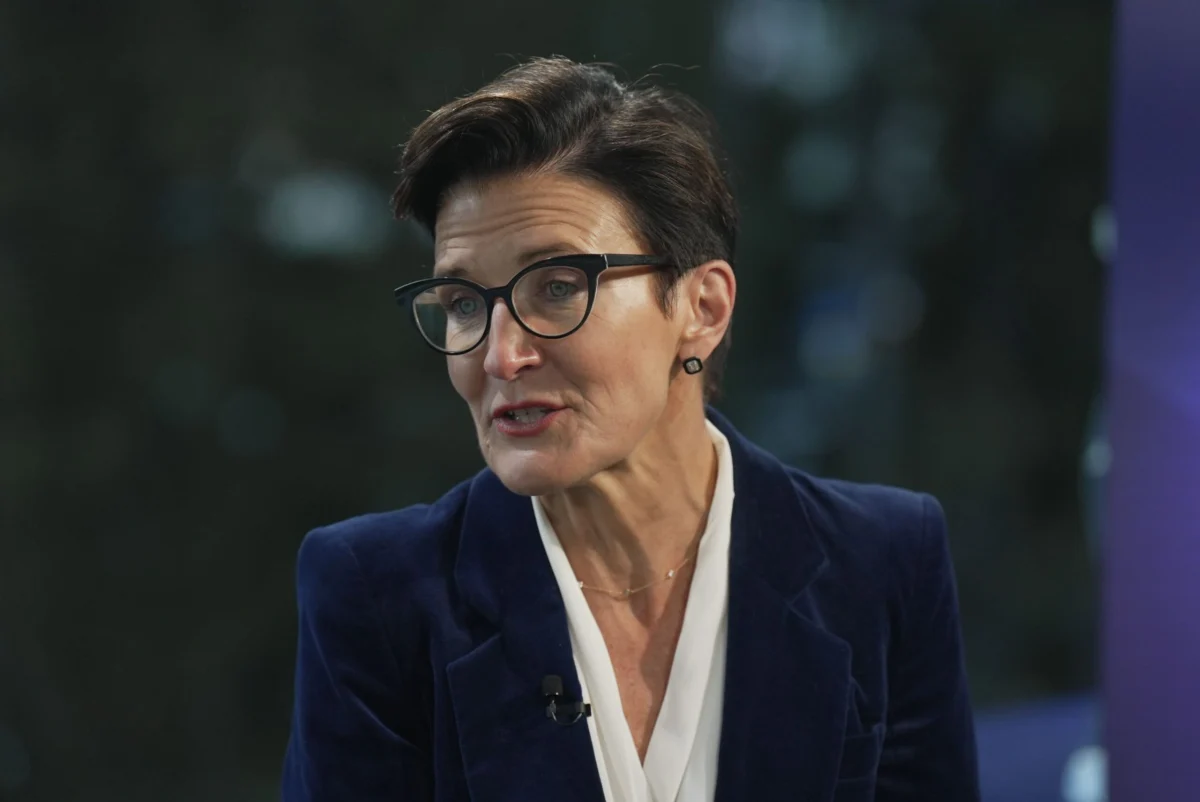
Citigroup delivered a powerhouse performance in the first quarter of 2026, reporting financial results that significantly outpaced Wall Street’s expectations and signaled a definitive turning point for the nation’s most global lender. In a report released Tuesday, the New York-based banking giant revealed its strongest quarterly revenue in over ten years, bolstered by a massive 56% year-over-year jump in earnings per share. These results serve as a robust validation of CEO Jane Fraser’s multi-year restructuring plan, which has sought to simplify the bank’s sprawling architecture, exit low-margin international markets, and refocus on high-return services and wealth management.
The bank’s Return on Tangible Common Equity (ROTCE), a critical barometer of how effectively a bank uses its shareholders’ capital to generate profit, surged to 13.1%. This figure not only represents the highest level of profitability for the firm since 2021 but also comfortably exceeds Citigroup’s own medium-term target of 10% to 11%. Speaking earlier this year at the World Economic Forum in Davos, Switzerland, Jane Fraser had hinted at the bank’s growing momentum, a sentiment she echoed in Tuesday’s earnings statement. Fraser noted that the firm is firmly on track to sustain its ROTCE targets throughout the fiscal year, emphasizing that the "organizational simplification" phase is nearing its conclusion. According to Fraser, the bank has entered the final stages of its international divestitures, with approximately 90% of its internal transformation programs now reaching their "target state."
The market’s reaction to Citigroup’s trajectory has been overwhelmingly positive throughout the early months of 2026. Citigroup’s stock has emerged as the top performer among the "Big Four" American banks year-to-date, a notable shift for a company that has historically traded at a significant discount to its tangible book value compared to peers like JPMorgan Chase and Bank of America. Analysts attribute this rally to a combination of improved operational efficiency and a "catch-up" effect, as investors begin to price in the success of the bank’s turnaround efforts. For years, Citigroup was viewed as a complex, undervalued laggard; however, the Q1 data suggests that the "Fraser Era" is successfully narrowing the valuation gap by demonstrating consistent, scalable growth.
A primary engine of the first-quarter beat was Citigroup’s Markets division, which capitalized on heightened market activity and strategic positioning. The fixed income division, traditionally a cornerstone of Citi’s institutional business, saw revenue climb 13% to $5.2 billion. Even more impressive was the performance of the equities trading desk, which saw a staggering 39% jump in revenue to $2.1 billion. This surge in equities suggests that Citi is successfully gaining market share from rival investment banks, leveraging its global footprint to facilitate complex trades for institutional clients. While the broader investment banking sector remained somewhat subdued—coming in slightly below analyst estimates—the equity underwriting sub-sector provided a silver lining, beating expectations as the initial public offering (IPO) market showed signs of a sustained thaw.
Perhaps the most significant "quiet" success in the report was the performance of the Services unit. Often described by analysts as the "crown jewel" of Citigroup, the Services division provides treasury, trade solutions, and securities services to multinational corporations and governments. In Q1 2026, the unit reported a 17% increase in revenue, reaching $6.1 billion and surpassing Wall Street’s forecasts. This segment is highly valued by investors because it generates recurring, fee-based income that is less volatile than trading or investment banking. The growth in Services underscores Citigroup’s unique competitive advantage: its ability to move money across more than 90 countries, a capability that few other financial institutions can match.
Despite the celebratory headlines, the earnings report also highlighted the ongoing costs of Citigroup’s massive overhaul. Expenses for the quarter rose by 7%, driven largely by severance packages associated with the bank’s previously announced headcount reductions and the impact of foreign exchange translation. Citigroup has been aggressive in trimming its workforce to eliminate layers of management, a move intended to make the bank more agile. While these severance costs weigh on the current bottom line, management views them as necessary investments to achieve a lower, more sustainable "run-rate" for expenses in the future.
Furthermore, the bank’s provision for credit losses came in higher than some analysts had projected. Citigroup set aside an additional $579 million in an allowance for credit loss build, primarily due to rising net credit losses within its U.S. consumer card business. As interest rates remain at historically elevated levels, the "lower-end" consumer has begun to show signs of stress, leading to higher delinquency rates in branded cards and retail services. This trend is not unique to Citigroup, but given the bank’s large credit card portfolio, it remains a focal point for risk managers. However, the bank noted that gains in its Citigold and retail banking segments helped offset some of these pressures, as higher-net-worth clients continued to exhibit strong spending and deposit behavior.
The regulatory landscape remains another critical variable for the firm. For years, Citigroup has operated under several consent orders from the Federal Reserve and the Office of the Comptroller of the Currency (OCC) related to "long-standing deficiencies" in data governance, risk management, and internal controls. These regulatory hurdles have forced the bank to spend billions on technology and compliance infrastructure. In the Q1 announcement, the bank reiterated that it expects to complete the bulk of the work required by these consent orders by the end of 2026. Reaching this milestone would be a watershed moment for the bank, as it would likely lead to a reduction in compliance-related spending and potentially clear the way for more aggressive share buybacks and dividend increases.
From a macroeconomic perspective, Citigroup’s global footprint remains a double-edged sword. While its international presence drives the success of its Services and Markets divisions, it also leaves the bank more exposed to geopolitical instability than its more domestic-focused peers. Ongoing conflicts in Europe and the Middle East, coupled with shifting trade dynamics in Asia, require Citigroup to maintain a sophisticated risk-mitigation strategy. However, Jane Fraser’s strategy of exiting 14 consumer markets—including the high-profile divestiture of Banamex in Mexico—has significantly reduced the bank’s exposure to volatile retail markets abroad, allowing it to focus its international capital on institutional banking where it holds a dominant position.
Industry experts are closely watching how the "reconfigured" Wealth and U.S. Consumer divisions perform in the coming quarters. During Q1, Citigroup adjusted the reporting structure of these units to better align with its new organizational model. While this made direct year-over-year comparisons difficult for some analysts, the underlying data showed positive momentum in Citigold, the bank’s premium banking tier. By targeting the "affluent" segment—clients with $200,000 to $10 million in assets—Citigroup is attempting to build a high-margin wealth management business that bridges the gap between retail banking and private banking.
As the "developing story" of Citigroup’s 2026 performance unfolds, the primary takeaway for the financial community is one of execution. For the first time in years, the bank is not just talking about a turnaround; it is producing the data to prove it. The 13.1% ROTCE is a powerful signal to the market that Citigroup can be a highly profitable enterprise if it remains disciplined. With the "final phase" of divestitures underway and the majority of transformation programs nearing completion, the bank is transitioning from a period of defensive restructuring to one of offensive growth.
Looking ahead to the remainder of the year, investors will be focused on whether the bank can maintain its momentum in the Markets division if volatility subsides, and whether the U.S. consumer can weather the impact of high interest rates without a spike in defaults. If Citigroup can navigate these headwinds while finally putting its regulatory issues in the rearview mirror, the "New Citi" envisioned by Jane Fraser may finally become a reality, permanently altering the competitive landscape of global finance. For now, the first-quarter results stand as a testament to a strategy that is finally firing on all cylinders, turning one of the most complex financial institutions in the world into a leaner, more profitable, and more focused competitor.
