
 By Lina Irawan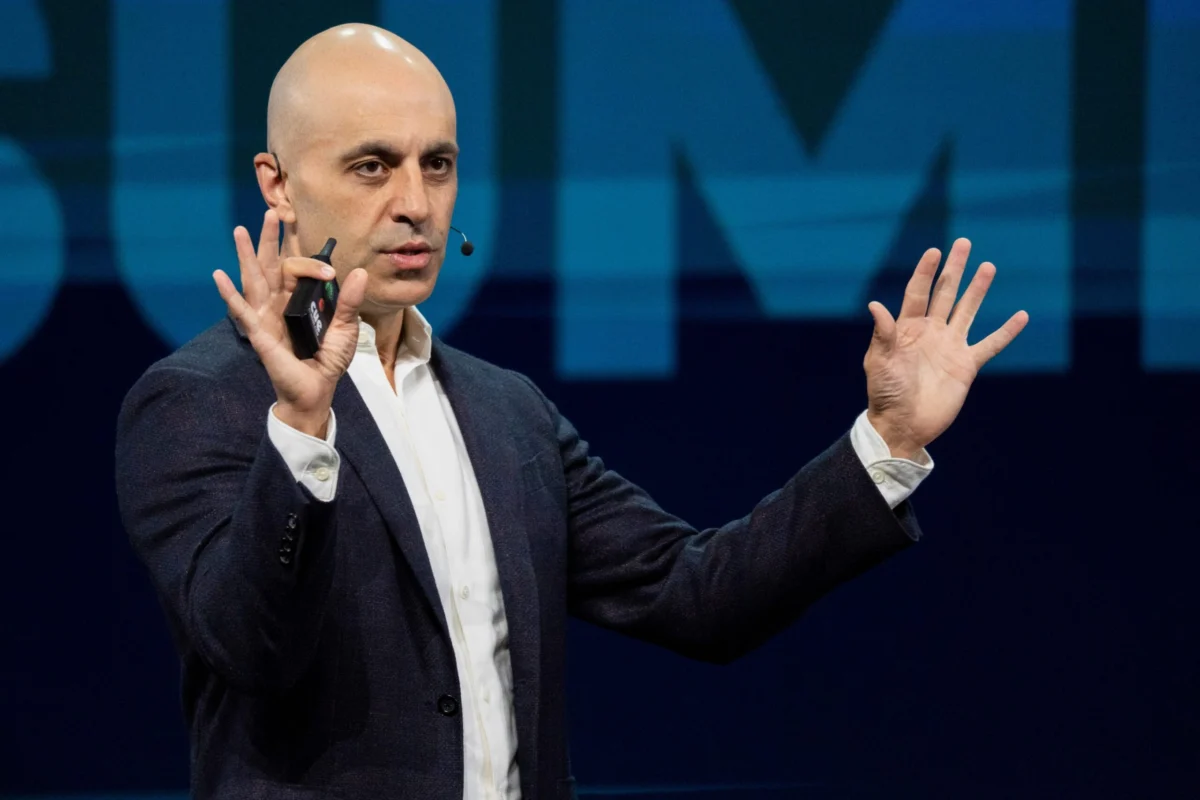
With a staggering valuation of $190 billion, Databricks has rapidly ascended to become one of Silicon Valley’s most significant and fastest-growing software companies. Specializing in data and AI, particularly its innovative "Lakehouse Platform" which unifies data warehousing and data lakes, Databricks empowers enterprises to manage, process, and analyze massive datasets for advanced analytics and machine learning. Its rapid expansion underscores a critical question for leaders: how do you scale a company at such an exponential rate without succumbing to the inherent complexities and bureaucratic bloat that often accompany hypergrowth? According to CEO Ali Ghodsi, the answer isn’t about packing more meetings into the schedules of his top talent; it’s precisely the opposite – ensuring they aren’t trapped in conference rooms all day.
Ghodsi articulated this philosophy on a recent episode of the Long Strange Trip podcast, stating, "I try to compress the calendar. What I mean by that is I try to put nothing on the calendar. It ends up being packed anyway, but there are many blocks that are free where I can go back to this main thing." This seemingly simple approach belies a sophisticated understanding of executive productivity and strategic focus, distinguishing between mere activity and genuine progress. For Ghodsi, a clear calendar isn’t an empty calendar; it’s an opportunity for deep work and problem-solving, a stark contrast to the back-to-back meeting culture prevalent in many organizations.
The "main thing" Ghodsi refers to is identified during highly focused, recurring meetings. Every Monday, Wednesday, and Friday at 8 a.m., Ghodsi and his core team convene to pinpoint the single biggest bottleneck confronting the company. This isn’t a status update meeting; it’s a strategic intervention designed to collaboratively dismantle the most pressing obstacle hindering Databricks’ progress. "I want to unblock that big thing that I think is the thing that’s going to get us 10x," he explained. This laser-like focus on singular, high-impact problems allows the leadership team to channel their collective energy and resources towards breakthroughs that truly accelerate growth, rather than dissipating it across a multitude of smaller, less critical issues.
Beyond these critical thrice-weekly sessions, Ghodsi actively resists the proliferation of other meetings on his schedule. He views a day crammed with consecutive meetings as not only exhausting but a profound loss of control over his own agenda. "I think if I do the 8 a.m. back-to-back-to-back-to-back-to-back-to-5 or 6 p.m., I consider those days I’ve just been a slave to my calendar. I’m just working for my calendar," he lamented. Such days, he argues, transform a leader from a strategic architect into a reactive administrator, merely responding to others’ demands and priorities – or, as he colorfully puts it, carrying "monkeys on my back." This sentiment resonates deeply within the executive suite, where the demand for strategic thinking often clashes with the relentless pull of operational minutiae disguised as collaborative meetings.
Databricks, through Ghodsi’s leadership, is championing a cultural shift that prioritizes focused work and strategic execution over the default assumption that more meetings equate to more collaboration or productivity. This stance is particularly poignant in an era where digital communication tools have made it easier than ever to schedule meetings, often leading to a paradoxical decrease in actual work getting done. The company’s impressive growth trajectory suggests that this approach isn’t just a personal preference but a vital component of its operational excellence.
Ghodsi’s perspective is not an isolated one; it mirrors a growing chorus of concerns among top executives who are pushing back against the prevailing culture of unnecessary meetings and poor meeting etiquette. In today’s hyper-competitive business landscape, where agility and rapid decision-making are paramount, the temptation to convene a meeting for every problem, inviting a broad array of stakeholders, is strong. However, this often leads to the very inefficiencies it aims to combat. Meetings can quickly devolve into time sinks, filled with aimless small talk, meandering discussions, and an overreliance on corporate jargon that obscures rather than clarifies.
Compelling data supports this executive skepticism. A 2024 survey conducted by software giant Atlassian, a company whose tools are designed to facilitate collaboration, revealed a stark reality: nearly three out of four meetings are deemed ineffective at disseminating information. Even more concerning, for 77% of respondents, meetings don’t solve problems; they simply create more meetings. This vicious cycle traps employees and leaders alike in an endless loop of discussions that yield minimal tangible output, eroding productivity, stifling innovation, and contributing to widespread meeting fatigue. The opportunity cost of these ineffective sessions is immense, representing countless hours that could otherwise be dedicated to deep work, strategic planning, product development, or customer engagement.
Even at more established corporations, leaders are echoing Ghodsi’s concerns that calendars choked with meetings are significant impediments to actual work. Bob Jordan, CEO of Southwest Airlines, cautioned last year that leaders can easily fall into the trap of mistaking busyness for effectiveness. Speaking at The New York Times DealBook Summit in December 2025, Jordan observed, "When you first start, it’s easy to confuse busyness and going to meetings with leadership… Because what we all find, I’m sure, is there’s no time to ‘work,’ and you confuse going to meetings with the work." His words underscore a critical distinction between performing tasks and truly leading, which requires dedicated time for reflection, foresight, and strategic thought, free from constant interruption.
United Airlines CEO Scott Kirby has taken an even more concrete approach to safeguard his time and promote efficiency. He imposes a strict cap of four hours of meetings per day and enforces stringent rules for when a meeting is convened. In a recent interview with Semafor, Kirby elaborated on his meeting philosophy: "My meetings are also quick, and my meetings are almost all conversational. I want to talk—really, don’t go through decks. If you want to send a deck, send it to me in advance, and then we’re just going to talk about it. But you’re not going to read slides to me." This approach forces participants to engage actively, come prepared, and focus on discussion and decision-making rather than passive information consumption, thereby maximizing the value of the limited time together.
Perhaps no CEO has been more direct in his disdain for inefficient meetings than JPMorgan Chase CEO Jamie Dimon. In his 2024 letter to shareholders, a widely read document offering insights into his management philosophy, Dimon’s advice was unequivocal: "Kill meetings." However, his directive isn’t a call to eliminate all collaboration, but rather to elevate the quality and purpose of the meetings that do occur. He demands that meetings be treated with the same rigorous focus and preparation as any other critical work. Speaking at Fortune’s 2025 Most Powerful Women summit, Dimon outlined his expectations: "When I go to a meeting, I’ve done the pre-reads, and you get 100% of my attention." He added a clear zero-tolerance policy for distraction, stating, "None of this nodding off, none of this reading my mail. If you have an iPad in front of me and it looks like you’re reading your email or getting notifications, I tell you to close the damn thing. It’s disrespectful." Dimon’s stance emphasizes mutual respect for time and the importance of active, engaged participation for any meeting to be truly productive.
The collective pushback from these high-profile leaders signals a broader shift in corporate culture. The traditional view of meetings as the default mode of collaboration is being challenged by a recognition that unstructured, poorly managed meetings are significant drains on organizational energy and resources. This re-evaluation is driven by several factors: the accelerated pace of business demanding faster, clearer decision-making; the increased complexity of global operations requiring deep strategic insight; and the widespread adoption of asynchronous communication tools that offer more efficient alternatives for information sharing.
For companies striving for innovation and growth, cultivating a culture that respects employees’ time and prioritizes focused work is paramount. This involves not just executive mandates but also empowering teams to question the necessity of meetings, enforce strict agendas, limit attendee lists to only essential participants, and utilize pre-reads effectively. It also means fostering environments where asynchronous communication via platforms like Slack, Teams, or project management software can handle routine updates, freeing up precious synchronous time for critical problem-solving and strategic alignment.
In conclusion, the strategies employed by Ali Ghodsi at Databricks, echoed by industry titans like Bob Jordan, Scott Kirby, and Jamie Dimon, represent a vital evolution in executive leadership. They highlight that true productivity and hypergrowth aren’t born from endless hours spent in conference rooms, but from disciplined focus, strategic prioritization, and a profound respect for the irreplaceable value of uninterrupted work. As businesses navigate an increasingly complex and competitive landscape, the ability to "compress the calendar" and dedicate time to the "main thing" will likely become an even more defining characteristic of successful, innovative organizations. The future of work, it seems, hinges not on more meetings, but on smarter, fewer, and far more impactful ones.
