
 By admin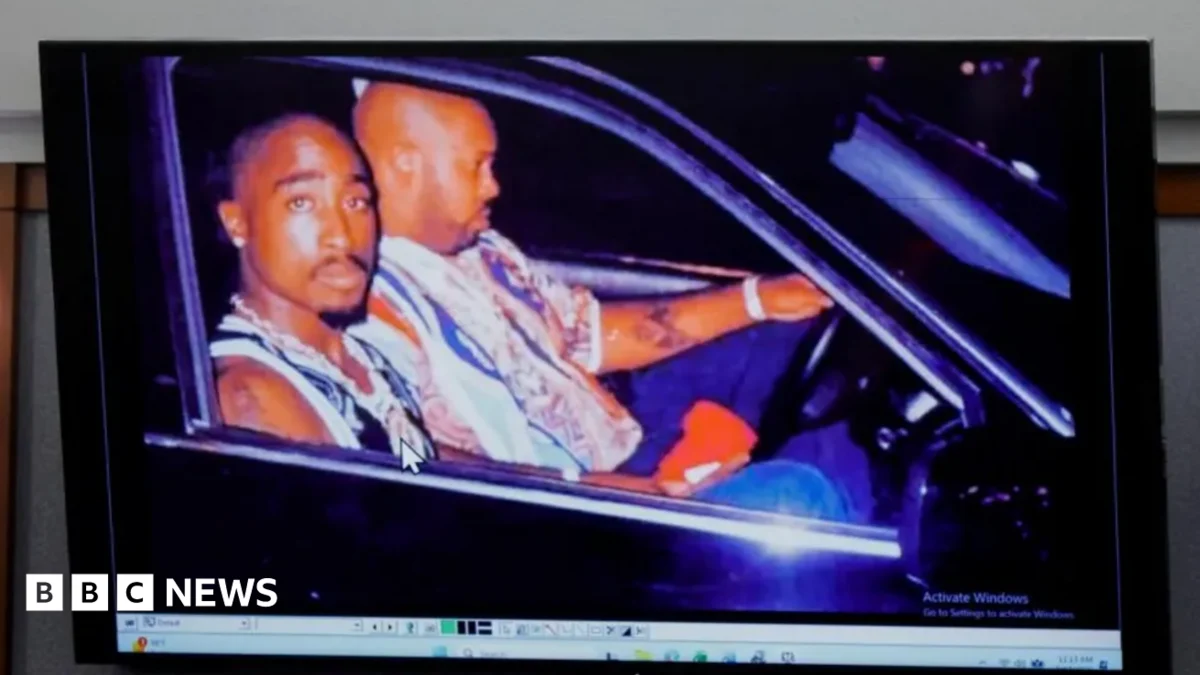
In a landmark verdict that has sent reverberations through the music industry and legal world, Duane "Keffe D" Davis, a former leader of the South Side Compton Crips, has been convicted of orchestrating the assassination of rap icon Tupac Shakur. The 63-year-old was found guilty of one count of murder with a deadly weapon by a Las Vegas jury, bringing to a close a nearly three-decade-long investigation into one of hip-hop’s most enduring mysteries. The conviction represents the first time anyone has been held criminally responsible for Shakur’s death, a cold case that has fueled countless theories and captivated fans worldwide for nearly 30 years.
The jury’s decision, delivered on Monday, concluded a trial that meticulously laid out the prosecution’s case, painting Davis as the mastermind behind the fatal 1996 drive-by shooting. Dressed in a somber black suit, Davis remained stoic in the Las Vegas courtroom as the verdict was announced. His immediate reaction, however, was a declaration of intent to appeal, a sentiment acknowledged by the judge and later echoed by legal experts.
Central to the prosecution’s argument was a 2008 police interview recording played for the jury. In the interview, Davis admitted to being present in the vehicle from which the shots were fired, though he maintained he did not personally pull the trigger that ended Shakur’s life. This admission, coupled with testimony from former associates and law enforcement, formed the bedrock of the case against him. Prosecutors contended that while Davis may not have been the shooter, his role as the orchestrator – identifying Shakur as a target, planning the ambush, and supplying the weapon – made him culpable for murder. His nephew, Orlando Anderson, was identified by the prosecution as the individual who fired the fatal shots. Anderson, who died in an unrelated shooting in 1998, had consistently denied any involvement in Shakur’s murder.
The emotional weight of the verdict was palpable in the courtroom. As the guilty verdict was read, Shakur’s relatives, who had followed the proceedings closely, held hands, with some embracing and tears flowing freely. The slain rapper was just 25 years old at the time of his death, at the zenith of his career and widely recognized as one of the most influential voices in rap music. His posthumous sales have surpassed an astounding 75 million records globally, a testament to his enduring legacy and the profound impact of his music.
For nearly three decades, the unsolved murder of Tupac Shakur stood as one of America’s most notorious cold cases. The lack of a conviction allowed a fertile ground for speculation, with numerous conspiracy theories emerging, ranging from rivalries within the hip-hop community to alleged involvement of law enforcement. Davis’s conviction finally provides a definitive legal resolution, though the complex web of events surrounding Shakur’s death continues to be a subject of intense scrutiny.
The defense team, led by attorney Michael Sanft, mounted a vigorous challenge to the prosecution’s narrative. They sought to persuade the jury that Davis’s incriminating statements, particularly those made in the 2008 interview, were not confessions but rather embellished tales spun for personal gain. Sanft argued that Davis was a "liar" whose primary motivation was to profit from his connection to the Shakur murder, primarily through the sale of his book, "The Life and Death of Tupac Shakur." During his closing arguments, Sanft implored the jury to view his client’s statements through the lens of self-promotion, emphasizing the absence of concrete, independent evidence directly linking Davis to the firing of the weapon. "There’s no proof," he insisted to the jury, attempting to cast doubt on the credibility of Davis’s own words.
Despite the defense’s efforts to paint Davis as a fabricator, the jury deliberated for a remarkably short period, reaching a guilty verdict within hours of being handed the case. This swift decision suggests that the evidence presented by the prosecution, including witness testimonies and the incriminating interview recording, was deemed sufficiently compelling.
Following the verdict, Clark County District Court Judge Carli Kierny scheduled Davis’s sentencing for October 13th. During the procedural discussions, Davis, demonstrating a desire to assert his rights, raised his hand and interrupted the proceedings to express his immediate wish to appeal and retrieve personal belongings, including his phone. Judge Kierny clarified that these matters could be addressed after the formal sentencing.
Clark County District Attorney Steven Wolfson, speaking at a press conference on Tuesday, indicated that Davis faces a minimum sentence of 40 years in prison. Wolfson also stated that prosecutors would not pursue additional gang enhancements to the sentence, citing Davis’s age as a significant factor. "I don’t know a defendant convicted of murder who doesn’t plan to appeal," Wolfson remarked, acknowledging the commonality of appeals in such high-profile cases. He further expressed confidence in the strength of the prosecution’s case, underscoring the thoroughness of their investigation and the persuasive nature of the evidence presented.
The conviction of Duane "Keffe D" Davis is not merely the resolution of a single criminal case; it is a pivotal moment in the history of hip-hop culture and criminal justice. For decades, the unanswered questions surrounding Tupac Shakur’s death cast a long shadow. While the legal battle has concluded for Davis, the narrative of Tupac Shakur’s life and untimely demise will continue to be examined, debated, and remembered, now with the added weight of a definitive legal judgment. The trial itself illuminated the complex interplay of street culture, gang rivalries, and the pursuit of justice, offering a stark reminder of the violence that has, at times, intersected with the vibrant world of hip-hop. The outcome also highlights the persistent efforts of law enforcement to tackle long-standing cold cases, demonstrating that even after decades, the pursuit of accountability remains a priority. The implications of this conviction are far-reaching, offering a sense of closure to those who mourned Shakur’s loss and serving as a cautionary tale about the devastating consequences of violence and the enduring quest for truth. The legal proceedings have also brought to light the intricate dynamics within the Crips gang and the violent backdrop against which some of hip-hop’s most iconic figures navigated their lives. The case serves as a stark reminder of the harsh realities that often underpinned the glamorous facade of the music industry during that era. Furthermore, the defense’s strategy of discrediting Davis as a self-serving storyteller underscores the challenges inherent in prosecuting cases reliant on the testimony of individuals with complex pasts and potential ulterior motives. The jury’s swift decision, however, indicates their belief in the prosecution’s evidence, effectively countering the defense’s narrative of fabricated confessions. The sentencing will be closely watched, as it will determine the final chapter in the legal saga of Duane "Keffe D" Davis and the long-awaited resolution to the murder of Tupac Shakur.
