
 By admin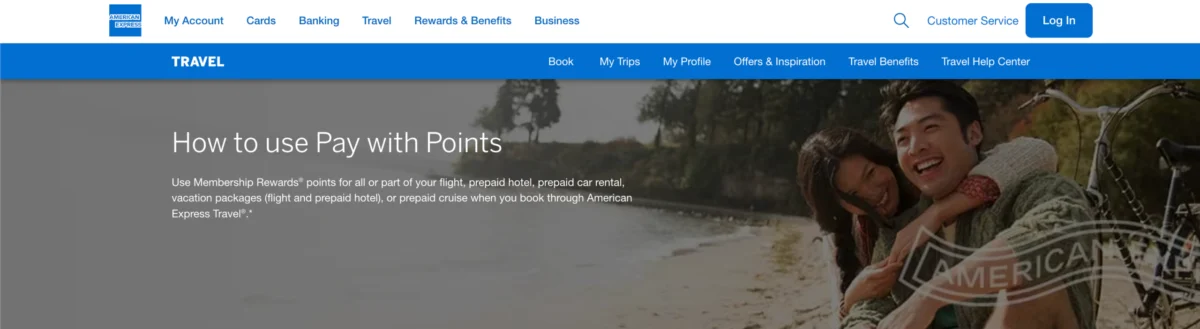
While seasoned "points pros" often focus on the high-yield potential of transferring points to external partners, the Pay with Points option serves as a critical bridge for those who prioritize convenience, fixed value, and the ability to book any seat on any flight without the frustration of "blackout dates." To truly master the American Express ecosystem, one must understand the nuanced math behind this feature, the specific card benefits that can amplify its value, and the strategic scenarios where it actually outperforms traditional transfer methods.
Defining Amex Pay with Points
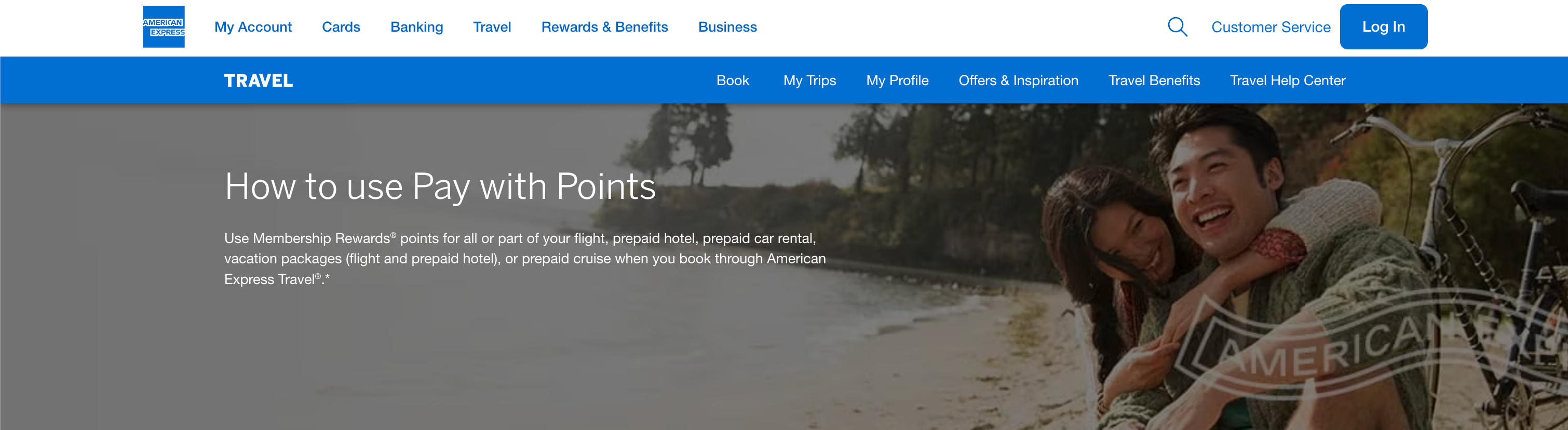
At its core, Amex Pay with Points is a redemption method that treats Membership Rewards points like a liquid asset within the American Express Travel ecosystem. Rather than converting your points into a different currency—such as Delta SkyMiles or Hilton Honors points—you are essentially using them to pay the "cash" price of a travel booking. When you select this option during the checkout process on the Amex Travel website, American Express charges the full amount to your card and then applies a statement credit for the portion you covered with points, usually within 48 hours.
The versatility of this program extends to flights, prepaid hotel stays, vacation packages, and even cruises. However, the redemption rate is not uniform across all categories, which is where many casual users fall into value traps. The standard benchmark for flights is 1 cent per point (cpp), meaning 10,000 points are worth $100. For most other travel categories, such as hotels and car rentals, the value drops significantly to 0.7 cents per point. This discrepancy is a vital data point for any cardholder aiming to maximize their return on spend.
The Mechanics of the Portal Experience
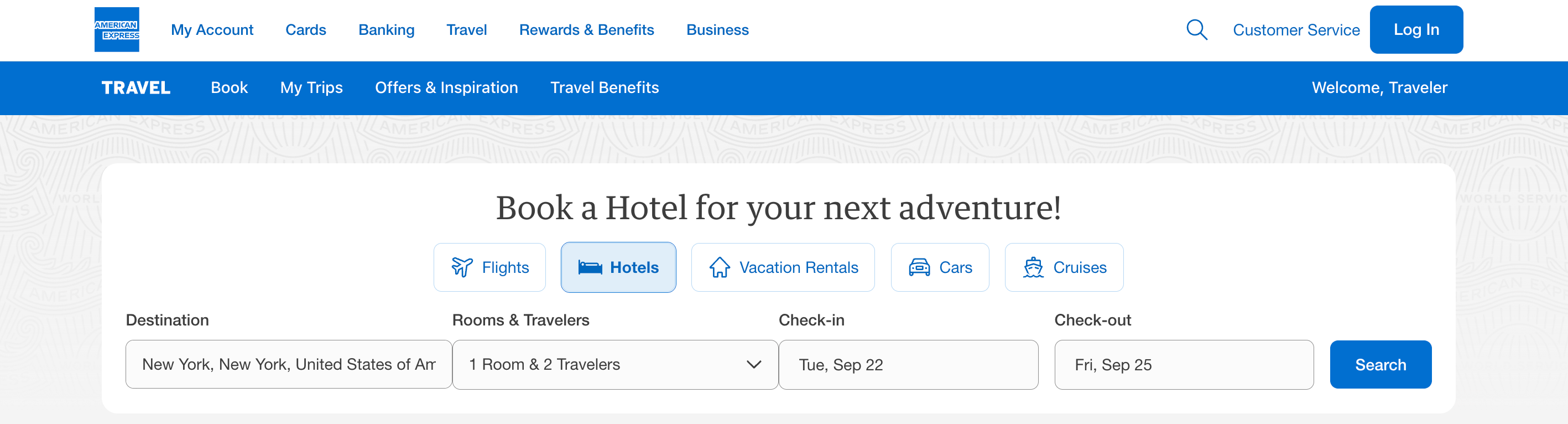
The process of using Pay with Points is integrated directly into the American Express Travel search engine. To utilize the feature, cardholders must first ensure their card is enrolled in the Membership Rewards program—a standard feature for premium cards like The Platinum Card® from American Express or the American Express® Gold Card.

The minimum threshold for a Pay with Points redemption is 5,000 points. If a booking costs more than the points balance available, American Express allows for a "split pay" configuration, where a portion is covered by points and the remainder is charged to the card. This is particularly useful for travelers who may be a few thousand points short of a dream vacation but still want to reduce their out-of-pocket expenses.
One critical technical detail to note is the distinction between "prepaid" and "pay at hotel" bookings. Pay with Points is generally only available for prepaid rates. If you choose a rate that requires payment at the front desk upon checkout, you will not be able to use your Membership Rewards points through the portal to cover that expense.
The Value Proposition: Fixed Value vs. Market Arbitrage
To understand whether Pay with Points is a "good" deal, one must look at the broader valuation of Membership Rewards. Industry experts and analysts, including those at The Points Guy, frequently value Amex points at roughly 2.0 cents apiece. This valuation is based on the "sweet spots" found when transferring points to partners like British Airways, Virgin Atlantic, or Air France-KLM Flying Blue, where a business-class seat costing $5,000 might only require 50,000 points—a massive 10 cpp redemption.
In contrast, the 1 cent per point offered by Pay with Points for airfare seems lackluster. However, the 1 cpp floor provides a "safety net." When cash prices for flights are low, or when airlines have not released any award inventory to their partners, the ability to book via the portal ensures that your points are never truly "worthless." Furthermore, Pay with Points bookings are treated by airlines as "cash" tickets. This means that unlike traditional award tickets, you will earn frequent flyer miles and elite status credits on the flight you just "paid" for with points. For a traveler chasing Diamond Medallion status with Delta or Executive Platinum with American Airlines, this "double dip"—spending points while earning status—can be a decisive factor.
The Power of the Business Rebate
The math for Pay with Points changes dramatically for holders of certain high-end business cards. This is where the "enriched data" of the program becomes most apparent. The Business Platinum Card® from American Express offers a 35% points-back rebate on eligible flights booked via Pay with Points. This applies to any flight on your selected qualifying airline, as well as any Business or First Class flight on any airline booked through Amex Travel.
The math behind the 35% rebate is often misunderstood. If you book a $1,000 flight, you initially spend 100,000 points. American Express then refunds 35,000 points to your account. Your net cost is 65,000 points for a $1,000 flight. This results in an effective redemption value of approximately 1.54 cents per point ($1,000 / 65,000). While this is still lower than the 2.0 cent expert valuation, the 1.54 cent rate is guaranteed and applies to any available seat, making it a powerful tool for business owners who need flexibility.
For the ultra-exclusive Centurion® Card (the "Black Card"), the rebate is even more substantial at 50%. This pushes the effective value to a remarkable 2.0 cents per point. At this level, the "simplicity" of the portal matches the "high value" of transfer partners, creating a best-of-both-worlds scenario for the world’s wealthiest travelers.
Comparative Analysis: Portal vs. Transfer Partners
To illustrate the strategic choice, consider a domestic flight from New York to Los Angeles. If the cash price is $300, using Pay with Points would cost 30,000 points. If you were to transfer points to Delta, that same flight might cost 45,000 miles due to dynamic pricing. In this case, the portal is the clear winner.
Conversely, consider a flight from New York to Paris in Business Class. The cash price might be $4,000 (requiring 400,000 points via the portal), but the same seat could be booked for 55,000 miles by transferring points to Air France-KLM during a promotional period. Here, using Pay with Points would be a massive waste of resources.
The "Golden Rule" of Membership Rewards is to always check the transfer partners first for long-haul, premium-cabin travel, but to rely on the portal for domestic economy flights or when specific flight times are non-negotiable.
Strategic Scenarios for Using Pay with Points
There are several specific instances where Pay with Points is the optimal strategy:
- Eliminating "Orphan" Points: If you have a small balance of points that isn’t enough for a major transfer, using them to shave $50 or $100 off a flight is a sensible way to clear the balance.
- Last-Minute Travel: Airlines often restrict award space for last-minute bookings or charge exorbitant "close-in" fees. The portal avoids these hurdles entirely.
- Boutique Hotels: While transferring to Marriott or Hilton is common, many travelers prefer independent boutique hotels. Amex Travel features thousands of these properties where points can be used at the 0.7 cpp rate—a lower value, but perhaps the only way to use points for that specific stay.
- Meeting Elite Status Requirements: As mentioned, portal bookings are revenue bookings. If you are $200 short of reaching the next tier of airline status at the end of the year, booking that final "status run" with points ensures you hit your goal without spending actual cash.
Expert Tips for Maximizing the Portal
To get the most out of this feature, cardholders should keep a few advanced tactics in mind. First, always look for "Insider Fares." These are discounted rates available exclusively to cardholders when paying entirely with points. Often, these fares provide a slightly better value than the standard 1 cpp.
Second, be aware of the "Fine Hotels + Resorts" (FHR) and "The Hotel Collection" programs. Platinum and Gold cardholders can book these curated properties through the Amex Travel portal. While the redemption rate for hotels remains 0.7 cpp, booking an FHR property with points still entitles you to the program’s elite-style benefits, such as daily breakfast for two, a $100 property credit, and guaranteed late checkout. This can effectively "subsidize" the lower redemption rate by providing hundreds of dollars in added value.
Finally, remember that the 35% or 50% rebate on business cards is capped. For the Business Platinum, the cap is 1 million points back per year; for the Centurion, it is 3 million. High-volume spenders should track their redemptions to ensure they don’t cross these thresholds and suddenly find their points value dropping back to the baseline.
Conclusion
Amex Pay with Points is a multifaceted tool that serves different purposes for different types of travelers. For the casual user, it is a gateway to "free" travel without the headache of learning complex loyalty rules. For the business owner, it is a high-value mechanism to turn corporate spending into tangible travel savings at a respected 1.54 cent rate. For the points enthusiast, it is a strategic fallback for when the "perfect" award redemption is unavailable.

While it is rarely the way to get the absolute highest mathematical value from a Membership Rewards point, its utility lies in its reliability. In a world of devaluing airline miles and shrinking award availability, having a fixed-value option that treats points like cash is an indispensable feature of the American Express ecosystem. By understanding the math, utilizing card-specific rebates, and knowing when to "pivot" to transfer partners, cardholders can ensure they are always getting the best possible return on their loyalty.
