
 By Rifan Muazin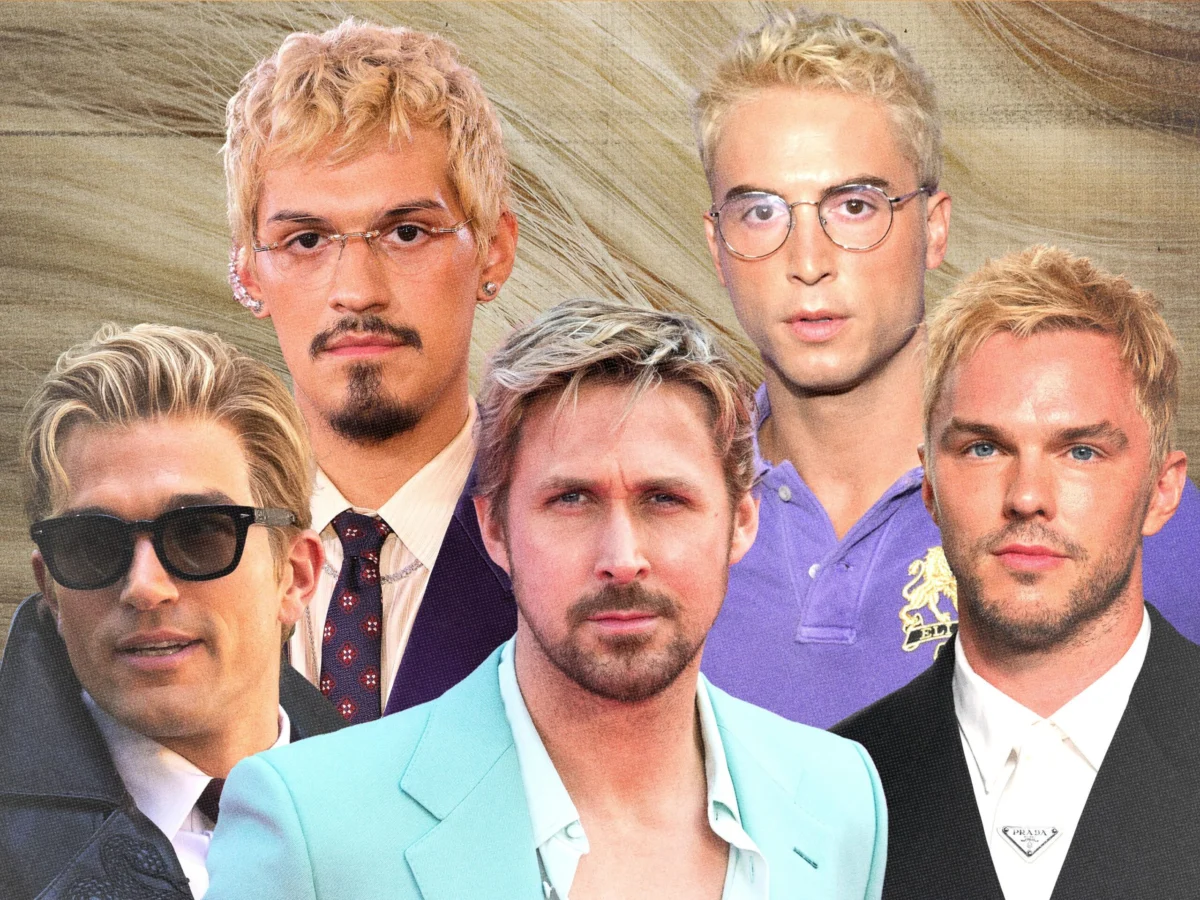
In July of 2026, the digital landscape witnessed a grooming seismic shift when the typically brunette comedian and actor Benito Skinner posted a topless gym selfie that did far more than showcase his fitness progress. Skinner debuted a radical aesthetic overhaul: a short, textured crop in a vibrant shade of blonde, paired with a deep, sun-drenched tan that suggested a life lived entirely poolside. The interplay between the hair’s gritty texture and the warmth of the golden hue created an effortless, "out of office" energy that resonated instantly across social media. The response was a deluge of "thirsty" comments and viral reposts, signaling that the internet—and by extension, the broader culture—was ready to embrace the return of the bleached-blonde leading man.
This phenomenon is not an isolated incident but rather the vanguard of a significant shift in men’s grooming. Increasingly, fashionable men are reaching for the bleach, participating in a nostalgic resurgence that draws heavily from the aesthetic playbooks of the late 1990s and the early 2000s. As we move deeper into 2026, the trend cycle appears to be folding back on itself; with the revival of spray tanning, frosted tips, and the aggressive "warrior" haircut, the current year is beginning to look remarkably like 2006. This "Y2K+20" movement suggests that the grooming habits of two decades ago—once dismissed as kitsch or dated—have been recontextualized for a new generation seeking bold self-expression.

While hairstyle trends are inherently cyclical—GQ noted a similar, albeit more muted, blonde wave in 2016—the current iteration feels more purposeful and varied. Within the rarefied air of celebrity culture, a dramatic color change serves multiple strategic functions. It can be a tool for method acting, a visual marker for a musical artist’s "new era," a psychological power move for an athlete ahead of a major competition, or a calculated engine for media buzz during a high-stakes promotional tour. However, the transition from dark to light is fraught with aesthetic peril. Not all blondes are created equal, and the line between a high-fashion statement and a grooming disaster is often found in the subtle science of color theory.
Take, for instance, the recent transformation of Paul Anthony Kelly. The actor, widely recognized for his portrayal of JFK Jr. in Love Story, was recently spotted on the set of the latest season of FX’s American Horror Story. Photographed in a long leather duster with a slicked-back, almost white-blonde coif, Kelly looked unrecognizable from his days as a clean-cut model. Interestingly, the public reaction to Kelly’s new look lacked the universal acclaim seen with Skinner’s. The reason, according to industry experts, lies in the "temperature" of the shade.
Celebrity hairstylist Sami Knight points out that the disconnect in Kelly’s look stems from a lack of tonal harmony. "The issue is temperature," Knight explains. "The shade sitting on Paul Anthony Kelly is too cool and too flat for his complexion and undertones. It makes it look like a block of color dropped on top rather than something that grew from him. It’s reading synthetic because there’s no variation in the tone and no warmth to bridge it to his skin." This "wiggy" effect occurs when the hair color fights the natural pigments in the skin rather than complementing them. In Kelly’s case, the harshness of the blonde may be a deliberate choice for his character—a visual shorthand for a villainous turn.

This specific look has been dubbed the "Malice Slick," a modern interpretation of the "blonde villain" trope that has populated cinema for decades. From Christopher Walken’s Max Zorin in A View to Kill to Kiefer Sutherland’s Ace Merrill in Stand by Me, the slicked-back, icy blonde hairstyle has long signaled a character who is cold, calculating, and potentially dangerous. In the context of Ryan Murphy’s American Horror Story, Kelly’s hair serves as a narrative device, communicating a potential shift toward the dark side before he even utters a line of dialogue.
In stark contrast to the "Malice Slick" is the "Summer Surfer" aesthetic, recently exemplified by Nicholas Hoult. Before transitioning back to his natural shade, Hoult experimented with a bleached top that felt light, airy, and evocative of coastal culture. Celebrity hairstylist Melissa DeZarate notes that Hoult’s look succeeded where others failed because of its intentional imperfection. By keeping a darker base at the roots, Hoult’s hair maintained a sense of depth and warmth. Sami Knight observes that this approach avoids the "brass trap"—the unwanted orange or yellow tones that plague DIY bleach jobs—while paying a subtle homage to Patrick Swayze’s iconic look in Point Break. It is a style that suggests leisure and athletic vitality rather than cinematic menace.
Perhaps no celebrity has navigated the blonde spectrum as publicly or successfully as Ryan Gosling. While his platinum transformation for the role of Ken in the Barbie movie initially sparked skepticism—with late-night host Jimmy Fallon famously likening him to "Draco Malfoy if he went to Barry’s Bootcamp"—Gosling eventually turned the look into a cultural touchstone. Post-press tour, Gosling pivoted to what DeZarate calls the "Classic Ken": a more refined, multi-tonal blonde featuring expertly placed highlights.

"He’s not just Ken, he’s the Classic Ken," says DeZarate. "His highlights are classically done and not a single one is out of place. His color is literally iconic at this point because it’s actually cemented in the physical representation of Ken." The success of Gosling’s blonde lies in its sandy, naturalistic warmth. Knight points out that the hair looks like an extension of his natural dark blonde strands, making the transition feel evolutionary rather than revolutionary. It is a masterclass in how to use professional color to enhance one’s existing features.
The trend has also permeated the world of high-stakes sports, where hair often serves as a form of "peacocking." Tennis phenom Carlos Alcaraz recently stunned fans by debuting a silver-toned buzzcut just two weeks after his 2025 US Open victory. DeZarate describes this look as the "Ice King," a power move that demands attention. Alcaraz’s style utilized a high-contrast approach, keeping the hair dark around the temples while bleaching the top to a near-white silver. "His icy bleach tone is calling you to stare at its perfection," DeZarate says. "Part of me thinks this hair color could have been a power play to keep all eyes on him at all times." For an athlete, such a bold change can signal the start of a new chapter or a "champion’s era," marking a departure from their previous self.
Beyond the aesthetics, the act of going blonde carries significant psychological weight. "Going blonde reads as lighter, more open, sometimes more carefree, sometimes more ambitious depending on the context and person," says Sami Knight. "On a man specifically, it tends to disrupt expectations in a way that reads as bold or experimental, which is probably why it’s become shorthand for a certain kind of reinvention, or, occasionally, a moment of crisis." In an era where traditional masculinity is being constantly redefined, the willingness to experiment with "high-maintenance" grooming is a sign of confidence and a rejection of rigid style norms.

For the average man considering a leap into the world of bleach, the experts offer a cautionary but encouraging guide. The primary rule is to match the hair’s temperature to the skin’s undertones. "Warm skin needs warm blonde—honey, caramel, and golden," Knight explains. "Cool or neutral skin has more range and can carry ashier, platinum tones." Identifying one’s undertone is the first step; those with veins that appear green or who look better in gold jewelry generally fall into the warm category, while those with blue veins or a preference for silver are typically cool-toned.
Furthermore, the "forgiveness" of the shade is a crucial factor. Golden blondes are generally more versatile and easier to maintain, as they mimic the way hair naturally lightens in the sun. Platinum, however, is a high-wire act. It requires a professional’s touch to custom-tone the hair and prevent it from looking like a flat, synthetic "block." The maintenance for platinum is also grueling, requiring frequent root touch-ups and the diligent use of purple shampoos to neutralize brassiness.
Ultimately, while dyeing one’s hair may not immediately grant entry into the Hollywood A-list, it offers a potent tool for personal transformation. Whether it is a "Summer Surfer" vibe for a vacation or an "Ice King" buzzcut to celebrate a personal milestone, changing one’s shade is a way to take agency over one’s image. As Sami Knight concludes, "Sometimes reinvention in a moment of transition can be both distracting and empowering." In the grooming landscape of 2026, the message is clear: the boldest men are those who aren’t afraid to lighten up.
