
 By admin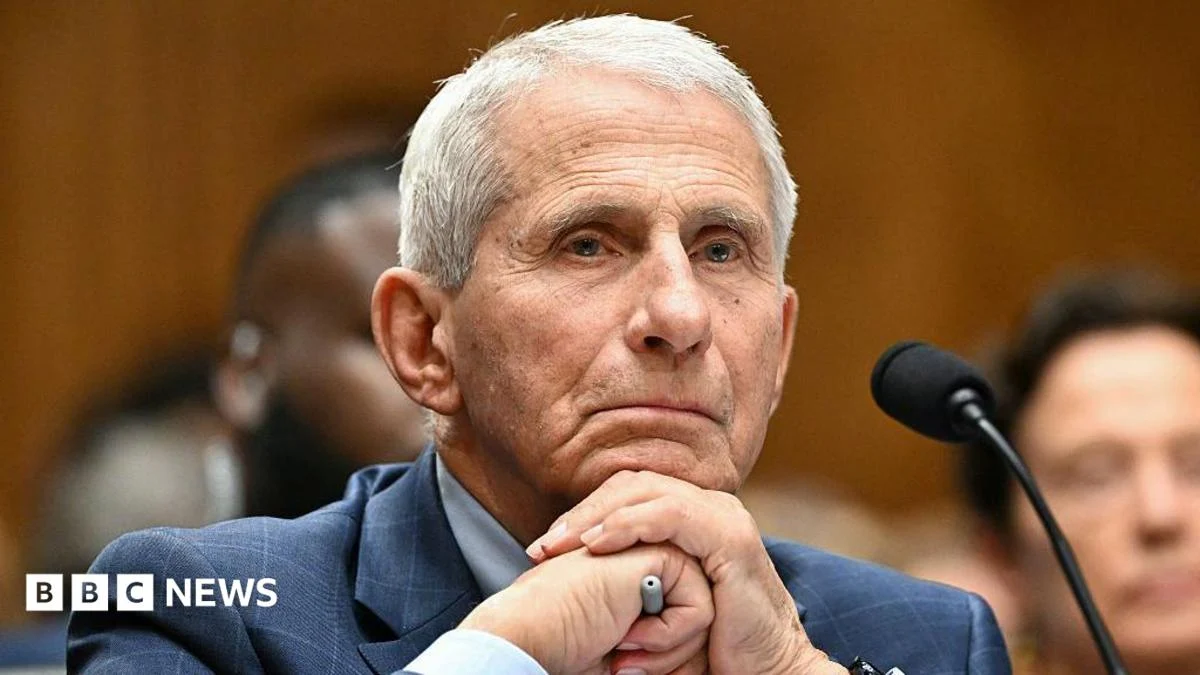
In a dramatic and highly anticipated U.S. Senate hearing on Wednesday, former top health official Dr. Anthony Fauci invoked his Fifth Amendment right against self-incrimination, refusing to answer questions regarding the COVID-19 pandemic. Fauci, 85, the former director of the National Institute of Allergy and Infectious Diseases (NIAID), stated that he feared Republicans on the committee would attempt to twist his testimony into grounds for a perjury prosecution. This move has intensified the already fraught political landscape surrounding the origins and handling of the pandemic, a period marked by intense scrutiny and partisan division.
Fauci’s decision to take the Fifth Amendment is a legally significant step, underscoring the gravity of the accusations leveled against him and the potential legal ramifications he perceives. The Fifth Amendment protects individuals from being compelled to testify against themselves in a criminal case, a safeguard designed to prevent coerced confessions and ensure fair legal proceedings. For Fauci, who has repeatedly testified before congressional committees on the pandemic, the risk of contradicting himself under oath and facing perjury charges appears to be a primary concern. Republicans have long accused Fauci of withholding information from the public and misrepresenting the dangers of COVID-19. Fauci has consistently denied these allegations, previously dismissing them as "simply preposterous."
In his statement to the Senate Committee on Homeland Security and Governmental Affairs, Fauci explicitly addressed his refusal, stating, "Although it pains me to do so because of the respect I have for the legislative branch of government… under the advice of my attorneys, I will invoke my right under the Fifth Amendment of the constitution to refrain from answering your questions." He pointed to what he described as Senator Rand Paul’s "obvious obsession" with prosecuting him, asserting that Paul’s sole objective in summoning him was to elicit testimony that would vindicate his public pronouncements that Fauci should end up "behind bars."
The invocation of the Fifth Amendment, it is crucial to note, is not an admission of guilt. It is a constitutional right intended to shield individuals from potential coercion, unintentional errors in testimony, and the unfair burden of proving their own innocence. However, the context of Fauci’s situation is complicated by the fact that he was granted a pre-emptive pardon by former President Joe Biden. This pardon offers protection from federal prosecution for actions taken between 2014 and 2025. Despite this protection, Fauci could still face charges for actions occurring after this period, including any alleged misconduct related to his testimony before the Senate committee, or potentially at the state or local level.
Senator Rand Paul, an ophthalmologist by training before entering politics, continued to press Fauci with questions despite his refusal to answer, repeatedly inviting him to "apologize." Paul indicated that the committee would vote the following week on a resolution to hold Fauci in contempt of Congress, a serious offense that could carry significant penalties. The line of questioning from Republicans focused on what they characterized as shifting health guidance during the pandemic, arguing that these changes, as public understanding of the virus evolved, were misleading. Fauci has previously defended these policy adjustments as necessary adaptations based on evolving scientific knowledge.
The tension during the hearing escalated when David Schertler, one of Fauci’s lawyers, who was seated beside him, attempted to interject during Paul’s relentless questioning. Schertler was subsequently removed from the hearing room. Following his removal, Schertler issued a statement calling Paul’s actions "outrageous" and an attempt to "exclude his counsel for making a legitimate legal point." He further characterized the proceeding as "baseless and vindictive" and a reflection of Rand Paul’s "personal vendetta against Dr Fauci."
The controversy surrounding Fauci’s testimony also drew a reaction from former President Donald Trump, who took to social media to label Fauci as "crazy." Trump reiterated his long-held belief that the virus originated from the Wuhan laboratory in China, accusing Fauci of "strongly disagreeing" and "always trying to protect China." The origins of the pandemic have been a persistent and highly contentious issue in the United States, with significant debate occurring between President Trump and public health officials, including Fauci, during Trump’s presidency. Their frequent clashes extended to the handling of the pandemic, including Trump’s suggestions of unproven treatments.
During the hearing, Senator Paul specifically raised the issue of COVID-19’s origins, suggesting that while Fauci publicly stated the virus originated naturally, he privately entertained the possibility of a lab leak. Paul has been a prominent proponent of the lab-leak theory, which posits that the virus escaped from China’s Wuhan Institute of Virology. The World Health Organization (WHO) has, as of 2025, indicated that the natural-origins theory – the transmission of the virus from animals to humans – is the "best supported" by available evidence, though it acknowledges that the determination of origin remains "inconclusive" pending further information.
Adding another layer to the unfolding narrative, Senator Paul released entries from Fauci’s pandemic-era diary earlier in the week. These entries, which Fauci had apparently kept, revealed his early musings on fame and the evolving understanding of COVID-19’s origins. The diary entries suggest an initial openness to both natural and lab-leak theories before Fauci appeared to become more convinced of a natural origin. In one entry from February 2020, Fauci noted that scientists did not have "total agreement" on the virus’s source. Later, he expressed that he was "almost certain that the virus evolved naturally from a species jump, even though… I keep an open mind about the possibility of a lab leak." He also wrote, "[J]ust because two alternatives are possible that does not mean that they are equally probable," reflecting a nuanced approach to the scientific uncertainty.
Fauci’s decision not to testify, however, provoked strong reactions from other Republicans. Senator Ron Johnson angrily declared his intention to pursue a subpoena to compel Fauci to answer the committee’s questions, highlighting the deep divisions within Congress on how to address the pandemic’s legacy. Following the hearing, the Republican Attorney General of Florida announced an investigation into Fauci, signaling a continued pursuit of accountability from state-level officials.
Conversely, several Democrats rallied to Fauci’s defense. Senator Maggie Hassan, for instance, characterized the hearing as "designed to entrap" Fauci, echoing the sentiment that the proceedings were politically motivated. Fauci’s public service during the pandemic was not without personal peril; he has faced death threats both during and after the coronavirus pandemic, and former President Trump had previously rescinded his security protection.
Despite the intense political battles, it is important to recall Fauci’s significant role during the initial response to the pandemic. He was a central and trusted figure in the U.S. government’s efforts to understand and combat the virus. In a notable instance of bipartisan recognition, President Trump awarded Fauci a presidential commendation in 2021 for his contributions to the U.S. COVID-19 vaccine project, known as Operation Warp Speed, underscoring his prior acknowledged contributions to national health initiatives. The current legal and political maelstrom surrounding his testimony represents a stark contrast to this earlier recognition, reflecting the profound polarization that has come to define the discourse around the COVID-19 pandemic. The refusal to testify, while constitutionally protected, has undeniably amplified the ongoing debate and cast a long shadow over the public’s perception of the pandemic’s origins and the actions of key figures involved in its management.
