
 By admin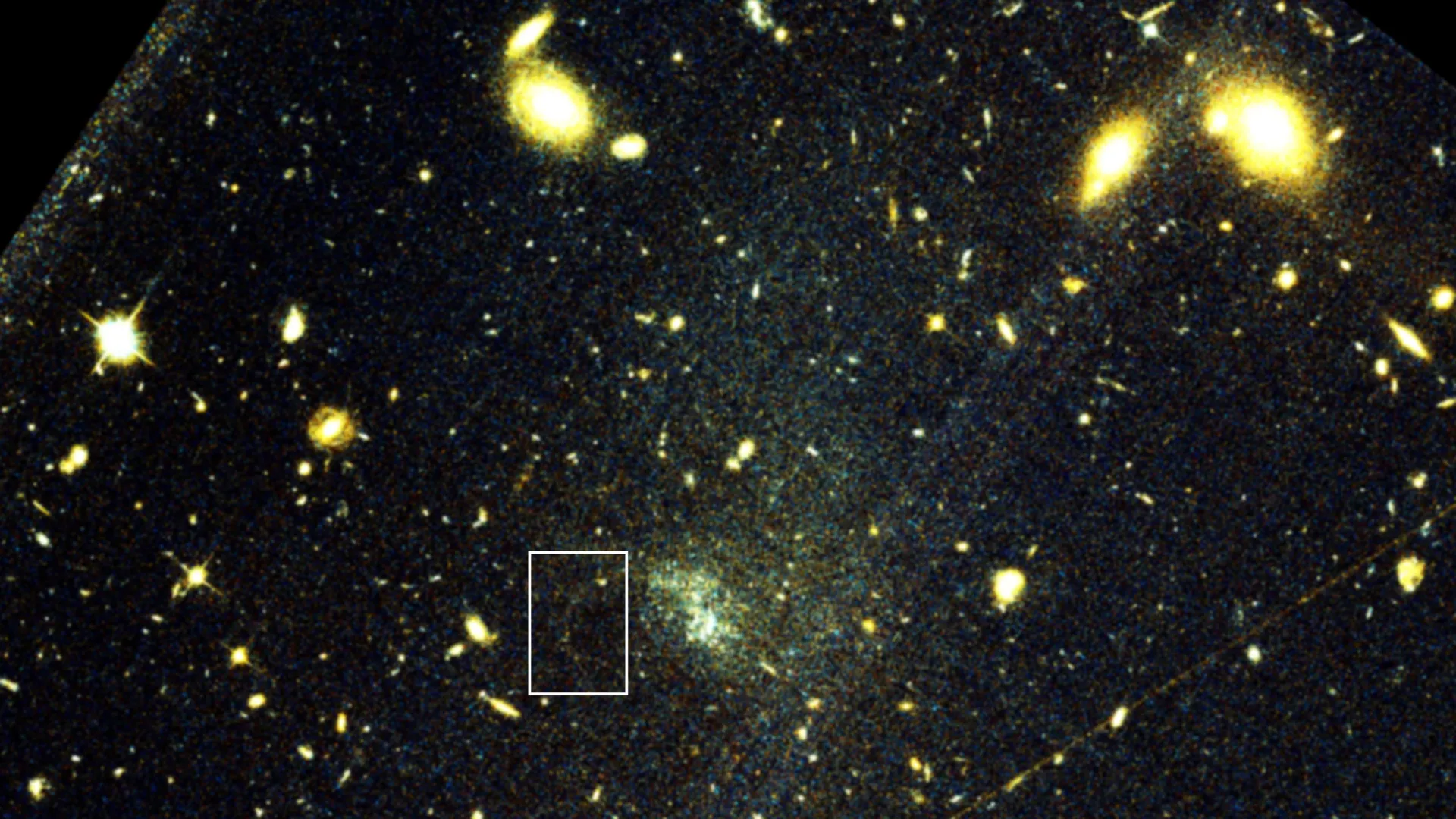
For billions of years, an ancient cluster of stars has been gradually coming apart, shedding stars that now form a faint, narrow ribbon across space. This delicate structure, stretching across the vast expanse beyond our home galaxy, is offering astronomers a revolutionary new way to investigate one of the universe’s biggest mysteries: the elusive nature of dark matter. An international research team, including a prominent astrophysicist from Northwestern University, has achieved a groundbreaking feat by identifying the first stellar stream of this type ever observed outside the Milky Way. While astronomers have long theorized the existence of such tidal streams around other galaxies, their extreme faintness and the overwhelming light of their host galaxies have rendered them notoriously difficult to detect, making this discovery a monumental step forward in extragalactic astronomy.
The newly unveiled stellar stream not only marks a significant observational milestone but also provides scientists with an unprecedented and powerful tool for probing the distribution and influence of dark matter, which remains one of the most profound unanswered questions in astrophysics. By meticulously analyzing the stream’s intricate shape and kinematic properties, researchers were able to reconstruct the gravitational field of its host galaxy with remarkable precision. This crucial information then allowed them to deduce how the unseen, enigmatic dark matter influenced the trajectories of the dislodged stars over cosmic timescales. The implications of these findings are far-reaching, holding the potential to fundamentally transform our understanding of how dark matter is distributed across a diverse range of galaxies and, by extension, throughout the entire universe. The seminal study detailing this discovery was published on August 12 in the esteemed scientific journal Nature, solidifying its impact on the astrophysical community.
"The stars in a stellar stream all travel along nearly the same orbit, and that orbit is exquisitely shaped by the galaxy’s cumulative gravitational pull," explained Northwestern’s Tjitske Starkenburg, a coauthor of the pivotal study. "By precisely modeling that gravity, we can derive an accurate estimate of the galaxy’s total mass. Since we already have a reasonably good understanding of how much of that mass is contributed by visible, baryonic matter—like the stars and gas we can observe—the residual mass must, by definition, be attributed to dark matter." Starkenburg, a recognized expert in extragalactic astronomy and a research assistant professor at Northwestern’s prestigious Center for Interdisciplinary Exploration and Research in Astrophysics (CIERA), played a critical role in the analysis. The study itself was co-led by Julie Kiel Holm from the University of Copenhagen and Sarah Pearson from the Technical University of Denmark, highlighting the collaborative spirit inherent in modern astronomical research.
Deciphering Stellar Streams: Cosmic Fingerprints of Gravity
To fully appreciate the significance of this discovery, it’s essential to understand the nature of stellar streams. Globular clusters are ancient, densely packed spherical collections of hundreds of thousands to millions of stars, gravitationally bound together and orbiting within the halo of a larger host galaxy. As these clusters traverse their galactic orbits, they are subjected to immense tidal forces exerted by the host galaxy’s powerful gravitational field. Over billions of years, this relentless gravitational tug-of-war slowly but surely strips away individual stars from the outer regions of the cluster.
Crucially, these liberated stars do not simply disperse randomly into space. Instead, due to their initial momentum and the specific nature of the galactic gravitational potential, they tend to continue traveling along nearly the same orbital path as their parent cluster. This process creates long, thin, coherent ribbons of stars—the stellar streams—that stretch across vast swathes of galactic real estate. These streams act as fossil records, meticulously preserving information about the cumulative gravitational forces they have encountered throughout their journey. They are akin to cosmic breadcrumbs, tracing the intricate contours of a galaxy’s invisible dark matter halo.
Astronomers have, for decades, identified dozens of such stellar streams within the confines of our own Milky Way galaxy. These local streams, often originating from either disrupted globular clusters or even smaller dwarf galaxies swallowed by our galaxy, have provided invaluable insights into the Milky Way’s formation history and its dark matter distribution. However, until this recent breakthrough, no comparable stream originating from a globular cluster had ever been definitively detected in another galaxy. The primary impediment has always been their extreme faintness. These delicate structures are typically so dim and diffuse that their light is utterly swamped and rendered indistinguishable against the much brighter, more luminous backdrop of their host galaxies, even with the most powerful telescopes.
The Breakthrough: Unveiling the Elusive Stream in UGC 9050-Dw1
The breakthrough that shattered this observational barrier came through a meticulous re-examination of archival observations from NASA’s iconic Hubble Space Telescope. Study coauthors David Sand and Catherine Fielder, both seasoned astronomers at the University of Arizona, were instrumental in presenting this invaluable historical data. It was during the careful scrutiny of images of the enigmatic ultra-diffuse galaxy (UDG) UGC 9050-Dw1, by study coauthor David Hendel for a separate publication, that a subtle yet unmistakable feature caught his eye: a faint, narrow arc that possessed all the tell-tale characteristics of a stellar stream.
UGC 9050-Dw1 is an extraordinary and somewhat mysterious type of galaxy, residing approximately 115 million light-years away from Earth. Ultra-diffuse galaxies are characterized by their extremely low surface brightness, meaning their stars are spread out over a very large area, making them appear almost transparent. This peculiar characteristic proved to be the key to the discovery. Because UGC 9050-Dw1 contains relatively few stars compared to a typical spiral or elliptical galaxy, it provided an unusually dark and quiescent background. This fortuitous circumstance made the dim, delicate light of the stellar stream significantly easier to distinguish and isolate from the surrounding galactic glow, a challenge that would have been insurmountable in a more luminous galaxy. The identification of this stream in such a distant and diffuse galaxy underscores both the power of advanced observational techniques and the serendipity that often accompanies scientific discovery.
A Novel Approach to Measuring Dark Matter
The profound importance of this discovery extends far beyond merely finding an extragalactic stellar stream. For the first time, researchers have unequivocally demonstrated that a globular cluster stellar stream can be effectively employed as a robust diagnostic tool to investigate the distribution and influence of dark matter in a galaxy situated well beyond the confines of the Milky Way. This represents a paradigm shift in our capability to map the invisible scaffolding of the universe.
Dark matter, a theoretical form of matter that does not interact with light or other forms of electromagnetic radiation, remains one of the most perplexing enigmas in modern cosmology. It is estimated to constitute roughly 85% of all matter in the universe, dwarfing the ordinary, baryonic matter (like stars, planets, and gas) that makes up everything we can directly observe. Because dark matter neither emits, absorbs, nor reflects light, astronomers cannot directly "see" it. Instead, its presence is inferred and detected solely through the profound gravitational influence it exerts on visible objects, such as stars, gas clouds, and entire galaxies. Understanding its nature and distribution is paramount to unraveling the fundamental architecture and evolution of the cosmos.
Once the extragalactic stellar stream was definitively identified, the research team embarked on an intensive computational effort. They ran thousands of sophisticated computer simulations, meticulously modeling the gravitational interactions within UGC 9050-Dw1. These simulations systematically tested different combinations of globular cluster characteristics (e.g., initial mass, orbital parameters) and, crucially, a wide array of possible dark matter distributions within the host galaxy’s halo. The goal was to determine which theoretical scenarios could accurately reproduce the observed appearance and morphology of the stream.
The models that most closely matched the detailed observations of the stellar stream provided unprecedented new estimates of UGC 9050-Dw1’s total mass, and, perhaps more importantly, revealed how that mass, particularly the dark matter component, is distributed throughout the galaxy. The results were highly significant, indicating that UGC 9050-Dw1 indeed contains a substantial amount of dark matter, a finding that aligns perfectly with astronomers’ expectations for ultra-diffuse galaxies, which are widely believed to be dominated by dark matter.
"Our results are remarkably consistent with previous studies and what they have already shown about the pervasive influence of dark matter in this particular ultra-diffuse galaxy," emphasized Julie Kiel Holm, one of the study’s co-leaders. "What makes this truly exciting is that we are now measuring it with a completely new and independent tool for this type of galaxy, unequivocally demonstrating that this innovative method also works effectively beyond the boundaries of our own galaxy." This validation of a new methodology opens up a powerful avenue for future research.
Stellar Streams: Illuminating Dark Matter’s Fine Structure
While the current analysis focuses on a single, albeit groundbreaking, discovery in one distant galaxy, the implications of this finding are immense. It is expected to catalyze a concerted effort to search for similar stellar streams around a multitude of different types of galaxies across the universe. By accumulating a larger and more diverse sample of extragalactic stellar streams, astronomers stand to gain a much deeper and more comprehensive understanding of how dark matter behaves on various scales and how its mysterious mass is distributed throughout galactic halos.
Thin stellar streams are particularly valuable as astrophysical probes because they are exquisitely sensitive to the subtle gravitational perturbations caused by small concentrations of dark matter. According to the prevailing cosmological model, Lambda-CDM, the dark matter halo surrounding galaxies is not perfectly smooth but contains numerous smaller, gravitationally bound clumps or "subhalos." These subhalos are predicted to be remnants of smaller dark matter structures that merged to form the larger halo. When one of these small concentrations of dark matter passes through a delicate stellar stream, its gravitational influence can disrupt the stream, potentially producing visible gaps, clumps, or kinks in its otherwise smooth structure.
"Thin stellar streams are like cosmic seismographs; they can develop discernible gaps or clumps when small concentrations of dark matter pass directly through them," Starkenburg elaborated. "Astronomers have long engaged in vigorous debate about whether we’ve already observed this phenomenon happening in streams within the Milky Way. If we can definitively confirm that these features are indeed caused by interactions with dark matter subhalos, that will provide us with an entirely new and incredibly precise way to test how dark matter is distributed on small scales—and ultimately, to learn more about its fundamental nature and particle properties." This would offer a crucial test for the Lambda-CDM model, potentially shedding light on the "missing satellites problem" or the "too big to fail problem," discrepancies between theoretical predictions and observed numbers of dwarf galaxies.
Future Telescopes: A New Era of Discovery
The prospect for future discoveries of extragalactic stellar streams is incredibly bright, thanks to the advent of next-generation observatories. While the current discovery relied on the formidable capabilities of the Hubble Space Telescope, future missions are poised to make these elusive structures far easier and more commonplace to find. The European Space Agency’s Euclid mission, launched in 2023, and NASA’s forthcoming Nancy Grace Roman Space Telescope, slated for launch later this decade, are specifically designed to survey far larger regions of the sky with unprecedented sensitivity and resolution than Hubble ever could. This dramatically increased field of view and depth will significantly boost the likelihood that astronomers will detect a veritable treasure trove of stellar streams around countless additional galaxies.
"It’s incredibly exciting that we were able to discover a thin stellar stream around a galaxy other than our own using already-existing archival Hubble Space Telescope data, and then further confirm its existence and characteristics with complementary ground-based telescope data," Starkenburg remarked with enthusiasm. "That makes the prospects exceptionally promising for the new generation of telescopes that are becoming available. The Roman Space Telescope, for instance, will be capable of observing an area of the sky that is a staggering 100 times larger than that of the Hubble Space Telescope in a single pointing, effectively opening up a vast new discovery space for these faint structures." These new observatories will not only find more streams but will also likely provide the higher-resolution data needed to study their fine structures and potentially detect the signatures of dark matter subhalos.
The study, formally titled "Evidence for the First Globular Cluster Stellar Stream beyond the Milky Way," represents a significant leap forward in our quest to understand the universe’s invisible components. This ambitious research was made possible through the generous support of VILLUM FONDEN (award number VIL53081) and the European Union (BeyondSTREAMS award number 101115754), underscoring the vital role of international collaboration and funding in pushing the boundaries of scientific knowledge. Tjitske Starkenburg also gratefully acknowledges specific support from the National Science Foundation (grant number AST-2510183) and NASA (grant numbers 22-ROMAN22-0055 and 22-ROMAN22-0013), highlighting the diverse funding mechanisms that underpin cutting-edge astronomical research. As astronomers continue to refine their techniques and deploy ever more powerful instruments, the universe’s hidden gravitational landscapes are gradually being brought into focus, promising a new era of discovery in the enigmatic realm of dark matter.
