
 By admin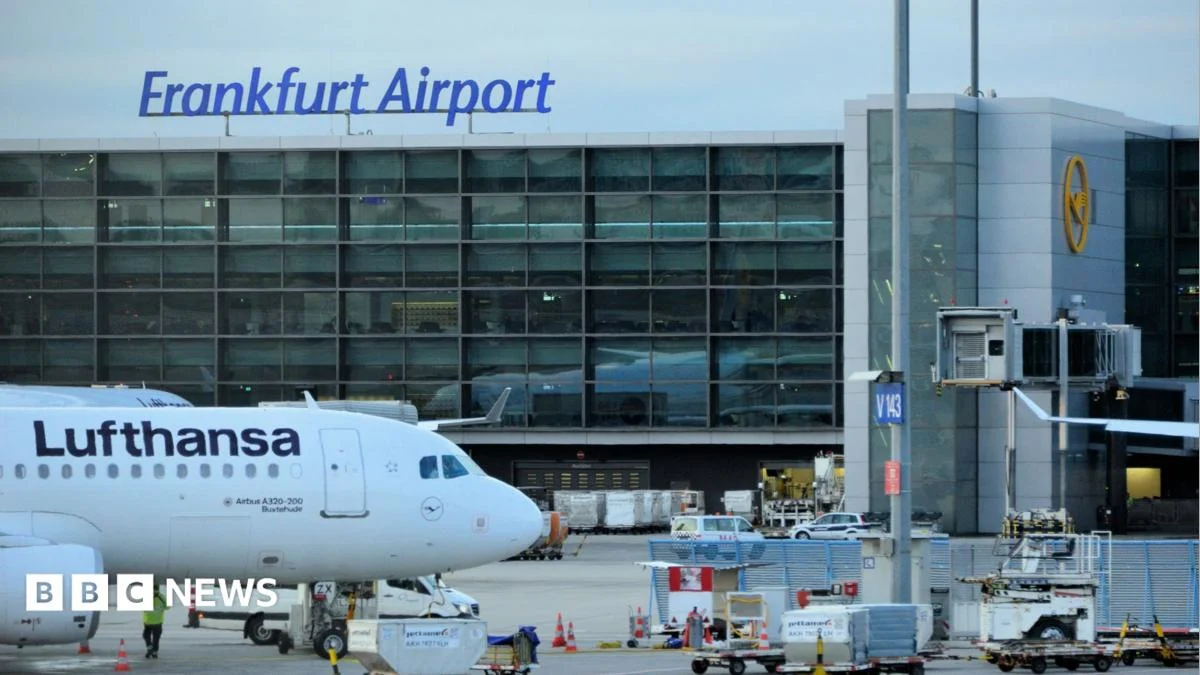
A tragic incident has cast a shadow over Germany’s busiest airport, Frankfurt Airport, as one of its employees has succumbed to malaria following a rare outbreak that has infected a total of six workers. The serious infection, typically spread by mosquitoes in tropical regions, is believed to have been introduced to the airport environment via an aircraft, according to German public health officials. The remaining five individuals who contracted the disease are currently undergoing medical treatment, as confirmed by a spokesperson for Fraport, the airport operator. In a proactive measure to understand and contain the situation, specialized traps have been deployed across the airport premises, and any captured mosquitoes will undergo rigorous laboratory analysis to identify their species and pinpoint their origin.
"Sadly, we must confirm that one employee has died as a result of the infection," the Fraport spokesperson conveyed to the BBC, underscoring the severity of the situation. The company has also taken steps to ensure its workforce is well-informed, providing comprehensive information to all employees and strongly encouraging them to seek medical attention should they experience any symptoms suggestive of malaria. The Frankfurt Public Health Department is spearheading the investigation into this unusual cluster of infections. Initial reports indicate that the six affected individuals held diverse roles and worked in different areas of the sprawling airport complex, prompting health officials to meticulously analyze blood samples. This analysis aims to ascertain whether the infections stemmed from a single infected mosquito or multiple vectors.
Further clarification was provided by public health officials in Frankfurt on Wednesday, who communicated through a letter to media outlets that the risk to the general population of Frankfurt is considered "very, very low." They emphasized that malaria is not transmissible from person to person, but rather exclusively through mosquito bites. The laboratory tests intended to definitively establish the source of these infections are anticipated to take several weeks to yield results, highlighting the intricate nature of such epidemiological investigations.
This development follows earlier reports in July that indicated an outbreak involving four infected workers. The Robert Koch Institute (RKI), Germany’s federal government agency and a leading research institution for disease control and public health, had previously stated that the four employees fell ill between July 4th and 6th. The RKI also corroborated the belief that the mosquitoes were brought into the airport environment via an airplane. The institute further elaborated that malaria cases in Germany are overwhelmingly observed among long-haul travelers who have been infected in malaria-endemic regions. Consequently, malaria transmitted within the confines of a German airport is considered an exceptionally rare occurrence.
The RKI’s epidemiological bulletin highlighted a critical factor contributing to the severity of such cases: "The lack of a travel history can lead to a delayed diagnosis. A delayed diagnosis increases the risk of a severe course of the diseases." This underscores the challenge public health officials face when identifying non-travel-related malaria infections. The bulletin also noted that the last documented instance of "airport malaria" – malaria contracted within an airport environment without recent travel to endemic areas – also occurred at Frankfurt Airport in 2023, suggesting a recurring, albeit rare, phenomenon.
Malaria, as defined by the World Health Organization (WHO), is a serious and sometimes fatal disease caused by a parasite that is transmitted through the bites of infected female Anopheles mosquitoes. While predominantly found in tropical and subtropical regions, its presence in non-endemic areas, particularly through imported vectors, poses a public health concern. The WHO emphasizes that malaria is both preventable and curable, but its potential for severe illness and death necessitates prompt diagnosis and effective treatment. The parasite responsible for malaria, Plasmodium, requires a specific mosquito vector for transmission, and crucially, the disease does not spread directly from an infected human to another human. The incubation period for malaria can vary, typically ranging from 7 to 30 days after the mosquito bite, but can sometimes be longer. Symptoms commonly include fever, chills, headache, muscle aches, fatigue, nausea, vomiting, and diarrhea. In severe cases, malaria can lead to anemia, respiratory distress, cerebral malaria (affecting the brain), kidney failure, and even death.
The current situation at Frankfurt Airport warrants a deeper examination of the factors that contribute to the introduction and potential establishment of disease-carrying vectors in such environments. Airports, by their very nature, are global hubs facilitating the movement of people and goods across continents. This connectivity, while essential for international commerce and travel, also presents opportunities for the inadvertent transport of biological organisms, including insects and pathogens. The specific circumstances surrounding the arrival of the infected mosquitoes at Frankfurt Airport are under intense scrutiny. Authorities are likely investigating flight manifests, cargo records, and aircraft maintenance logs from flights that may have originated from or transited through malaria-endemic regions in the period preceding the outbreak. The possibility of mosquitoes hiding in cargo holds, passenger cabins, or even within aircraft structures cannot be discounted.
The process of identifying the mosquito species involved is crucial for understanding their origin and potential breeding habits. Different species of Anopheles mosquitoes have varying geographical distributions and biting behaviors. Identifying the specific species will aid in determining the most probable region from which they originated and the likely pathways of their introduction. Furthermore, understanding the species’ susceptibility to insecticides and its reproductive capabilities within the airport environment will inform public health strategies for prevention and control. The analysis of captured mosquitoes will likely involve morphological identification, as well as genetic analysis to confirm their species and potentially their geographical origin.
The investigation also aims to determine the number of mosquito bites and the timeline of infection among the six affected employees. This will help in reconstructing the epidemiological chain of events. If all six individuals were infected by a single mosquito, it would imply a highly efficient transmission event, possibly involving a large parasite load within the mosquito. Conversely, if multiple mosquitoes were involved, it would suggest a broader exposure within the airport environment. The fact that the infected individuals worked in different jobs and areas of the airport is a significant factor. It raises questions about the extent of the potential exposure zone and whether the mosquitoes were confined to a specific area or had dispersed.
The public health communication strategy employed by the Frankfurt Public Health Department, emphasizing the low risk to the general population, is a standard public health practice aimed at preventing undue panic while maintaining vigilance. The clear distinction between person-to-person transmission and vector-borne transmission is vital for public understanding. However, the rarity of such an event in a non-endemic country like Germany necessitates a comprehensive and transparent approach to information dissemination.
The RKI’s mention of "airport malaria" as a recurring phenomenon at Frankfurt Airport, with a previous case in 2023, suggests that this might not be an isolated incident. This raises important questions about the effectiveness of current vector control measures at the airport. While disinfection protocols for aircraft are standard, the efficacy of preventing mosquito ingress and establishment within the airport infrastructure itself warrants ongoing review and potential enhancement. Factors such as the airport’s proximity to natural water bodies, local climate conditions, and the presence of suitable breeding sites within and around the airport could play a role.
The implications of this outbreak extend beyond the immediate health concerns of the airport workers. It highlights the interconnectedness of global health and the challenges posed by emerging infectious diseases in a highly mobile world. The potential for imported vectors to establish themselves in new environments is a growing concern, particularly in the context of climate change, which can alter the geographical ranges of disease vectors and pathogens. This event serves as a stark reminder of the need for robust surveillance systems, rapid response mechanisms, and international cooperation in disease prevention and control.
The response from Fraport, including the installation of traps and the provision of information to employees, demonstrates a commitment to addressing the situation. However, the long-term implications for airport operations and public health strategies in managing similar risks in the future will need careful consideration. This could include enhanced screening protocols for aircraft arriving from high-risk regions, improved vector surveillance within airport premises, and public awareness campaigns for airport staff and frequent travelers regarding the symptoms and prevention of mosquito-borne diseases.
The death of the Frankfurt Airport worker is a profound loss and a tragic consequence of this rare outbreak. It underscores the importance of vigilance and preparedness in public health, especially in environments that serve as gateways for global travel. As the investigation continues, the findings will undoubtedly contribute to a better understanding of how to prevent and manage such incidents in the future, ensuring the safety and well-being of airport communities and the wider public. The complexity of tracing the origin of the infected mosquitoes and the subsequent infection of multiple individuals emphasizes the intricate challenges of modern epidemiology and the critical role of scientific investigation in safeguarding public health against evolving threats. The focus now shifts to the meticulous scientific analysis and the implementation of robust preventative measures to mitigate the risk of future occurrences at this vital international transit hub.
