
 By admin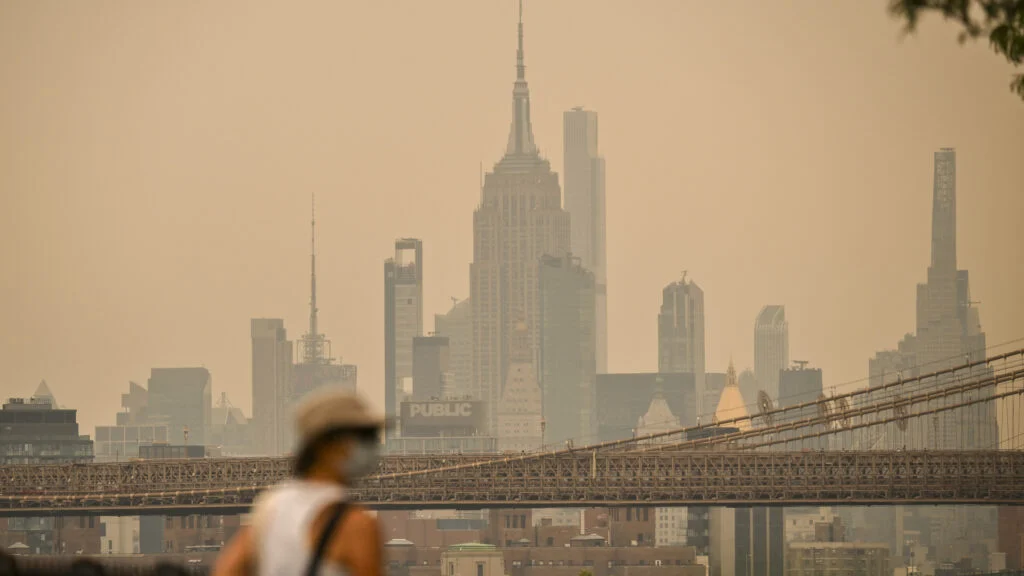
As thick plumes of wildfire smoke from millions of burning acres in Canada descend upon major metropolitan centers across the United States, the atmosphere has transformed into a visceral, sepia-toned reminder of our planet’s fragility. In New York City, the impact was immediate and measurable: by the conclusion of the first day of heavy haze, emergency room visits for asthma exacerbations surged by 31%, according to municipal health data. This respiratory crisis did not occur in a vacuum; it struck a city already reeling from its second major heat wave of the 2026 season, creating a dangerous synergy of extreme heat and toxic air. These overlapping events are not mere coincidences but are the physical manifestations of the cyclical and compounding relationship between fossil fuel combustion, a rapidly warming climate, natural disasters, and the resulting burden on human health. While some observers may view this as a signal that the climate crisis has reached an insurmountable tipping point, history suggests a different interpretation. If we examine the trajectory of environmental policy over the last century, we find that health-related environmental catastrophes have often served as the necessary catalysts for profound legislative and social transformation.
To understand the potential of the current moment, one must look back to the post-World War II era, a time when the concept of global warming was largely confined to niche scientific circles. During this period, industrialized cities faced an environmental challenge that felt just as overwhelming as today’s climate crisis: rampant local air pollution. In the mid-20th century, regulations governing air quality were virtually nonexistent. The prevailing ethos of industrial progress prioritized output over environmental stewardship. Municipalities often incinerated garbage within city limits rather than transporting it to distant landfills, and the proliferation of automobiles—unfettered by emission standards—filled the streets with exhaust. Coal remained the primary energy source for heating and manufacturing, leading to a reality where smoke and soot were ubiquitous features of urban life. It was common for residents in cities like Pittsburgh, London, or New York to find layers of black sediment on their windowsills and cars every morning.
At the time, the scientific community was beginning to categorize the specific components of this "urban miasma." These substances—now classified by the World Health Organization as "classical air pollutants" and by the U.S. Environmental Protection Agency as "criteria air pollutants"—include carbon monoxide, particulate matter (PM), ground-level ozone, sulfur dioxide, and nitrogen dioxide. Each of these pollutants carries distinct health risks based on its chemical properties and how it interacts with human physiology. Particulate matter, for instance, can penetrate deep into the lung tissue and even enter the bloodstream, triggering systemic inflammation and cardiovascular events. Despite the growing body of evidence linking these pollutants to chronic illness, meaningful regulation remained elusive for decades as industrial interests and political inertia maintained the status quo.
The tipping point for regulation finally arrived when these chronic issues escalated into acute, undeniable tragedies. The most famous of these was the Great Smog of London in December 1952. For five days, a period of stagnant atmospheric conditions trapped the emissions from coal fires and industrial plants over the city, creating a lethal "pea-souper" fog. The air turned a sickly yellow-black, and visibility dropped to near zero. By the time the winds shifted, the human cost was staggering: tens of thousands of people had fallen ill, and later estimates suggested that as many as 12,000 deaths were attributable to the event. This catastrophe stripped away the abstraction of environmental health, making the dangers of pollution a matter of immediate national security. The public outcry that followed led directly to the passage of the Clean Air Act of 1956 in the United Kingdom, a landmark piece of legislation that mandated a shift away from "smokey" fuels and set the stage for modern environmental governance.
The United States experienced its own awakening a decade later. In November 1966, New York City was engulfed by its most alarming smog event on record. As sulfur dioxide and carbon monoxide levels reached unprecedented heights, the city’s leadership was forced to take drastic measures. For the first time in the city’s history, emergency messaging was broadcast via television, radio, and print media, pleading with citizens to reduce their energy consumption and limit the use of private automobiles. Vulnerable populations—those with preexisting heart or lung conditions—were urged to remain indoors behind closed windows. The city’s infrastructure buckled; as municipal incinerators were ordered to shut down to prevent further emissions, garbage began to pile up on the streets. The inflammatory nature of the smog caused hundreds of thousands of New Yorkers to suffer from shortness of breath, and approximately 200 people died from the acute effects of the pollution.
The 1966 New York smog was a galvanizing moment for the American environmental movement. The tragedy was widely covered by national media, resonating with urban dwellers across the country who recognized their own cities’ vulnerabilities. The legislative response was remarkably swift. Within a month, New York City updated its administrative code to expand air pollution surveillance and restrict emissions. More importantly, the event caught the attention of the federal government. Just two months after the New York crisis, President Lyndon B. Johnson delivered a special message to Congress entitled "Protecting Our National Heritage." In his address, Johnson explicitly referenced the New York smog as evidence that the nation could no longer ignore the poisoning of its atmosphere. This advocacy led to the 1967 Air Quality Act and eventually the comprehensive Clean Air Act of 1970, which established the National Ambient Air Quality Standards (NAAQS).
The success of these regulations cannot be overstated. By 2020, collective levels of the six criteria pollutants in the U.S. had dropped by 78% compared to 1970 levels, even as the economy grew and the population increased. In some cases, individual pollutant levels dropped by more than 90%. Local emissions-driven smog events, which were once a regular and deadly occurrence in American cities, became a thing of the past. This historical victory provides a blueprint for the current struggle against the climate crisis, but it also highlights a critical distinction in the nature of the threat.
Criteria air pollutants and greenhouse gases (GHGs) like carbon dioxide, methane, and nitrous oxide are distinct yet fundamentally linked. Both are primarily the byproducts of combustion, but they harm us through different pathways. Criteria pollutants are "direct killers"; they cause immediate illness, cancer, and premature death due to their direct physical interaction with the human body. Greenhouse gases, by contrast, act as "indirect killers." While CO2 is not toxic at atmospheric levels, its accumulation in the atmosphere traps heat, fundamentally altering the Earth’s climate systems. This warming, in turn, creates a cascade of health risks: injuries from more frequent and intense hurricanes, the expansion of vector-borne infectious diseases, increased allergen-inducing pollen, and the proliferation of massive wildfires.
Today, more than half a century after the first Clean Air Acts, we find ourselves at a new crossroads. The increasing frequency of natural disasters—hurricanes, floods, droughts, and the migrating haze of wildfire smoke—is shifting climate change from an abstract scientific prediction to a tangible, felt reality for hundreds of millions of people. Much like the smog events of the 1950s and 60s, these disasters are making the invisible visible. The science of public perception confirms this shift. Data from the Pew Research Center indicates that 67% of individuals across 25 countries now view climate change as a major threat to their nations. Crucially, research shows that personal experience is the most powerful driver of this shift; individuals who have personally endured an extreme weather event are more than twice as likely to view climate change as a crisis compared to those who have not. Over 80% of those who experience extreme weather now recognize climate change as a contributing factor.
This shift in perception presents a vital opportunity for public health advocates and policymakers. To secure a sustainable future, we must bring the true underlying root causes of every extreme weather event to the forefront of the public discourse. Highlighting the health risks and the economic costs of these events is particularly effective for engaging those who may be skeptical of broader climate science. The link between fossil fuel combustion and the smoke filling our children’s lungs must be emphasized clearly, efficiently, and unapologetically.
As we look toward the future, we must draw strength from the environmental victories of the 20th century. The physicians and researchers who witnessed the smog of 1966 did not simply treat the patients in their emergency rooms; they used their expertise to demand systemic change. Today’s health professionals—including environmental health physicians like Rebecca Florsheim and specialists in pandemic prevention like Neil Vora—are calling for a similar mobilization. We must treat the current wave of climate-driven disasters not just as tragedies to be managed, but as evidence that demands action. If we follow through on the commitment to link climate health to public policy, this era will be remembered not for the escalation of environmental disasters, but as the moment we used those crises to finally secure a breathable, livable world for generations to come.
