
 By Rifan Muazin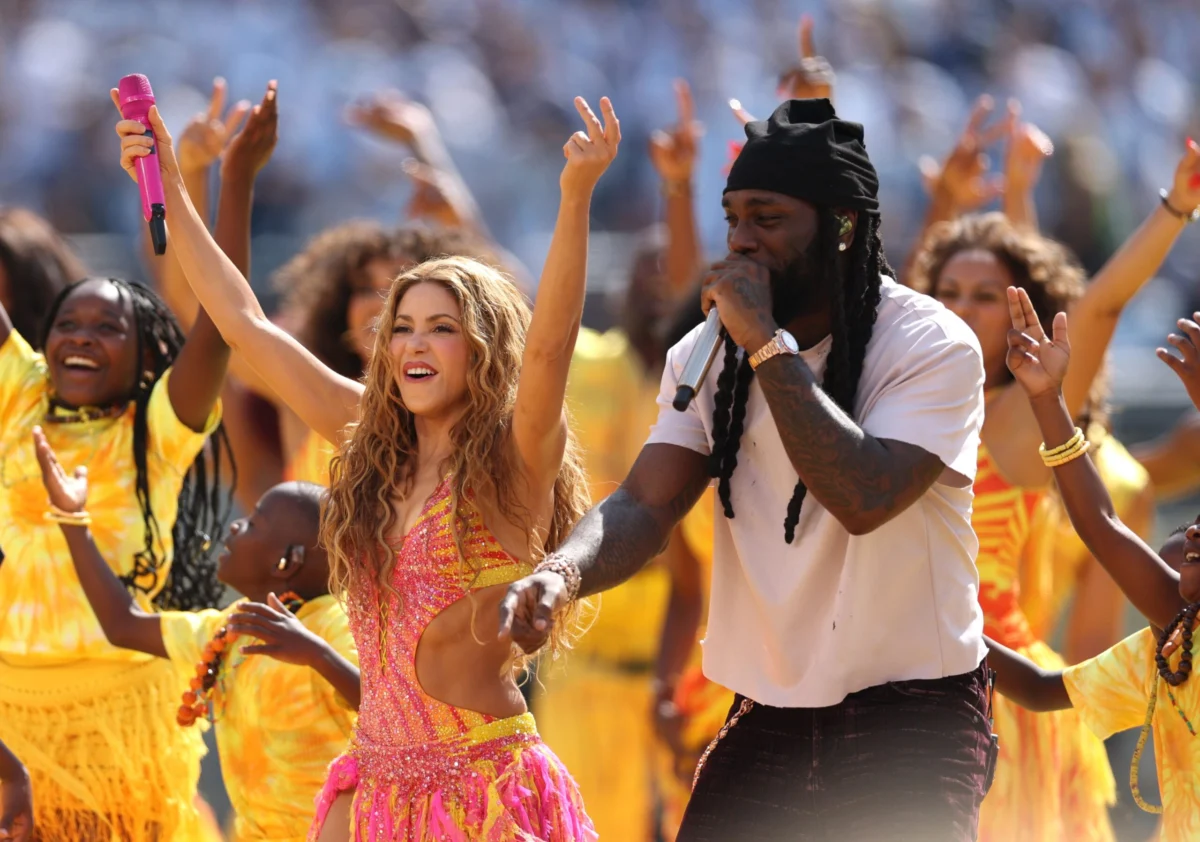
The 2026 FIFA World Cup has been a tournament defined by its unprecedented scale, being the first iteration to feature 48 teams and three host nations: the United States, Mexico, and Canada. As the tournament reached its crescendo at the temporarily re-christened New York New Jersey Stadium—known to locals and NFL fans as MetLife Stadium—the halftime show during the final match between Spain and Argentina had to be more than just a musical intermission; it had to be a statement of global unity. The production, which lasted exactly 11 minutes, was a masterclass in cultural curation, blending the nostalgia of legacy acts with the chart-dominating power of modern icons, all while leaning into a visual aesthetic of "childlike wonder" designed to soothe the nerves of a world watching a tense, scoreless stalemate.
The show was curated by Coldplay frontman Chris Martin, who brought the same spirit of collaborative generosity he displayed during the Super Bowl 50 halftime show in 2016. Martin’s vision for the 2026 final was centered on the concept of the "Global Citizen," a theme that resonated through a lineup that spanned four continents. By leveraging the star power of Justin Bieber, BTS, Shakira, and Madonna, the production ensured that every major television market on the planet was represented. This was not merely a concert; it was a strategic exercise in soft power and international marketing, estimated to have been viewed by a record-breaking 1.5 billion people worldwide.
The spectacle opened with a high-octane tribute to the "Queen of Pop." Madonna, an artist whose career has spanned more than four decades, took the stage with a performance that artfully blended her past with her present. She chose to open with a reimagined mashup of her 2000 hit "Music" and The Trammps’ 1976 disco staple "Disco Inferno." This choice was a nod to her "Confessions on a Dance Floor" era, particularly as she was joined on stage by her longtime collaborator and producer Stuart Price. Price, who famously helmed the Confessions album and its subsequent tour, served as her live DJ, orchestrating a soundscape that felt both retro and cutting-edge.
Madonna’s entrance was one of the night’s most talked-about moments. Rather than a traditional stage entrance, she approached the field in a custom-built dune buggy, flanked by a "flock" of zesty roller skaters whose neon-clad movements evoked the street culture of Venice Beach and the club scenes of Berlin. In a move that bridged the gap between entertainment and sports history, the buggy carried two of football’s greatest legends: the Brazilian icons Ronaldo and Ronaldinho. The two World Cup winners appeared slightly dazed by the sheer sensory overload but remained smiling, serving as a reminder of the tournament’s rich history even as the music looked toward the future.
As the disco beats faded, the production took a "hard tonal swerve" into the whimsical. In a move that could have only been sanctioned under Chris Martin’s playful curation, a group of Muppets appeared on a secondary stage. Backed by a color-coordinated marching band, the Muppets performed a high-energy rendition of The White Stripes’ "Seven Nation Army," a song that has become an unofficial anthem in football stadiums across the globe. This segment was elevated by the presence of Gustavo Dudamel, the world-renowned conductor who is currently in the midst of his high-profile transition from the Los Angeles Philharmonic to the New York Philharmonic. Dudamel, dressed in a crisp blue suit with "Dudamel 1" emblazoned on the back, conducted the ensemble with his trademark exuberance. The band itself was a symbolic fusion of the New York Philharmonic and the Simón Bolívar Symphony Orchestra of Venezuela, representing a musical bridge between the North and South Americas.
The transition from orchestral rock to K-pop was seamless, as the floor was ceded to BTS. The South Korean septet, who have become the face of the global Hallyu wave, performed their 2020 smash hit "Dynamite." In the context of 2026, the performance felt like a celebration of the group’s enduring relevance. Their choreography was as precise as ever, but the performance also featured moments of surprising intimacy. The members took turns leaning into the high-definition cameras, singing directly to the viewers at home with a tenderness that contrasted with the massive scale of the stadium. This "positivity jam" served as a vibrant middle chapter to the show, emphasizing the theme of international friendship.
The North American contingent was represented by Justin Bieber, whose introduction provided a moment of comedic relief. Jason Sudeikis and Brendan Hunt appeared on the massive stadium screens in character as Ted Lasso and Coach Beard, the beloved protagonists of the hit series that helped popularize football (soccer) in the United States. Their banter set the stage for Bieber, who represented his native Canada, one of the tournament’s co-hosts. Bieber’s performance focused on his recent evolution as an artist, specifically highlighting "Everything Hallelujah" from his fictional 2025 album SWAG II. The song, which had already achieved viral status following a surprise Coachella performance, brought a gospel-infused pop sensibility to the stadium.
Bieber’s aesthetic choices were a topic of immediate discussion on social media. Dressed in a deconstructed rugby shirt—a playful, if slightly "wrong sport," nod to athletic culture—Bieber leaned into a rugged, more mature look. His facial hair, described by critics as a "goatee that has gone to the woods in order to find itself," was captured in tight, lingering camera shots that allowed the audience to contemplate the singer’s journey from teen idol to seasoned performer. The "church camp" vibes of his set provided a moment of reflection before the high-energy finale.
If Madonna was the show’s legendary opening and Bieber its modern soul, Shakira was its beating heart. The Colombian superstar, often referred to as the "Queen of the World Cup" due to her iconic anthems for the 2006, 2010, and 2014 tournaments, proved why she remains a perennial favorite for FIFA events. Appearing barefoot in a shredded pink and yellow dress, Shakira’s performance of "Dai Dai" was a highlight of the evening. The song, a collaboration with Nigerian Afrobeat giant Burna Boy, was specifically commissioned as the official anthem for the 2026 World Cup. It perfectly encapsulated the "intercultural" spirit of the event, blending Latin rhythms with West African beats.
Shakira’s stage presence was described by observers as "immortal," her energy matching that of the dozens of child dancers who swirled around her. Her ability to execute complex chest and hip isolations while maintaining a flawless vocal delivery served as a reminder of her unique position in the pop pantheon. In a world of global citizens, Shakira’s performance suggested that she might be the most "global" of them all, effortlessly navigating different languages and musical traditions.
The finale brought all the disparate elements together. The PS22 Chorus, a world-famous elementary school choir from Staten Island, New York, took to the field to lead the stadium in a rendition of "Believe In Love." The song, an unreleased track from Coldplay, served as the emotional anchor of the show. As the Muppets reappeared and the field filled with hundreds of performers, Chris Martin himself emerged from the crowd. His role as the curator was evident in the way he allowed the other stars to shine, only stepping into the spotlight at the very end to harmonize with the children.
The visual palette of the finale was a riot of neon pastels and flags adorned with hearts, a deliberate choice to counteract the "harsh energy" of the high-stakes match occurring on the pitch. In a tournament that had seen its fair share of sloppy slide tackles and heated referee squabbles, the halftime show was a 11-minute vacuum of peace and love. The "childlike wonder" Martin sought to evoke was palpable as the stadium transformed into a kaleidoscope of color.
As the performers cleared the field and the players from Spain and Argentina returned for the second half, the impact of the show lingered. It was a production that understood the assignment: to entertain a global audience of billions while honoring the specific cultural moment of 2026. From the disco dunes of Madonna to the gospel-pop of Bieber and the Afro-Latin fusion of Shakira, the 2026 FIFA World Cup Final halftime show was a testament to the power of music to unite a fractured world. It was, as Justin Bieber sang, a "World Cup Hallelujah."
