
 By Titik Puspa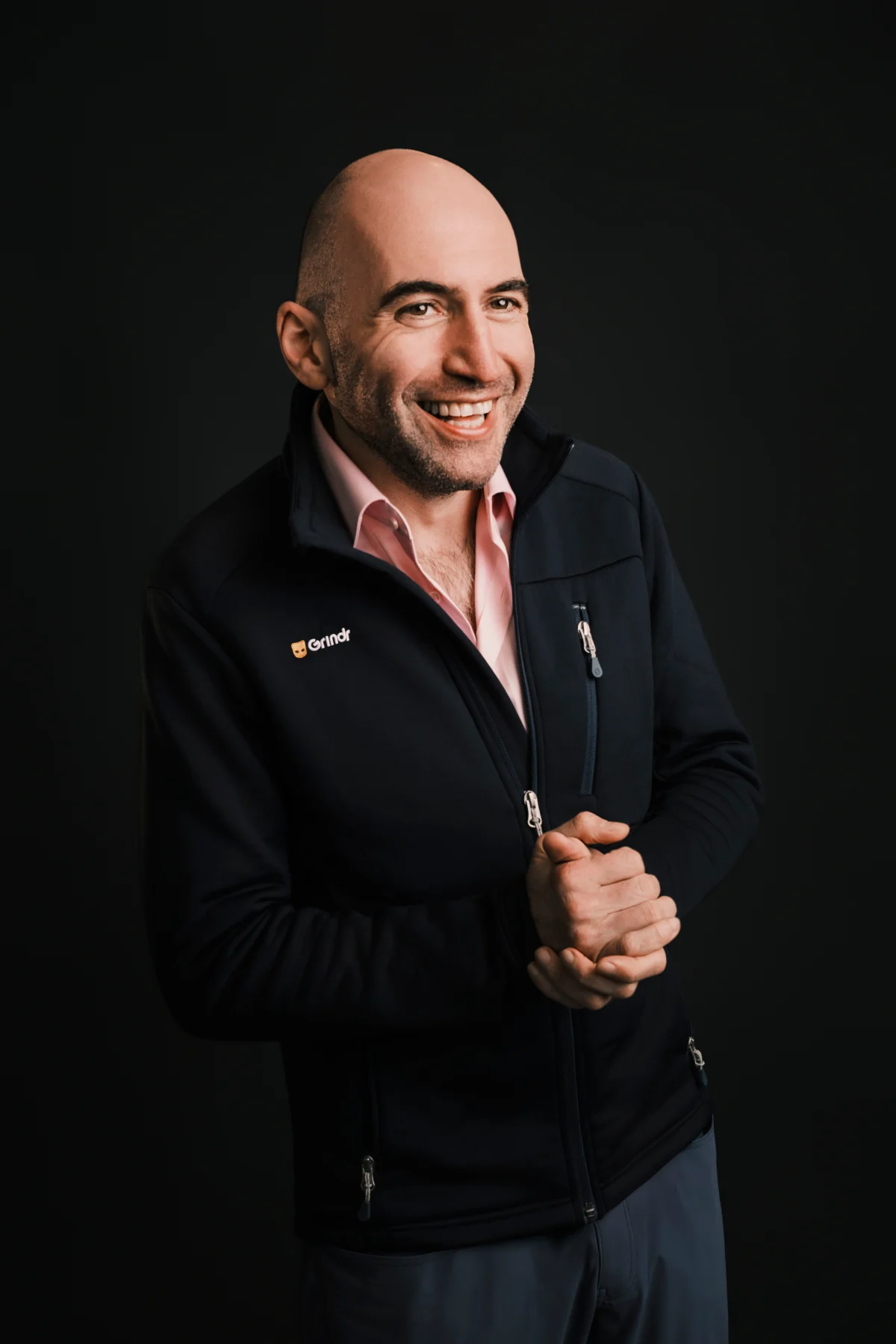
When George Arison stepped into the CEO role at Grindr in 2022, he inherited a company at a critical juncture. Fresh off a tumultuous period that saw it transition from Chinese ownership to a mandated divestiture and then a private-equity acquisition, Grindr was a profitable entity but lacked a clear strategic direction and robust product development. Fast forward four years, a SPAC listing, and a somewhat controversial return-to-office mandate, and Grindr is now presenting a compelling narrative as a significant growth story. The company is on track to nearly triple its revenue, projecting over $540 million in revenue for the current year, up from $195 million in 2022, while maintaining impressive adjusted EBITDA margins exceeding 40%.
This remarkable revenue surge has been primarily driven by an increase in what existing customers are willing to pay, rather than a dramatic expansion of its user base. In the second quarter of this year, Grindr boasted 1.4 million paying users, representing 9% of its total user base. However, the average revenue per user (ARPU) has seen a substantial increase since Arison’s tenure began in 2022. Arison is now keenly focused on identifying the next wave of growth, a significant part of which involves transforming Grindr into a "gayborhood in your pocket." This ambitious vision extends beyond its core function of dating and hookups to encompass a comprehensive platform for healthcare – offering everything from erectile dysfunction medication and HIV prevention to, eventually, connecting users with LGBTQ+-friendly doctors. Furthermore, the platform aims to facilitate travel by helping users discover and connect with communities wherever they go. This "everything app" approach mirrors a prevailing trend in consumer technology, where companies are striving to become indispensable hubs for a wide range of user needs.
However, Arison is not solely relying on this expansive vision to fuel future growth. Grindr is also preparing to launch a new, significantly more premium subscription tier later this year, which the company is betting will resonate with the market. This new offering, dubbed "EDGE," has already generated some online backlash, with critics on platforms like Reddit questioning its necessity and price point, with some lamenting the perceived departure from the app’s original ethos, echoing sentiments like "literally who’s paying for this" and "we need 2012 grindr back."
Arison, who previously founded and led Shift Technologies, an online used-car marketplace that he also took public via a SPAC in 2020, is actively engaging with the press to address what he perceives as an unfair valuation of Grindr’s stock. He argues that institutional investors are applying a "Grindr discount" simply because it is a gay dating app, overlooking its potential as a broader tech platform. During a Zoom call with TechCrunch, Arison recounted an investor who explicitly included a "Grindr discount" line item in a financial model, reducing a fair-value estimate by a notable 25%.
This sentiment of a market discount, however, is not universally shared. Major financial institutions like Morgan Stanley, Goldman Sachs, and Raymond James have recently raised their price targets for Grindr’s stock. In July, Morgan Stanley upgraded its rating to "overweight," specifically citing the upcoming EDGE tier and Grindr’s strategic push into telehealth as key growth drivers. This positive outlook has contributed to a roughly one-third surge in Grindr’s stock price over the past six months. Despite this upward momentum, the perceived "Grindr discount" persists, with the stock currently trading at approximately 11 times its projected 2027 EBITDA, a valuation that represents about a 35% discount compared to its industry peers, though the precise reasons for this persistent valuation gap remain somewhat elusive.
Arison, characterized by his amiable demeanor and a subtle hint of his native Georgian accent, was candid and forthcoming in a recent Q&A session with TechCrunch, which has been edited for clarity and conciseness to delve deeper into the company’s transformative journey and future aspirations.
When you took the helm at Grindr in 2022, the company was in a state of flux. What were your immediate priorities?
My initial focus was on three core pillars. Firstly, company building. During the peak of the COVID-19 pandemic, hiring practices were less stringent, leading to an environment where productivity was often estimated at only three to four hours of genuine work per day. To address this, we implemented a hybrid work model, requiring employees to be in the office two days a week starting in the summer of 2023. This decision, while generating significant media attention and some initial backlash, ultimately led to a more streamlined and efficient workforce. Consequently, our employee count decreased to approximately 70 individuals. Today, only about 25 employees who were with Grindr prior to my arrival remain, reflecting a significant organizational overhaul. We now operate with a lean team of 175 U.S. employees, augmented by a team in Colombia, and are on track to achieve over $540 million in guided revenue this year.
Secondly, driving revenue growth through product innovation. My objective was to develop and launch products that users would find valuable enough to pay for. This strategy has been instrumental in increasing our pay conversion rate from under 6% to over 9%, and has effectively doubled our average revenue per user (ARPU).
Thirdly, establishing a long-term vision. This involves realizing the "gayborhood in your pocket" concept, which encompasses the expansion into adjacent areas such as healthcare and travel. These initiatives are designed to create a more comprehensive and integrated experience for our users.
You’ve spoken about Grindr’s engineering culture being underestimated. Could you elaborate on the actual size of the team responsible for this technological output?
Our technical team comprises approximately 94 to 95 individuals across all engineering disciplines. I recall a conversation with a CEO of a large tech company who posited that advancements in AI would enable us to achieve what we previously thought required a team of 300 to 350 people with a significantly smaller headcount. His prediction has proven remarkably accurate. We are currently accomplishing the work equivalent to what would have historically demanded around 350 individuals, with a team of approximately 100. A significant development is that roughly 80% of our codebase is now AI-generated, leading to a substantial 2.5x increase in engineering productivity over the past year.
Grindr recently tested a premium AI-powered tier, EDGE, with pricing that, in Canada, translated to approximately $350-$375 per month in U.S. dollars. This price point drew considerable online criticism. What is the status of this initiative?
It’s important to clarify that EDGE has not yet been officially released; it is currently in a testing phase, and a select group of users have access as part of this trial. This tier is positioned above our existing XTRA ($23.99/month) and Unlimited ($44.99/month) subscriptions. We are not marketing AI as a standalone product. Instead, we are offering features that leverage AI to enhance user experience and outcomes, utilizing user behavior and intent data, with explicit consent, to facilitate more accurate and meaningful connections than a basic profile could achieve. The retention rates for these new features have surpassed any previous metrics we’ve observed.
The pricing figures that circulated online were derived from one specific test point within a broader range of pricing strategies we employed to gauge market elasticity. This was not indicative of a final price. EDGE is slated for a public launch towards the end of this year or early next, at which point we will have a clearer understanding of its market reception. Our strategic approach views EDGE as a premium flagship offering, akin to a Tesla Model X or S, with the underlying technological advancements eventually cascading down to benefit the broader product suite over time.
Regarding the matching algorithms themselves, you’ve described leveraging AI to suggest potential partners outside of a user’s immediate geographic area. This is particularly relevant given the often-limited dating pools for gay men, even in major cities like San Francisco. What evidence do you have that these long-distance matches translate into meaningful connections?
Even in San Francisco, a city with a disproportionately high gay population compared to most other urban centers in the United States, the total number of gay individuals is estimated to be between 50,000 and 60,000. This number, while significant, still represents a relatively small pool for individuals seeking romantic partners, contributing to the general challenges gay men often face in dating. Our AI initiative aims to transcend these geographical limitations, potentially connecting users with individuals in distant cities, such as St. Louis, who exhibit genuine compatibility based on observed behaviors rather than solely on self-reported profile information.
While we do not track the intimate details of users’ relationships post-connection – as that would represent an overreach into personal privacy – we have observed significant trends that indicate the platform’s effectiveness. Grindr is widely recognized as the primary platform where the majority of gay men report meeting their partners. Furthermore, there is a discernible shift in preferences among younger cohorts compared to older generations. Approximately 50% of gay men under the age of 35 express a desire for long-term monogamous relationships, and a notable 25% indicate an interest in starting a family – aspirations that would have been considerably less common in my own generation. When individuals are queried about the obstacles to their relationship pursuits, a common response is the difficulty in finding a suitable partner. While I cannot definitively guarantee that our platform will resolve this challenge entirely, we believe it is a worthwhile endeavor to explore new avenues, given that existing approaches have clearly not achieved a comprehensive solution.
The potential for expanding Grindr’s addressable market beyond its core dating app functionality is immense. The healthcare initiatives you’re pursuing are particularly compelling. Could you provide more details on your strategy in this area, and whether you are developing these products in-house or acting as an intermediary for external providers?
Our initial foray into healthcare began with cash-pay products under our "Woodwork" line, which includes treatments for conditions such as erectile dysfunction, as well as access to GLP-1s and peptides. We chose cash-pay as the most straightforward entry point. Recently, we launched an integrated AI bot within the app that streamlines the entire transaction process, eliminating the need for users to navigate to Woodwork.com. Our second area of focus is HIV prevention and treatment. We have made a commitment to provide direct access to information for 10 million individuals regarding where they can obtain PrEP (Pre-Exposure Prophylaxis). This initiative is being implemented both domestically, through our in-app health center, and on an international scale.
The third, and most long-term, component of our healthcare strategy involves facilitating actual clinical care, such as connecting users with LGBTQ+-affirming doctors via telehealth services. While this is not something we are actively building today, I envision a future, perhaps a decade from now, where healthcare emerges as a more significant revenue stream for Grindr than our current core business.
Currently, non-subscription revenue, which includes advertising and healthcare services, constitutes a relatively small portion of Grindr’s overall business.
Indeed, subscriptions currently account for approximately 83% of our revenue, a slight decrease from around 86% in 2022. However, it’s crucial to note that this decline in percentage is occurring even as subscription revenue itself has experienced substantial growth, a testament to the significant expansion of our overall user base. The newer business ventures, such as healthcare and advertising, are genuinely in their nascent stages. Our long-term aspiration is to cultivate a company that, in ten years’ time, boasts a robust subscription business, a thriving advertising segment, a well-established healthcare division, and a significant presence in the travel sector, operating in parallel. At present, the latter two segments are still in their early developmental phases.
You’ve previously indicated that investors continue to apply a "Grindr discount" to the company’s stock due to its identity as a gay dating app. However, the stock has seen a substantial increase over the past six months, with Morgan Stanley upgrading its rating and the stock trading at a premium multiple compared to Match Group. Doesn’t this suggest that the market discount is diminishing?
It is our fervent hope that we are increasingly being recognized as a growth company. As CEO, I have overseen more than 16 consecutive quarters of revenue growth exceeding 25%, providing a solid basis for such an expectation. The issue of stigma is a very real one; we have encountered instances where a consulting firm declined to engage with us due to reputational concerns, and a bank even refused our funds during the Silicon Valley Bank crisis. This stands in contrast to the strong partnerships we have maintained with other major financial institutions like Goldman Sachs and Morgan Stanley. I believe much of this hesitancy stems from Grindr’s identity as a gay dating product, rather than dating itself being inherently controversial. It’s noteworthy that Tinder, which prominently features a "free tonight" button on its homepage, does not face similar scrutiny. Nevertheless, I concur that the market’s perception of our company has demonstrably improved.
