
 By admin
Hamas has announced its acceptance of a comprehensive disarmament plan for the Gaza Strip, a pivotal development that, if realized, could pave the way for a protracted period of peace and security in the region. The militant group stated that it had engaged in "responsible and positive" negotiations, culminating in a "national consensus" among Palestinian factions. This decision, however, is met with considerable skepticism by Israel, which remains unconvinced of Hamas’s genuine willingness to relinquish its arms and control. Israeli officials have reiterated their stance: no withdrawal from Gaza will occur until Hamas is fully disarmed. Beyond the 15-point roadmap initially presented by the US-led Board of Peace, a four-page addendum, exclusively obtained by the BBC, meticulously details a phased approach to Hamas’s disarmament and a gradual Israeli withdrawal.
The Intricacies of Hamas’s Disarmament: A Phased and Conditional Process
The core of the proposed agreement hinges on Hamas laying down its arms, a long-standing impediment to the advancement of President Trump’s ambitious 20-point peace plan for Gaza, first unveiled in September of the previous year. This plan notably advocated for the establishment of a Board of Peace, tasked with overseeing the agreement’s implementation and, crucially, managing the financial resources allocated for Gaza’s redevelopment. The principles embedded within both the roadmap and the newly disclosed document outline a clear progression: "A process shall begin to inventory and store heavy weapons, military production sites, weapons depots, and tunnels." This critical step, however, is explicitly contingent upon Israel fulfilling its obligations under the initial ceasefire agreement, which was brokered in October of the preceding year.
This conditional clause represents a significant potential breakthrough. The disarmament process would fall under the purview of the Palestinian National Committee, a body composed of independent technocrats to whom Hamas has agreed to cede authority. Furthermore, the deployment of an International Stabilization Force (ISF) to Gaza is a crucial element of the plan. Significantly, the document emphasizes that the disarmament process will encompass not only Hamas but also other Palestinian factions operating within the territory. The roadmap documents then directly link this disarmament initiative to "a phased Israeli withdrawal," with a crucial stipulation that "no weapons shall be transferred or handed over to Israel or to any non-Palestinian party." This provision aims to prevent the illicit proliferation of arms and ensure that disarmament serves the purpose of regional stability rather than simply rearming other actors.
Navigating the Practicalities: Challenges and Timelines for Disarmament
The precise mechanisms by which the handover of weapons would be executed remain somewhat opaque. The prevailing understanding is that all heavy weaponry, including Hamas’s remaining rocket arsenal and other military hardware, would be transferred to a secure storage facility overseen by the National Committee. As of now, this committee has not yet established a physical presence within Gaza, having conducted its operations from Cairo.
Regarding the timeline, the document seen by the BBC indicates a phased approach, stating that the process would unfold "in a gradual, sequential, and time-bound manner, based on an implementation schedule to be prepared within 14 days." Hamas, however, has concurrently declared that its willingness to surrender heavy weapons is inextricably linked to Israel’s commitment to ending "all forms of aggression" and withdrawing its forces from Gaza. The group’s statement underscored that Israel’s commitment to ceasing its military operations in Gaza is a "fundamental prerequisite" for any progress on the deal.
The proposed plan also addresses the dismantling of Hamas’s extensive underground tunnel networks, weapons stores, and manufacturing facilities. These would be systematically mapped and destroyed as part of the disarmament process. Remaining personal arms and police-issued weapons would undergo a phased registration and handover process to a newly established Palestinian police force. This new force would operate under the supervision of the International Stabilization Force (ISF). Hundreds of recruits for this new police force have already undergone training in Egypt and Jordan. In a recent development, Israel’s cabinet gave its approval for approximately 200 international troops from "friendly countries" to form part of the ISF contingent in Gaza, though their deployment is still pending. Hamas has also been actively seeking assurances that pro-Israel militias operating within Gaza will be dismantled and will also surrender their arms, indicating a desire for a comprehensive demilitarization of the territory.
Israel’s Stance: Deep Skepticism and Unwavering Demands
Israel’s reaction to the proposed disarmament plan has been characterized by deep skepticism, particularly regarding Hamas’s commitment to relinquishing its weapons and its overarching control in Gaza. Far-right National Security Minister Itamar Ben-Gvir publicly expressed his dissent via Telegram, stating that the plan is "not acceptable" to Israel. Israeli officials have consistently maintained that any Israeli withdrawal from the "Yellow Line"—the demarcation signifying areas under Israeli control—will not commence until Hamas is demonstrably disarmed.
Adding a layer of complexity to the situation is Israel’s current control over a significantly larger portion of Gaza than initially stipulated by the October ceasefire agreement. Recent reports indicate that yellow concrete barriers, which previously delineated the Yellow Line, have been repositioned westward, extending Israel’s control to over 60% of the strip. This expansion of control complicates the notion of a phased Israeli withdrawal to pre-agreed lines.
A critical annex within the document seen by the BBC mandates that Israeli forces withdraw to the agreed Yellow Line "within 24 hours of the Israeli government’s approval of the plan." Furthermore, it stipulates that Israeli forces should not re-enter these areas "as long as Hamas complies with the implementation of the agreement." This clause highlights the delicate balance of trust and compliance that must be established for the agreement to succeed.
The Role of Civil Servants and the Transfer of Power
A significant element of the proposed plan addresses the status of civil servants within Gaza. Earlier this month, Hamas announced the dissolution of its government in Gaza, signaling its readiness to transfer power to the National Committee as part of the broader ceasefire negotiations. A key demand from Hamas throughout these negotiations has been the assurance that the tens of thousands of civil servants employed by its government prior to the recent conflict will receive compensation or be offered new employment opportunities. This group includes not only Hamas police and security personnel but also essential workers in the health and education sectors. While many of these individuals are likely to be supporters of Hamas, the plan aims to ensure their fair treatment.
The agreement proposes to treat all public employees "lawfully, fairly, and with dignity regarding their rights." The practical implications of this commitment, particularly concerning security vetting for civil servants who will work under the National Committee, remain a subject of ongoing discussion and potential scrutiny. The integration of these individuals into a new administrative structure will be a critical test of the plan’s ability to foster a stable and functional governance framework.
The Strategic Calculus: Why Hamas is Agreeing Now
The timing of Hamas’s acceptance of this disarmament plan is likely influenced by a confluence of factors. Recent negotiations aimed at advancing Trump’s peace plan have seen Hamas subjected to intense pressure from regional mediators, who themselves have been urged by Washington to demonstrate tangible progress. The recent elevation of Hamas chief negotiator, Khalil al-Hayya, to the overall leadership of the group, replacing a five-member council, has streamlined decision-making processes. Al-Hayya commands strong support from Hamas members within Gaza and from the group’s armed wing, lending significant weight to his influence.
Regional geopolitical shifts may also have played a role. Early in the recent escalation of regional tensions, some Hamas officials were reportedly adopting more hardline stances, potentially anticipating a decisive victory for Iran, a key backer of the group, which they believed would bolster their own position. However, sources close to Hamas suggest that this strategic calculation has since been abandoned, as hopes for such an outcome have diminished. Palestinian officials involved in the ongoing talks indicate that the new leadership is prepared to make this landmark political decision, driven in large part by the devastating humanitarian conditions that continue to plague Gaza. The sheer scale of suffering and destruction has created an undeniable imperative for a political resolution.
The Grim Reality in Gaza: Amidst Hope, Persistent Hardship
Despite the announcement of Hamas’s acceptance, the reaction on the ground in Gaza has been muted, marked by a palpable sense of weariness and deep-seated skepticism. While some residents have expressed a faint glimmer of hope, years of failed ceasefires and shattered agreements have fostered a profound distrust in new political pacts. The Israel Defense Forces (IDF) confirmed to the BBC reports of an Israeli strike on Gaza occurring mere hours after President Trump announced the deal, an incident in which several Palestinians were reportedly injured. This immediate post-announcement violence underscores the fragility of the situation and the challenges in de-escalating hostilities.
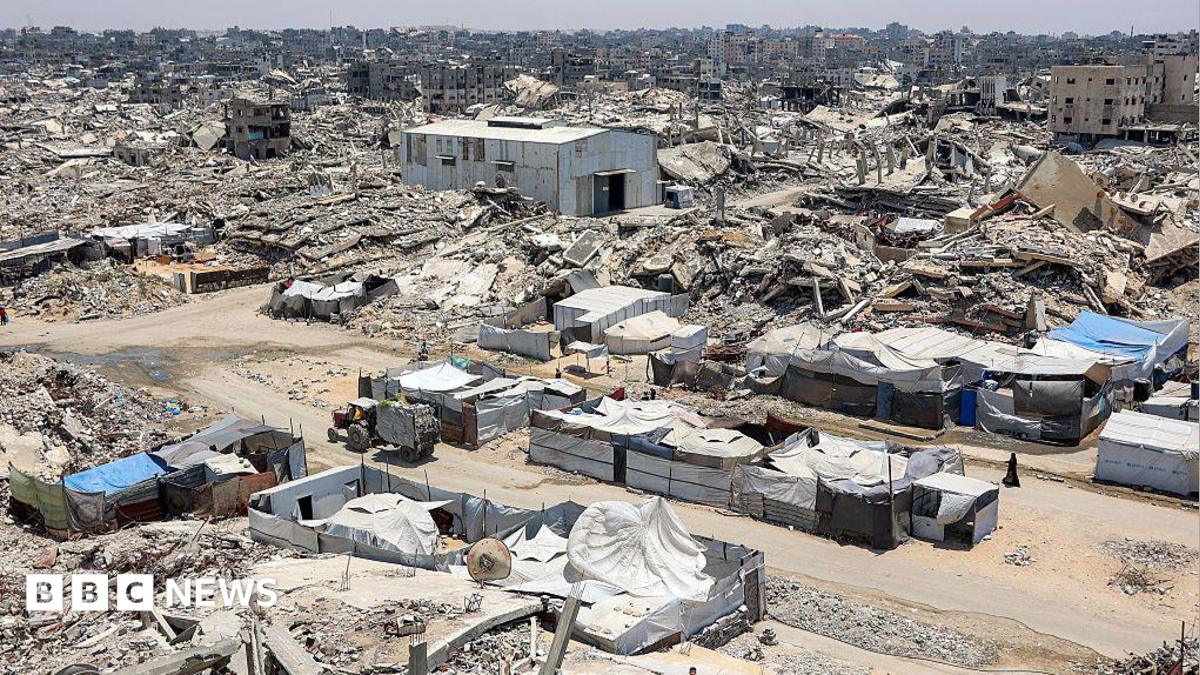
Over two million Palestinians continue to endure harrowing conditions in Gaza, grappling with widespread disease, a severe scarcity of food and clean water, and inadequate shelter. Their existence is confined to an ever-shrinking territory, exacerbated by Israel’s ongoing construction of land barriers. These barriers not only further displace families but also expand Israel’s "Yellow Line" temporary control area deeper into the enclave.
The human cost of the ongoing conflict remains devastating. According to figures from the Hamas health ministry, which are considered reliable by the United Nations, at least 1,168 Palestinians, including children, have been killed in Israeli attacks since the previous ceasefire took effect. Conversely, four Israeli soldiers have been killed in Palestinian attacks in Gaza during the same period. Satellite imagery analyzed by BBC Verify in November of last year revealed that Israel had destroyed more than 1,500 buildings in areas of Gaza that have remained under its control since the ceasefire. The actual number is likely considerably higher, as imagery is not available for all affected areas. Compounding the destruction, UN estimates indicate that approximately 60 million tonnes of debris have been generated since October 2023, a stark testament to the scale of the devastation. The path to rebuilding and recovery, even under an agreed peace plan, will be an arduous and monumental undertaking.
