
 By admin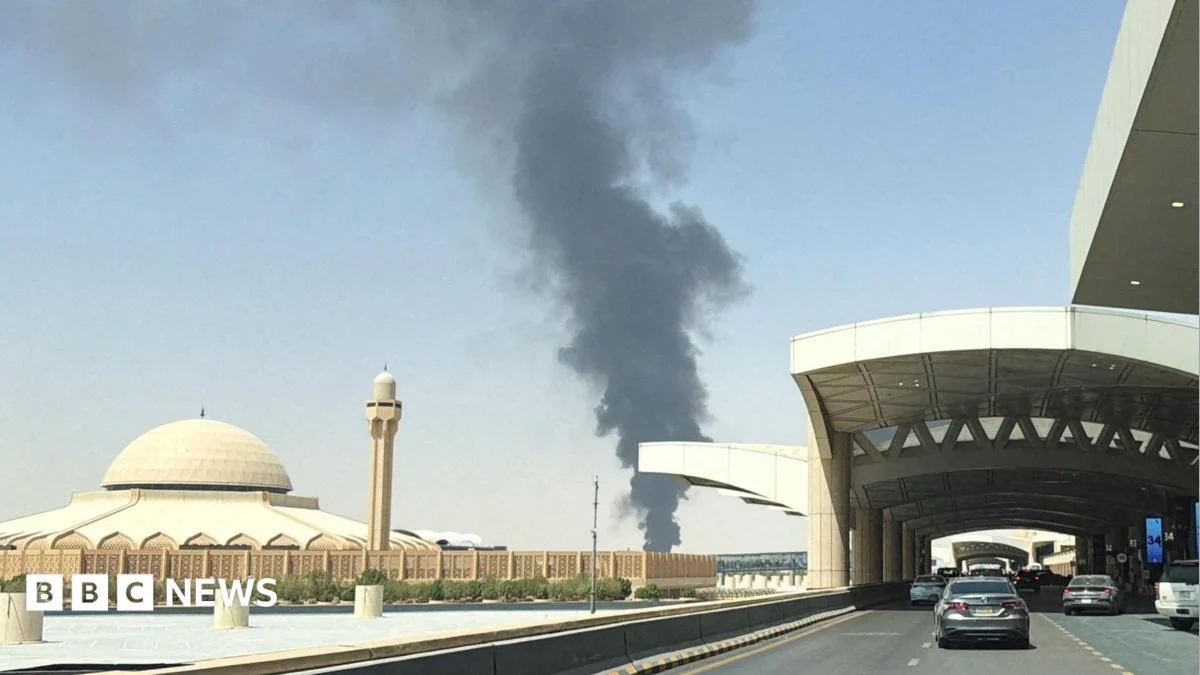
In a significant escalation of the protracted conflict in Yemen, Iran-backed Houthi militants have claimed responsibility for a series of coordinated drone and ballistic missile attacks that struck the Saudi capital, Riyadh, as well as vital energy facilities along the Kingdom’s Red Sea coast. The audacious strikes, which occurred on Saturday, have sent ripples of concern across the region and prompted urgent advisories from international bodies regarding travel and potential impacts on global energy markets. Saudi authorities confirmed the interception of a ballistic missile targeting Riyadh, underscoring the heightened threat posed by the Houthi offensive.
The unfolding events began with the unsettling sight of a column of thick black smoke billowing from fuel tanks situated near King Khalid International Airport in Riyadh. This visible manifestation of the attack led to temporary disruptions in flight operations, with the flight tracking website FlightRadar24 reporting significant delays and cancellations. The capital had been jolted by air raid alerts, a stark reminder of the increased intensity of Houthi attacks on Saudi Arabia, which have notably surged since July. Residents in the capital described hearing the alarms, followed by the unsettling sensation of their windows shaking, an experience one 27-year-old resident of northern Riyadh described as "definitely scary" and "unexpected." Firefighters were observed attempting to contain a blaze at a burnt-out Aramco fuel tank, a direct consequence of the reported strikes. Saudi Civil Defence had issued overnight alerts warning of potential danger in Riyadh and other regions, before later issuing an all-clear on Saturday morning.
In response to the escalating hostilities, the US Department of State issued a strong advisory urging American citizens in the Middle East to maintain vigilance and prepare for potential travel disruptions, including flight cancellations. The statement explicitly condemned the "Iranian-supported Houthis" for their "hostilities against Saudi Arabia, including civilian airports," warning that the ongoing military conflict "has the potential to escalate rapidly" and advising Americans to "seriously reconsider travel to and through the region." This advisory reflects the growing apprehension among international powers regarding the volatile security situation and its broader implications.
A Saudi-led coalition official spokesperson confirmed that air defenses had successfully thwarted "hostile attempts to target civilians" not only in Riyadh but also in the cities of Bish, Taif, Farasan, and Yanbu. This indicates a broad and coordinated nature to the Houthi offensive, aiming to inflict damage and sow fear across multiple strategic locations within Saudi Arabia.
Houthi military spokesman Yahya al-Sarea, in a statement disseminated online, detailed the scope of the operation, claiming that a "large number of ballistic and cruise missiles and drones" were deployed to strike "sensitive sites" in Riyadh and Aramco state oil and gas company facilities in Yanbu. He framed these attacks as a retaliatory measure against "the Saudi enemy’s criminal attempts" to target the Yemeni capital, Sanaa, which is currently under Houthi control. Al-Sarea also accused Saudi Arabia of launching approximately 300 strikes across Yemen in the preceding week, highlighting the reciprocal nature of the violence and the ongoing cycle of retribution.
The current wave of attacks is intrinsically linked to the brutal civil war that has been devastating Yemen for years. The Houthis, an armed political and religious movement, are locked in a fierce struggle against Yemen’s internationally recognized government, which receives crucial backing from Saudi Arabia. This conflict, now in its seventh year, has created one of the world’s most severe humanitarian crises, with millions displaced and facing widespread famine and disease. The Houthi’s decision to escalate attacks on Saudi territory represents a strategic maneuver to exert pressure on Riyadh and potentially disrupt its involvement in the Yemeni conflict.
This is not the first time the Houthis have targeted Saudi Arabia. In recent months, they have launched numerous attacks on targets within the Kingdom, including airports and oil infrastructure. Just this week, the group claimed responsibility for downing a Saudi fighter jet over Yemen, further underscoring their increasingly sophisticated military capabilities and their willingness to engage Saudi forces directly.
The intensification of hostilities comes at a grim human cost. An unconfirmed report from the Agence France-Presse (AFP) news agency, citing military sources on both sides of Yemen’s civil war, indicated that fighting on Saturday alone claimed 48 lives. According to the report, 31 Houthi fighters were killed, while government sources reported the loss of 17 soldiers on their side. This grim toll highlights the ongoing bloodshed and the immense human suffering perpetuated by the conflict.
Adding to the dire humanitarian situation, the International Organization for Migration (IOM), a United Nations body, reported on Friday that the number of people displaced by recent fighting in Yemen had surpassed 104,796. This figure underscores the continuous displacement and humanitarian needs arising from the escalating violence.
The Houthi seizure of the strategic port city of Mokha and Perim Island in recent times has further amplified regional concerns. These locations serve as critical gateways to key shipping routes utilized by Gulf states for exports to Asia and Europe. The Houthis have declared this naval blockade as a direct response to a Saudi blockade of ports and airports in Houthi-controlled northwestern Yemen. This tit-for-tat blockade strategy highlights the intricate web of economic and strategic leverage being employed by both sides. Notably, Saudi vessels have increasingly relied on this stretch of the Red Sea for oil exports, particularly since the Strait of Hormuz became a more precarious route due to geopolitical tensions involving the US and Iran.
The potential implications of these attacks extend beyond the immediate regional security landscape, reaching into the global energy market. Investment banking giant JP Morgan acknowledged the uncertainty surrounding the impact of the Yemen conflict on oil prices, admitting in a rare note to investors that "we simply don’t know how to model the endgame." This statement from a major financial institution reflects the broader market apprehension regarding the stability of oil supplies and the unpredictable nature of the conflict’s trajectory. The disruption of energy infrastructure in Saudi Arabia, a leading global oil producer, invariably raises concerns about potential price volatility and supply chain disruptions, affecting economies worldwide. The continuous attacks on Saudi energy assets by the Houthis serve as a stark reminder of the fragility of global energy security in the face of protracted regional conflicts. The strategic importance of the Red Sea shipping lanes, coupled with the vulnerability of Saudi energy infrastructure, creates a volatile environment with far-reaching economic consequences.
