
 By admin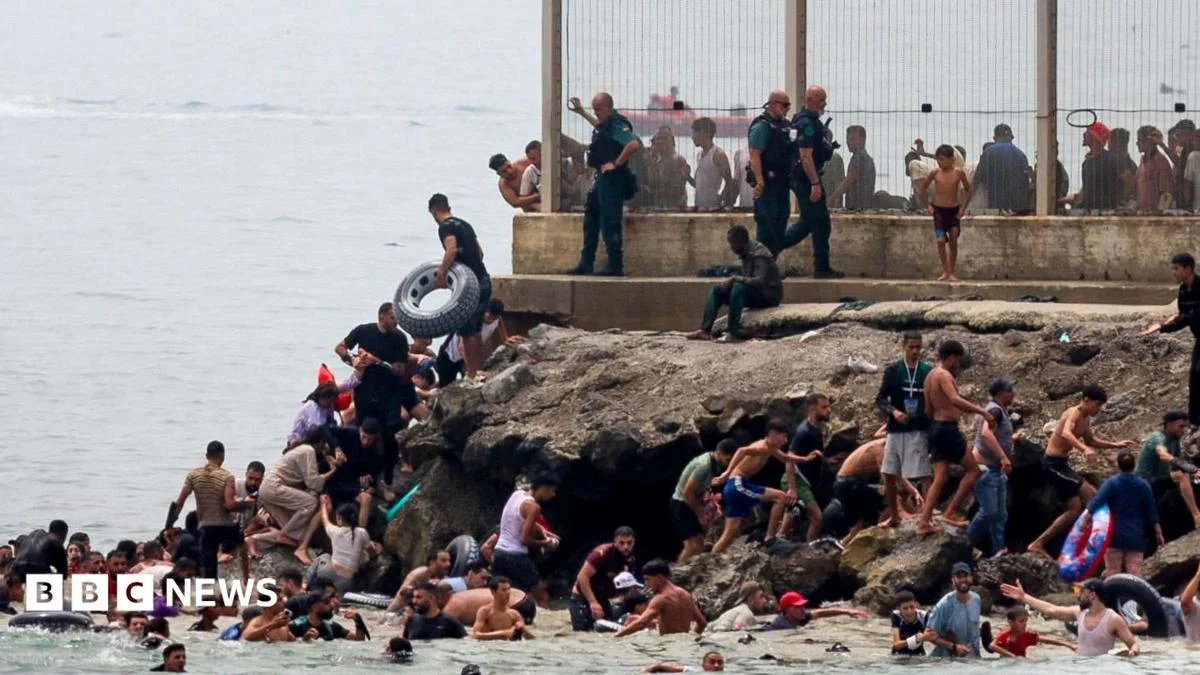
The Spanish North African enclave of Ceuta has witnessed an unprecedented influx of hundreds, potentially thousands, of migrants over the past week, overwhelming the territory’s limited resources and igniting a full-blown humanitarian and security crisis. The staggering numbers, which Juan Jesús Vivas, the leader of Ceuta, described as "overwhelming," have prompted urgent calls for intervention from the Spanish central government. Fernando Grande-Marlaska, Spain’s Interior Minister, is slated to visit the beleaguered territory on Friday, a move that underscores the gravity of the situation.
Compelling and often harrowing footage has emerged, depicting migrants braving the treacherous waters of the Strait of Gibraltar. They are seen swimming, clinging to inflatable rings, and utilizing makeshift flotation devices in a desperate bid to reach Ceuta’s shores. Others have been documented as running through the border fence, a stark visual testament to the lengths to which individuals will go in their pursuit of a better life and refuge in Europe. Ceuta, perched on Morocco’s northern coast, has historically served as a critical, albeit perilous, gateway for migrants seeking to enter the European Union from the African continent. Its strategic location, separated from mainland Spain only by the Strait of Gibraltar, makes it a constant focal point for these arduous journeys.
The recent surge in arrivals is occurring against a backdrop of evolving legal interpretations regarding migrant returns. Earlier this month, Spain’s Supreme Court delivered a ruling stipulating that migrants intercepted at sea while attempting to reach Ceuta or Melilla cannot be summarily returned to Morocco. This judicial decision, intended to uphold human rights and due process, appears to have been exploited by human trafficking networks, according to the Spanish Interior Ministry. Officials believe these networks are actively encouraging the flow of undocumented migrants, predominantly young individuals, by leveraging the perceived shift in Spanish policy. The ministry has emphasized its commitment to cooperation with Morocco on all aspects of migration, including a joint agreement to strengthen efforts to address the issue. A key element of this reinforced collaboration includes the "handover, as soon as possible, of all people who have entered Ceuta illegally," a measure aimed at regaining control and managing the flow of arrivals.
However, there is considerable ambiguity and conflicting reporting regarding the exact scale of the crossings. While some reports suggest "hundreds" of individuals have entered, Spanish media outlets, citing preliminary estimates, have put the figures between 2,000 and 3,000 people on Thursday alone. These higher estimates have not yet been officially confirmed by the Guardia Civil, Spain’s national gendarmerie. Meanwhile, Spain’s public broadcaster, RTVE, has reported that "hundreds" crossed into the territory during the day and indicated that over 1,500 migrants, predominantly young Moroccans, had reached Ceuta in the past two weeks. Adding to the grim reality of the situation, Vivas revealed that the bodies of 60 people have been recovered at sea in recent months, a somber statistic that underscores the deadly risks associated with these crossings.
The humanitarian and security emergency in Ceuta is palpable. Vivas has issued stark warnings that the territory’s reception centers for unaccompanied minors are operating at several times their intended capacity, highlighting the immense strain on local infrastructure and social services. This latest surge has inevitably drawn comparisons to the dramatic events of May 2021, when approximately 8,000 people entered Ceuta over a matter of days. That earlier crisis not only strained resources but also exacerbated diplomatic tensions between Spain and Morocco, underscoring the delicate geopolitical balance surrounding these enclaves.
Ceuta and its sister enclave, Melilla, are of profound significance as they represent the European Union’s only land borders with the African continent. This unique geographical position has long made them flashpoints for migration and security concerns. In recent years, Spanish authorities have implemented a multi-pronged strategy to bolster security around these enclaves. This has included enhanced surveillance technologies, reinforcement of physical barriers, and a concerted effort to improve bilateral relations and cooperation with Morocco. Despite these extensive measures, the persistent desire for entry into Europe continues to drive individuals to attempt these perilous crossings.
The escalating situation in Ceuta has also drawn international attention and commentary. Notably, Italy’s Prime Minister, Giorgia Meloni, has called for Spain to be suspended from the Schengen zone, a move that would have significant implications for free movement within Europe. Meloni stated that Italy is "prepared to intervene with extraordinary measures to defend the borders and the safety of citizens." She described the images from Ceuta as "striking" and asserted that "uncontrolled illegal immigration poses a concrete threat to the security of Europe’s borders." This strong stance from a major EU member state reflects a growing concern among some European nations about the perceived impact of irregular migration on national security and border integrity.
The recurring nature of these mass crossings into Ceuta and Melilla highlights the enduring pull factors that drive migration from Africa to Europe. These factors are multifaceted and include economic hardship, political instability, conflict, and a lack of opportunities in countries of origin. For many, Europe represents a beacon of hope for a more secure and prosperous future. However, the journey is fraught with danger, and the reception and integration of those who arrive present complex challenges for host countries, particularly for smaller territories like Ceuta, which are disproportionately affected.
The EU’s external border policy is under constant scrutiny, and the events in Ceuta bring to the fore the ongoing debate about how to effectively manage migration flows while upholding humanitarian principles. The cooperation between Spain and Morocco is crucial in this regard, as the effectiveness of border control and the prevention of human trafficking depend heavily on the collaboration between the two nations. However, the complexities of the situation, including the legal challenges surrounding returns and the persistent demand for entry, mean that simplistic solutions are unlikely to be found.
Experts in migration studies emphasize that addressing the root causes of migration in countries of origin is essential for long-term solutions. This involves investing in development, promoting good governance, and fostering economic opportunities in regions from which migrants originate. Furthermore, the need for robust and efficient asylum processing systems within the EU remains a critical issue, ensuring that those who are genuinely in need of protection are identified and receive appropriate support, while those who do not qualify are returned humanely and efficiently.
The situation in Ceuta serves as a stark reminder of the ongoing human dimension of migration and the profound challenges it poses for both migrants and the authorities tasked with managing their arrival. As Spain grapples with this latest crisis, the international community will be watching closely to see how the situation unfolds and what broader implications it may have for European migration policy and border security. The coming days, with the expected visit of the Interior Minister and continued efforts to manage the influx, will be critical in determining the immediate trajectory of this unfolding humanitarian and security challenge. The long-term implications, however, will likely necessitate a more comprehensive and coordinated approach involving all stakeholders, from the local authorities in Ceuta to the highest levels of European and African governance.
