
 By Rifan Muazin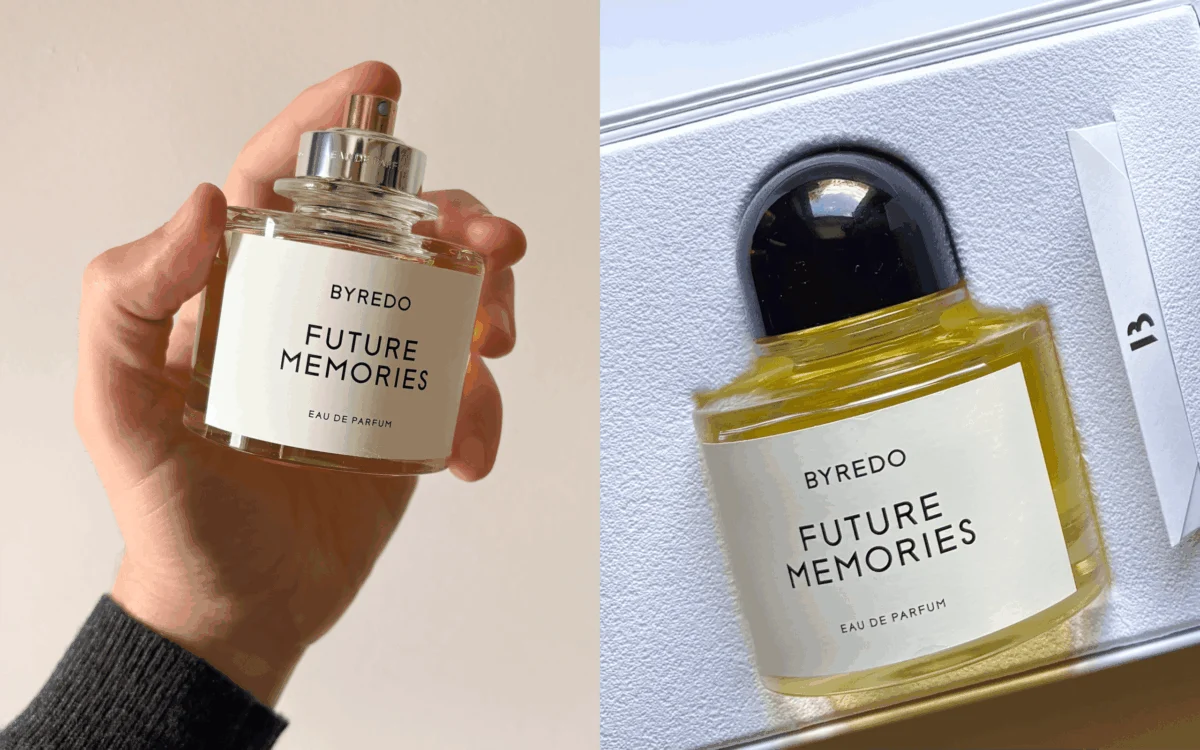
The landscape of men’s grooming in the early 2000s was a monolithic terrain dominated by high-street designer juices and department-store staples that favored aggressive projection over personal narrative. In this era of aquatic "blue" scents and heavy-handed orientals, Byredo arrived in 2006 as a quiet but profound disruption. Founded by Ben Gorham, a former professional basketball player with a degree in fine arts and no formal training in perfumery, the Stockholm-based house brought a much-needed reset to the industry. By combining Swedish minimalism with Gorham’s Indian heritage and a distinct "indie-cool" aesthetic, Byredo transformed niche perfumery from an gatekept secret into a global luxury phenomenon. Today, the brand stands as a pillar of the modern fragrance world, having successfully navigated the transition from a cult outsider to a household institution, recently punctuated by its high-profile acquisition by the Spanish fashion and fragrance giant Puig.
For nearly two decades, Byredo has maintained its relevance by anchoring its identity in the concept of scent as a medium for memory. Unlike traditional houses that often lean on the prestige of "noses" or the rarity of ingredients, Gorham approached fragrance as a visual and emotional storyteller. This philosophy birthed a series of now-iconic scents that have become staples in the modern rotation. I have personally followed this trajectory for years, witnessing the rise of Gypsy Water—a hazy, incense-heavy blend of lemon, pine needles, and sandalwood—into a bonafide cultural touchstone. Similarly, the crisp, rose-forward Super Cedar, the ethereal and desert-inspired Mojave Ghost, and the vibrant, marigold-laced Bal d’Afrique have cemented their status as "cult classics." These are not merely fragrances; they are olfactory signatures for a generation that values subtlety and design-conscious luxury.
Yet, beyond the blockbuster hits, the house’s portfolio contains "deep cuts" that reveal its true range. Oud Immortel, for instance, is a complex, woody composition that pairs the medicinal sharpness of oud with the earthy grit of patchouli and papyrus—a scent not necessarily for the novice, but one that is wildly transportive for the seasoned collector. Conversely, Blanche offers an exploration of the color white, manifesting as a clean, laundry-fresh daily driver that pioneered the "skin scent" category long before the term became a marketing buzzword. Across all these variations, a consistent Byredo DNA emerges: an airy, almost incense-like quality tempered by faint musky undertones. Even the brand’s richest, most resinous offerings retain a certain weightlessness, a restraint that allows the fragrance to interact with the wearer’s natural chemistry rather than masking it.
This brings us to the house’s latest revelation: Future Memories. After wearing the scent consistently for the past month, it is clear that Byredo has once again captured lightning in a bottle. Billed as a "gourmand"—a category typically reserved for scents that smell overtly edible, like vanilla, chocolate, or honey—Future Memories subverts expectations. It is not a cloying sugar bomb; instead, it is a verdant, liquor-laced dreamscape that feels both nostalgic and avant-garde. The creation is the work of Quentin Bisch, arguably one of the most prolific and talented perfumers working today. Bisch, known for his ability to layer woody notes with unexpected synthetic sparkles (as seen in his work for Marc-Antoine Barrois and Parfums de Marly), brings a structural depth to Future Memories that feels unmistakably sophisticated.
The architecture of Future Memories is a masterclass in olfactory contrast. The opening is a bright, green explosion of galbanum and blackcurrant, sharpened by the effervescent "fizz" of aldehydes. This initial sweetness is quickly grounded by a heart of rich orris butter—one of the most expensive and coveted ingredients in perfumery, derived from the roots of the iris flower—and orange blossom. This combination provides a boozy, slightly smoky warmth that feels lived-in and intimate. The base is anchored by labdanum, a resinous note with a "church-like" quality that adds a layer of solemnity and mystery. Finally, there is the vanilla. While vanilla is currently trending across the industry, Byredo’s iteration avoids the "cupcake" associations of mass-market scents. Here, the vanilla is dry, chic, and sultry, acting more as a textural anchor than a flavoring agent.

What makes Future Memories particularly impressive is its wearability. Despite the complexity of its notes, it possesses an "understated moodiness" that makes it versatile enough for a variety of settings. It has the depth required for a dinner downtown or an art gallery opening, yet it is light enough to be worn in a professional office environment. It is the kind of fragrance that complements a head-to-toe black outfit—polished, slightly mysterious, and deeply intentional. In terms of performance, it sits relatively close to the skin. While some enthusiasts may clamor for "beast mode" projection and 24-hour longevity, the intimacy of Future Memories is its greatest asset. It does not fill a room; it invites those nearby to lean in. It is a scent designed for the wearer and those in their immediate orbit, a philosophy that aligns with the broader "quiet luxury" movement currently reshaping the fashion and beauty industries.
The name itself, Future Memories, reflects Ben Gorham’s ongoing obsession with the elasticity of time. According to the brand, the scent explores the idea that the present is constantly, almost imperceptibly, slipping into the past. It is a poetic concept that highlights the unique power of smell to act as a temporal bridge. Research in neuroscience has long confirmed the "Proustian effect," where the olfactory bulb’s proximity to the hippocampus and amygdala allows scents to trigger vivid emotional memories more effectively than any other sense. Byredo has built an empire on this scientific reality, crafting scents that feel like they belong to a memory you haven’t quite had yet. Future Memories is the pinnacle of this approach: it feels strange but polished, a bridge between the familiar and the unknown.
As Byredo continues to evolve under the umbrella of Puig, there is always a fear that a brand’s "indie" soul might be diluted by corporate scaling. However, Future Memories serves as a reassuring signal that the house’s creative edge remains sharp. The brand has successfully transitioned from a niche darling to a global institution without losing the design-forward, narrative-driven essence that made it a "reset" for the industry in 2006. By hiring top-tier talent like Quentin Bisch and continuing to experiment with challenging notes like galbanum and labdanum, Byredo proves it is still more interested in setting trends than following them.
To understand the full context of Future Memories, one must also look back at the scents that paved its way. Gypsy Water remains the quintessential entry point for the brand. Its mix of juniper, pepper, and lemon creates a "nomadic" vibe that feels ethereal and artsy. It is a fragrance that defied gender norms from the start, appealing equally to anyone who desired a scent that felt like a crisp morning in a pine forest. Then there is Bal d’Afrique, a love letter to 1920s Paris and its infatuation with African culture and art. With its blend of neroli, African marigold, and Moroccan cedarwood, it remains one of the most universally adored scents in the world. It is citrusy and floral, yet grounded by an earthy vetiver that gives it an unmistakable "skin-scent" quality.
In the final analysis, Future Memories is a worthy successor to these titans. It represents a maturation of the Byredo style—retaining the lightness and musky "DNA" of the earlier years while introducing a richer, more resinous complexity. For those who have followed the brand from its inception, this new release feels like a homecoming. For newcomers, it is a perfect introduction to a house that refuses to play by the traditional rules of French perfumery. As the fragrance market becomes increasingly crowded with "influencer brands" and derivative "dupes," the enduring success of Byredo serves as a reminder that true luxury is found in the intersection of high-quality ingredients, thoughtful design, and a compelling story. Future Memories is not just a fragrance; it is a testament to the power of scent to capture the fleeting nature of time, ensuring that even as the present becomes the past, the memory remains exquisitely fragrant.
