
 By admin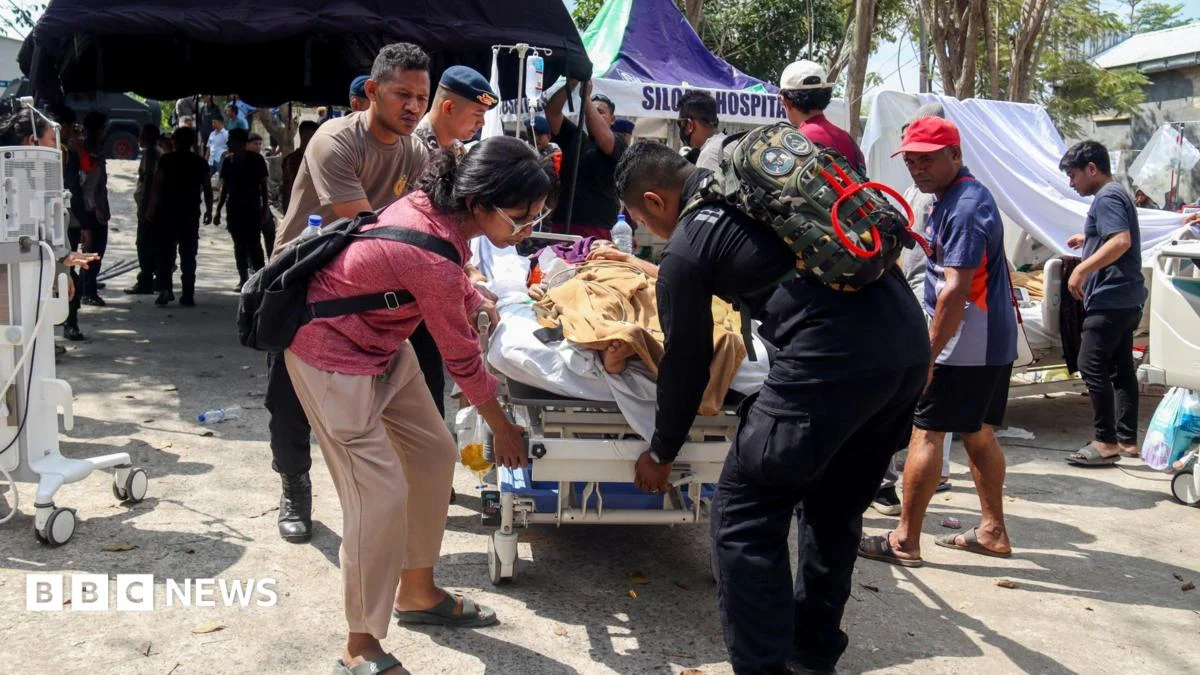
Rescue teams are relentlessly scouring the rugged terrain of Indonesia’s Flores island in the aftermath of a powerful magnitude 7.7 earthquake that struck early Saturday morning, leaving a grim trail of destruction and claiming the lives of at least 47 people. The seismic event, which occurred just before 05:00 local time (22:00 GMT on Friday), originated at a relatively shallow depth of 15 kilometers, according to Indonesia’s Meteorology, Climatology, and Geophysics Agency (BMKG). The shallow depth, while not necessarily indicative of higher magnitude, often contributes to more intense ground shaking and thus greater damage to surface structures.
Preliminary assessments from the National Disaster Management Agency (BNPB) paint a dire picture of the immediate impact. More than 900 homes have been reported as severely damaged, with hundreds of other buildings also succumbing to the powerful tremors. This initial figure, however, is likely to rise as rescue efforts penetrate more remote and inaccessible areas. The sheer force of the main quake was further amplified by a staggering 341 aftershocks, a common phenomenon following major seismic events, which continue to rattle the already fragile infrastructure and instill fear in the surviving population. The persistent aftershocks not only pose an ongoing threat to life and property but also complicate rescue operations, making unstable structures even more perilous for search and rescue personnel.
The full extent of this disaster is still being pieced together, a process made more challenging by the archipelago nation’s geography and the remote nature of some of the hardest-hit regions. Adding to the nation’s seismic woes, a second, significant earthquake of magnitude 6.9 struck at the opposite end of Indonesia, a stark and unsettling reminder of the country’s precarious position within the Pacific Ring of Fire. This geological hotspot is a horseshoe-shaped zone of intense seismic and volcanic activity, encircling the Pacific Ocean, and is responsible for a significant portion of the world’s earthquakes and volcanic eruptions. Indonesia, lying on the convergence of several major tectonic plates, including the Indo-Australian, Pacific, and Eurasian plates, is particularly susceptible to frequent and powerful earthquakes. The recent events underscore the perpetual vulnerability of the nation to natural disasters.
Tremors from Saturday’s devastating earthquake were reportedly felt by residents across a wide swathe of western Indonesia, reaching as far as Bima Regency and City, according to the BNPB. However, the Manggarai province on Flores island has emerged as one of the most severely affected areas. Early data tragically indicates that 24 fatalities were recorded in this province alone. The neighboring East Manggarai province also bore a heavy toll, with 17 deaths confirmed. Further casualties were reported in Sikka province, where three people lost their lives, and at least one death was recorded in each of the Ngada, Ende, and West Manggarai provinces. In addition to the fatalities, at least two individuals sustained serious injuries, and 11 others suffered minor injuries, highlighting the immediate medical needs of the affected communities.
In response to the unfolding humanitarian crisis, the BNPB has mobilized significant resources. Over 5,000 people have been evacuated and are currently residing in temporary shelters, a testament to the widespread displacement caused by the earthquake. The agency has dispatched 10,500 aid packages to the affected areas, containing essential supplies to meet the immediate needs of the survivors. "Meeting basic needs and providing logistics for evacuees has become one of the top priorities of the emergency response," a statement from the BNPB emphasized, underscoring the critical importance of immediate humanitarian assistance.
The challenging task of assessing the full scale of the destruction is compounded by the remote and mountainous nature of the region. This geographical isolation often means that infrastructure is less developed, and access for rescue and relief efforts can be significantly hampered. Despite these difficulties, early reports are beginning to shed light on the widespread damage. More than 150 houses are reported to have been severely damaged, a figure that is likely to be a conservative estimate. Beyond residential structures, the earthquake has also inflicted damage on dozens of educational institutions, a number of healthcare facilities, places of worship, government offices, and several other public facilities, disrupting essential services and the fabric of community life.
Compelling and harrowing video footage captured at the port in Maumere, the largest town on Flores, offers a visceral glimpse into the destructive power of the quake. The video shows large chunks of concrete breaking away from the terminal building, crashing down onto passengers who were waiting to board an inter-island ferry. In a terrifying moment, some individuals were thrown into the sea when the gangway connecting to a ship catastrophically collapsed. Such scenes underscore the suddenness and ferocity of the earthquake, leaving little time for people to react or escape.
Emanuel Melkiades Laka Lena, the governor of East Nusa Tenggara province, addressed the gravity of the situation at a news conference. He revealed that many of the victims were tragically killed in their sleep by collapsing rubble, highlighting the vulnerability of people in their homes during the early morning hours. The devastating impact on ordinary citizens was echoed by Arnold Welianto, a resident of Talibura, a coastal village in Sikka, East Nusa Tenggara. Welianto recounted his terrifying experience of being violently shaken awake by the tremors. "I was startled awake and immediately went to my child’s room," he stated, his words conveying the primal fear and instinct to protect loved ones in the face of such a catastrophic event.
Welianto also shared a chilling observation with the BBC: many people in his community had already fled into the hills because the sea had noticeably receded following the earthquake. This phenomenon, known as a tsunami precursor or "drawback," occurs when the seabed is displaced by an earthquake, pulling water away from the coast. While it can sometimes precede a devastating tsunami, it also serves as an immediate indicator of significant seismic activity and a cause for widespread alarm. The receding sea line in this instance served as a powerful, albeit terrifying, warning sign for coastal communities.
The geological context of Flores island and its surrounding regions is crucial to understanding the frequency and intensity of seismic events. Flores is part of the Sunda Arc, a geologically active volcanic arc formed by the subduction of the Indo-Australian Plate beneath the Eurasian Plate. This ongoing tectonic process generates immense stress, which is periodically released in the form of earthquakes. The region has a history of significant seismic activity, and Saturday’s magnitude 7.7 earthquake is a stark reminder of the inherent risks faced by its inhabitants. Experts have long warned about the potential for large earthquakes in this region, and the recent event serves as a grim validation of those concerns.
The humanitarian response is a complex logistical challenge. Beyond the immediate provision of food, water, and shelter, there is an urgent need for medical supplies and personnel to treat the injured. The destruction of healthcare facilities further exacerbates this challenge. Efforts are also underway to restore essential services, including electricity and communication lines, which have been severely disrupted. The psychological toll of such a disaster is immense, and providing mental health support to survivors, particularly those who have lost loved ones or their homes, will be a critical component of the long-term recovery process.
The economic impact of the earthquake will also be significant. The destruction of homes, businesses, and public infrastructure will require substantial investment for rebuilding and recovery. Many communities on Flores rely on agriculture and tourism, both of which are likely to be severely impacted by the disaster. The long-term implications for livelihoods and economic stability will necessitate comprehensive recovery plans and sustained support from national and international partners.
The Indonesian government, while facing the immediate crisis, is also looking towards the future. The BNPB’s role in coordinating disaster response and relief efforts is paramount. However, the resilience of the Indonesian people, forged through a history of facing natural disasters, is also a crucial factor in the recovery process. Community-led initiatives and the spirit of mutual assistance, known as "gotong royong" in Indonesia, will play a vital role in helping affected communities rebuild their lives.
As the search for survivors continues and the full scale of the devastation becomes clearer, the international community is beginning to mobilize its support. Aid organizations and foreign governments are offering assistance in the form of financial aid, relief supplies, and expert personnel. This global solidarity is essential in helping Indonesia overcome this immense challenge and rebuild the affected communities. The earthquake on Flores island is a stark reminder of the power of nature and the profound impact it can have on human lives. It also highlights the critical importance of disaster preparedness, early warning systems, and robust emergency response mechanisms in a seismically active nation like Indonesia. The road to recovery will be long and arduous, but the determination of the Indonesian people, coupled with international support, offers a beacon of hope amidst the devastation. The ongoing efforts to account for all missing persons, provide aid to the displaced, and begin the monumental task of reconstruction will define the coming months and years for the people of Flores and the wider Indonesian nation. The lessons learned from this tragic event will undoubtedly inform future disaster management strategies, striving to mitigate the impact of future seismic events in this vulnerable region.
