
 By Lina Irawan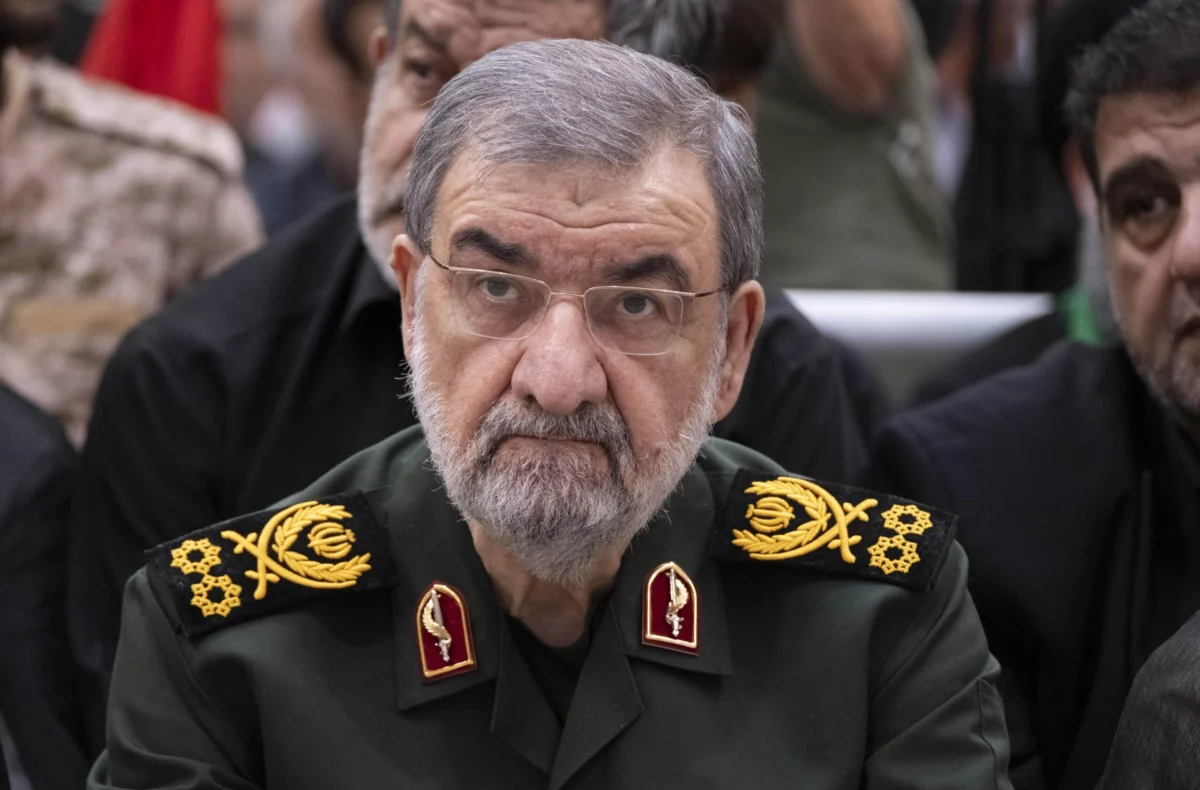
Tehran’s top security official delivered a stark warning on Sunday, declaring that Iran would consider any nation’s support for impending new U.S. economic measures against the Islamic Republic as an "act of war," a pronouncement that significantly escalates rhetoric amid an already volatile geopolitical landscape. Concurrently, Iran’s president defended a recently signed memorandum of understanding (MOU) with the United States as the most viable pathway to resolve the protracted "neither war nor peace" stalemate, even as diplomatic efforts intensify with Pakistan’s army chief slated to visit Tehran in a bid to revive stalled talks. The heightened tensions coincide with a deceptive calm in the strategically vital Strait of Hormuz, where attacks have subsided, yet an Iranian authority has moved to impose new restrictions on maritime transits, signaling a continued hardening of positions.
Iran’s Security Chief Sharpens Warning to Neighbors
Mohsen Rezaei, the newly appointed hard-line leader of Iran’s Supreme National Security Council, delivered his latest, most aggressive warning via the social media platform X, with his comments rapidly amplified by Iranian state media. This statement followed his most extensive public remarks since assuming the critical post earlier this month, a move widely interpreted by analysts as a significant shift towards a more confrontational stance by Tehran. Rezaei, a veteran of the Iran-Iraq War and former commander of the Islamic Revolutionary Guard Corps (IRGC), also served as a military adviser to Supreme Leader Ayatollah Mojtaba Khamenei, underscoring the weight and official backing behind his pronouncements. His appointment, alongside other senior figures known for their hardline views, has been seen as consolidating power among those advocating for robust resistance against external pressures, particularly from the United States.
In an interview aired late Saturday on state broadcaster, Rezaei had previously threatened a "seismic" retaliation if the U.S. administration, under former President Trump, were to take further aggressive action. He explicitly warned that Iran would target other oil-shipping routes from the Persian Gulf, thereby circumventing and undermining the centrality of the Strait of Hormuz, a move that would have profound implications for global energy markets. Labeling support for U.S. sanctions an "act of war" is a significant escalation in diplomatic language, typically reserved for military aggression. In international law, an "act of war" can justify self-defense measures, potentially leading to military responses. While unlikely to immediately trigger conventional warfare, this rhetoric signals Iran’s extreme resolve and intent to treat economic strangulation as a direct existential threat, challenging the traditional boundaries of international conflict.
U.S. Economic Warfare and Its Impact
The Iranian warnings come ahead of an anticipated announcement on Monday by U.S. Treasury Secretary Scott Bessent, who is expected to unveil a new package of economic measures. These sanctions are part of Washington’s stated commitment to imposing an "unprecedented" level of economic warfare and isolation on Iran. For decades, Iran has lived under various forms of international sanctions, dating back to the 1979 Islamic Revolution and the hostage crisis, intensifying over its nuclear program, and later expanding to include its ballistic missile development and regional activities. The latest "maximum pressure" campaign, initiated by the Trump administration, aims to cripple Iran’s economy, force it back to the negotiating table on U.S. terms, and ideally, compel a change in its regional and domestic policies.
The impact of these prolonged and escalating sanctions on Iran’s economy has been severe. The country has grappled with rampant inflation, a depreciating national currency, significant reductions in its crucial oil exports, and widespread economic hardship for its populace. Essential goods have become more expensive, foreign investment has plummeted, and access to international financial systems has been largely cut off, leading to a chronic shortage of hard currency. Despite these pressures, the Iranian leadership has consistently maintained its defiance, often portraying the sanctions as a test of national resilience and a foreign plot to destabilize the country. The upcoming measures are expected to target remaining avenues for revenue generation, further tightening the economic noose and potentially exacerbating internal discontent.
Iranian President Seeks Path Beyond Stalemate
In a contrasting tone, Iranian President Masoud Pezeshkian on Sunday defended a memorandum of understanding (MOU) signed with the United States in mid-June, advocating for it as the most pragmatic solution to move beyond the current state of "neither war nor peace." This phrase aptly captures Iran’s precarious geopolitical position, characterized by simmering tensions, economic hardship, and the constant threat of military confrontation, without the decisive resolution of either peace or outright conflict. Pezeshkian emphasized the urgent need for stability, noting that Iran has been unable to attract crucial foreign investment nearly six months into the ongoing conflict, a situation unsustainable for a nation requiring robust economic growth to address domestic challenges.
"There is not a single provision in this agreement that amounts to capitulation," Pezeshkian asserted in a speech published by the state-run IRNA news agency, attempting to assuage hardline critics within Iran who view any engagement with the U.S. as a sign of weakness. He underscored the chain of command, stating, "The supreme leader sets the policies, and we will follow that path," a crucial acknowledgment that ultimate authority rests with Ayatollah Khamenei, who has the final say on all major state affairs, including foreign policy. The interim deal, which opened a 60-day period for talks, aimed at de-escalating the war and reaching a comprehensive accord on Iran’s contentious nuclear program. However, that period concluded last week with no tangible signs of compromise or an extension, leaving the future of diplomatic engagement uncertain and highlighting the deep chasm of distrust between Washington and Tehran. The failure to secure an agreement means Iran continues to struggle to attract the foreign capital and technological expertise vital for its long-term development, perpetuating its economic isolation.
Strait of Hormuz: A Volatile Lifeline
While rhetoric escalated, physical attacks in the Strait of Hormuz, the narrow waterway through which approximately one-fifth of the world’s total oil supply passes, have reportedly calmed over the past 48 hours. A multinational coalition overseen by the U.S. Navy confirmed no new confirmed attacks, though shipping traffic remains at reduced levels, indicative of lingering apprehension among maritime operators. However, this calm was offset by significant "posturing" from Iran. A recently created Iranian entity, the Persian Gulf Strait Authority, which has itself been sanctioned by the U.S., published a list of dozens of vessels it claimed had violated transit arrangements. These ships, according to the authority, would face future restrictions, including potential fines or seizures, raising serious concerns within the international shipping community.
Historically, the Strait of Hormuz has been considered an international waterway, guaranteeing freedom of navigation for all vessels. However, Iran’s assertion of control and its new restrictions challenge this long-standing principle, particularly following the U.S. and Israeli attacks on Iran on February 28, which fundamentally altered regional dynamics. The U.S. military, through its naval operations, has maintained a robust presence, claiming its blockade of Iranian ports had redirected 70 commercial ships and disabled three as of Sunday. This underscores the ongoing naval standoff and the strategic importance both sides place on controlling or influencing transit through the strait. In a further development, Iran and Oman, located on the opposite side of the strait, are reportedly discussing joint management of the waterway, which could include the imposition of new transit fees. Such a move would not only be a significant assertion of sovereignty but also a direct challenge to international maritime law and could further destabilize global energy markets by increasing shipping costs and operational risks.
Diplomatic Efforts by Pakistan
In an attempt to de-escalate the burgeoning crisis, Pakistani Field Marshal Asim Munir is expected to lead a delegation to Tehran on Monday, Iranian state television reported, citing Foreign Ministry spokesperson Esmail Baghaei. Regional officials, speaking anonymously due to the sensitivity of the discussions, confirmed the visit is part of Islamabad’s concerted efforts to mediate between the United States and Iran, urging both sides to return to the negotiating table. Pakistan, a neighboring country with historical ties to Iran and a significant military power in its own right, occupies a unique position to act as a go-between. It maintains complex relations with both the U.S. and Iran, making it a credible, albeit challenging, intermediary.
The mission is fraught with difficulty, given the deep-seated mistrust and maximalist positions adopted by both Washington and Tehran. The U.S. demands a halt to Iran’s nuclear enrichment, an end to its regional proxy activities, and a rollback of its missile program, while Iran insists on the lifting of all sanctions and security guarantees. Pakistan’s role would primarily focus on facilitating back-channel communications and exploring potential pathways for de-escalation, aiming to prevent the conflict from spiraling into a broader regional conflagration. The success of such mediation hinges on the willingness of both the U.S. and Iran to compromise and engage in constructive dialogue, a prospect that appears increasingly dim amid the current rhetoric and actions.
Internal Crackdown and Human Rights in Iran
Amid the external pressures, Iran continues its internal crackdown on dissent. The judiciary’s Mizan news agency reported the latest execution linked to the nationwide protests that erupted early this year. Majid Adineh, arrested on January 9 in Mohammadshahr, west of Tehran, was convicted under Iran’s stringent laws imposing harsher penalties for espionage and cooperation with hostile states. The judiciary claimed forensic examinations linked a handgun found on him to shots fired on January 8 and 9, and alleged that Adineh had joined the unrest following calls by groups opposed to Iran’s government, receiving training from organizations outside the country. Human rights organizations have consistently condemned Iran’s judicial process, citing a lack of due process, coerced confessions, and the use of capital punishment against protestors, often on vaguely defined charges such as "enmity against God" or "corruption on Earth." These executions are widely seen as a tool by the Iranian state to instill fear and suppress any resurgence of the widespread anti-government demonstrations that challenged the ruling establishment.
Escalating Violence in the West Bank
Further exacerbating regional instability, violence continued unabated in the Israeli-occupied West Bank. Police arrested a 16-year-old Israeli settler from Avigayil settlement in connection with the beating of Saeed Muhammad Ibrahim Rabah, a 61-year-old Palestinian amputee, outside his home in Khirbet al-Rakeez. This assault occurred a year after Rabah had lost a leg after being shot by a settler, highlighting a disturbing pattern of violence aimed at displacing Palestinian families from their land. Rabah, speaking to The Associated Press, defiantly stated, "we will remain, no matter what happens," underscoring the deep-rooted resistance against such tactics.
Separately, the West Bank Health Ministry reported the death of Islam Maher Ajouri, a 14-year-old, who was shot dead by Israeli forces in the Askar refugee camp in Nablus. His uncle, Nehad Ajouri, described the shooting as indiscriminate, while the Israeli military did not immediately comment on the incident. This incident adds to the growing number of Palestinian minors killed in the West Bank amidst ongoing Israeli military raids and settler incursions. Concurrently, Israel’s military announced the detention of a suspect in a stabbing attack that wounded a 24-year-old Israeli man in the al-Auja area of the West Bank. Israel’s emergency services reported the man was in moderate condition. These incidents reflect a relentless cycle of violence and reprisal that continues to plague the West Bank, fueled by occupation, settlement expansion, and deeply entrenched grievances.
Gaza Under Fire: Civilian Casualties and Renewed Threats
The humanitarian crisis in Gaza deepened with renewed Israeli airstrikes on Sunday. Four-year-old Mohammed Taha died, and at least five others were wounded, after an Israeli airstrike hit a central Gaza house, according to Al-Aqsa Martyrs Hospital. Israel’s military later confirmed it had struck and killed a Hamas commander, Ismail Abu Ful, in central Gaza, a claim corroborated by the hospital. In southern Gaza, another Israeli strike wounded at least seven people, including three children, according to health officials at Nasser Hospital, with no immediate comment from the military on this incident.
Defense Minister Israel Katz, in a statement, instructed the military to "act immediately and forcefully" to prevent launches of incendiary balloons, kites, or drones from Gaza toward nearby Israeli communities. This directive echoes a period before the devastating October 7, 2023, attack by Hamas-led militants on Israel – which resulted in 1,200 deaths and 251 hostages – when such projectiles were frequently sent from Gaza into southern Israel, causing widespread fires and significant damage. Hamas, in response, issued a statement on Sunday, accusing Israel of "using children’s toys as a pretext" for further attacks and the displacement of Gaza residents. The ongoing strikes and threats highlight the fragility of any truce in Gaza and the devastating toll the conflict continues to take on civilian lives, particularly children, who remain highly vulnerable in the densely populated enclave. The specter of renewed hostilities, fueled by both direct attacks and the broader context of the Oct. 7 atrocities, continues to loom large over the besieged territory.
