
 By admin
For nearly a decade, Ruchira Ranasingha has been navigating a labyrinth of international borders and immigration policies, a journey that began with the hope of a new life and has culminated in an unexpected and prolonged displacement. What started as a planned relocation from Sri Lanka has morphed into a three-year ordeal of being stranded on the remote Cook Islands, a cluster of 15 islands in the South Pacific, with her return home seemingly an insurmountable challenge. The 50-year-old Sri Lankan woman, her voice choked with emotion, expressed her desperate desire to return to her homeland, even offering to be repatriated under strict supervision if necessary.
Ranasingha’s predicament began with a desire to settle in New Zealand. After seeking asylum there, she was advised by an immigration consultant to temporarily leave the country to apply for a work visa. This strategic move, intended to facilitate her long-term residency, backfired spectacularly. Once in the Cook Islands, her work visa application was rejected. Compounding her misfortune, her departure from New Zealand meant she had violated the terms of her existing asylum-linked visa, effectively severing her pathway back to the country she had sought refuge in.
The core of her current crisis lies in the refusal of transit visas from key transit hubs. New Zealand, the country she had initially aimed for, has denied her transit visa applications, citing concerns that she might not genuinely depart their territory. This apprehension stems from her prior asylum claim, which indicated a fear for her safety in Sri Lanka. Australia, another primary transit route from the Cook Islands, has also rejected her applications. The remaining international flight options from the Cook Islands lead to Tahiti and Hawaii, but both destinations necessitate the submission of biometric information, a process that can only be completed in person within New Zealand. This bureaucratic Catch-22 has left Ranasingha with no viable avenue for departure, effectively trapping her on the picturesque yet isolating archipelago.

The human cost of this prolonged limbo is immense. Ranasingha’s immediate concern is missing her only son’s wedding, scheduled for November. The thought of being absent for such a pivotal family event weighs heavily on her. Furthermore, her mother’s health has deteriorated significantly due to the constant worry about her daughter’s situation, leading to frequent hospitalizations. Through tears, Ranasingha pleaded for any solution, stating, "I will do anything they ask of me – I just want to go home."
Ranasingha’s initial departure from Sri Lanka in 2018 was born out of economic hardship. The closure of her small T-shirt factory due to declining business and mounting debts left her with little choice but to seek opportunities abroad. She moved to Hong Kong, working as a domestic caregiver, looking after the elderly and children to support herself and repay loans. Her brother, speaking to BBC Sinhala, revealed the immense financial pressure she was under, exacerbated by the death of her husband, who was a drug addict, approximately seven years prior. This background highlights the desperate circumstances that propelled her to seek a better future.
In December 2022, Ranasingha arrived in New Zealand, initially on a two-month visitor visa, staying with a cousin. As her visa neared expiration, she sought assistance from an immigration interpreter to apply for asylum. Her grounds for asylum were rooted in threats she claimed to be facing from lenders back in Sri Lanka, a situation that evidently made her fear for her safety upon return. She was subsequently granted an "open work visa" as an asylum seeker, allowing her to work for a broad range of employers for a year. She found employment at a restaurant, which initially agreed to sponsor an employment visa, a move she believed would provide long-term stability and a clearer path to residency.
However, under New Zealand immigration law, asylum seekers are generally prohibited from applying for other types of visas while their asylum claims are being processed. Consequently, her employment visa application was denied. It was at this juncture that she engaged the services of Immigration & Secretarial Services, a firm that, according to Ranasingha, advised her that a new employment visa application could be made from overseas. Email correspondence reviewed by the BBC indicates that the manager of this firm, Sylviane Gallant, assured Ranasingha that the process would commence once she had left New Zealand. This assurance led Ranasingha to book a short stay in the Cook Islands, a decision that, in hindsight, proved to be a grave miscalculation.

Upon her arrival in the Cook Islands, Ranasingha was again refused the employment visa. The critical consequence of her departure from New Zealand was the violation of her existing visa conditions. New Zealand authorities made it unequivocally clear that they would not grant her any future visas. Gallant, the consultant, reportedly made several attempts to intervene on Ranasingha’s behalf, including correspondence with political figures such as Chris Penk, New Zealand’s then-immigration minister. However, Ranasingha states that Gallant eventually admitted fault and informed her that "there was nothing more she could do," advising her that returning home might be the best course of action.
Believing this to be her only option, Ranasingha agreed to return to Sri Lanka. She purchased an Air New Zealand ticket and proceeded to the airport. However, upon arrival, she was informed that she could not board the flight without a New Zealand transit visa, a requirement she was unaware of or had been misinformed about. This revelation marked the beginning of her prolonged struggle to simply get home.
Subsequently, Ranasingha lodged three separate applications for a New Zealand transit visa. All were rejected, with immigration authorities stating they were not convinced of her genuine intention to transit. Her attempts to secure an Australian transit visa met with a similar fate, with four applications being denied. In one of its rejection letters, New Zealand authorities suggested she explore alternative transit routes. However, both the US state of Hawaii and the French Polynesian island of Tahiti informed her that biometric data collection was a prerequisite for any visa processing, a step that could only be undertaken in New Zealand. Her most recent application to New Zealand, which detailed her efforts to find alternative routes and highlighted the urgent personal circumstances of her son’s wedding and her mother’s declining health, was also declined. This repeated rejection has led to significant financial losses from canceled tickets and a growing sense of despair. "I have lost so much money on tickets," she lamented. "For almost four years I have been just applying for visa after visa with nothing working out."
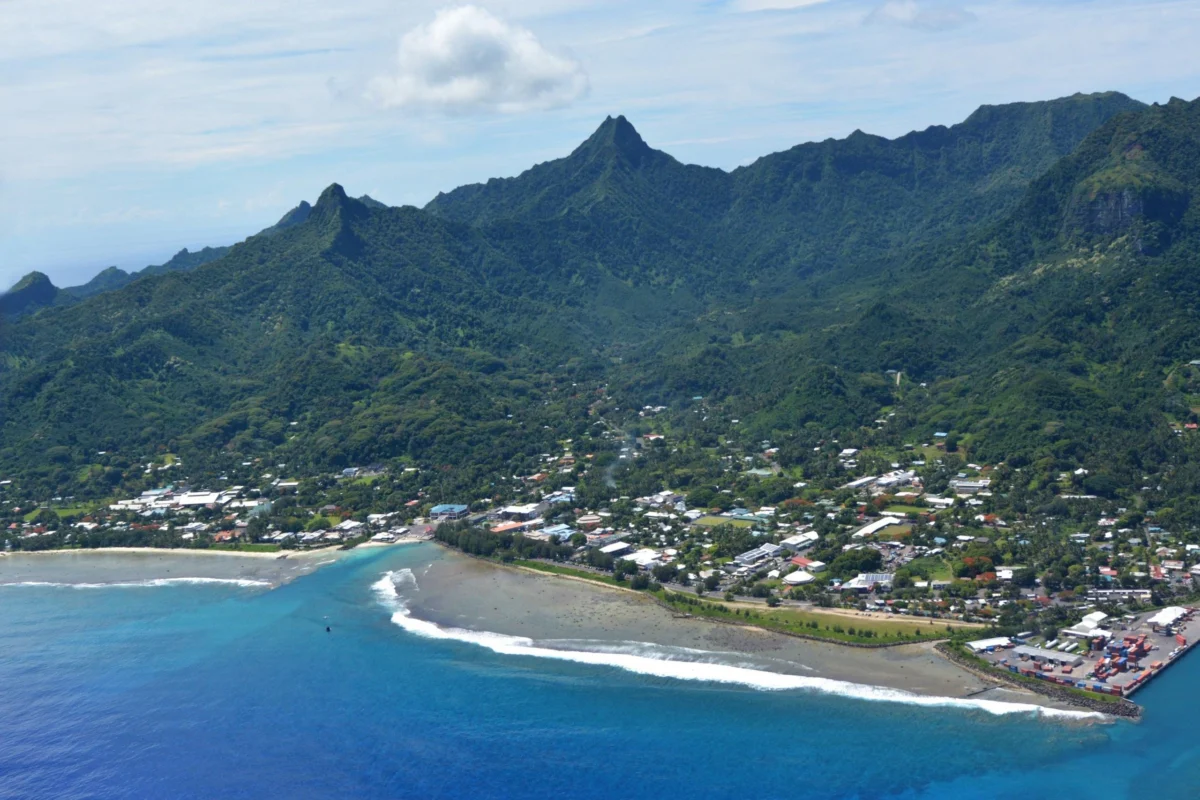
The Cook Islands, a destination renowned for its pristine beaches and dramatic volcanic landscapes, has become an unexpected and protracted place of residence for Ranasingha. While she acknowledges her fortunate circumstances in being accommodated free of charge in hotel staff quarters and receiving support from locals in the form of food and clothing, the underlying feeling of being trapped persists. One of the hotel directors even provided her with a sewing machine, enabling her to generate a small income, a testament to the kindness of some individuals she has encountered. She finds solace in her mother’s belief that she must have performed good deeds to receive such kindness, but this does little to alleviate her anxiety. The stress of her situation is taking a toll on her health, and she expresses palpable fear about her future: "I am scared something is going to happen to me."

Immigration law specialists have weighed in on the complexities of Ranasingha’s case. Alastair McClymont, an Auckland-based immigration law specialist, commented that Ranasingha had received "terrible advice" that was unlikely to have come from a legitimate immigration lawyer. He pointed to a prevalent industry of "so-called immigration consultants" who, he suggests, may not fully comprehend the risks involved when lodging applications for their clients, often charging substantial fees. Ranasingha confirms she has paid thousands of New Zealand dollars in fees to Immigration & Secretarial Services. When contacted by the BBC, Gallant did not provide a response.
McClymont explained that New Zealand authorities are likely to continue refusing the transit visa because, from their perspective, Ranasingha’s prior asylum claim signifies that she does not intend to return to Sri Lanka. He further elaborated that New Zealand’s close coordination with Australia means that Australia would also be hesitant to allow her transit, and similar concerns would likely be raised by France and the United States. The fundamental issue, he stated, is that to leave, "she is going to have to transit through somewhere and no-one will want to take the risk."
Immigration New Zealand confirmed to the BBC that multiple transit visa applications had been received from Ranasingha, all of which were declined. The official reason provided was that they were "not satisfied she has a genuine intention to transit through New Zealand." When questioned about the possibility of granting a visa even with stringent measures like handcuffing and escorting, a representative from the immigration minister’s office indicated that such measures do not preclude individuals from making an asylum claim, suggesting this is the underlying reason for their reluctance.
Australia’s Department of Home Affairs declined to comment on individual cases, stating that any non-citizens traveling to Australia must satisfy the requirements of the Migration Act 1958 and the Migration Regulations 1994.

Meanwhile, Ranasingha’s family in Sri Lanka has been actively seeking assistance from their government. Her brother shared that they have explored "every possible avenue," but have so far been unsuccessful in securing her return. The Sri Lankan Ministry of Foreign Affairs stated that they are "taking all necessary steps to facilitate her return to Sri Lanka from the Cook Islands." They further indicated that officials from the Sri Lankan High Commission in Wellington, New Zealand, are working closely with the relevant New Zealand authorities and the Ministry of Foreign Affairs on this matter.
Despite these assurances, Ranasingha’s brother remains deeply concerned about her mental and emotional state. He relayed a distressing conversation with his sister, during which she expressed a grim sentiment: "Her mental state is not good… One of the times we spoke, she told me that if they were not willing to get her back home alive, they might at least repatriate her body." This heartbreaking statement underscores the profound despair and the desperate measures Ranasingha is contemplating due to her prolonged and seemingly unsolvable predicament. The case highlights the intricate and often unforgiving nature of international immigration laws and the devastating human consequences that can arise when individuals become caught in their complex web.
