
 By admin
It has been nearly two years since JetBlue first signaled its intention to disrupt the domestic aviation landscape by introducing a dedicated first-class cabin on its narrow-body fleet. Today, the New York-based carrier has finally pulled back the curtain, providing the first comprehensive look at its new "BlueFirst" product. This move marks one of the most significant strategic pivots in the airline’s 26-year history, transitioning JetBlue from a "boutique" low-cost carrier with a niche premium product into a full-service competitor capable of going head-to-head with the "Big Three"—American Airlines, Delta Air Lines, and United Airlines—on every route it serves.
While JetBlue has earned international acclaim for its Mint business-class product, which debuted in 2014 and redefined transcontinental travel with lie-flat suites and artisanal dining, the airline has historically lacked a traditional domestic first-class offering. Passengers flying shorter routes, such as New York to Orlando or Boston to Chicago, were limited to "Even More Space" seats, which provided extra legroom but lacked the physical seat differentiation and elevated service found in the first-class cabins of legacy carriers. With the introduction of BlueFirst, JetBlue aims to capture a larger share of the high-yield corporate and premium leisure market that demands a superior "hard product" regardless of flight duration.
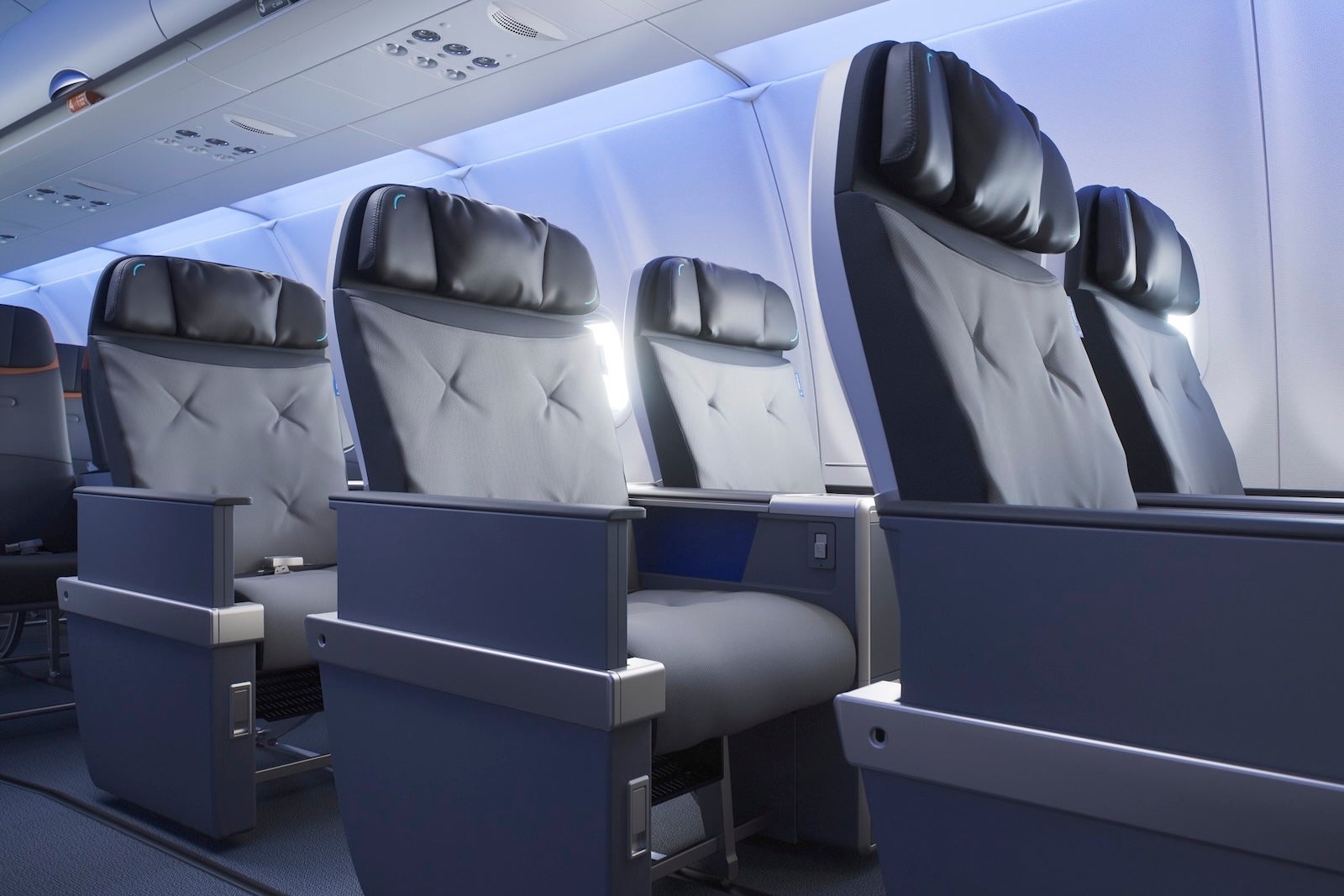
The BlueFirst cabin features a customized version of the MiQ platform manufactured by U.S. aerospace giant Collins Aerospace. Frequent flyers will recognize the basic architecture of the seat, as it is the same model utilized by American Airlines for its domestic first-class retrofits. However, JetBlue has invested heavily in "soft product" enhancements and ergonomic customizations to ensure the seat aligns with its brand identity. The most notable addition is the integration of "flex foam" technology developed in partnership with the luxury bedding company Tuft and Needle. This specialized padding is designed to distribute weight more evenly and reduce pressure points, a critical feature for a seat that, unlike Mint, is a deep recliner rather than a lie-flat bed. The signature blue Tuft and Needle tag on the headrest serves as a visual cue of this comfort-focused collaboration.
Technological integration remains a cornerstone of the JetBlue experience. Each BlueFirst seat is equipped with a 13.3-inch high-definition seatback screen, which is significantly larger than the industry average for domestic first class. These screens are Bluetooth-enabled, allowing passengers to pair their own wireless headphones, such as AirPods, directly with the entertainment system. This eliminates the need for wired adapters and aligns with the modern traveler’s preference for a seamless tech environment. Furthermore, each console includes universal AC power outlets alongside both USB-A and USB-C charging ports, ensuring that devices remain powered throughout the journey.
The physical dimensions of the BlueFirst seat are designed to lead the industry. JetBlue is promising up to seven additional inches of legroom compared to its standard "Core" economy seating, which generally offers 32 inches of pitch. This would place BlueFirst pitch at approximately 38 to 39 inches, rivaling the most generous offerings from Delta and United. The seat width is also expected to increase significantly, offering a 2-2 configuration on the Airbus A320 and A321 aircraft, and a 1-2 configuration on the smaller Airbus A220-300 fleet.
Beyond the hardware, JetBlue is aiming to reinvent the domestic first-class dining experience. Historically, domestic first-class meals on legacy carriers have often been criticized for being uninspired or inconsistent. JetBlue’s solution is the "BlueFirst Bento," a multi-course meal served in a single, elegantly designed box for flights over 899 miles. These meals, inspired by the airline’s successful partnership with New York-based restaurant group Delicious Hospitality Group (DHG) for its Mint service, will feature a rotating menu of seasonally inspired dishes. Sample menus include savory crepes with gruyère and ham for breakfast, and sesame-crusted beef noodles or ginger-tofu bowls for lunch and dinner.
"Traditional first-class food and beverage can feel stuck in the past," JetBlue CEO Joanna Geraghty said in a statement accompanying the reveal. "BlueFirst is our way of refreshing the experience for today’s traveler, combining the high-touch service our customers love with a modern, streamlined approach to dining and comfort."
The strategic timing of this rollout cannot be overstated. The aviation industry in 2026 is characterized by an intense "premiumization" trend. Following the global pandemic, travel patterns shifted; while traditional business travel recovered slowly, "premium leisure" travel—passengers willing to pay extra for comfort and space—surged. Delta and United have reported record-breaking revenues from their premium cabins, prompting JetBlue to reconsider its "one-size-fits-most" domestic strategy. By installing BlueFirst, JetBlue is not only increasing its revenue potential per flight but also providing a more consistent experience for Mint-loyal customers who previously felt a "service cliff" when connecting to a non-Mint domestic flight.
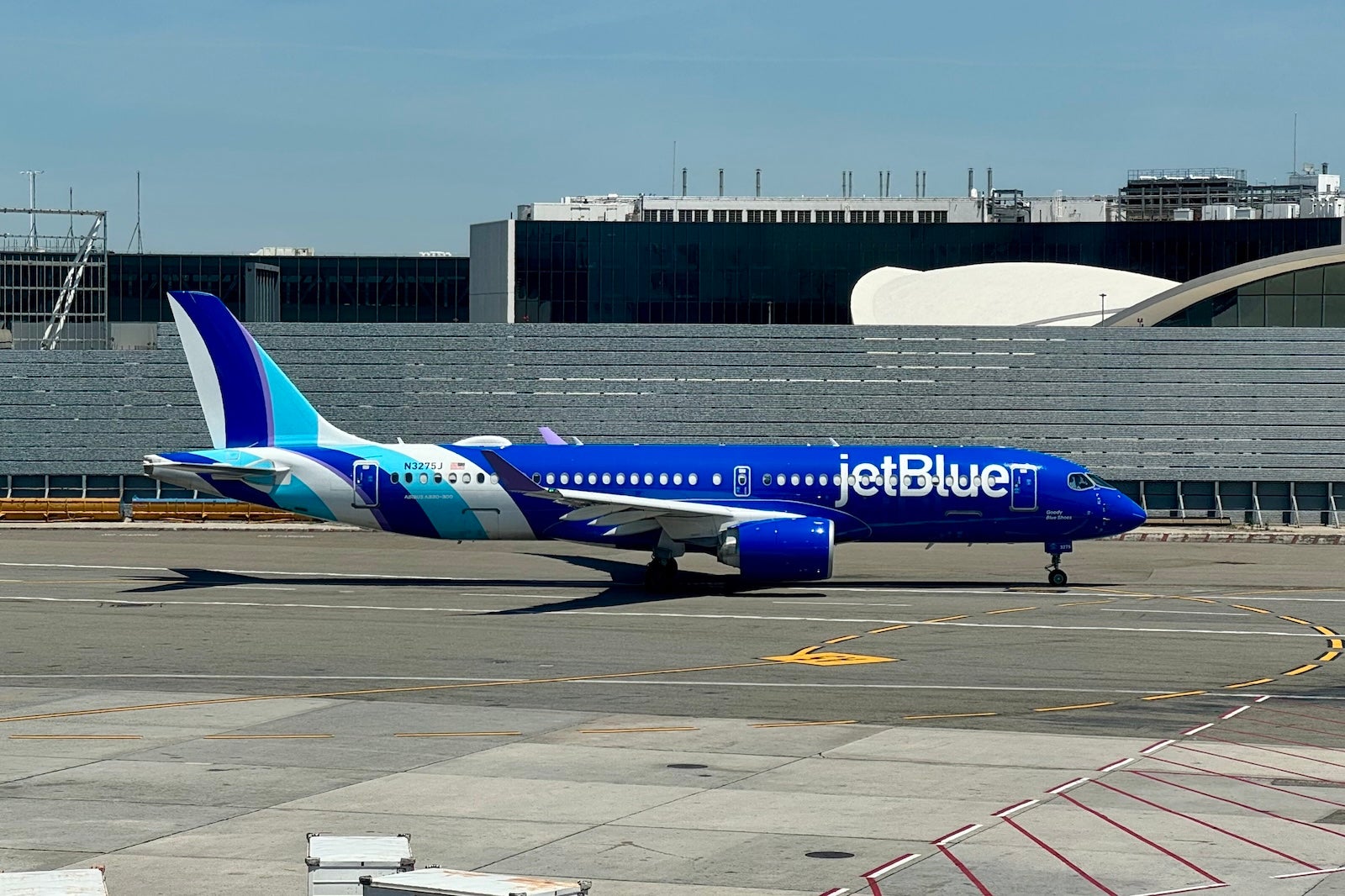
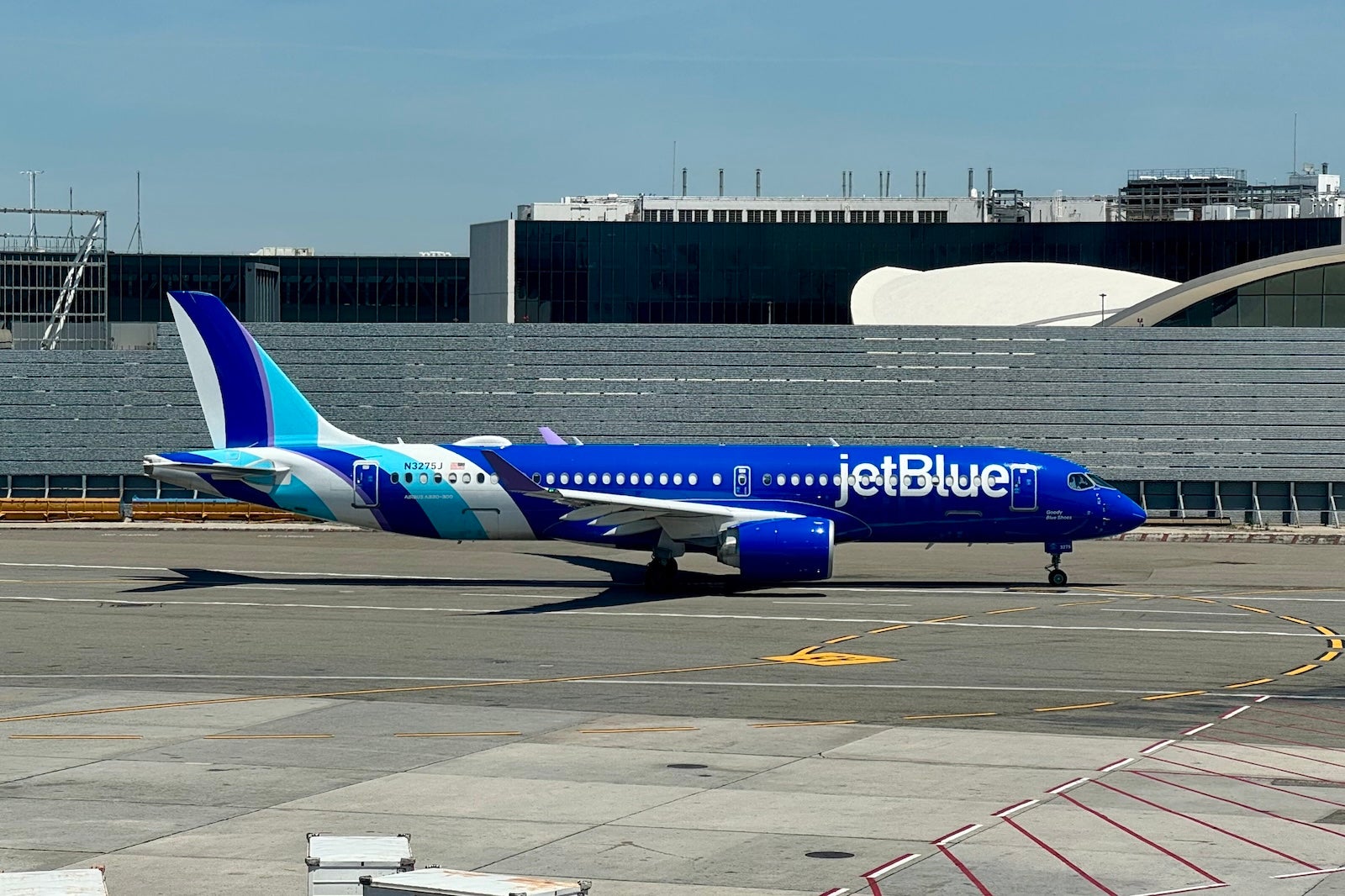
The rollout of BlueFirst will be aggressive. The airline has confirmed that the new cabin will be standard on all new aircraft deliveries starting in late 2026. For the existing fleet, a massive retrofit program is scheduled to begin in early 2027. The Airbus A220-300, which is rapidly replacing the older Embraer 190s, will feature three rows of BlueFirst (a total of 9 or 12 seats depending on configuration). The workhorse Airbus A321neo and A321ceo fleets will feature four rows of first class, totaling 16 seats. JetBlue President Marty St. George noted during a recent earnings call that the "majority" of the fleet would be equipped with BlueFirst by the end of 2027, with the entire narrow-body fleet (excluding those dedicated to Mint service) completed by 2028.
However, the introduction of BlueFirst also brings a more complex fare structure. JetBlue has announced it will offer multiple tiers of first-class tickets, including a "BlueFirst Basic" fare. This move has generated some controversy among aviation analysts, as it introduces restrictions to the premium cabin. While a standard or "flex" BlueFirst ticket includes two checked bags, priority boarding (Group 1), and no change fees, the "Basic" version may limit baggage allowances or loyalty point accrual. This "unbundling" of the first-class experience is a clear attempt to compete with the "First Class Lite" offerings that have begun to appear in international markets, allowing price-sensitive travelers to sit in the front of the plane while forgoing certain ancillary perks.
One area where BlueFirst stops short of a full legacy-carrier experience is lounge access. JetBlue has clarified that a BlueFirst ticket will not grant automatic entry into its new "BlueHouse" lounges currently under development at New York’s John F. Kennedy International Airport (JFK) and Boston Logan International Airport (BOS). Access to these exclusive spaces will remain reserved for Mint passengers, high-tier Mosaic loyalty members, and holders of the airline’s premium co-branded credit cards. This decision highlights JetBlue’s intent to keep BlueFirst as a product focused primarily on the "on-board" experience, while maintaining Mint as the true "halo" product of the brand.
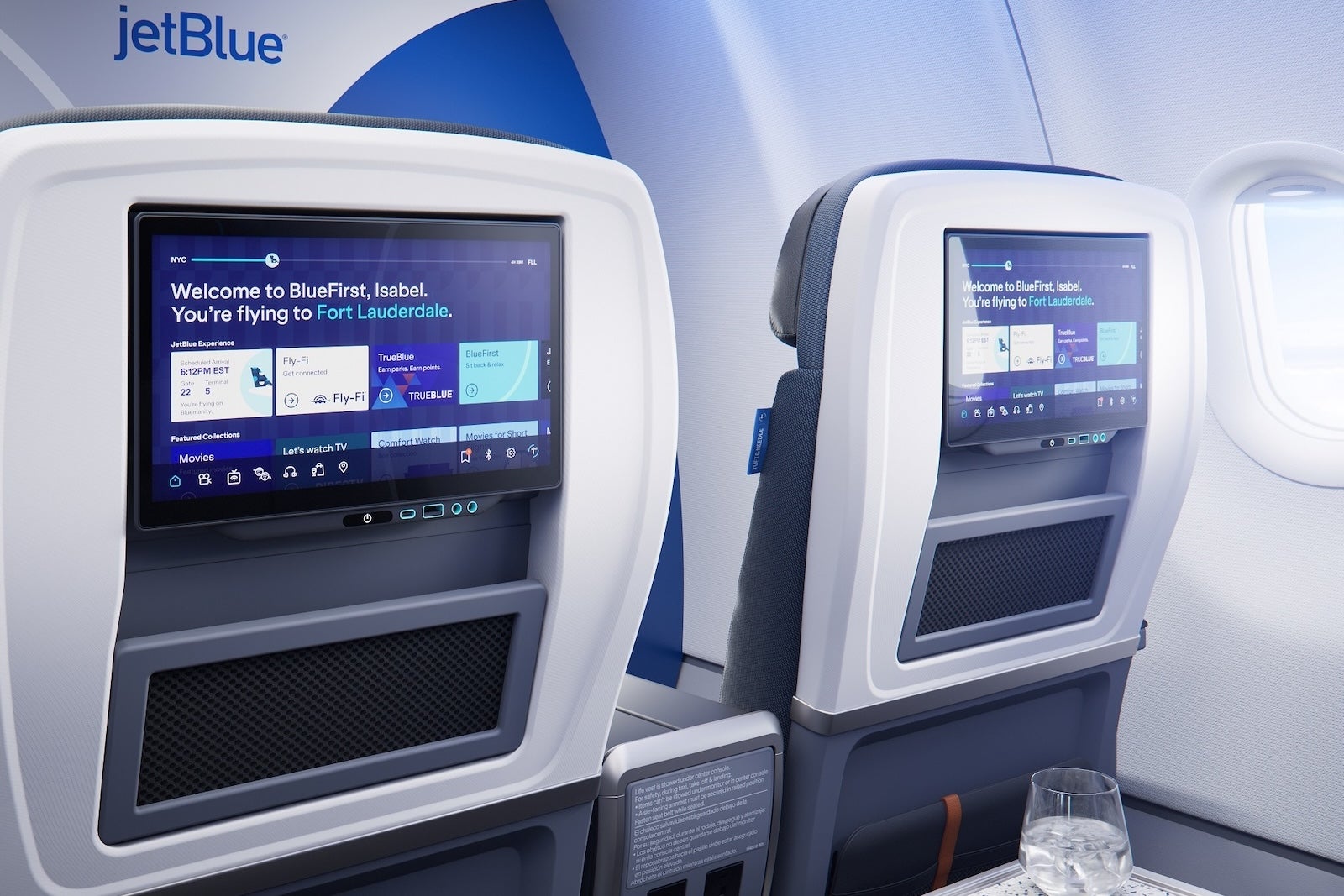
From a competitive standpoint, BlueFirst puts JetBlue in a unique position. By maintaining its industry-leading free high-speed "Fly-Fi" across the entire plane and combining it with a competitive first-class seat, JetBlue is betting that it can win over customers who are tired of the inconsistent service levels at larger airlines. The addition of Tuft and Needle foam and Bluetooth audio gives JetBlue a "tech-forward" edge that appeals to a younger, more digitally native demographic.
As the airline prepares for the official inaugural flight of BlueFirst later this year, industry eyes will be on the financial impact of this transition. Retrofitting hundreds of aircraft is a multi-billion dollar undertaking that requires taking planes out of service and reconfiguring cabin interiors. However, if JetBlue can successfully upsell even a small percentage of its current "Core" passengers to BlueFirst, the increase in yields could provide the financial stability the airline has sought following the termination of its Northeast Alliance with American Airlines and its blocked merger with Spirit Airlines.
In conclusion, BlueFirst represents more than just a new seat; it is a declaration of JetBlue’s maturity. No longer content to be the "scrappy underdog" with a single premium offering, JetBlue is evolving into a comprehensive premium airline. By blending the comfort of Tuft and Needle, the technology of Collins Aerospace, and a reimagined dining program, JetBlue is signaling that the future of domestic travel isn’t just about getting from point A to point B—it’s about how much you enjoy the journey in between. Travelers can expect to see the first BlueFirst-equipped planes on high-frequency corridors between the Northeast and Florida by December 2026, marking the beginning of a new era for the "little airline that could."
