
 By Titik Puspa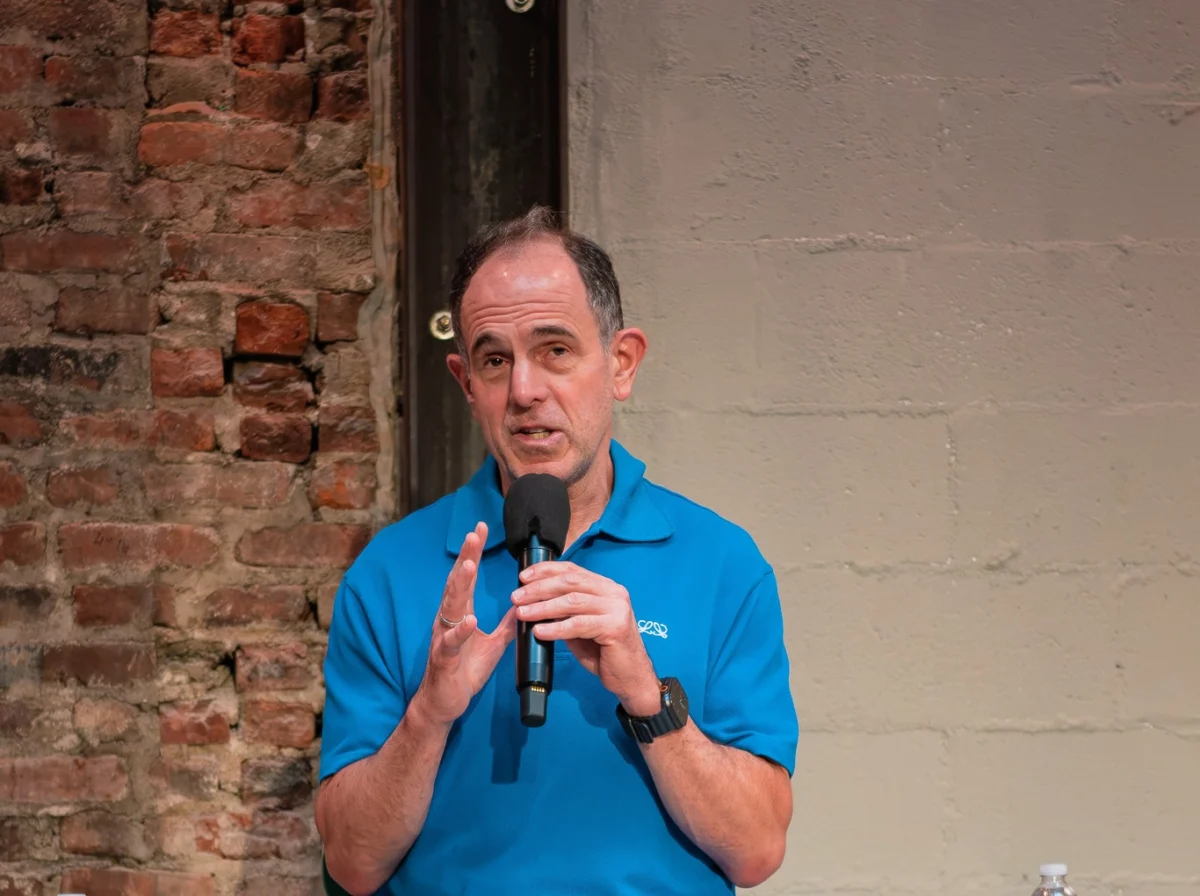
Keith Rabois, a prominent figure in the venture capital world for over a decade, has signaled a significant shift in Khosla Ventures’ operational strategy. For the entirety of his 13-year tenure with the firm, its geographical anchor has been the iconic Sand Hill Road in Menlo Park, California. However, this steadfast tradition is set to be disrupted with the confirmation of Khosla Ventures’ first-ever office outside its longtime Silicon Valley home. Speaking at TechCrunch’s StrictlyVC event held in the vibrant West Village of New York City, Rabois unveiled plans for a new outpost, slated to open its doors this fall at a 14th Street address. The construction is reportedly underway, though Rabois, with a seasoned understanding of project timelines, offered a somewhat cautious outlook, noting, "It’s actually allegedly being built out now. We’ll see. This fall opening date is very vague in my mind."
This expansion is particularly noteworthy given Khosla Ventures’ historically localized approach. "We don’t even have an SF office, so this is a very big step for us," Rabois emphasized, underscoring the magnitude of this move for the firm. The new New York office is designed to accommodate a core group of Khosla Ventures investors, with Rabois himself among them. However, its most distinctive feature will be what Rabois termed an "executive briefing center." This dedicated space is envisioned as a dynamic hub where the firm will host approximately 10 to 12 portfolio companies concurrently, facilitating intensive four-day-a-week engagements with Fortune 500 corporations. The strategic intent behind this initiative is to foster tangible business development opportunities for Khosla Ventures’ portfolio. "The portfolio companies love this," Rabois stated to the attendees, elaborating on the tangible benefits: "They get pilots and customers, and so it’s going to be a very vibrant office because of that." This proactive approach to generating client acquisition and strategic partnerships for its investments highlights a sophisticated understanding of the value chain in venture capital beyond mere capital infusion.
The timing of this announcement is also significant, arriving just months after Rabois’s own relocation to the East Coast. His personal move was motivated by a desire to be closer to his husband, Jacob Helberg, who serves as the Under Secretary of State for Economic Growth, Energy, and the Environment, and their children, who are presently based in Washington, D.C. This geographical recalibration by a key partner inevitably raised questions about New York’s capacity to serve as a talent magnet, a role the Bay Area has historically dominated. When probed on this matter, Rabois offered a nuanced perspective, suggesting that the answer hinges on the seniority of the talent pool.
For entry-level positions, Rabois expressed unreserved optimism about New York’s potential. "Individual contributor level, right out of school, absolutely," he affirmed, citing Ramp, a fintech company he has consistently supported, as a prime example. He elaborated, "We’ve been tapping into right-out-of-school graduates and been able to create a critical density of talent from the intern class [onward] that is extraordinary." This indicates a belief that New York’s educational institutions and burgeoning tech scene are capable of producing a robust pipeline of junior talent, essential for the foundational growth of startups.
However, Rabois acknowledged a different reality when it comes to attracting seasoned professionals. "Senior engineers, architect-level – no, I think that’s a challenge," he admitted. He tempered this concern with a forward-looking observation: "Fortunately, maybe in the modern age, you need less of these people per company than you have historically." This suggests a potential shift in organizational structures, where a greater emphasis on distributed teams and specialized roles might mitigate the need for a large concentration of senior technical staff in a single location.
The most significant hurdle, according to Rabois, lies in recruiting talented senior executives. This challenge, he explained, is less about the absolute supply of individuals and more about the interplay of geography and lifestyle preferences. "If you have an in-office culture, most of the more senior people that live and reside in the New York area live outside the city, and the commute in and out of the city for an office environment can be very painful," Rabois observed. Drawing from his own upbringing in a New York commuter suburb, he elaborated on the logistical difficulties: "We were like a 32-minute express train into the city, but many people live two concentric circles further away. When you need to recruit proven executive talent, and you really believe in an in-office culture, [that has] been very challenging." This points to a fundamental tension between traditional in-office work models and the lived realities of many senior professionals in a sprawling metropolitan area like New York.
Rabois highlighted Ramp’s strategic approach to circumventing this talent acquisition bottleneck. "We don’t hire senior people. We just build from the bottom up, ground up. It’s been a very conscious strategy, very intentionally, for the last three years," he revealed. While acknowledging the viability of this "build from the ground up" philosophy, he also underscored its limitations: "That can work. But if you need a CFO, a SVP of sales, someone who’s got a lot of gravitas and experience, it’s really hard to have them in the office five days a week, because unless they’re very independently wealthy, they really can’t afford to raise a family right in the middle of the city." This candid assessment reveals the complex trade-offs involved in talent strategy, particularly for firms prioritizing in-office culture.
Khosla Ventures’ decision to establish a physical presence in New York positions it within a select, albeit potentially expanding, group of major venture capital firms that have recognized the city’s growing significance. Established players like Sequoia Capital and Andreessen Horowitz have maintained New York offices for years, though their operations there have typically been more modest in scale compared to their Bay Area headquarters. Khosla Ventures’ move, therefore, represents a more substantial commitment, suggesting a belief in New York’s burgeoning ecosystem and its potential for future growth.
This strategic expansion by Khosla Ventures coincides with compelling data indicating a seismic shift in the tech talent landscape. A report released just last month by commercial real estate services firm CBRE revealed a groundbreaking development: for the first time in the 13 years the firm has been tracking this data, New York has narrowly surpassed the San Francisco Bay Area in terms of total tech talent headcount. This notable shift is largely attributed to the aggressive hiring of artificial intelligence talent by financial firms, occurring concurrently with staff reductions by many Bay Area tech employers. This trend suggests a diversification of the tech industry’s geographical centers, with New York emerging as a formidable competitor to Silicon Valley.
The implications of this talent migration are profound. For years, the narrative has been that Silicon Valley is the undisputed mecca for tech innovation and talent. However, the CBRE report suggests that this paradigm is evolving. The rise of AI, coupled with the financial sector’s increasing reliance on technological expertise, has created a surge in demand for tech professionals in New York. This demand, combined with a potentially more cost-effective living environment for some, has contributed to the city’s ascendance.
Despite this compelling data, the sentiment within the New York tech community, at least as gauged by the audience at the StrictlyVC event, remains somewhat skeptical. When the CBRE report was mentioned, one attendee voiced a common sentiment: "I heard about that study. I don’t buy it." This skepticism highlights a lingering attachment to the traditional view of Silicon Valley’s dominance and perhaps a reluctance to fully embrace the implications of New York’s growing prominence. It suggests that while the numbers may indicate a shift, the ingrained perceptions and established networks that have long defined Silicon Valley’s advantage are not easily dismantled.
The move by Khosla Ventures, therefore, can be interpreted not just as an expansion of physical footprint, but as a strategic bet on the evolving nature of the tech industry and its talent distribution. By establishing a significant presence in New York, the firm is positioning itself to capitalize on the city’s expanding talent pool, particularly at the junior levels, and to cultivate new avenues for portfolio company growth through its innovative executive briefing center. Whether New York can fully replicate the deep bench of senior executive talent found in the Bay Area remains an open question, but Khosla Ventures’ bold move suggests a willingness to adapt and innovate in response to a dynamic and increasingly decentralized tech landscape. The firm’s investment in a New York office signifies a clear acknowledgment of the city’s burgeoning importance and its potential to become a co-equal hub in the global venture capital ecosystem. This expansion is not merely about planting a flag; it’s about actively engaging with and shaping the future of talent acquisition and company growth in a rapidly transforming industry.
