
 By admin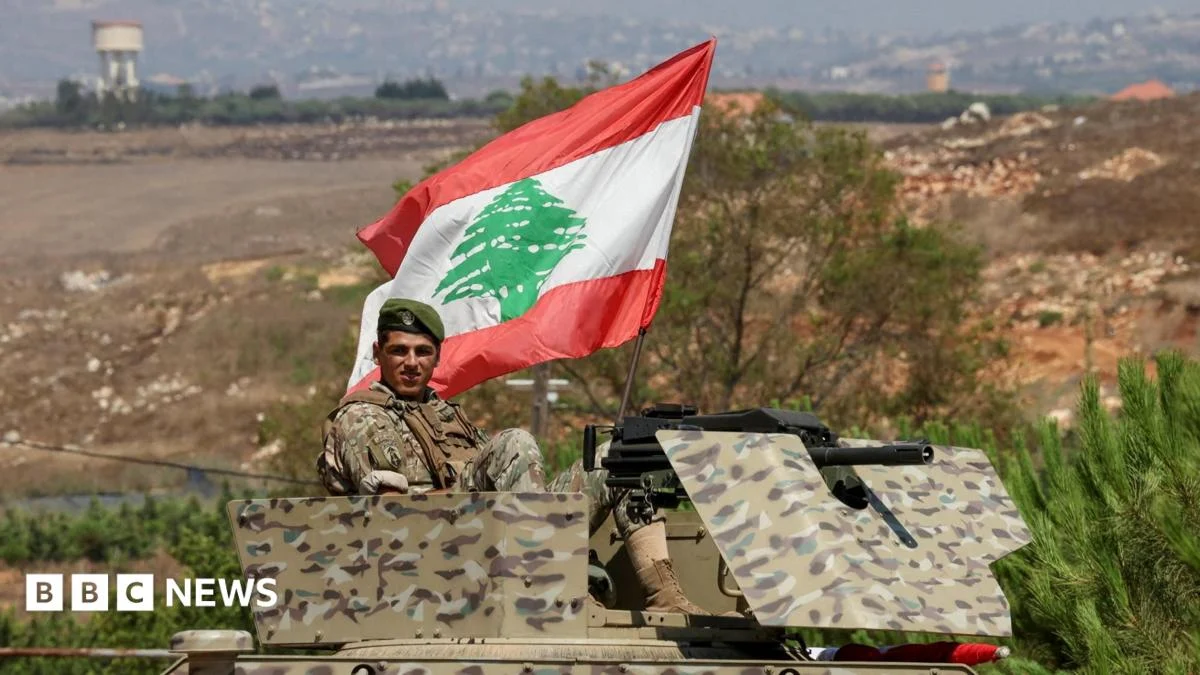
Lebanon’s army has commenced a significant deployment into a designated "pilot zone" in the southern part of the country, marking a crucial step in the phased withdrawal of Israeli forces. This operation, brokered by a US-backed agreement finalized last month, signals a potential shift in regional dynamics and the complex security landscape of southern Lebanon. Engineering units of the Lebanese army were observed entering the village of Zawtar al-Gharbiyeh, located in the Nabatieh district, on Tuesday morning, as officially announced by the army command. However, the initial stages of this deployment were not without immediate friction, as the army command later reported that Israeli forces opened fire in the vicinity of the advancing Lebanese troops. The Israeli military, in its own statement, confirmed that warning shots were discharged after Lebanese troops reportedly crossed into the Israeli-declared "security zone."
The "pilot zone" initiative is a cornerstone of the broader agreement, which envisions a gradual withdrawal of Israeli troops from a limited segment of territory occupied during the protracted conflict with Hezbollah, a powerful Iran-backed Lebanese group. A parallel objective of this framework is the disarmament of Hezbollah, a contentious issue that has long been a central point of contention in regional security discussions. The commencement of Tuesday’s deployment occurred strategically ahead of a high-stakes meeting in Washington D.C. between U.S. President Donald Trump and his Lebanese counterpart, Lebanese Armed Forces Commander General Joseph Aoun.
General Aoun, during his visit to the White House, was expected to leverage the meeting to press President Trump for increased U.S. pressure on Israel to expedite its withdrawal from the remaining occupied territories in southern Lebanon. Furthermore, Aoun aimed to secure robust American support for the Lebanese Armed Forces (LAF) as they prepare to assume full control of areas currently under the significant influence of Hezbollah. Speaking to reporters in the Oval Office, Aoun candidly stated his needs from the U.S. president: "I told him [Trump] I need two things from you: political support and supporting the LAF [Lebanese Armed Forces]."
President Trump, standing alongside General Aoun, pledged that the United States would provide assistance to Lebanon, a nation he described as having been "hit hard" over several decades. He articulated a vision of a more equitable future for the country, stating, "It’s been a very badly treated place and country, and we’re going to have it properly treated. And treated with the respect it deserves." This rhetoric suggests a potential recalibration of U.S. policy towards Lebanon, moving beyond the historical focus on counter-terrorism to a broader engagement aimed at stabilization and development.
The U.S. State Department, on Monday afternoon, formally announced the commencement of "pilot zone operations" in Zawtar al-Gharbiyeh and two other Lebanese villages, Froun and Srifa. This development was presented as a direct outcome of the "Trilateral Framework" that was agreed upon by Israel, Lebanon, and the United States at the close of June. The department characterized this step as a significant "milestone," attributing its achievement to productive discussions held the previous week between Israeli and Lebanese representatives in Rome.
Later on Monday, a senior Israeli military official corroborated the plans, confirming that the Israel Defense Forces (IDF) would "adjust its force posture in one of the pilot areas" to facilitate the Lebanese army’s mission. This adjustment, the official emphasized, would be undertaken while simultaneously "safeguarding the security of IDF soldiers and preserving its right to self-defence and to remove threats." The overarching objective of the pilot program and the broader agreement, the official reiterated, was "the disarmament of the Hezbollah terrorist organisation and the removal of its illegal weapons." The official also reaffirmed Israel’s stance that the IDF would maintain its presence within the "security zone"—a roughly 10-kilometer-deep strip of occupied Lebanese territory along the border—for "as long as necessary" to ensure the security of northern Israeli communities, underscoring the ongoing security concerns that continue to shape Israel’s policy.
The Lebanese army command, in its Tuesday statement, reiterated that its units had commenced deployment to Zawtar al-Gharbiyeh, explicitly stating that this action was "based on ongoing communications with the Military Co-ordination Group for Lebanon." This group, a trilateral body, was established specifically to oversee and support the implementation of the agreed-upon framework. The army command also issued a public appeal to Lebanese citizens, urging them "not to head to the village until the security situation stabilises, and to comply with the instructions of the deployed military units for their own safety." This cautionary note highlights the volatile nature of the situation and the need for civilian cooperation to prevent unintended incidents.
The subsequent report of Israeli forces opening fire in the vicinity of the Lebanese units added a layer of tension to the unfolding events. The Lebanese army command characterized this action as an "attack" that "hinders the implementation of deployment steps in the pilot zones," suggesting that the incident could potentially derail the carefully orchestrated phased withdrawal and deployment process. In response, the IDF stated that its soldiers had fired "warning shots into the air" after Lebanese troops and an engineering vehicle allegedly "crossed approximately 150m (490ft) into the security zone and breached the barriers" in the adjacent area of Zawtar al-Sharqiyeh. The IDF reported that the Lebanese troops subsequently "withdrew from the area, and no injuries were reported," indicating a de-escalation following the warning shots.
Despite this localized incident, the Lebanese army confirmed that its troops were actively engaged in carrying out missions in the nearby villages of Froun and Srifa, a testament to the ongoing progress of the pilot zone operations as announced by the U.S. on Monday. An Israeli source, speaking anonymously to the Haaretz newspaper, also indicated that there were no Israeli troops present in these two villages, suggesting a degree of successful withdrawal in those specific areas.
Further complicating the narrative of Israeli withdrawal, Lebanon’s state-run National News Agency reported on Tuesday that Israeli forces were responsible for two significant explosions near the villages of Beit Yahoun and Kounine, located in the Bint Jbeil district. The agency also reported instances of blasts resulting from Israeli-controlled demolitions in the town of Majdal Zoun, within the Tyre district. These reports raise concerns about the extent and nature of Israeli actions in areas it is vacating, particularly regarding potential damage to civilian infrastructure.
It is important to note that in many villages within the areas that have remained under Israeli occupation, significant destruction has been reported, attributed to Israeli strikes or demolitions. While the Israeli military asserts that its actions are aimed at dismantling Hezbollah infrastructure, human rights organizations have raised serious allegations. They contend that some of these destructive actions may constitute the deliberate destruction of civilian infrastructure, potentially amounting to war crimes. This discrepancy between official Israeli justifications and human rights assessments underscores the ongoing debate and scrutiny surrounding the conduct of military operations in the region.
Hezbollah itself has publicly rejected the agreement brokered between the Lebanese government, Israel, and the United States. The group has characterized the provisions linking Israel’s withdrawal to its disarmament as crossing "all red lines," indicating a firm opposition to the terms of the accord. Israel, conversely, has maintained its position that it will not fully withdraw from Lebanon until Hezbollah is completely disarmed, setting a high bar for the complete cessation of its military presence. This deadlock over disarmament remains a central obstacle to a comprehensive resolution of the conflict.
According to President Trump, the U.S. possesses "concrete plans" to assist Lebanon in building its capacity to disarm Hezbollah. However, he offered no specific details regarding the nature or scope of these plans. He did, however, express optimism about the Lebanese army’s growing self-sufficiency. Furthermore, President Trump indicated a willingness to engage directly with representatives of Hezbollah if such a request were to be made by General Aoun, suggesting a potential diplomatic avenue that could be explored.
The current escalation of conflict in the region, which drew Lebanon into the wider war between Israel, the United States, and Iran, began on March 2nd. This date marked the launch of rockets into Israel by Hezbollah, reportedly in retaliation for an Israeli strike that resulted in the death of Iran’s Supreme Leader. In response, Israel initiated a widespread bombing campaign across Lebanon and launched a significant ground invasion into the southern part of the country. The human cost of this conflict has been substantial. According to the Lebanese health ministry, over 4,300 people have been killed in Lebanon, including nearly 800 children, women, and medical personnel. Israeli authorities, on the other hand, report the deaths of 37 Israeli soldiers and four civilians on both sides of the border during the conflict. These grim statistics underscore the devastating impact of the ongoing hostilities on civilian populations and highlight the urgent need for a lasting peace. The pilot zone deployment, while a step forward, exists within this complex and often volatile geopolitical context, with significant challenges and potential pitfalls ahead.
