
 By Titik Puspa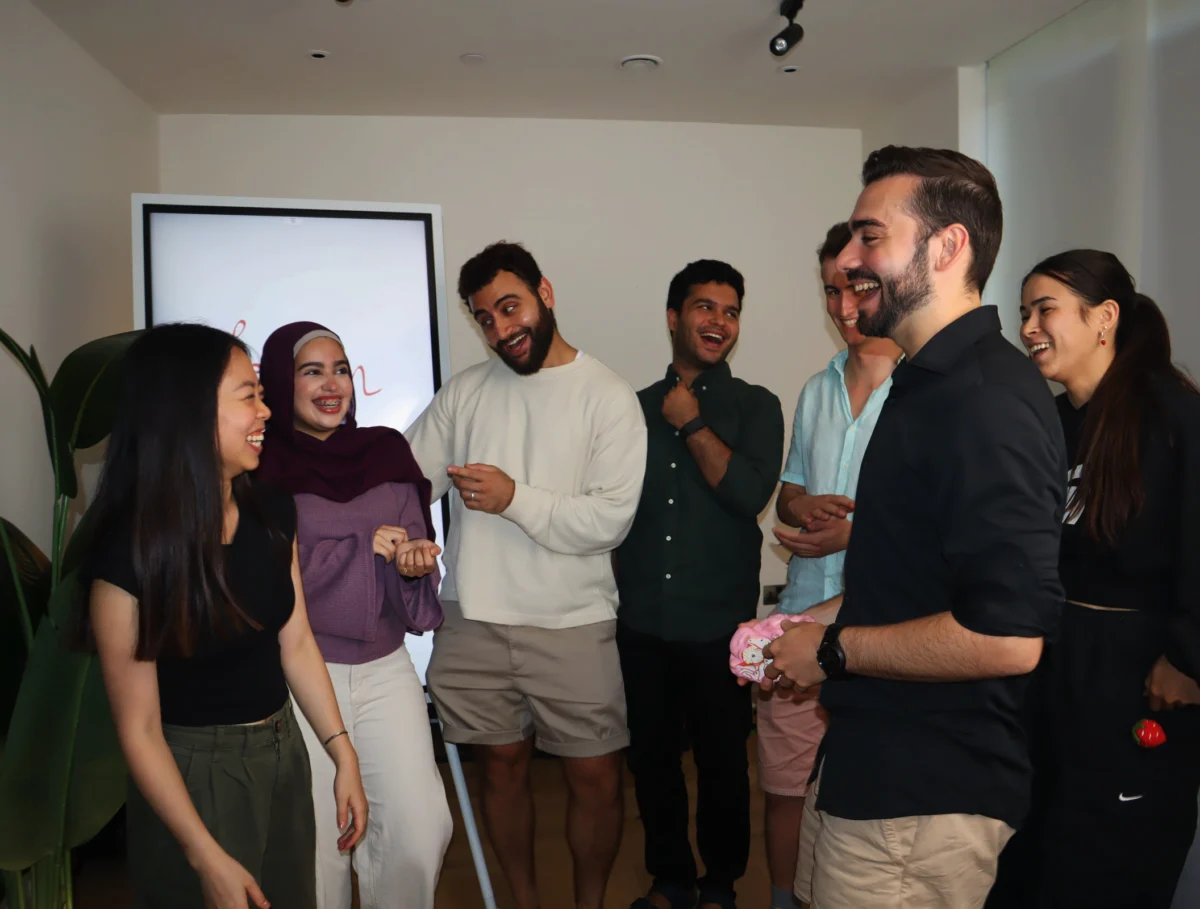
In a quiet corner of East London, a stark contrast to the frenetic energy often associated with Silicon Valley’s startup scene, six twentysomethings have cultivated an environment they proudly call the "anti-San Francisco hacker house." This isn’t a place for relentless 12-week sprints culminating in a high-stakes Demo Day. Instead, the residents of the London Island Founder House, affectionately known as "Lift House," are prioritizing what founder Rowan Aldean, 26, describes as a "holistic improvement in life."
Aldean, who achieved a significant financial milestone by selling his previous company, VeriFast, for millions last year, now steers an "applied AI" startup focused on guiding companies in deploying AI agents. He and his wife, Zahraa, 22, a promising pharmaceutical research PhD candidate, have been residents since May, a few months after the house officially opened its doors in March. Their vision for Lift House is rooted in a desire to foster a more balanced and sustainable approach to building successful tech ventures, a stark departure from the often-militant hustle culture prevalent in San Francisco.
The reporter’s afternoon visit to Lift House offered a glimpse into this philosophy. Escorted through the meticulously maintained sidewalks of a modern East London development, the six-story building stood facing the tranquil waters, a beacon of a different kind of ambition. Lift House, a name that cleverly alludes to both its physical elevator and its mission to "uplift" tech founders, is a rare breed in London’s co-living hacker house landscape. While San Francisco boasts dozens, if not hundreds, of such spaces, London has only a handful, making Lift House a significant experiment in a burgeoning market.
Lift House represents a bold wager on the potential of U.K. founders to forge groundbreaking companies without succumbing to the performative excesses of Silicon Valley. Tales abound of San Francisco hacker houses operating out of illicit warehouse spaces, hosting lavish galas, or adopting punishing 72-hour work sprints, a manifestation of the notorious "996" work culture. Aldean dismisses such practices as "performative and over-the-top events," pointing to the quiet but monumental achievements of London’s own DeepMind. "They’ve won Nobel Prizes and built frontier innovation without any song and dance," he remarked, highlighting a more understated yet impactful approach to innovation.

This deliberate divergence aligns with a burgeoning trend termed "Londonmaxxing," where founders meticulously optimize their engagement with the city’s unique tech ecosystem. While the London scene may appear less ostentatious and more grounded than its Californian counterpart, its founders share the same fundamental aspirations: success, wealth, and market dominance. The city’s tech sector is experiencing a significant boom, particularly in artificial intelligence. In 2026 alone, London AI startups have secured an impressive $12 billion in funding, accounting for a substantial portion of the $14.7 billion raised by all London startups, according to data from Dealroom. Six companies – Wayve, Superintelligence, ElevenLabs, Recursive, Ineffable Intelligence, and Isomorphic Labs – have each raised over $500 million, with the latter three founded by alumni of the renowned DeepMind. This surge in AI investment has injected a palpable sense of optimism into the U.K. tech scene, galvanizing a new generation of founders, like those at Lift House, to pursue ambitious goals.
The operational model of Lift House is a hybrid of a startup incubator and a co-living community. The commitment of residents is fluid, with some staying for a month and others planning for six months or more. They manage their own groceries, though communal cooking and ingredient sharing are common. Cleaning duties are distributed amongst the group, and details regarding rent remain confidential. The overarching ethos, consistently articulated by the residents, is one of balanced ambition – a concept almost alien to the intense, singular focus often demanded by San Francisco startups.
A cornerstone of this balanced approach is the Sunday journaling ritual, introduced by David Amor, 28, who leads a brain coaching and training company. Amor works with founders and business leaders to enhance their understanding of the brain and optimize business performance. The journaling practice encourages residents to reflect on their weekly engagement with nature, their dietary habits, and their physical activity levels. Luke, 27, who runs an AI-marketing company, attests to the positive impact of living at Lift House. "I’m eating healthier, working out more, and sleeping more," he shared, noting that he now prioritizes lunch, a simple habit he previously neglected. (Luke requested his last name be withheld).
Beyond personal well-being, community engagement is also a priority. Tuesday evenings are dedicated to volleyball, with the founders forming a house team to compete in a local league. On other evenings, after dinner, Wan Ying L., 25, who recently left an AI startup and is developing a new venture, might find solace and inspiration at the piano in the living room. Shared recreational activities, such as playing the board game Catan or attending art exhibitions together, further strengthen the bonds within the house.
Presence Plumb, 25, a tech strategist, frequently hosts rooftop dinner parties. These gatherings serve as vibrant hubs for discussion and networking, with dishes reflecting the diverse nationalities within the house – from Iraqi to Spanish influences. Invited guests include founders, researchers, investors, and operators, fostering an environment for dynamic conversations about tech trends and investment opportunities. Plumb describes the London ecosystem as "calmer, balanced, authentic in a way," observing that its participants "don’t want too much of that only startup tech bro vibe. They want a bit of balance."

Individual work schedules at Lift House are personalized. Amor, for instance, adheres to a strict morning routine, waking by 8 a.m. and dedicating himself to focused work for the initial part of the day, aiming for "no distractions." He follows this with a cold shower, a practice he believes "increases your dopamine by 250%," providing a motivational spark. Luke typically rises around 8:30 a.m. His co-founder, Varun, 27 (who also requested his last name be withheld), often joins him at Lift House for co-working, and their workday commences around 9 a.m. with a team call. Aldean, the host, generally starts his day later, rarely before 10 a.m. unless a significant event, such as a crucial investor call, necessitates an earlier start.
When playfully queried about what makes the house distinctly British, Aldean offered a lighthearted observation: "Well, we drink tea together like Brits, and in SF folks just drink filtered coffee." More seriously, he elaborated on the unique pressures faced by British founders. They must contend with a cultural aversion to risk, an ingrained tendency towards humility, and a pervasive shame associated with failure. Instead of embracing the "hustle and grind" at the expense of sleep, they navigate what is known as "tall poppy syndrome," a phenomenon where individuals who achieve significant success are often targeted for criticism and brought down. This cultural nuance can make founders hesitant to openly celebrate their accomplishments.
Despite these challenges, Luke views London as an advantageous location for early-stage founders, citing a robust network, ample early-stage capital, and the availability of a fulfilling life beyond the confines of the tech industry. He likens the city’s cultural landscape for founders to New York, a stark contrast to San Francisco. Amor further emphasizes London’s appeal, noting its diversity and the abundance of opportunities for engagement, whether through "founder-run clubs, wellness events, [or going] to jazz nights."
Luke and Varun have successfully navigated the funding landscape, largely leveraging the U.K. government’s Seed Enterprise Investment Scheme (SEIS) and Enterprise Investment Scheme (EIS). These schemes are designed to incentivize angel investment in local startups. "There are people who will pay basically the same rate of tax if they give us the money versus if they pay income tax," Luke explained, highlighting another advantage of launching a venture in London.
Aldean perceives the London ecosystem as less cutthroat than its Silicon Valley counterpart. He recalls his own experience in a Bay Area hacker house, where the emphasis was on heads-down product building, with desks facing walls. He found the ecosystem at times prone to gossip, a practice he notes is conducted differently in the U.K. "There’s nothing like ‘oh my god did you hear that the CTO just, like, did this’," Aldean commented, describing a pervasive sense of anxiety about negative stories being spread, particularly if they served an individual’s agenda. He also observes that London startups tend to target large, established corporations for sales, rather than selling to each other, which allows for building without the pressure of currying favor with peers.

Varun and Luke echo this sentiment, identifying another key difference between the U.S. and U.K. markets. "It’s a relatively fleeting market," Varun stated regarding the U.S., where "you get quick wins." He contrasted this with London, where "it’s hard to close a customer, but if they close, they stay with you longer." This suggests a focus on building long-term, stable customer relationships in the U.K.
However, the ultimate trajectory for many U.K. startups often leads to the United States. The U.K. offers access to affordable, high-caliber talent from prestigious universities like Oxbridge and a time zone conducive to collaboration with Europe, the Middle East, Asia, and parts of North America. The U.S., on the other hand, provides access to the world’s largest economy and a vast pool of investors willing to deploy significant capital across all stages of funding, from pre-seed to growth. "It’s almost like a factory line in a way," Varun observed, describing the common pathway of starting in the U.K. and then expanding to the U.S., or vice versa.
American investors also play a significant role in attracting British talent. One founder shared an anecdote about an investor who conditioned their backing on the company relocating to the U.S., a move the founder ultimately made, though she maintained her family base in the U.K. Luke recounted a similar experience with a Miami-based investor who urged him and Varun to move to the U.S., a practice he described as "quite common." While they have already initiated their U.S. expansion, Luke and Varun remain open to relocating to the U.S. to be closer to their customer base, despite their strong ties to London.
This dynamic highlights a palpable tension within not only the U.K.’s tech ecosystem but also across much of Europe. Plumb expressed her commitment to supporting the European ecosystem, noting that "a lot of people are trying to support the European ecosystem more." Yet, Aldean candidly observed, "Founders talk about London; everyone is bullish on the country until they get the opportunity to leave."
The lease for Lift House extends for approximately another year, and there’s a palpable desire among residents to sustain the initiative for as long as possible. The scarcity of such dedicated co-living hacker houses in London is notable, although the city does host various short-term gatherings, such as the Solana Hacker House meet-up series. Some more publicly recognized co-living hacker houses operate as part of global networks, like the San Francisco-based The Residency, which expanded into London last year, and BaseJump, which is preparing to launch its own London hacker house program.

In 2024, a contrasting venture, "The London Founder House," was established with the tagline, "The people here don’t want work-life balance." Sifted’s coverage of this initiative highlighted its focus on intense work without emphasis on personal well-being. Although it wound down last year, it left an indelible mark on the London ecosystem through its concept, events, and the connections it fostered. Prospective residents for The London Founder House were required to have raised at least half a million dollars. In stark contrast, Lift House seeks individuals who demonstrate a hobby outside their companies and a commitment to fitness. This inclusive approach aligns with the "Londonmaxxing" ethos, aiming to demonstrate that it is possible to achieve success without sacrificing personal well-being. "The culture is to build something that lasts," Aldean concluded, "not necessarily burn out chasing a flash."
