
 By Rifan Muazin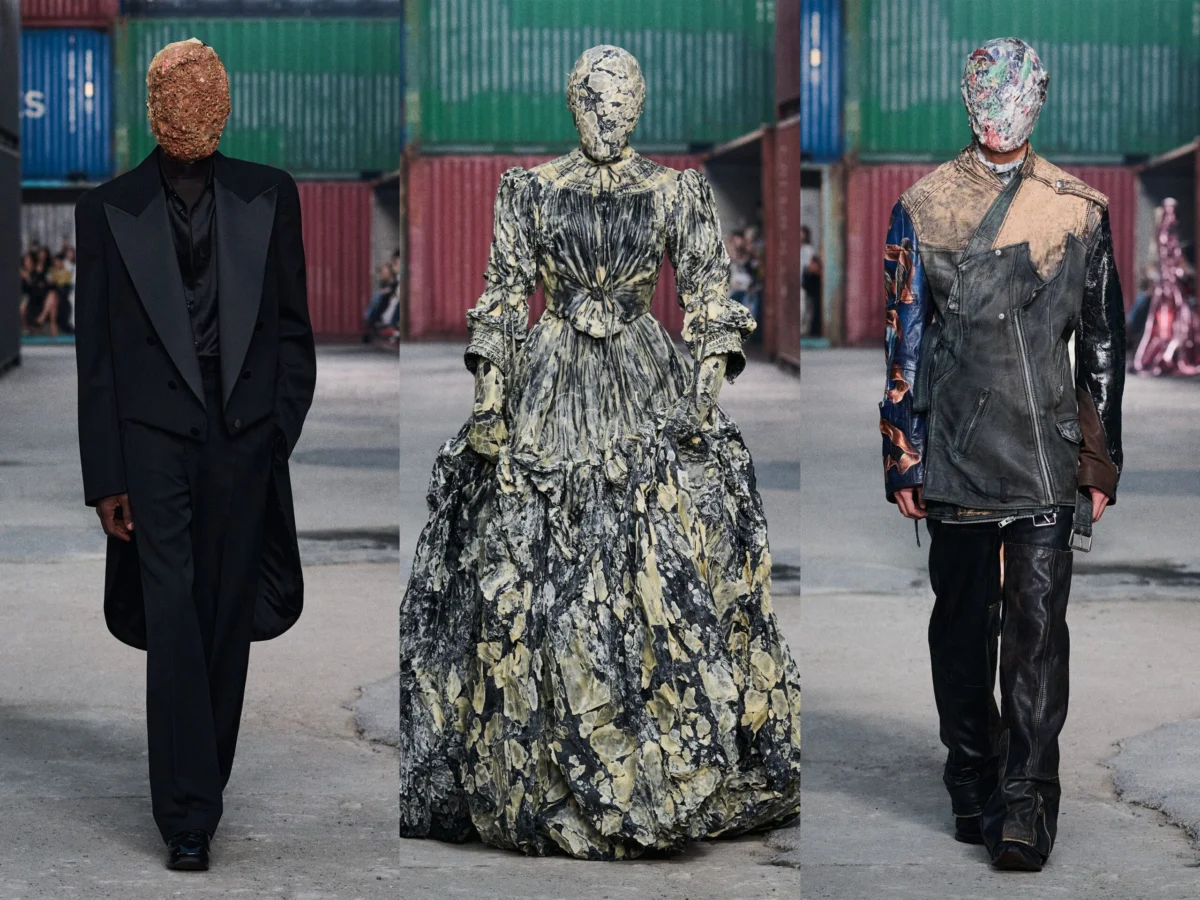
The atmosphere was heavy with the cinematic grit of a 1980s John Woo crime thriller as an anonymous black van came to a halt in the heart of a sprawling, industrial marina. Under the shimmering dusklight of Shanghai, where brawny metal cargo containers were stacked like monoliths against the skyline, the air crackled with a specific kind of high-fashion tension. A security detail—a squadron of men in sharp black suits, dark shades, and earpieces—stood guard, evoking the high-octane energy of the finale of the 1986 classic A Better Tomorrow. Yet, the visual dissonance was immediate: instead of combat boots or standard oxfords, the feet of the assembled fashion elite were clad almost exclusively in Tabis, the split-toe silhouette that has become the ultimate signifier of the Maison Margiela cult.
On April 1, marking the climactic conclusion of Shanghai Fashion Week, Maison Margiela staged a takeover of one of the city’s busiest shipyards. This was not merely another runway show; it was a historic milestone—the house’s first-ever runway presentation held outside the traditional fashion capital of Paris. The choice of Shanghai was a calculated and symbolic gesture, serving as the launchpad for an ambitious, weeks-long cultural project titled "Maison Margiela Folders." This multi-city initiative was designed to act as a bridge, importing the avant-garde house’s most essential codes and esoteric history to the Chinese superpower through a series of immersive exhibitions.
The rollout of "Maison Margiela Folders" spanned a quartet of China’s most influential urban centers, each serving a distinct purpose in the brand’s educational narrative. The first chapter opened on April 2 in the opulent Huangpu District of Shanghai, showcasing a breathtaking display of 58 iconic looks from the Artisanal line—the house’s equivalent to haute couture. From there, the project migrated to Beijing, where it delved into the label’s long and storied history of eccentric masks, a hallmark of founder Martin Margiela’s obsession with anonymity. The third installment brought the "Tabi" to the forefront in Chengdu, featuring nine of the world’s most rarest and wildest collections of the split-toe footwear. Finally, the journey concluded in Shenzhen, where visitors were invited to participate in the "Bianchetto" ritual, slathering their own garments in the brand’s signature cracking white paint.
The strategic motivation behind this massive logistical and creative undertaking is rooted in the shifting tectonic plates of the global economy. China remains the undisputed "beating heart of global luxury," as noted by high-ranking LVMH executives. For Maison Margiela, the stakes are particularly high. Since 2019, the brand has aggressively expanded its physical footprint in the country, opening 26 stores and cultivating a growing legion of local tastemakers. As Glenn Martens, the house’s creative director, explained, the move to China was about more than just visibility; it was about building a deep, linguistic understanding of the brand’s complex DNA for a new generation of consumers.
The success of such a grand expansion, however, rested entirely on the creative output of the Fall 2026 collection debuted at the Shanghai shipyard. Glenn Martens, the 42-year-old Belgian visionary who has spent the last year solidifying his grip on the house’s aesthetic, delivered what can only be described as a blockbuster. The show featured 76 coed looks that blurred the lines between ready-to-wear and the high-concept artistry of the Artisanal line. It was a masterclass in draping, construction, and what some might call "high-concept freakiness," proving that Martens is not only a student of Margiela’s history but a bold architect of its future.
Among the most talked-about pieces was a gown that tested the physical limits of both the model and the medium: a nearly 200-pound dress crafted from repurposed cracked ceramics. As the model navigated the runway flanked by shipping containers, the garment emitted a rhythmic crunching and clanking, a literal symphony of deconstruction. Equally staggering was a voluminous, glittering shroud covered entirely in gold star stickers. According to house insiders, this single piece required a team of 34 artisans and 3,000 hours of labor to assemble, utilizing a staggering 150,000 stickers to achieve its celestial texture.

Martens also offered inventive riffs on the "Bianchetto" technique, which traditionally involves white paint that cracks and peels over time to reveal the garment underneath. One standout dress was dramatically molded from stiff, meringue-like peaks of paint, turning a house code into a sculptural experiment. The masks, too, returned in haunting new forms. The show opened with a trio of organza versions printed with dollface makeup, creating an unsettling, uncanny valley effect that set the tone for the evening. As an introductory handshake to the Chinese market, the collection was firm, memorable, and uncompromisingly avant-garde.
"We began with the house codes," Martens remarked on his creative process. "We look at what has been over-referenced and what invites reinterpretation. From there, a way of cutting, proportion, and texture emerges naturally. It’s not something that is calculated." This organic approach to design has allowed Martens to navigate the transition from his predecessor, John Galliano, while maintaining the core ethos established by Martin Margiela in 1988.
Despite the high-voltage experimentation, the collection revealed a surprising and savvy pivot toward wearability, particularly in the menswear. While the masks and ceramic gowns captured the headlines, the twenty-odd men’s looks were remarkably grounded. Martens presented luscious, full-bodied velvet suits and exquisitely flowy tuxedos that felt primed for a Hollywood red carpet. The outerwear, in particular, tapped into the current zeitgeist of vintage-obsessed menswear. There were patchwork leather bikers, heavyweight sherpa parkas, and a strong-shouldered tweed topcoat that felt like a nod to the archival Armani and Ralph Lauren aesthetics currently dominating social media mood boards.
Perhaps most surprising was Martens’ take on the ubiquitous duck canvas work jacket. Drawing inspiration from the time-tested Carhartt Detroit model, Margiela’s version featured a boxy silhouette and a shawl collar, elevating a blue-collar staple into a luxury icon. This blend of the radical and the relatable is a feature of Martens’ broader strategy. By creating "viral" moments through risky marvels, he elevates the profile of the more commercial pieces—the artfully thrashed jeans, the "Sprinter" torpedo sneakers, and the breakout "Box Bag" carryalls—that are designed to drive the brand’s financial growth.
Glenn Martens is no stranger to the delicate balance of commerce and creativity. Having made his name at Y/Project and currently helming Diesel (both under the OTB Group umbrella), he understands the machinery of modern fashion. His tenure at Margiela has proven that he can honor the house’s legacy of anonymity while navigating the demands of a 21st-century public-facing role. Martin Margiela, the founder, famously shunned the spotlight, refusing interviews and hiding his face. Martens acknowledges that in 2026, anonymity must be redefined. "Anonymity today," he notes, "is less about being invisible and more about keeping the focus on the work, even if you have to be present as a designer."
As the "Maison Margiela Folders" project concludes its tour in Shenzhen, the impact of the Shanghai show continues to reverberate through the industry. By choosing to debut his most ambitious collection to date in China, Martens has signaled that the future of Maison Margiela is global, inclusive, and unafraid of the spotlight. The challenge moving forward will be managing the burgeoning cult of personality surrounding Martens himself. As he continues to operate at a virtuoso level, blending the deconstructivist spirit of the past with the commercial realities of the present, the "quiet" house of Margiela is becoming louder than ever. The shipyard in Shanghai was more than just a runway; it was a declaration of intent, proving that while the clothes may be masked, the brand’s vision is clearer than ever.