
 By admin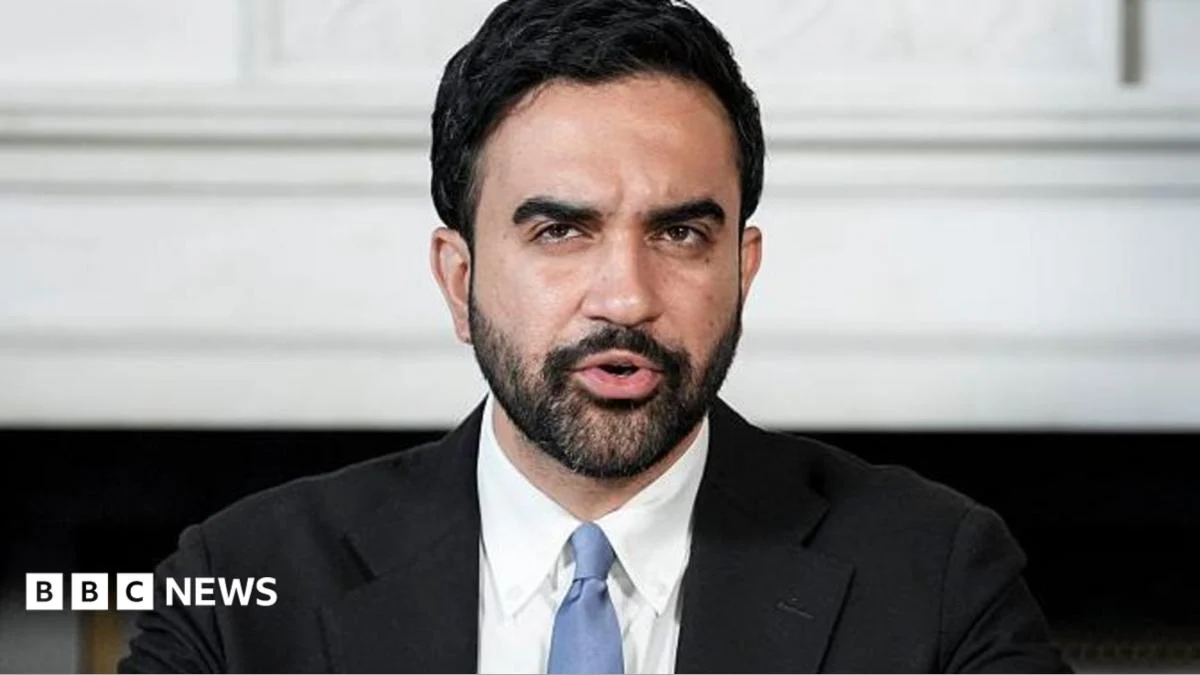
In a dramatic pivot that has sent ripples through both domestic and international political spheres, New York City Mayor Zohran Mamdani, who had previously vowed to order the arrest of Israeli Prime Minister Benjamin Netanyahu should he set foot in the city, has now publicly stated that he lacks the necessary legal authority to carry out such an action. This recalibration of his stance, articulated in a recent social media video and further elaborated upon, marks a significant departure from his fervent campaign promises and his direct engagement with the International Criminal Court’s (ICC) pursuit of the Israeli leader.
Mayor Mamdani’s initial pronouncements had positioned him as a vocal critic of Israeli policies in Gaza, aligning himself with international calls for accountability. During his mayoral campaign, Mamdani repeatedly characterized the war in Gaza as a genocide and labeled Prime Minister Netanyahu a war criminal. These were not mere rhetorical flourishes; he explicitly stated his intention to fulfill a pledge to order the arrest of Netanyahu, citing an ICC arrest warrant. Speaking to The New York Times as a candidate, he declared, "This is something that I intend to fulfill," framing such an arrest as an act of honoring a warrant issued by the ICC. This bold declaration resonated with a segment of his constituency and drew considerable attention, positioning him as a figure willing to take direct action against perceived international injustices.
The International Criminal Court issued arrest warrants in 2024 for Prime Minister Netanyahu and a Hamas commander, alleging war crimes. The ICC’s mandate, established by the Rome Statute, its founding treaty, extends to prosecuting individuals accused of genocide, crimes against humanity, and war crimes committed within the territories of states that are party to the treaty. Technically, if an individual subject to an ICC arrest warrant enters a member state, that country is obligated to arrest and surrender the individual to the court. However, a crucial geopolitical nuance in this case is that the United States, while a significant global power, is not a signatory to the Rome Statute and therefore not a member of the ICC. This non-membership fundamentally alters the legal landscape for enforcing ICC warrants on American soil.
It was this very jurisdictional complexity that Mayor Mamdani’s office has now navigated. In his recent social media video, Mamdani explained that his team had exhaustively reviewed "every avenue available" under the law. The conclusion reached, he stated, was that "we do not have the independent legal authority to enforce this." He then strategically shifted the onus, declaring, "The federal government, however, does." This pointed call for federal action underscores the layered nature of international law enforcement within the U.S. system. Mamdani explicitly urged the federal government to "join the ICC and execute this warrant," thereby advocating for a broader, more encompassing approach to international justice.
This latest statement by Mayor Mamdani comes in response to his earlier, more direct engagement with the possibility of enforcing the ICC warrant. In an interview with The New York Times published on Saturday, Mamdani revealed that he was engaged in "an active conversation" with law enforcement agencies regarding the potential enforcement of the ICC arrest warrant should Netanyahu visit New York. This interview generated significant attention, prompting a swift and forceful response from former President Donald Trump.
On Monday, President Trump took to his social media platform, Truth Social, to unequivocally state that Prime Minister Netanyahu would not be "arrested, in any way, shape or form" while in the United States. Trump’s rationale was rooted in his perception of Israel’s geopolitical role, particularly its ongoing conflict with Iran. He asserted, "He is fighting against the Islamic Republic of Iran, which recently killed 52,000 innocent protestors [sic], and has spent the last 47 years killing American Soldiers, and others." This statement highlights a starkly different perspective on Netanyahu’s leadership and Israel’s security concerns, framing his actions within a broader context of regional conflict and U.S. interests.
Mayor Mamdani’s acknowledgment of his lack of independent authority does not diminish his strong disapproval of Prime Minister Netanyahu’s presence in New York. In his social media video, he reiterated that Netanyahu was "not welcome" in New York City, a sentiment particularly poignant given the city’s anticipated role as a host for the UN General Assembly in September, an event where Netanyahu is expected to be present. This ongoing tension reflects a broader debate within the United States, particularly within the Democratic Party, regarding U.S. policy towards Israel.
Recent polling data illustrates a notable shift in the perspectives of Democratic voters. A poll revealed that 58% of Democrats now believe the U.S. is too supportive of Israel, a significant increase from 45% recorded in early 2024. This growing sentiment of critical evaluation of U.S.-Israel relations may have influenced the political climate surrounding Mayor Mamdani’s initial statements and the subsequent responses. The evolving opinions within a key political demographic underscore the complex and often contentious nature of discussions surrounding the Israeli-Palestinian conflict and U.S. foreign policy.
The exchange between Mayor Mamdani and Israeli officials has also been sharp. In response to Mamdani’s interview with The New York Times, Danny Danon, the Israeli ambassador to the UN, issued a pointed rebuke, stating to the mayor, "You were elected to serve New Yorkers, not Hamas’ propaganda." This statement accuses Mamdani of aligning with what Danon perceives as Hamas’s narrative, thereby politicizing the mayor’s stance and framing it as detrimental to both New Yorkers and Israel. This illustrates the high stakes and the charged rhetoric that often accompany discussions on this deeply divisive issue.
The situation surrounding Mayor Mamdani’s pronouncements and the subsequent retraction of his ability to personally enforce an ICC warrant highlights several critical aspects of contemporary international relations and domestic politics. Firstly, it underscores the limitations of local authorities in enforcing international legal instruments, particularly in countries like the United States that have not ratified key international treaties. Secondly, it showcases the growing influence of public opinion and evolving political alignments on foreign policy debates, as evidenced by the shifts in Democratic voter sentiment. Thirdly, it illustrates the potent role of social media in disseminating political messages and shaping public discourse, as seen in Mamdani’s video statements and Trump’s Truth Social posts. Finally, it reflects the deeply entrenched geopolitical divisions and the often-heated rhetoric that characterize discussions about the Israeli-Palestinian conflict on a global stage. While Mayor Mamdani may not have the direct power to arrest Prime Minister Netanyahu, his vocal stance and the ensuing national and international reactions have undoubtedly amplified the ongoing debate about accountability for alleged war crimes and the role of international justice mechanisms in a complex world order. The situation serves as a potent reminder that even at the local level, political figures can become focal points for profound global issues, forcing a reckoning with jurisdictional boundaries, legal authorities, and deeply held political convictions. The U.S. federal government’s position, as articulated by former President Trump, remains a significant bulwark against the enforcement of ICC warrants on American soil, a stance that has been consistent across different administrations and reflects a long-standing U.S. policy of prioritizing national sovereignty and its own legal frameworks over international judicial mandates it has not formally embraced.
