
 By admin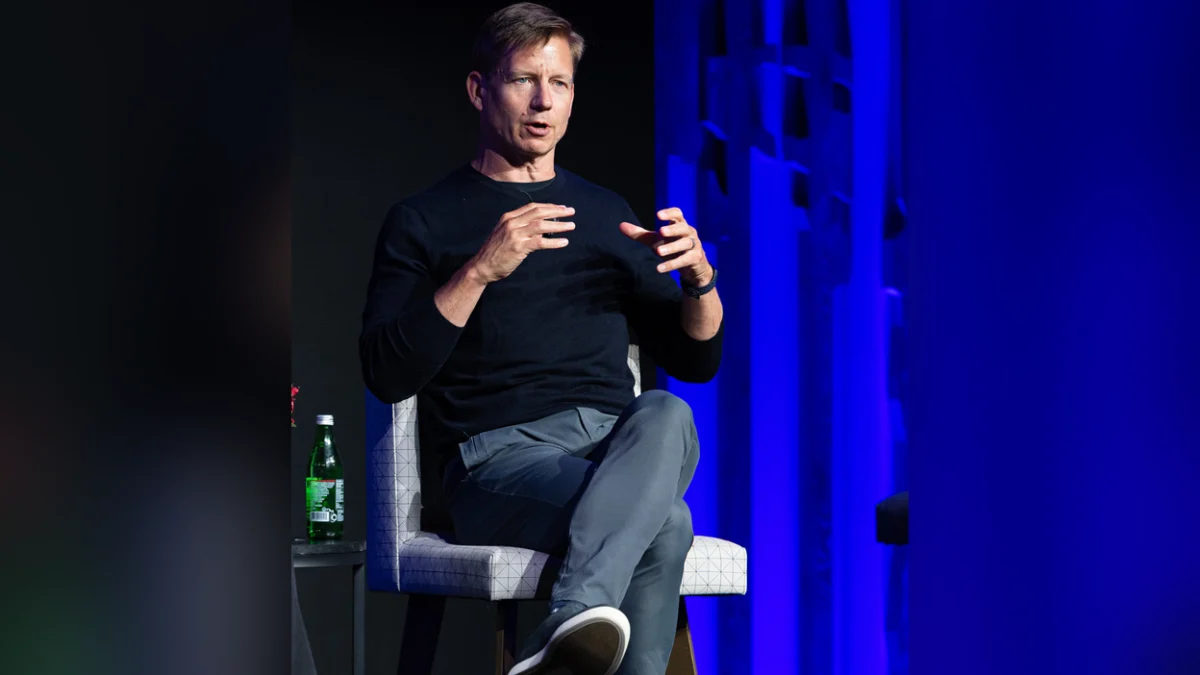
In the hyper-accelerated world of digital transactions, Mastercard faces a monumental challenge: judging the trustworthiness of a purchase in less time than it takes to blink. Across a staggering 175 billion transactions last year alone, the global payments network grappled with this instantaneous decision-making, a process where every tap of a Mastercard initiates a complex risk assessment. Now, the very nature of the entities participating in these transactions is undergoing a profound transformation, compelling Mastercard to fundamentally re-evaluate its established security protocols. Greg Ulrich, the company’s Chief AI and Data Officer, articulated this pivotal shift to an engaged audience at VB Transform 2026 in Menlo Park on July 14th. "We’ve built a bunch of risk rules over time that were intended to stop a bot from transacting," Ulrich revealed. "Now we need to enable the bot to transact, so that requires a change to our risk framework and our risk rules."
Ulrich, who joined Mastercard eleven years ago following the acquisition of an analytics firm where he was instrumental, underscored the foundational role of trust in the company’s operations from his very first day. "It’s what enables a merchant that’s never met you to accept payment and ensure that they’re going to get paid. It’s what enables you as a consumer to transact and ensure that things are going to work out in a trusted, secure way. And if something goes wrong, there’s a safe and secure path for a dispute and to resolve this," he elaborated, highlighting the delicate equilibrium Mastercard strives to maintain.
The 100-Millisecond Verdict: AI’s Expanding Vision in Transaction Scoring
Ulrich provided the VB Transform 2026 attendees with an insider’s look into the intricate workings of each transaction judgment. "When you tap your Mastercard to pay for a product or service, we’re providing a score to that transaction," he explained. "We have under 100 milliseconds to look at that and give a score from zero to 999 about how likely is that to be fraudulent or real. And we pass that on to the issuing bank." This infinitesimal window of opportunity for risk assessment underscores the sophistication and speed required to secure the global payment ecosystem.
The advent of generative AI has dramatically broadened the scope and accuracy of this critical scoring mechanism. "Because we have new technology, we can bring in more data, we can bring in more context, and now we’re finding that we can identify 300, 400% more fraudulent transactions at those high-risk bands," Ulrich stated, emphasizing that this enhanced detection is achieved without introducing additional friction or an unacceptable rate of false positives for consumers. He further elaborated on Mastercard’s proactive stance against fraud, citing its Safety Net system, which has successfully thwarted over 70 billion fraudulent transactions to date. The company’s strategic investment in artificial intelligence extends to the development of its own transformer model, leveraging its vast repository of transaction data as a bedrock for pioneering new safety, security, and personalization solutions. Earlier this year, VentureBeat’s "Beyond the Pilot" podcast delved deeply into the intricacies of Mastercard’s production fraud stack, offering a detailed technical breakdown of this cutting-edge technology.
AI’s Pervasive Influence: Powering a Growing Services Business
The implications of AI at Mastercard extend far beyond the realm of fraud prevention, permeating a substantial portion of its burgeoning services business. Ulrich revealed that approximately 40% of Mastercard’s operations are now rooted in services, encompassing a diverse range of offerings such as marketing services, comprehensive fraud, safety, and security solutions, and business intelligence platforms. "A third of those are predicated on AI, and those are growing at a much faster clip than everything else," he reported, signaling a clear strategic pivot towards AI-driven innovation.
A recurring theme throughout Ulrich’s presentation was the critical role of trust in enabling the widespread adoption and scalability of AI. "What’s going to enable AI to continue to scale is not the capabilities of the agents, it’s how much we trust those agents to do on our behalf as a consumer, as a business, as a financial institution, or otherwise," he asserted. This sentiment highlights the symbiotic relationship between advanced AI capabilities and the essential element of user confidence.
The Five Pillars of Trust: Securing Agentic Commerce
The emergence of agentic commerce, where automated agents act on behalf of individuals or businesses, fundamentally alters the landscape of what needs to be secured. "Instead of a single atomic transaction where I say go buy something, I’m effectively delegating authority, or a consumer’s delegating authority, a business is delegating authority," Ulrich explained. "And when that happens, it’s a much more complicated transaction." This delegation of authority necessitates a more robust and nuanced approach to security, where trust becomes a paramount precondition. "The only way it’s going to work with trust is if we can identify what was the intent, what are the behaviors, what are the constraints that were intended in that transaction," he emphasized.
To address these complexities, Mastercard has meticulously constructed a five-layered security framework. The first and most crucial layer is identity. "I want to make sure I can understand not just who the consumer is, but who the agent is, that I combine them together and that I have KYA or know your agent, that I’m validating that it’s legitimate technology, that it’s a legitimate agent," Ulrich stated. "We can register it into our system." This Know Your Agent (KYA) protocol aims to ensure that the entities operating within the payment ecosystem are legitimate and authorized.
The second layer is verifiable intent, which establishes a tamper-proof cryptographic record of the original instructions accompanying a transaction. This provides an objective and auditable trail, crucial for resolving discrepancies. "If you’ve asked for Nike black Nikes in size 12, but you got them on a final sale and they’re not returnable and that wasn’t in your instruction, there’s a way to look at that in an objective and clear way on the back end," Ulrich illustrated, effectively addressing the "wrong-Nikes" scenario with unparalleled clarity.
Controls constitute the third layer, defining the parameters within which an agent can operate, including the specific merchants they can engage with, spending limits, and other predefined constraints. The execution of these transactions is managed through Mastercard Agent Pay, the fourth layer, which seamlessly integrates tokenization, authentication, and the acceptance framework. This platform has already seen successful initial deployments with industry giants like Microsoft, OpenAI, and Google, signifying its strategic importance. The fifth and final layer is intelligence, which encompasses a sophisticated suite of risk rules, insight tokens that grant permissioned access to valuable data for personalized recommendations, and continuous monitoring facilitated by partners like Recorded Future to proactively identify and neutralize emerging threat actors.
The Grand Vision: Empowering Procurement Agents with Autonomous Capabilities
While consumer-facing purchases represent the nascent stage of agentic commerce, Ulrich pointed towards a far more significant opportunity in the realm of business-to-business procurement. He painted a compelling picture of a manufacturing enterprise with an ever-operational assembly line, managed by an intelligent agent. This agent would autonomously oversee inventory levels, trigger automatic replenishment orders when stock dips, and operate within predefined budgetary constraints while adhering to approved supplier lists. "When you can start enabling that, you require those same five layers for that type of transaction," he asserted, underscoring the universal applicability of Mastercard’s security framework.
Extending agentic commerce across inter-company transactions amplifies the number of parties requiring mutual trust. "You need clear standards for identity, you need clear standards for intent, you need these to work across. You’re gonna have a procurement agent, a supplier agent, a banking agent. They’re all gonna need to communicate to enable this to happen in an autonomous way, and that’s gonna require really scaled trust infrastructure," Ulrich emphasized. This interconnectedness necessitates a robust and standardized infrastructure for trust that can facilitate seamless communication and collaboration between disparate agents.
Leveraging Advanced Models, Maintaining a Steadfast Security Posture
Mastercard’s commitment to cutting-edge AI is evident in its early engagement with groundbreaking models. The company participated in Anthropic’s Project Glasswing, working with its Mythos model, and collaborated with OpenAI on GPT-5.5-Cyber. "What we’ve seen from both of those is incredibly powerful models finding new vulnerabilities in the ecosystem that were difficult to detect previously, but it’s really a new tool as opposed to a new motion," Ulrich observed. This perspective highlights that while the tools of detection are evolving dramatically, the fundamental security approach remains consistent.
Internally, the Chief Security Officer spearheads a dedicated team tasked with identifying and mitigating these evolving threats. This team meticulously prioritizes critical assets, subjects them to routine model analysis, categorizes findings by severity, and employs the same advanced technologies to implement patches and remediation. Furthermore, Mastercard is actively extending this robust security architecture and patching methodology to external partners, fostering a more secure ecosystem for all.
Lessons Learned: Building Securely from the Ground Up
Reflecting on the company’s experience over the past 14 months of developing agentic capabilities, Ulrich shared invaluable insights. "The guardrails, the security, all this stuff has to be embedded at the front end. These can’t be things that we’re adding on at the back end. That’s lesson one. Lesson two is you have to be operating for scale, and the other one is around observability and accountability matter as much as the intelligence," he stated, outlining the core principles that guided their development. Mastercard has cultivated what Ulrich describes as an "agentic factory," a comprehensive operating system designed with built-in compliance, observability, and guardrails, rather than relying on post-hoc additions. This proactive approach ensures that model drift, once a manual process requiring dedicated teams, is now seamlessly automated within this integrated factory.
When questioned about potential pitfalls by an audience member, Ulrich did not shy away from the challenges of transitioning from pilot projects to full-scale production. "If you’re trying to extend that and then add guardrails in as you’re extending it, once you’ve already built it, I think you’re doomed to fail," he warned, emphasizing the critical need for security to be an integral part of the initial design.
Mastercard’s journey also involved the development of a suite of agents for its 4,000 consultants, addressing needs in deep research, text-to-SQL queries, Excel manipulation, and PowerPoint creation – tools that, at the time, did not meet the company’s exacting standards. If faced with the same development task today, Ulrich indicated a fundamental shift in their architectural approach. "I don’t know that we anticipated when we built things fourteen months ago that we would be rethinking the fundamental architecture and the approach already," he admitted, highlighting the rapid evolution of the AI landscape and the company’s agile response to it.
The Ascendancy of Agentic Identity: Bridging the Gap in the Trust Ecosystem
Ulrich anticipates that the identity layer will be the next frontier for innovation and market development in agentic commerce. Within the Mastercard Agent Pay framework, the company currently authenticates consumers using established e-commerce protocols and subsequently binds the agent to that individual. "Outside of that framework, I think there will be open standards to identify who an agent is and bind the agent with the consumer," he predicted. "And then we can tie that with verifiable intent." This vision points towards a future where standardized identity protocols will be essential for secure and transparent agent interactions.
VentureBeat’s June 2026 Pulse research corroborates this critical need, revealing a significant gap in agent identity management. The research indicates that only 32% of 107 qualified enterprise respondents provide each agent with its own scoped, managed identity, and a mere 12% actively consider agent-identity products in their strategic planning. This data underscores the nascent stage of agent identity adoption and the substantial opportunity for growth.
Ulrich characterized identity as "one of the faster-growing ecosystems," noting Mastercard’s strategic investments in this area over the past six to seven years, both organically and through acquisitions. This expansion now encompasses "agentic identity as well as the traditional KYB and KYC identity." The sophisticated risk rules that have historically safeguarded Mastercard’s network against unauthorized bot activity have been honed over more than two decades of applying AI to transaction data. The ongoing rewrite of these rules, designed to accommodate the secure integration of agents into the network, is already well underway on the very same infrastructure that processed an unprecedented 175 billion transactions last year, marking a new era of intelligent and trusted commerce.
