
 By Rifan Muazin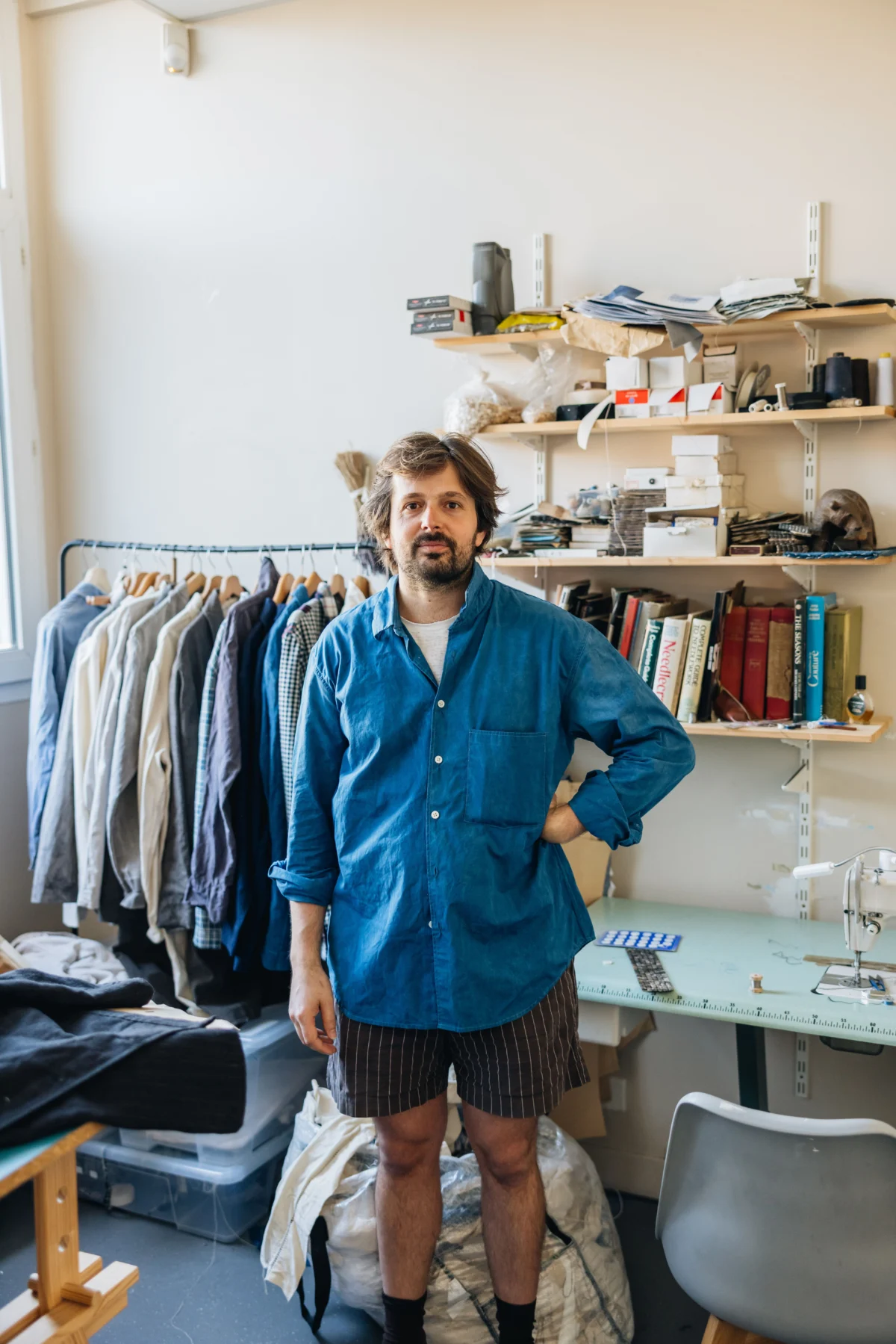
Operating from a sun-drenched atelier in Paris, Church occupies a space that feels increasingly radical in an era of "fast fashion" and AI-driven trend forecasting. He crafts his eponymous line of jackets, shirts, and trousers one piece at a time, utilizing textiles that are often older than the buildings in which they are sold. His primary medium consists of century-old deadstock fabrics, ranging from the early 19th century to the mid-20th century. By sourcing linens and cottons from the 1820s through the 1960s, Church is not just making clothes; he is acting as a steward of textile history. His work has carved out a dedicated following among a specific tribe of menswear enthusiasts—those who value the "hand" of a garment and the narrative of its construction over the visibility of a logo.

To understand Oliver Church’s rise, one must look at his trajectory from the periphery of the fashion world to its artisanal center. Born and raised on the rugged, windswept coast of West Auckland, New Zealand, Church’s aesthetic was forged in an environment where utility and nature intersect. After completing his formal education at fashion school, he followed the well-trodden path of many Commonwealth creatives, decamping to London to find his footing in the industry. It was here that he began to refine his eye for the "vintage-modern" synthesis. He "cut his teeth" working for Ian Paley at Garbstore, a brand and retail destination legendary for its elevation of historical workwear and obscure military silhouettes.
Following his stint in London, Church transitioned to Paris, a move that would prove pivotal for both his personal life and his professional philosophy. In the French capital, he found employment with Gareth Casey at Casey Casey, a label renowned for its obsession with fabric texture and its "washed-and-worn" aesthetic. This period served as an apprenticeship in the art of the artisanal; Casey Casey’s influence is visible in Church’s appreciation for garments that look better with age and use. However, it was the French social structure itself that provided the ultimate catalyst for his independence.

In a rare acknowledgment for a fashion designer, Church credits France’s socialist welfare system and robust labor protections for giving him the financial and psychological stability required to launch his label in 2019. In London or New York, the sheer cost of living and the volatility of the rental market often force young designers into a "hustle" mindset that favors quick wins and mass appeal. "If I’d stayed in London, it would have taken me 10 more years to be in a position where I could start my own brand," Church admits. He points to the security of French life—the difficulty of arbitrary firing, the protections against sudden eviction, and the strict controls on rent hikes—as the "safety net" that allowed him to take the risk of making slow, expensive, hand-sewn clothing. In this sense, his brand is a direct fruit of a system that values the individual’s right to a stable existence over the unbridled demands of capital.
At the core of the Oliver Church brand is a fanatical devotion to the raw materials of tailoring. While most modern brands select fabrics from a seasonal swatch book provided by a mill, Church hunts for "deadstock"—remnants of fabric that were produced decades, or even centuries, ago and then forgotten in warehouses, barns, or private collections. These textiles, particularly those from the 1800s, possess a weight, a weave, and a soul that modern industrial looms simply cannot replicate. The linens of the 19th century were often hand-loomed, resulting in slight irregularities that give the finished garment a unique character.

Once the fabric is secured, the transformation begins in Church’s workshop. Much of the textile is hand-dyed, either by Church himself or at the prestigious French dye house Couleur Garance. Located in the Luberon region, Couleur Garance is a sanctuary for natural dyeing techniques, specializing in plant-based pigments like indigo, madder, and weld. This process is the antithesis of the chemical-heavy dyeing used in mass production. The resulting palette is earthy and organic—deep indigos, weathered beiges, and rich, loamy browns—that seem to vibrate with a depth of color that synthetic dyes lack.
The labor-intensive nature of this work dictates the brand’s output. Church is a "one-man show" in the most literal sense, cutting and sewing the majority of the pieces himself. This artisanal bottleneck is what creates the scarcity that collectors find so alluring. While he manages wholesale accounts with prestigious indie retailers like Neighbour in Vancouver and Mouki Mou in London, he maintains a direct connection to his audience by reserving time for two or three private orders each month. These bespoke pieces are the pinnacle of his craft, allowing for a dialogue between the maker and the wearer.

The economics of Oliver Church’s work reflect the reality of this slow-motion production. A single shirt can start at $800, a price point that reflects the rarity of the 150-year-old fabric, the cost of natural dyeing, and the dozens of hours of skilled manual labor involved in its construction. His lead times are currently around three months—an eternity in a world accustomed to Amazon Prime’s next-day delivery—though he expresses a desire to streamline his process to a two-month window. This "waitlist culture" is not an artificial barrier; it is the honest timeline of a human being working with his hands.
Who is the Oliver Church customer? According to the designer, they are not a monolithic group of wealthy "hypebeasts." Instead, they are individuals who have reached a stage of "aesthetic maturity" where they no longer care about current trends. "I’ve had school teachers, people who work in fashion, architects, scientists," Church says. "I’ve had writers, photographers, people who work in public administration." This diverse clientele is united by a shared obsession with the "how" and "why" of a garment. They are the kind of people who want to know the botanical origin of a dye or the specific year a linen was loomed. They find beauty in the hand-sewn buttonhole and the way a natural indigo dye will "crock" and fade over years of wear, creating a personal patina.

Looking toward the future, Church is cautiously expanding his repertoire while staying true to his slow-fashion ethos. He is currently developing a line of sweaters using mulberry silk sourced from a specialized Italian mill. Mulberry silk, produced by silkworms fed exclusively on mulberry leaves, is the highest quality silk available, known for its strength, uniformity, and hypoallergenic properties. Even as he experiments with new fibers, the philosophy remains the same: find the best possible material and treat it with the respect it deserves.
In the broader context of the fashion industry’s environmental crisis, Church’s model offers a compelling, if difficult-to-scale, alternative. By using deadstock fabrics, he is engaging in a form of high-end upcycling, breathing new life into materials that might otherwise rot in storage. By creating garments that are built to last a lifetime—and that are aesthetically timeless enough to be worn for decades—he is challenging the "disposable" nature of modern consumption.

Ultimately, Oliver Church represents a return to the "atelier" model of the past, updated for a globalized, digital world. He has proven that there is a viable market for "quiet luxury" that isn’t just about price, but about the radical transparency of the process. In his world, scarcity is not a trick used to sell more products; it is a testament to the fact that some things simply cannot be rushed. For the "menswear nerds" and collectors who wait months for a single shirt, the value lies in knowing that their garment wasn’t made by a machine or a marketing department, but by a man in a Parisian workshop, honoring the ghost of a century-old fabric one stitch at a time.
