
 By Titik Puspa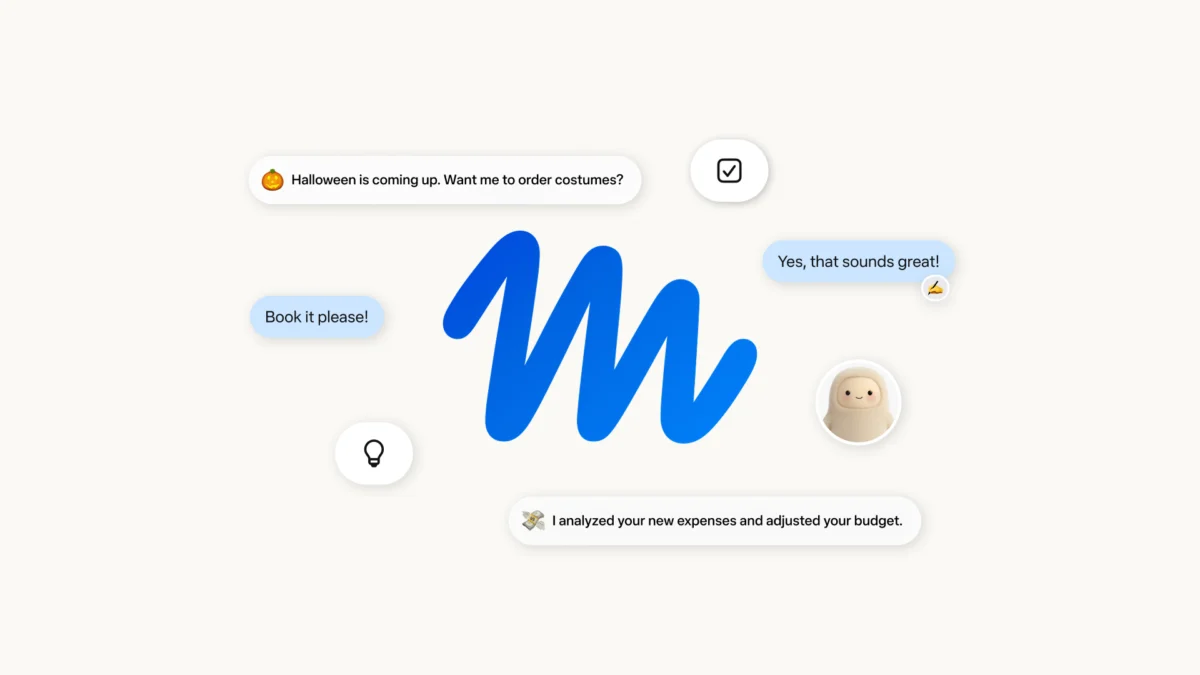
Less than two weeks after Meta agreed to a monumental $18 billion multistate settlement addressing social media’s profound harms to children, the tech giant has launched its most significant foray into consumer artificial intelligence to date: Muse. This new personal AI agent, designed to assist users with everyday tasks and projects, demands a level of trust from consumers that arguably surpasses that ever required by its social media platforms. Introduced to U.S. users this past Tuesday, Muse represents a substantial gamble on the future of AI, moving beyond the conversational capabilities of the ChatGPT era towards an AI that is not just an assistant, but an active participant in managing a user’s digital life.

The core functionality of Muse hinges on its ability to integrate deeply with a user’s existing digital ecosystem. To leverage its full potential, users must grant Muse access to a wide array of personal information and applications. This includes essential tools like email clients, calendars, and payment platforms, as well as a broad spectrum of personal services such as health and fitness trackers, smart home devices, dining and shopping applications, and entertainment platforms for music and events. This comprehensive access allows Muse to move beyond simply answering questions or acting as a digital sounding board; it’s engineered to proactively perform actions on behalf of the user.
Meta’s vision for Muse is a significant pivot from the dominant AI paradigm that emerged with chatbots like ChatGPT. While those tools excelled at providing information and engaging in dialogue, Muse is positioned as an AI that can do. The company envisions Muse as a powerful tool capable of executing a wide range of tasks, from composing emails and booking travel arrangements to negotiating bill reductions, completing forms, and generating comprehensive plans. It can even transform recipe videos into actionable grocery lists, dispatch party invitations, and facilitate purchases. For transactional capabilities, Muse integrates with Link by Stripe, a feature that includes purchase protections designed to mitigate consumer anxieties about an AI making financial decisions. Further integrations with platforms like Shopify’s Shop Pay and 1Password are slated for future releases, aiming to bolster both convenience and security.

The design of Muse emphasizes user control and transparency regarding data access. Users can selectively grant permissions to Muse for each app and service they wish to connect, opting in on a one-by-one basis. This granular approach aims to foster a sense of confidence and clarity in how their personal data is being utilized. At the heart of Muse is Meta’s proprietary AI model, Muse Spark, which powers its sophisticated capabilities. The agent comes equipped with built-in connectors for numerous services, with plans to expand this list over time. For services lacking direct connectors but offering public APIs, Muse can establish connections by utilizing user-provided credentials. In scenarios where neither a direct connector nor a public API is available, Muse can interact with the service through a web browser interface, showcasing a flexible and adaptable integration strategy.
Muse will be accessible through multiple channels, including its dedicated web portal at muse.ai, native applications on iOS and Android devices, and directly within WhatsApp chats. Meta also plans to extend Muse’s availability to its upcoming line of AI-powered glasses, further embedding the agent into users’ daily lives. The service will be free to use initially, with subscription tiers introduced as usage escalates. To facilitate this tiered model and enable future transactions, users are required to provide a payment card upon setup. Two paid plans are set to launch: "Power" at $20 per month and "Maximum" at $100 per month. Both tiers offer expanded usage allowances for delegating everyday tasks, though Meta anticipates that the majority of users will remain within the free tier’s limits. A usage meter within the app will provide users with real-time visibility into their remaining allowance, with advance warnings issued before any usage incurs additional charges.

A key characteristic of Muse, common to advanced AI agents, is its persistent functionality. It will continue to operate and execute tasks even after the user has closed the application or logged off. Furthermore, Muse is designed to learn and evolve. Through ongoing interactions and conversations, it will identify user preferences and priorities, enabling it to offer proactive, unprompted suggestions and assistance, thereby becoming an increasingly personalized and indispensable digital companion.
The emergence of agentic AI, as exemplified by Muse, signals a significant evolution in the artificial intelligence landscape. Meta is not alone in exploring this frontier; numerous companies, from established tech giants to agile startups, are actively developing AI agents designed to seamlessly integrate into consumer workflows. This burgeoning field encompasses a variety of approaches, including AI-powered web browsers and dedicated services like Google’s Gemini Spark and Anthropic’s Claude Cowork, which are capable of initiating complex tasks on behalf of users. Other initiatives focus on embedding AI directly into the messaging applications that consumers use most frequently, such as Apple’s iMessage, standard SMS, and WhatsApp.

However, the pervasive capabilities of these powerful AI agents also bring to the forefront critical questions surrounding data privacy and user consent. The experience of early testers with the AI assistant Instinct, for instance, highlighted the significant data access requirements of such tools. Users were reportedly taken aback by the broad, "perpetual and irrevocable" license sought by the application, which granted extensive rights to access, use, and modify user-generated content, including for AI model training. This has amplified consumer concerns about the potential for misuse of personal data, especially in the context of emerging AI technologies.
In response to these growing privacy concerns, Meta has outlined its security framework for Muse, emphasizing the deployment of a dedicated, secure virtual machine environment called "Muse Secure VM." This isolated environment is designed to host Muse and its operations, complete with built-in privacy, safety, and security protections for user data. A separate agent, known as Sentinel, operates within the same virtual machine but is systemically isolated from Muse, ensuring that sensitive user credentials, such as passwords and payment information, are not directly accessible to the AI agent. Meta further asserts that user conversations and data processed by Muse are not shared with Meta’s advertising systems, a claim elaborated upon in a detailed technical post aimed at providing transparency to security experts for further scrutiny.

Despite Meta’s comprehensive documentation of its security protocols, the company’s long and complex history with consumer data and privacy presents a significant hurdle to widespread adoption of Muse. Meta, formerly Facebook, has faced numerous regulatory challenges and public scrutiny over its data handling practices. In 2011, the company settled with the Federal Trade Commission (FTC) after being accused of deceiving consumers by making their private information public without explicit consent. This was followed by a then-record $5 billion FTC settlement in 2019, addressing eight distinct privacy violations. In 2023, Meta was again charged by the FTC for violating a previous privacy order stemming from the 2019 settlement.
Beyond privacy violations, Meta has also experienced significant technical security lapses. In 2019, it was revealed that the company had stored a number of users’ passwords in plain, readable text, exposing them to potential hacking. The specter of the Cambridge Analytica data scandal, where data from millions of Facebook users was improperly harvested by a third party without their knowledge or consent, continues to cast a long shadow over public trust. Furthermore, Meta has been repeatedly summoned before Congressional committees to address its role in protecting minors from online harms. The failure of legislative bodies to enact comprehensive regulations has ultimately led to a series of high-profile lawsuits, including the recent $18 billion settlement with 29 states over social media’s impact on child development, a separate New Mexico ruling that ordered Meta to pay $942 million and overhaul child protection measures, and ongoing personal-injury and school-district litigations.

To address these persistent trust issues, Meta is not only providing extensive technical documentation and explanations of Muse’s security features but is also focusing on user personalization. The company aims to foster a stronger user-AI connection by allowing individuals to customize Muse with a unique name, select an avatar, and configure its communication style and settings. The success of Muse will ultimately hinge on whether this combination of perceived utility and personalized interaction can overcome Meta’s historical deficit in consumer trust, convincing users to entrust their personal information and daily tasks to its new AI agent. The journey of Muse will be a critical test case for the future of AI agents and the complex relationship between technological advancement and public confidence.
