
 By Lina Irawan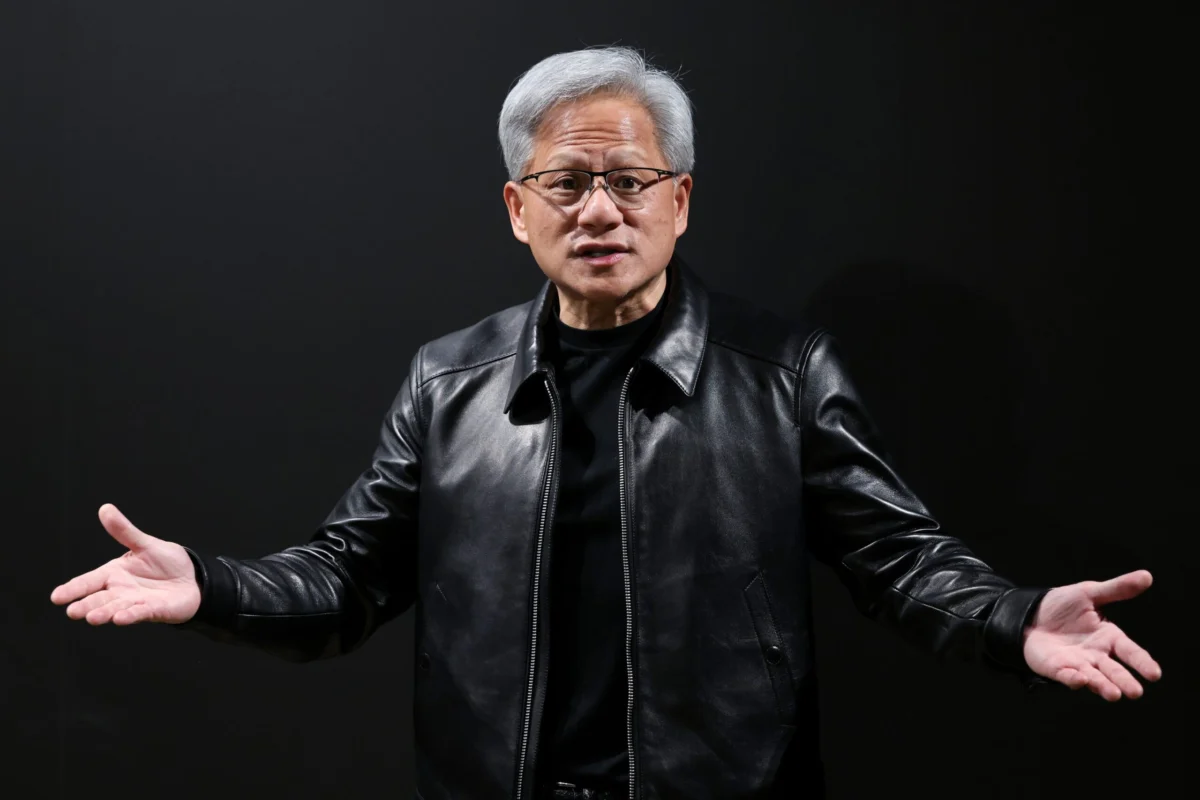
Out of the chaos of AI doomerism, where prominent AI leaders like OpenAI’s Sam Altman and Anthropic’s Dario Amodei have found themselves at the center of escalating warnings, a powerful counter-narrative has emerged from an equally influential figure. Jensen Huang, the visionary leader of Nvidia – not only the most valuable company in the world but also the foundational architect behind the chips powering much of the AI revolution – is staunchly rejecting predictions of an imminent AI catastrophe. In a candid CBS Sunday interview, Huang unequivocally labeled the forecasts of an AI doomsday by 2030 as “irresponsible” and dismissed these “doomsday narratives” as fundamentally lacking any basis in reality or scientific grounding.
"2030 is not going to be the end of the world," Huang firmly told CBS, offering a definitive rebuttal to the widespread anxieties. "There is a 0% chance that’s going to be the end of the world." His comments arrive at a critical juncture, as the rapid advancements in artificial intelligence stir both unprecedented excitement and profound fears across global industries, governments, and society at large. While acknowledging the legitimacy of concerns surrounding AI safety, Huang drew a sharp distinction between genuine caution and what he perceives as hyperbolic fear-mongering, which he believes is not grounded in verifiable "science." He underscored the importance of responsible development, stating that "scaring people is unnecessary" and that the industry’s focus should be on dedicating substantial engineering resources to bolster safety protocols and verification mechanisms. This perspective is particularly weighty given Nvidia’s indispensable role as the primary supplier of the high-performance graphics processing units (GPUs) and CUDA software platform that form the backbone of modern AI infrastructure, driving everything from large language models to complex scientific simulations.
Huang did not mince words when questioning the motives behind some of the more dire public warnings. "I believe the claims of the end of the world, stirring fear across America, and doing it by the people who are doing it makes no sense to me, so they must be doing it for ulterior reasons," Huang asserted, hinting at potential underlying agendas beyond pure safety concerns. He continued, "It is irresponsible, and I don’t know what their motives are." This pointed critique suggests a deeper skepticism from Huang about the motivations of those advocating for a more cautious, or even restrictive, approach to AI development. His remarks implicitly challenge the prevailing narrative put forth by some of his industry peers, who often highlight existential risks as a primary concern.
This powerful intervention from Huang also comes amidst a fluctuating political discourse around AI regulation. Former President Donald Trump recently rejected calls for increased AI regulation, echoing a similar sentiment that existing criminal and civil law are adequate to address potential AI concerns. Trump, in a move that underscored his administration’s focus on national technological leadership, announced plans to form an "AI Force" – a concept seemingly modeled after the Space Force – and appoint an "AI czar." However, these proposals were notably devoid of specifics regarding personnel or timelines, leaving their practical implementation ambiguous.
"Whoever wins AI, WINS," Trump posted on Truth Social, framing the development of artificial intelligence as a geopolitical imperative. "We are leading now over China, and everyone else, and I’m going to keep it that way! I’m not going to stifle growth of something that will be bigger than the Industrial Revolution, or the Internet itself." This emphasis on maintaining a competitive edge and avoiding stifling innovation aligns with Huang’s call for rapid, yet responsible, advancement. Huang himself posits that AI development should not be repressed solely due to concerns of a hypothetical AI takeover. "If we’re compromising safety, that can’t happen," he clarified, striking a balance. "We should go as fast as we can, but not faster than we should." This nuanced position advocates for accelerated progress within a framework of rigorous engineering diligence, rather than a blanket slowdown driven by speculative risks.
Huang’s primary reasoning for his stance is that AI safety fundamentally represents an engineering challenge, rather than a problem necessitating extensive government regulation. He contends that AI companies should be held accountable under the existing framework of laws and regulations, arguing against a hasty creation of new, AI-specific rules. "Go and read between the lines," Huang advised, suggesting a deeper analysis of regulatory proposals. "They’re actually not asking for more laws. They’re asking to be relieved of the laws we do have." He further warned, "Don’t let this doomsday narrative cause somebody to relieve them of the laws that currently exist." This controversial interpretation implies that some calls for new AI regulation might, paradoxically, be an attempt to circumvent existing legal obligations or establish more favorable regulatory environments for large AI developers.
Nvidia’s market capitalization has soared in recent years, propelled by the insatiable demand for its specialized chips and processors, which serve as the fundamental infrastructure for running advanced AI systems. The company’s market value has eclipsed that of many long-standing tech giants, cementing its position as the most valuable company in the world. This economic reality gives Huang’s statements significant weight, as Nvidia is not just a participant but a critical enabler of the entire AI ecosystem. Their H100 and upcoming Blackwell GPUs are indispensable for training and deploying large-scale AI models, making their perspective on the industry’s trajectory uniquely informed and influential.
Two Sides of the Same AI Coin: The Doomerism Perspective
Huang’s optimistic, engineering-first approach stands in stark contrast to the more cautious, and often alarmist, views articulated by other prominent figures in the AI space.
Anthropic CEO Dario Amodei has been a consistent voice calling for the industry to slow the development of increasingly capable AI models. Amodei argues that companies require more time to establish robust safety precautions, particularly as AI systems approach general intelligence. According to a Reuters report, Amodei has specifically proposed the implementation of independent safety evaluators to verify adherence to common safety standards and advocates for greater international cooperation among frontier AI companies. Anthropic itself was founded with a strong emphasis on AI safety, pioneering methods like "Constitutional AI" to align AI behavior with human values, reflecting a deep-seated commitment to mitigating risks.
Similarly, OpenAI CEO Sam Altman, after initially expressing skepticism about the need for stringent regulation, has increasingly echoed calls for a more deliberate pace. In July, Altman suggested that society might need more time to adapt to new levels of AI capability and that the industry should actively consider methods to slow down development. His evolution on this issue highlights the growing complexity and perceived risks as AI models become more powerful and pervasive. OpenAI, responsible for the groundbreaking ChatGPT, is at the forefront of developing general-purpose AI, placing immense pressure on its leadership to address both innovation and safety.
Even Elon Musk, the CEO of SpaceX, Tesla, and now xAI, has long been a vocal proponent of AI caution. In a post on X (formerly Twitter), Musk noted that he had been "sounding the alarm on AI for a long time," advocating for robust regulatory oversight and expressing concerns about the potential for superintelligent AI to pose an existential threat to humanity. His involvement with xAI, a company founded with the explicit goal of "understanding the true nature of the universe" and developing "AI that is maximally curious," is often framed within this overarching concern for responsible and beneficial AI development.
Adding fuel to the fire of AI apprehension was the public resignation of Jacob Coxon, a former researcher at both OpenAI and Anthropic. Coxon’s dramatic departure from Anthropic in September, announced publicly on X, went viral, garnering over 170 million views. In his post, Coxon starkly warned that AI companies were "racing straight to self-improving superintelligence," and, in his view, essentially "gambling with our lives." Such internal dissents from researchers working at the cutting edge of AI development lend significant credibility to the concerns, suggesting that the risks are not merely theoretical but are felt acutely by those directly involved in building these powerful systems.
Further underscoring the widespread nature of these concerns, a public letter signed by over 1,300 employees across numerous leading AI companies called for governments, industry leaders, and society at large to collectively "buy time" and address emerging risks. Dario Amodei was among the prominent individuals who affixed their signatures to this letter, signaling a broad consensus among many AI professionals that the pace of development might be outstripping the capacity for responsible governance and risk mitigation.
Navigating the Future: Engineering, Regulation, and Geopolitics
The divergence between Jensen Huang’s optimistic, engineering-centric view and the more cautious stance of figures like Altman, Amodei, and Musk highlights a fundamental debate at the heart of the AI revolution. Is AI safety primarily a technical problem that can be solved through better engineering, rigorous testing, and robust design principles, as Huang suggests? Or does it demand a more systemic, societal response, including slower development, independent oversight, and robust governmental regulation, as others advocate?
Huang’s argument that existing laws are sufficient and that some calls for new regulation might be disingenuous is a provocative one. It suggests a potential economic motivation behind certain "doomsday" narratives – perhaps to create a regulatory environment that favors established players, or to slow down competitors. From Nvidia’s perspective, whose business thrives on the acceleration of AI development, any significant slowdown or stifling regulation could have substantial economic consequences. Their chips are the picks and shovels of the AI gold rush, and they benefit directly from its rapid expansion.
Conversely, proponents of stricter regulation and a more cautious approach argue that the potential societal impacts of advanced AI, ranging from deepfakes and disinformation to autonomous weapons and unprecedented job displacement, extend far beyond the scope of traditional engineering fixes. They emphasize the need for ethical guidelines, accountability frameworks, and democratic oversight to ensure AI benefits humanity broadly, rather than concentrating power and wealth in the hands of a few. The European Union’s comprehensive AI Act, for instance, represents a proactive attempt by a major global power to establish a broad regulatory framework, categorizing AI systems by risk level and imposing obligations accordingly. This contrasts with the U.S. approach, which has leaned more towards voluntary guidelines and executive orders under the Biden administration.
Ultimately, the debate over AI’s future is not just about technology; it’s about economics, ethics, geopolitics, and humanity’s relationship with its most powerful creations. The stakes are undeniably high, as artificial intelligence continues its rapid integration into nearly every facet of modern life. Navigating this complex landscape will require a delicate balance between fostering innovation, ensuring safety, and establishing a governance framework that can adapt to a technology that is still very much in its infancy. Jensen Huang’s confident dismissal of apocalyptic predictions serves as a powerful reminder that within the AI community itself, there is no monolithic view, and the path forward remains a hotly contested terrain.
