
 By Lina Irawan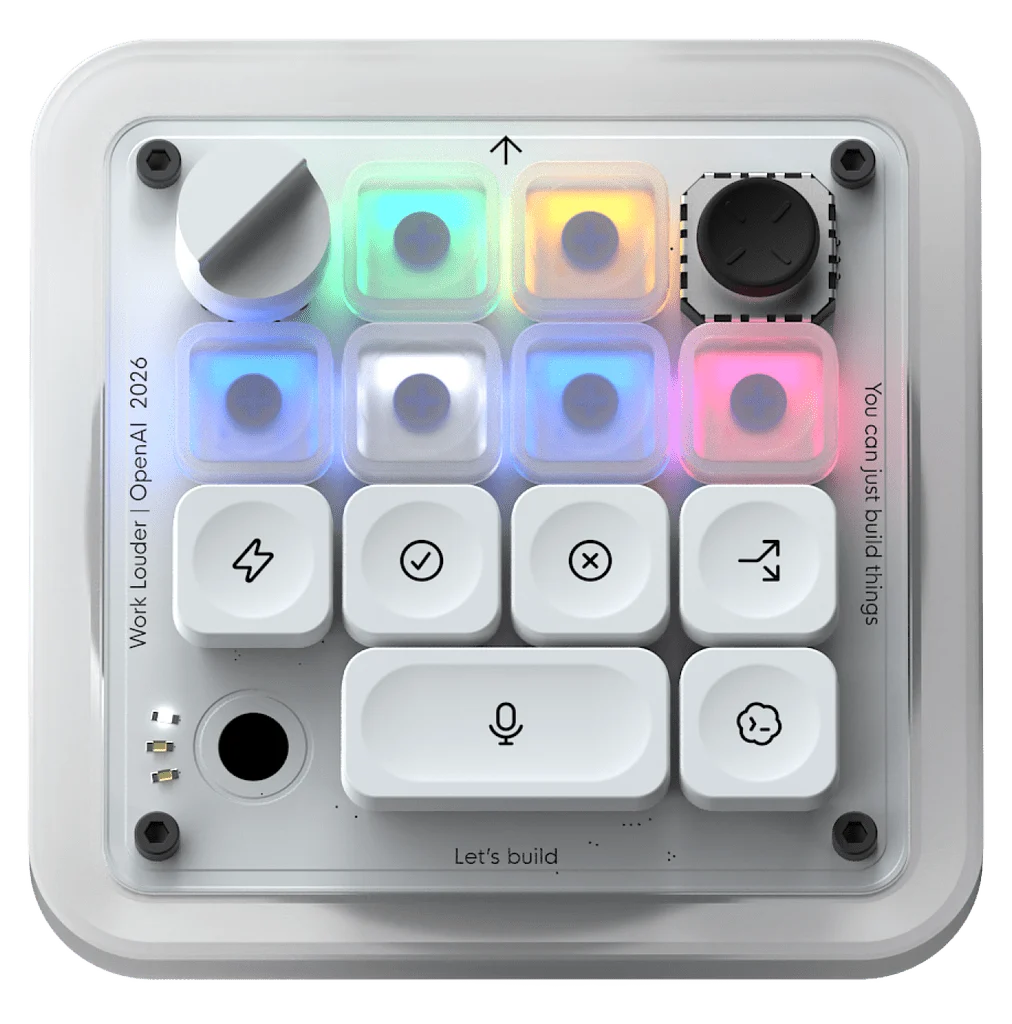
OpenAI’s foray into hardware has transfixed techies for more than a year, with speculation about the AI company’s forthcoming mystery gadget ranging from a smart speaker to a wearable device. The tech world had braced for a revolutionary consumer device, a physical manifestation of artificial intelligence designed to integrate seamlessly into daily life, perhaps even spearheaded by design icon Jony Ive. Yet, the initial unveiling from the AI giant proved to be a surprising, if strategically shrewd, diversion from these high-profile expectations. It turns out, OpenAI’s first hardware device is a bit more prosaic: a keyboard.
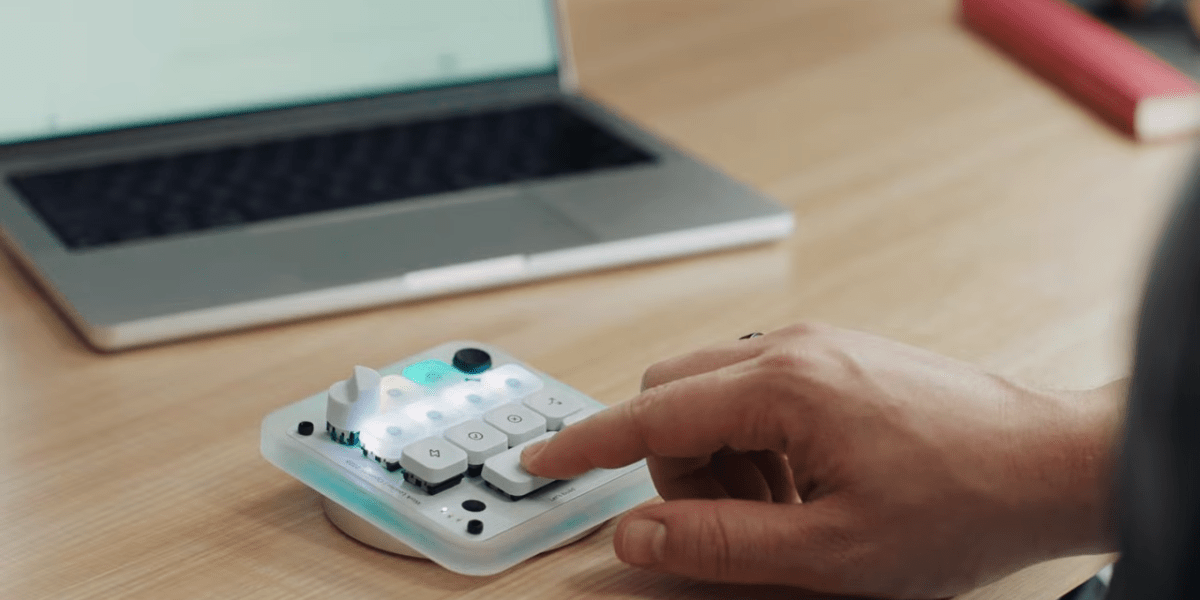
On July 15, the tech world witnessed the debut of the Codex Micro, a compact, $230 square keyboard that quickly captured attention, not for its groundbreaking innovation, but for its rapid disappearance from digital shelves. This unique peripheral features a 12-key pad, a joystick, and distinctive neon lights, setting it apart from standard input devices. Its design and functionality are specifically targeted at computer coders who leverage OpenAI’s powerful Codex tool, an advanced AI system capable of translating natural language into code and assisting with various programming tasks. Developed as a one-off project in collaboration with the boutique keyboard firm Work Louder, the Micro keyboard stands distinctly separate from the much-anticipated consumer gadget—the so-called AI companion—that is widely expected to be released sometime next year, a project reportedly involving former Apple design chief Jony Ive and Sam Altman.
Despite its niche target audience and seemingly modest form factor compared to the grander visions of AI hardware, demand for the Codex Micro keyboard was nothing short of phenomenal. It sold out entirely on the day it went on sale, vanishing from OpenAI’s digital storefront in approximately 12 hours. This instant scarcity quickly propelled the device into the realm of collectibles, creating a vibrant, albeit speculative, secondary market. On eBay, prices for the sold-out keyboards soared, with one ambitious listing reaching an astonishing $1,850. While that particular sale was unlikely to materialize at such a peak, past sales figures reveal significant premiums. The highest recorded bounty was $1,250, achieved on July 16, a mere day after its initial release. Prices have since seen a steady, albeit still elevated, decline. In the week following its launch, units typically fetched between $800 and $1,000. More recently, prices have stabilized around $450, still nearly double its original retail price. This brisk trade isn’t confined to a single region; while most sellers are based in the U.S., a notable number hail from European countries like France, the Netherlands, and Ireland, underscoring a global appetite for this particular piece of AI history.
The functionality of the Codex Micro is tailored to enhance the workflow of developers immersed in OpenAI’s ecosystem. It aims to streamline and simplify the process of tracking progress and interacting with the Codex AI. A distinctive LED ring encircles the keyboard, providing immediate visual feedback: lighting up red for an error, orange when the AI agent is actively working on a task, green for successful completion, or blue for other status indicators. This intuitive visual signaling allows developers to quickly grasp the state of their AI assistant without diverting their attention from the code itself. Furthermore, the inclusion of a dial allows users to precisely adjust the AI’s "effort" or complexity for a given task, offering a nuanced level of control over the AI’s output. The joystick, a less common feature on modern keyboards, is designed to initiate common programming tasks with a flick of the thumb, such as debugging an error, refactoring existing code, or generating new code snippets based on prompts. These specialized inputs suggest a thoughtful approach to creating a more direct and efficient interface for AI-assisted coding, moving beyond mere text prompts to a more tactile and responsive interaction model.
However, the high resale prices and specialized nature of the Codex Micro have not escaped scrutiny from the very community it targets. For many seasoned programmers, paying $450—let alone over a thousand dollars—for a compact, auxiliary keyboard is not necessarily a bargain. Critics were quick to label the device as superfluous, highlighting the availability of more affordable and equally programmable alternatives. As one Redditor pointed out, "You can get a programmable keyboard, with a knob, for 18 bucks." Another commenter further underscored this sentiment by sharing a link to open-source software, demonstrating how virtually any programmable keyboard could be configured to replicate the Micro’s core functions, stripping away the perceived exclusivity and specialized utility. This perspective emphasizes that, from a purely functional standpoint, the Codex Micro might be seen as an expensive novelty rather than an indispensable tool for all developers.
Yet, for a significant segment of buyers, the Codex Micro’s appeal extends far beyond its raw utility. Many are undoubtedly viewing it as a collectible—an artifact from the dawn of the AI age, a tangible piece of history from a company that has quickly established itself as one of the new technology’s foremost standard bearers. The limited-edition nature, coupled with OpenAI’s explicit statement that it has no plans to restock the device, amplifies its collectible value. This scarcity creates a powerful "fear of missing out" (FOMO) effect among enthusiasts and investors alike, similar to how early Apple products or limited-edition sneakers command exorbitant prices on the secondary market. While OpenAI itself won’t be producing more, Work Louder, the company that manufactured the product in partnership with OpenAI, does offer a version on its website that features the Codex integration, albeit without the coveted OpenAI branding. This alternative provides functionality but lacks the symbolic weight that drives the collectible market.
The idea for the Codex Micro originated not from OpenAI’s core product development teams, but surprisingly, from its merchandise division, which manages the company’s online store, Supply Co. Initially, Supply Co. served as a private portal for OpenAI employees to acquire company swag. However, in December 2025, OpenAI briefly opened the store to the public to commemorate its tenth anniversary. This public debut, as Quartz reported, led to unexpected social media reactions. The minimalist, streetwear-inspired hoodies and tote bags, while perhaps intended to be stylish, were met with derision, with some critics labeling them "tasteslop" and "nerd merch," according to The Wall Street Journal. "OpenX started to get a little bit of heat for their merch," recalled Mike Di Genova, co-founder of Work Louder. This public reception, he noted, catalyzed the OpenAI team’s desire to "step up their merch game" and create something more substantial and reflective of their innovative spirit.
Later that same month, OpenAI reached out to Di Genova, expressing interest in developing a product specifically geared toward developers, a demographic the company rightly identifies as a crucial early adopter group and evangelist base for its technologies. The collaboration quickly took shape, with OpenAI and Work Louder finalizing their concept for the Codex Micro within a few months. OpenAI subsequently placed a substantial order for the devices. Di Genova, reflecting on the rapid sell-out, expressed his disbelief: "I thought it was going to take at least a month to sell through the inventory. It was limited stock, but they purchased a lot." While neither company disclosed the exact number of units produced, the swift depletion of such a significant inventory underscores the immense demand and the powerful allure of the OpenAI brand.
Crucially, while the Codex Micro is not directly linked to OpenAI’s highly anticipated consumer hardware device—the one currently being developed with ex-Apple designer Jony Ive and Sam Altman, rumored to be a revolutionary "AI companion"—it serves as an invaluable testing ground. This seemingly niche product is proving out two concepts absolutely key to OpenAI’s broader hardware ambitions: the efficacy of physical hardware as a novel way to interact with OpenAI’s sophisticated software, and the growing importance of voice as a primary interface. Now that all the Micro devices are in the hands of users, OpenAI is meticulously monitoring user feedback, with regular discussions occurring in a dedicated Slack channel that Di Genova is also a part of. This iterative approach to product development, gathering real-world data from early adopters, is vital for a software company venturing into the complex world of hardware.
One of the most telling features of the Codex Micro is its dedicated microphone button. Pressing it provides users with instant, easy access to speak directly to the AI, enabling verbal instructions and queries. This feature directly aligns with OpenAI’s strategic push towards voice-first interactions. Just last week, OpenAI further emphasized this direction by releasing a digital microphone button for ChatGPT Work, a new desktop application that seamlessly merges the capabilities of ChatGPT and Codex. This parallel development highlights a consistent vision for how users will interact with AI in the near future.
OpenAI co-founder and president Greg Brockman has been particularly vocal about this paradigm shift, calling voice the "interface of the future" for computing. His rationale is compelling: "it means the computer moves closer to you rather than you having to contort yourself around the machine." Brockman boldly predicted that society will one day look back on "clicking and typing" as a mere "phase" in the evolution of human-computer interaction. This vision suggests a future where natural language, spoken aloud, becomes the dominant mode of interaction, freeing users from the constraints of traditional input devices.
It remains to be seen if Brockman’s prediction will fully materialize, and if it is truly feasible to accomplish highly detailed tasks on a computer, such as in-depth editing, complex coding, or intricate prompting, exclusively through voice. While voice offers convenience, precision and granular control often require visual and tactile feedback. However, for now, many in the AI industry agree that hardware integration is becoming a critical differentiator for companies like OpenAI. As the underlying AI models become increasingly powerful and commoditized, the unique ways users can interact with these models—especially through custom hardware—will become a crucial competitive advantage.
Mike Di Genova of Work Louder encapsulated this evolving philosophy, offering a modern twist on a classic tech adage. "There’s this quote from Steve Jobs where he says, ‘If you want to make great hardware, make software,’" Di Genova noted, referring to Apple’s philosophy of integrating hardware and software seamlessly. "I think we’ve quite literally reached the point where now we’re on the backswing of that pendulum. If you want to make great software, make hardware, because basically there’s no moat anymore." In an era where AI software capabilities are rapidly advancing and becoming more accessible, the physical interface—the hardware—is emerging as the new frontier for creating proprietary ecosystems, deepening user engagement, and ultimately, building a defensible moat in a fiercely competitive landscape. The Codex Micro, despite its humble appearance, may well be OpenAI’s first tangible step in sculpting that future.
