
 By admin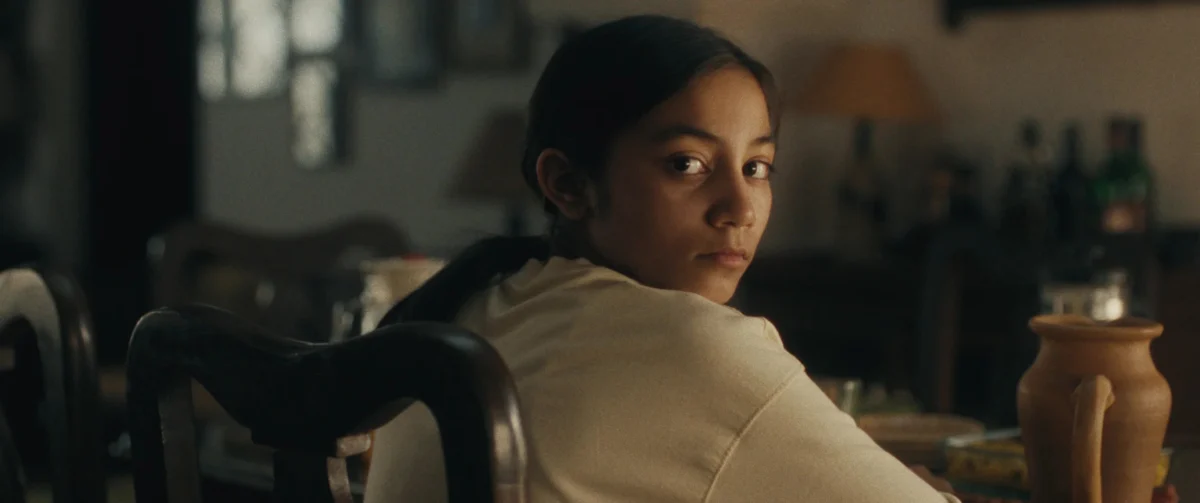
Shalini Adnani’s debut feature, "Our Share of Sand," is a meticulously crafted and deeply affecting class drama, offering a poignant exploration of justice, power, and inequality through the innocent yet perceptive eyes of a child. The film masterfully navigates the complexities of its characters’ often narrow constructions by immersing the audience in a world of brooding intensity, set against the stark backdrop of a contemporary sand-mining crisis in India. At its heart is Maya (Maya Mehta), a twelve-year-old British Asian girl who, upon returning to India to join her industrialist father, Rohan (Mohammad Zeeshan Ayyub), becomes an unwitting witness to a routine accident that shatters her nascent understanding of the world. This pivotal event triggers a profound internal conflict within Maya, as she grapples with the encroaching awareness of injustice and inequity, forcing her to choose between the courage to speak out and the ingrained instinct for moral compartmentalization that has long been a hallmark of her family’s generational success.
Adnani, a Chilean-born Londoner of Indian heritage, imbues the film with a palpable atmosphere, drawing deeply from her own memories of visiting India as a young outsider. This personal connection is instrumental in shaping both the film’s evocative ambiance and her protagonist’s deliberately confined perspective. Such an intimate lens, while rich with potential, also carries the inherent risk of appearing voyeuristic, of gawking at unfamiliar cultures, their inherent hegemonies, and their distinct ways of life, even with the most well-intentioned narrative approach. However, Adnani artfully sidesteps this pitfall by anchoring her story firmly within Maya’s familial ties. Through this intimate focus, the writer-director delves into the complicity of the affluent South Asian diaspora, subtly examining the very foundations that afford them the luxury of emigration and the maintenance of privileged lives abroad.
The film opens with a brief, almost timeless, poetic prologue, set decades in the past. Here, obscured day-laborers, their faces hidden from view, meticulously sift through sandy riverbanks, their arduous labor leading to the extraordinary discovery of an enormous diamond. A hushed debate ensues among them, a critical juncture where the question of whether to alert their boss to this monumental find hangs heavy in the air. This unresolved moment of moral ambiguity serves as a potent foreshadowing, a seed of doubt planted early in the narrative, which will resonate throughout the film’s exploration of inherited wealth and moral compromise.
The next time this significant diamond appears, it is in a contemporary setting, where Maya’s stern paternal aunt, Arti (Jyoti Dogra), proudly displays it. Arti regales Maya with the family’s carefully constructed mythology, recounting how her grandfather, a man of humble origins, discovered the gem. According to this narrative, he then sold a fragment of it, a pivotal act that allowed their family to ascend from the struggles of the postcolonial partition era. However, the unresolved quandary from the prologue—whether the grandfather truly discovered the diamond as a laborer himself, or simply claimed it from his employees—lingers as a persistent, unsettling question. This ambiguity is not merely a minor detail; it is central to the film’s thematic core, highlighting the precarious and often unverified nature of "bootstraps" creation myths that underpin generational wealth.
This pervasive doubt about the veracity of their family’s ascent forms the bedrock of the film’s profound saga of cyclical inequality. Initially, this inequality manifests in unassuming ways, as Maya begins to form a friendship with Kiran (Krish Raj More), a boy of a similar age. A subtle yet significant division already exists between them: Maya, accustomed to her British upbringing, speaks limited Hindi or Marathi, the local languages, while Kiran, though understanding English to a basic degree, cannot converse fluently. This linguistic barrier, a tangible symbol of their differing backgrounds, is further reinforced when Maya’s father, Rohan, callously scolds Kiran and dismisses him back to his duties, a stark reminder of their disparate social standings.
The fact that Kiran is in Rohan’s employ at such a tender age comes as no surprise, underscoring the rigid inflexibility of caste and class structures that remain deeply ingrained in Indian society, even on the outskirts of Mumbai, where the film is predominantly set. Kiran, treated with dismissive indifference, is one of Rohan’s divers, a crucial manual laborer integral to the cement production chain that is literally laying the foundation for India’s modern development. The narrative then takes a grim turn as Rohan’s penchant for circumventing regulations, a common practice in his pursuit of profit, leads to a devastating accident that occurs under the cover of night. This accident leaves Kiran permanently injured, a catastrophic outcome that forces Maya, a key witness, and her British Indian mother, Priti (Ellora Torchia), into a profound moral dilemma. They are left to quietly ponder their responsibilities to the authorities, grappling with the agonizing question of what, if anything, they ought to say to the police.
Although the film deliberately refrains from explicitly naming the divisions it portrays—much of the narrative unfolds through Maya’s deliberately sheltered perspective, mirroring her limited understanding of the world—its setting offers a potent and poignant symbolism for a nation historically built upon systemic discrimination. Caste, in this context, operates as a silent, insidious killer. The crushing expectations foisted upon Rohan’s workers, their lives dictated by the demands of industrial production, collide with their subdued, often unspoken, pleas for basic human dignity. While some of these laborers are understandably filled with a righteous fury, many others recognize the severe limitations placed upon their ability to voice their grievances, understanding that there is only so much they can say without risking further repercussions.
It is true that most characters in "Our Share of Sand" exist primarily within the confines of the plot, their identities and motivations largely defined by their role in the unfolding narrative and their relationship to the prevailing social strata. We glean little about Maya’s life prior to her arrival in India, or Kiran’s existence beyond the relentless demands of his labor, or the broader family dynamics beyond their casual cruelty and self-absorption. Yet, within this deliberately focused storytelling paradigm, Adnani manages to imbue each scene with a simmering dramatic wrath, a potent tension that bubbles just beneath the surface of everyday interactions.
This pervasive tension often serves as enough subtext, amplified by the astute visual language employed by cinematographer Adric Watson. His tight and often gritty frames meticulously confine Maya and Arti, their movements and their immediate surroundings captured with an astute visual composition that gradually illuminates the stark reality of their privileged, yet emotionally sterile, lives. The film also makes occasional, striking use of night photography, particularly through the lens of the family compound’s strategically placed security cameras. This unexpected visual element, a nod to the ubiquitous surveillance in their lives, gestures towards a thematic connection between the maintenance of caste superiority and the oppressive nature of fascistic oversight. This is perhaps the closest "Our Share of Sand" comes to casting a wide net over India’s contemporary political milieu, and while this broader societal critique remains largely unexplored, the film’s deliberate and confining focus on Maya’s point of view yields significant dramatic dividends.
Maya Mehta, in her debut performance, delivers a truly stunning portrayal of a young girl profoundly perturbed by the world around her and her uncertain place within it. The film’s sinister, shadowy tone imbues even ostensibly natural spaces with an imposing and unsettling quality. The result is a twisted, naturalistic fairytale, a stark commentary on the structural realities that govern society. Adnani’s film powerfully illustrates how, under the relentless pressure of the boot-heel of systemic inequality, even the most ostensibly life-giving forces—the very rivers and forests that sustain life—can be perverted and turned against the innocent. The narrative serves as a potent reminder that the sand being mined is not merely a commodity, but a symbol of the earth’s bounty, a resource that, when exploited without conscience, contributes to the ongoing exploitation and suffering of those on the margins of society, and that the consequences of such actions ripple through generations.
