
 By admin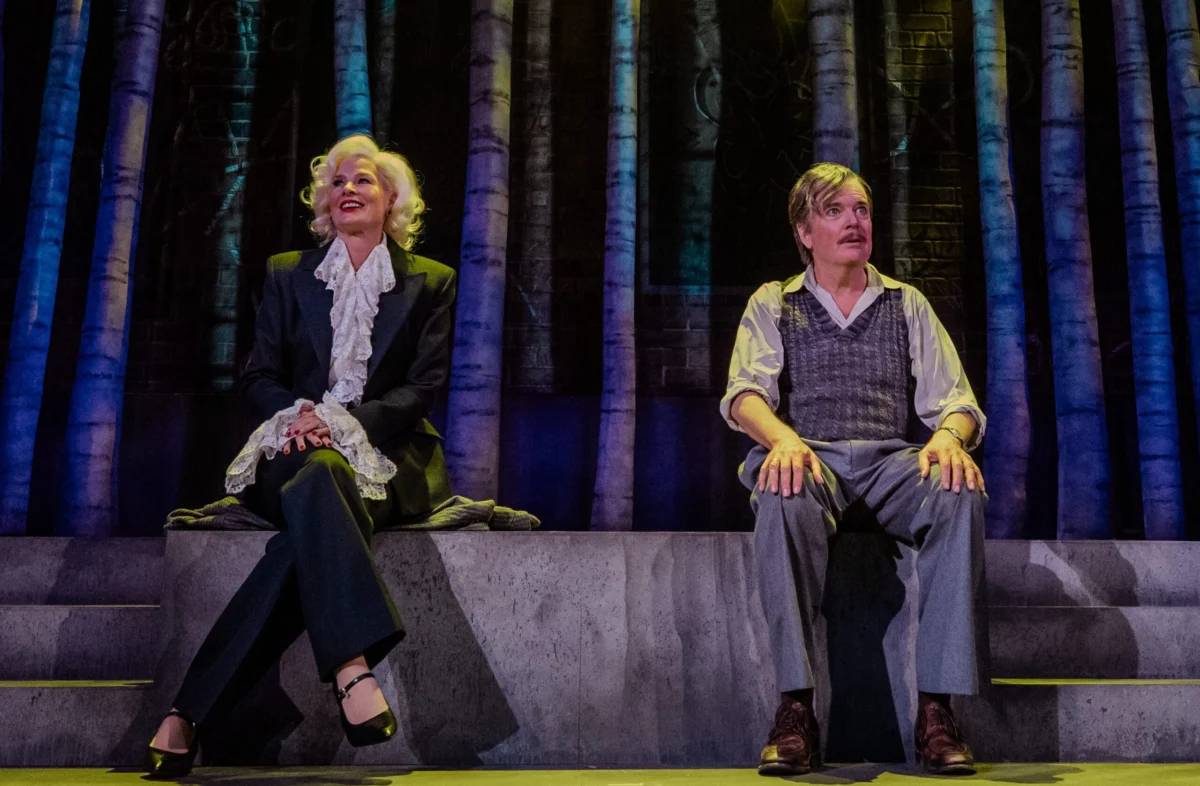
The Pasadena Playhouse, a venerable institution in the San Gabriel Valley, has once again positioned itself at the forefront of theatrical innovation and star power, following the resounding success of its February revival of "Amadeus." The acclaimed production, which captivated audiences and critics alike, has paved the way for an immediate encore collaboration between Tony Award winners Jefferson Mays and director Darko Tresnjak. Their new venture, Friedrich Dürrenmatt’s darkly comedic and thought-provoking play "The Visit," opened a mere seven months after "Amadeus" graced the same stage, creating a palpable sense of a resident company, a rare and exciting phenomenon in major theater today. With a significant portion of the cast and crew carrying over from the previous production, the Playhouse is cultivating an environment of artistic synergy and continuity, offering theatergoers a consistent level of exceptional talent.
While "Amadeus" was a universally embraced crowd-pleaser, "The Visit" promises to be a more polarizing, though no less vibrant, theatrical experience. This vintage black comedy, originally penned by Swiss playwright Friedrich Dürrenmatt in 1956, delves into themes that resonate with a chilling contemporary relevance, despite its mid-20th-century origins and numerous subsequent adaptations and rewrites. The play, loosely aligned with the theater of the absurd, provides director Darko Tresnjak ample opportunity to explore surreal, grotesque, and anachronistic elements within its initially realistic framework. However, at its core, "The Visit" is a profound exploration of fatalism, systematically illustrating how societal structures, governmental systems, and individual choices are inexorably susceptible to corruption and venality. The audience’s ultimate enjoyment of the play may well hinge on their pre-existing beliefs about the pervasive nature of these societal ills.
Jefferson Mays, widely recognized as one of contemporary theater’s most charismatic and capable actors, takes on the role of Anton Schill, a humble shopkeeper in a post-war, or perhaps a contemporary, European setting. While Mays is undeniably the billed star and the clear protagonist, his character in "The Visit" is a stark departure from the bombastic Salieri he embodied in "Amadeus." Instead of scenery-chewing, Mays delivers a masterful performance of restraint, embodying a man who is more of a "mouse than a man." In a recent interview, Mays admitted to initial uncertainty about his suitability for the passive role. Yet, it is precisely this quiet desperation and internal struggle that showcases his profound skill. He expertly mutes his inherent charisma, initially presenting a picture of gentle humanity before succumbing to a chilling emblem of human depravity. This nuanced portrayal offers a unique pleasure, allowing audiences to witness the subtle unraveling of a seemingly ordinary man caught in extraordinary circumstances.

The undeniable centrifugal force of "The Visit" is the character of Claire Zachanassian, portrayed with electrifying perfection by Melinda Page Hamilton. Claire, the world’s wealthiest woman, possesses a personality that far exceeds her financial fortune. Though Hamilton may not yet be a household name, her commanding presence on stage, complemented by her recurring television roles, ensures she commands the audience’s unwavering attention from her very first entrance. She arrives in her impoverished girlhood town like a force of nature, a captivating and cunning blend of Lauren Bacall’s smoky allure, Madonna’s audacious persona, and a demonically possessed Daisy Buchanan. Her initial pronouncements of nostalgic revisitation are laced with barbed wit, making it almost tempting to believe her intentions are benign, despite the ominous presence of muscle-bound handlers and an ominously empty casket. In theatrical tradition, a coffin introduced early in a play is a strong indicator of its ultimate trajectory, and "The Visit" adheres to this convention, albeit mercifully condensed into a single act for this Pasadena production, avoiding the more lengthy three-part iterations seen elsewhere. Hamilton’s performance is a tour de force, holding the audience captive even as the plot compels her character toward increasingly schematic actions.
The central plot revelation, a significant plot twist that occurs less than halfway through the play, has become so widely disseminated in synopses over the past seven decades that it is almost impossible to avoid. For those who may not be privy to this crucial detail, proceeding with caution is advised. In essence, Claire Zachanassian has earmarked the aforementioned casket for Anton Schill, her former lover. Despite sharing tender memories of their youthful dalliances, Claire publicly announces her intention to revitalize the struggling town with a substantial donation of one billion units of unspecified currency. Her sole condition: the delivery of a dead Anton. Claire embodies pure vengeance, her delivery a curious mix of 1930s screwball comedy dialogue and the directness of a confessional. This "deal with the devil," or perhaps a more sophisticated version of a cocktail-party-savvy Cruella de Vil, marks a pivotal shift in the play.
Up to this dramatic ultimatum, "The Visit" functions as a rollicking, albeit dark, good time. For many in the audience, this sense of dark amusement will persist until the very end, even as somber undertones emerge. However, a critical perspective might identify a fundamental flaw: once Claire presents her "modest proposal," the audience is unlikely to harbor any doubt about the inevitable outcome. The play’s structure, while compelling, relies on a rather self-satisfied depiction of humanity’s capacity for corruption when presented with an escape from misery or mundanity. Consequently, the latter two-thirds of the drama primarily serve to underscore the predictable ease with which ostensibly respectable citizens can succumb to greed and violence. While the play’s commentary on human nature rings true – as the saying goes, "it’s true, it’s true" – its predictability might detract from its transgressive power in a contemporary context, a power that might have been more potent in the more morally ambiguous climate of the late 1950s and 1960s.
The narrative might have sustained a greater degree of suspense if the townspeople exhibited more visible internal struggle with the prospect of murdering a trusted friend. Following an initial rejection of Claire’s offer, the town’s swift and complete capitulation by the following morning feels almost instantaneous. The program notes draw a parallel to "Invasion of the Body Snatchers," a comparison that highlights the rapid and unsettling transformation of the populace. However, the film’s narrative arc benefits from the gradual realization and dawning horror experienced by its protagonist, a tension that "The Visit" bypasses with its accelerated moral decay. While a brief scene featuring a cleric wrestling with his conscience offers a fleeting moment of dramatic depth, his resolve quickly crumbles, mirroring the town’s collective descent. The play’s depiction of a population finding justifications for heinous acts is tragically realistic; however, the almost instantaneous nature of this moral capitulation strains dramatic credibility and diminishes the potential for prolonged theatrical engagement.

Further dramatic implausibilities emerge upon closer examination. The play’s opening scenes, rooted in a more realistic tone, portray the townspeople as convinced that Anton’s past romantic connection with Claire will be their financial salvation, a belief he seemingly shares as they reminisce about their past intimacy. However, once Claire reveals the deeply personal history that fuels her quest for retribution, her motivations, while undeniably stemming from a profound betrayal, still appear somewhat psychopathic by contemporary moral standards. To suggest that Anton, the seemingly harmless man we first meet, would have realistically imagined Claire returning with anything but a thirst for vengeance, rather than a benign sentiment, strains credulity. This disconnect raises questions about Anton’s mental state or perhaps highlights a fault in the script’s condensation. Tony Kushner’s earlier, more expansive three-and-a-half-hour adaptation for the London stage might have offered greater clarity, but as it stands, the current script’s basic logical coherence remains elusive, even when viewed through the lens of surrealist fable.
Despite these narrative quibbles, "The Visit" offers numerous undeniable pleasures that remain compelling, even as the play hurtles toward its predictable conclusion. Director Darko Tresnjak, in collaboration with wardrobe designer Charlotte DeVaux Shields and set designer Alexander Dodge, has ingeniously conceived of sneakers as a potent symbol of complicity and moral compromise. The supporting cast members’ gradual reveal of their brightly colored, glowing footwear at crucial moments serves as a visual metaphor for their shared descent into the town’s collective depravity. This recurring motif, while telegraphed, elicits genuine amusement and surprise, even when applied to characters like the town cleric, whose succumbing to the "Air Jordan pandemic" elicits an "LOL" from even the most jaded critic. The production’s increasing integration of contemporary elements, such as disco bumper music during scene changes and the pervasive use of modern cameras and video screens, contributes to a jarring yet ultimately justified immersion in the 2020s. While the early disco interlude might feel somewhat arbitrary, the later incorporation of technology effectively amplifies Tresnjak’s ambitious time-tripping aesthetic.
The production’s most unsettling characters, without question, are the aging, bald, and blind eunuchs, played by Jake Levy and Lauren Worsham. Their enigmatic presence within Claire’s entourage, seemingly serving no immediate purpose, gradually reveals itself as integral to the tragic narrative Claire eventually unfolds, explaining their uncanny familiarity with the town despite their blindness. Their inclusion pushes "The Visit" to the precipice of horror, a thematic territory that the play often flirts with, despite its pervasive wit and cynicism. The production seems to aspire to the macabre sensibilities of Grand Guignol, even as it remains more firmly anchored in the existential bleakness of Samuel Beckett.
Ultimately, the bold artistic choices made in this production warrant continued trust in Tresnjak’s vision. "The Visit," with its offbeat revival aspirations and its potent blend of dark humor and unsettling commentary, is a testament to the power of ambitious theatrical storytelling. The lead performances by Jefferson Mays and Melinda Page Hamilton are, indeed, "worth your visit." While Mays might have a less overtly demanding role compared to his previous turn in "Amadeus," his profound embodiment of a nebbish trapped in a sub-Kafkaesque nightmare elicits genuine empathy, even as the script itself seems to subtly discourage such sentiment. And Melinda Page Hamilton? She is utterly captivating, commanding the stage with her tempestuous rages and her chillingly casual cruelty. One would gladly accompany her Claire to any soirée of the ultra-elite, even if it meant spotting a coffin with one’s own name on it.

"The Visit" runs through October 4th at the Pasadena Playhouse, located at 39 South El Molino Ave. in Pasadena. For tickets and further information, please call 626-356-7529 or visit http://www.pasadenaplayhouse.org.
