
 By admin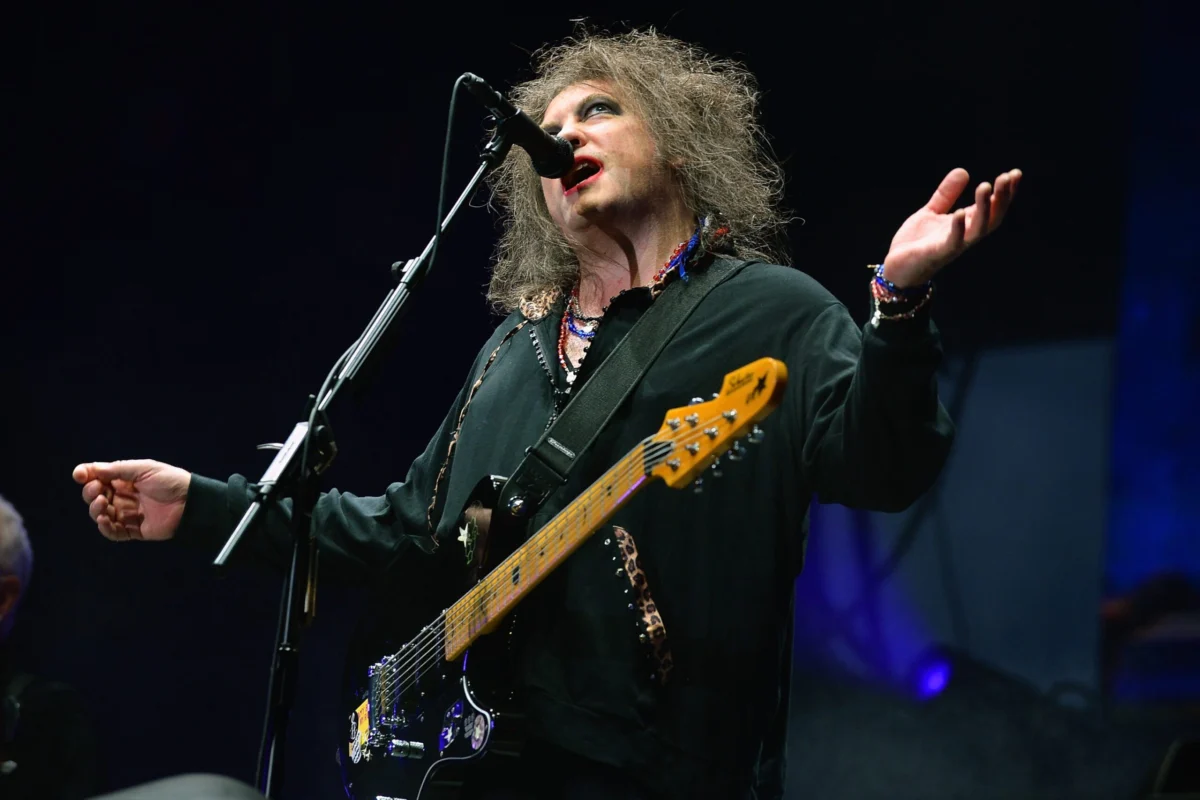
The hallowed turf of the FIFA World Cup final, traditionally a stage for athletic brilliance and national pride, is set to witness an unprecedented spectacle this year: its very first halftime show. This groundbreaking decision, aimed at transforming the championship match into a global entertainment event, has ignited a firestorm of controversy, drawing sharp condemnation from an unlikely quarter – Robert Smith, the enigmatic frontman of the iconic post-punk band The Cure. In a visceral outburst that reverberated across social media, Smith did not mince words, expressing his profound dismay at this commercialization of a sporting pinnacle.
Smith’s initial salvo, posted on The Cure’s official Instagram account, was a raw, unadulterated expression of his displeasure: “AAAAAAAAAAAAAAAAAAGH… #Breadandcircuses #MUGWANK #pleasejustfuckoff.” The hashtags themselves, a potent cocktail of cynicism and exasperation, spoke volumes about his disdain for what he perceived as a cynical ploy to pander to the masses with superficial entertainment, diverting from the core essence of the sport. The term “bread and circuses,” a historical reference to the Roman emperors’ tactic of appeasing the populace with food and entertainment to distract them from political issues, perfectly encapsulated Smith’s critique. The hashtag #MUGWANK, a particularly offensive British insult, underscored the depth of his anger, suggesting he viewed the entire endeavor as utterly contemptible and nonsensical.
The lineup for this inaugural halftime extravaganza, curated by Coldplay’s Chris Martin, reads like a who’s who of global pop superstardom. Scheduled to grace the stage are music titans Madonna, Justin Bieber, Shakira, and the K-pop phenomenon BTS. This ambitious assembly of artists, designed to attract a wider audience and maximize global viewership, is precisely what seems to have irked Smith. FIFA president Gianni Infantino, in a statement intended to herald the event, described the halftime special as a "groundbreaking spectacle" that would celebrate "football, music and our shared values, ensuring a legacy that transcends the final whistle." Infantino’s pronouncement, laden with corporate-speak and lofty ideals, likely served to further alienate Smith, who appears to view this fusion of high-stakes sport and commercial entertainment as a dilution of football’s intrinsic appeal.
However, in a subsequent post, Smith sought to clarify his vehement stance, emphasizing that his ire was not directed at the individual performers themselves, but rather at the underlying concept. “IT IS ABOUT THE #MUGWANK I D E A OF A FOOTBALL WORLD CUP FINAL HALF TIME SHOW… IF YOU NOW UNDERSTAND MY ‘AAAAAAAGH!’ A BIT BETTER, BUT STILL DON’T AGREE, PLEASE ADJUST YOUR RED CAP, YOUR ‘I 🖕 JANNY + DONNY + $$$’ TSHIRT AND… KNOCK YOURSELF OUT? ONWARDS,” he wrote, adding a link to his Instagram. This clarification revealed that Smith’s critique was aimed squarely at the perceived absurdity and commercial opportunism of integrating such a high-profile entertainment show into a sporting event of such immense significance. The mention of a "red cap" and a T-shirt emblazoned with "I 🖕 JANNY + DONNY + $$$" suggests a political undertone to his protest, perhaps alluding to perceived corruption or greed within FIFA, or the broader commercial forces at play. His continued use of the term #MUGWANK, even in his clarification, demonstrates the intensity of his feelings.
The sheer scale of the planned halftime show also presents a logistical and regulatory challenge. While sources have informed BBC News that the performance could extend to an astonishing 25 minutes, tournament regulations stipulate that players’ breaks should not exceed 15 minutes. This discrepancy raises questions about how FIFA intends to manage the timing, potentially impacting the flow of the match and the players’ rest period. The decision to dedicate such a significant portion of the halftime interval to entertainment, rather than allowing the athletes adequate recovery time, has been met with skepticism by traditionalists who believe the focus should remain squarely on the football.
Adding another layer of complexity and potential artistic merit to the halftime spectacle, Variety has exclusively reported that the show will feature performances by members of the New York Philharmonic and the Simón Bolívar Symphony Orchestra of Venezuela. This collaboration is slated to include a tribute to Venezuela, acknowledging the devastating earthquakes that have recently struck the region. This element, while seemingly intended to imbue the halftime show with a sense of gravitas and humanitarian concern, has done little to assuage the critics like Smith, who likely view it as an attempt to legitimize an already questionable premise. The juxtaposition of classical music, global pop acts, and a tribute to a natural disaster within a single halftime show highlights the ambitious, and perhaps overreaching, nature of FIFA’s vision.
The controversy surrounding the halftime show underscores a broader debate about the intersection of sports and entertainment. For decades, major sporting events have incorporated pre-game ceremonies and post-game celebrations, but the introduction of a full-fledged, multi-artist concert during the critical halftime interval marks a significant departure. Proponents argue that this will elevate the World Cup experience, attracting new fans and generating greater global engagement. They point to the success of similar halftime shows at the Super Bowl, which have become cultural touchstones. However, critics, including Robert Smith, contend that this commercialization risks trivializing the athletic achievements and the passionate dedication of fans who cherish the purity of the sport.
Smith’s outspoken opposition is not entirely surprising, given his artistic persona. The Cure, with their brooding lyrics and distinctive sound, have often served as a voice for disillusionment and social commentary. Robert Smith himself is known for his anti-establishment views and his reluctance to conform to mainstream trends. His reaction to the FIFA halftime show can be seen as a continuation of this ethos, a rejection of what he perceives as corporate homogenization and a dilution of authentic cultural experiences.
The Cure, meanwhile, is currently on tour across Europe, with a recent performance in Plovdiv, Bulgaria. Smith has also recently contributed to Olivia Rodrigo’s new album, featuring on the duet "What’s Wrong With Me," showcasing his continued relevance in the contemporary music landscape. His involvement in such diverse projects, from his own band’s artistic endeavors to collaborations with younger artists, highlights his multifaceted career. However, his passionate outburst regarding the World Cup halftime show demonstrates that his commitment to his artistic principles and his willingness to challenge the status quo remain unwavering. The debate over the FIFA World Cup final halftime show is far from over, and Robert Smith’s impassioned critique has undoubtedly added fuel to the fire, ensuring that this historic event will be remembered not only for its sporting drama but also for the cultural schism it has exposed. The question remains: will the spectacle transcend the whistle, or will it be remembered as the moment football traded its soul for a pop concert?
