
 By Rifan Muazin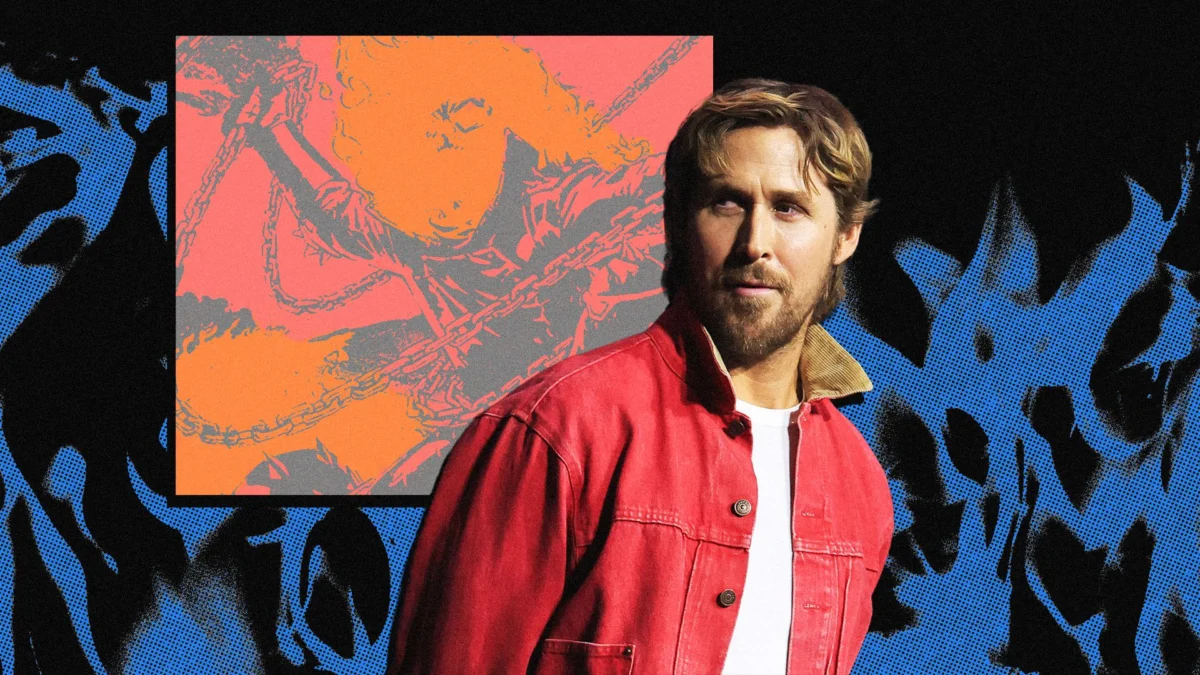
The reveal was orchestrated with the kind of theatrical flair that has become a hallmark of the Marvel brand. Gosling took to the stage to the gritty, pulsating sounds of the synth-punk band Suicide’s 1977 track “Ghost Rider,” a song famously sampled by M.I.A. for her provocative "Born Free." Clad in a razor-sharp red jacket—a sartorial choice that immediately went viral—Gosling’s presence felt like a victory lap for a casting campaign he had essentially self-funded through sheer charisma. The actor has been vocal about his desire to play the character, famously correcting interviewers who suggested he might want to play Nova or Captain Britain. His persistence paid off when Kevin Feige, appearing on stage alongside Happy Sad Confused host Josh Horowitz, finally confirmed that the "Spirit of Vengeance" had found its modern host.
This casting comes at a pivotal moment for both the actor and the studio. Gosling is currently in a career phase defined by high-concept, high-stakes blockbusters that still allow for his signature brand of cool, detached intensity. He and Marvel are doubling down on a creative partnership that extends beyond the supernatural biker flick; it was confirmed that the Ghost Rider solo film will be helmed by director Shawn Levy and written by Jonathan Tropper. This trio is already deeply embedded in the Disney/Marvel ecosystem, having recently wrapped production on Star Wars: Starfighter, which is slated for a May 2027 release. By the time Ghost Rider hits theaters in 2028, the Gosling-Levy-Tropper triumvirate will likely be one of the most powerful creative engines in the industry.
However, Gosling wasn’t the only major casting announcement to set Hall H ablaze. In a move that signals a bold new direction for one of Marvel’s most prestigious sub-franchises, David Jonsson was announced as the new Black Panther. Known for his breakout performance in the high-stakes financial drama Industry and his recent turn in the Alien franchise, Jonsson brings a gravitas and technical precision that suggests a different tonal approach for the protector of Wakanda. His standalone Black Panther film is currently scheduled for a December 2028 release, suggesting that the latter half of the decade will be anchored by these two very different, yet equally compelling, leading men.
The expansion of the MCU roster comes as the studio attempts to navigate a period of unprecedented scrutiny. The narrative of "superhero fatigue" has transitioned from a skeptical theory to a quantifiable box-office reality. Following a string of underperformances and a general sense of narrative aimlessness within the Multiverse Saga, Marvel is under immense pressure to prove it can still manufacture the "event" cinema that defined the Infinity War era. The presentation also offered a glimpse into Avengers: Doomsday, the film tasked with recalibrating the entire franchise. While the return of Robert Downey Jr. and Chris Evans—albeit in roles that remain shrouded in mystery—has provided a nostalgia-fueled boost, the industry remains cautious. The question of whether Doomsday has the "juice" to reinvigorate the global box office is the multi-billion-dollar question hanging over Kevin Feige’s head.
In this context, the casting of Ryan Gosling as Ghost Rider is more than just fan service; it is a strategic maneuver to bridge the gap between "normie" audiences and hardcore cinephiles. Gosling occupies a rare space in the Hollywood hierarchy. He is a "literally me" icon for the internet age, a romantic lead, an action star, and a serious dramatic actor who has worked with auteurs like Nicolas Winding Refn and Damien Chazelle. By bringing him into the fold as a supernatural biker from hell, Marvel is betting on an actor who can carry a film on the strength of a silent stare and a well-tailored leather jacket. For a character like Ghost Rider, whose previous cinematic outings—most notably the Nicolas Cage iterations—leaned heavily into camp and Gothic excess, Gosling’s casting suggests a pivot toward something sleeker, perhaps more grounded in the neo-noir aesthetic he perfected in Drive.
The creative team behind the project further reinforces this shift. Shawn Levy has proven himself a master of blending heartfelt character work with large-scale spectacle, as evidenced by his success with Stranger Things and his recent integration into the MCU with Deadpool & Wolverine. Jonathan Tropper, known for the visceral, character-driven action of Banshee and the emotional complexity of This Is Where I Leave You, provides a writing pedigree that hints at a Ghost Rider film with actual stakes beyond the CGI fireballs. This isn’t just about a man with a flaming skull; it’s about the burden of the curse and the high-octane world of stunt riding, a world Gosling previously explored in the melancholic The Place Beyond the Pines.
Industry analysts are already projecting that 2028 could be a "make-or-break" year for the Disney subsidiary. With Gosling’s Ghost Rider and Jonsson’s Black Panther both arriving that year, the studio is moving away from the "quantity over quality" model that defined its early Disney+ era and returning to a focused, star-driven theatrical slate. There is also the "Spider-Man factor" to consider; with a new trilogy for Tom Holland’s Peter Parker in the works, the financial floor for the MCU remains incredibly high. Yet, the brand needs more than just the web-slinger to maintain its dominance. It needs new icons.
The character of Johnny Blaze offers a unique opportunity for tonal experimentation. As a character, Ghost Rider sits at the intersection of the supernatural, the gritty urban crime genre, and the high-fantasy cosmic elements of the MCU. In the comics, Blaze is a man who made a deal with Mephisto to save his father, only to be bonded to the demon Zarathos. This Faustian bargain provides a rich psychological landscape for an actor of Gosling’s caliber. Fans are already speculating whether the film will lean into the horror elements that have been largely absent from the MCU, or if it will be a stylized "road movie" that takes Gosling across the dark underbelly of the Marvel Universe.
The reaction at Comic-Con suggests that the appetite for this specific brand of storytelling is massive. When Gosling appeared on stage, the roar from the crowd was a reminder that despite the box-office dips, the communal experience of the MCU still holds a unique power. Gosling’s playful banter with Horowitz and Feige showed a man who is not just taking a paycheck, but who is genuinely invested in the lore. He joked about his "contractual obligation" to wear cool jackets, a nod to his status as a fashion icon, while also acknowledging the weight of the character’s history.
As the dust settles on the Hall H announcements, the road ahead for Marvel looks both ambitious and perilous. The studio is leaning heavily on established star power and nostalgia, but in Ryan Gosling, they have found a lead who feels fresh, relevant, and capable of leading a new vanguard. Whether Ghost Rider can truly "save" the MCU remains to be seen, but with a 2028 release date, the engines are officially revving. The combination of Gosling’s star power, Levy’s directorial vision, and a character that fans have been dying to see properly realized suggests that the Spirit of Vengeance might just be the spark Marvel needs to reignite its fire. For now, the "excite-o-meter" is at an all-time high, and for the first time in a long time, the future of the MCU feels as hot as a hellfire-charged motorcycle.
