
 By admin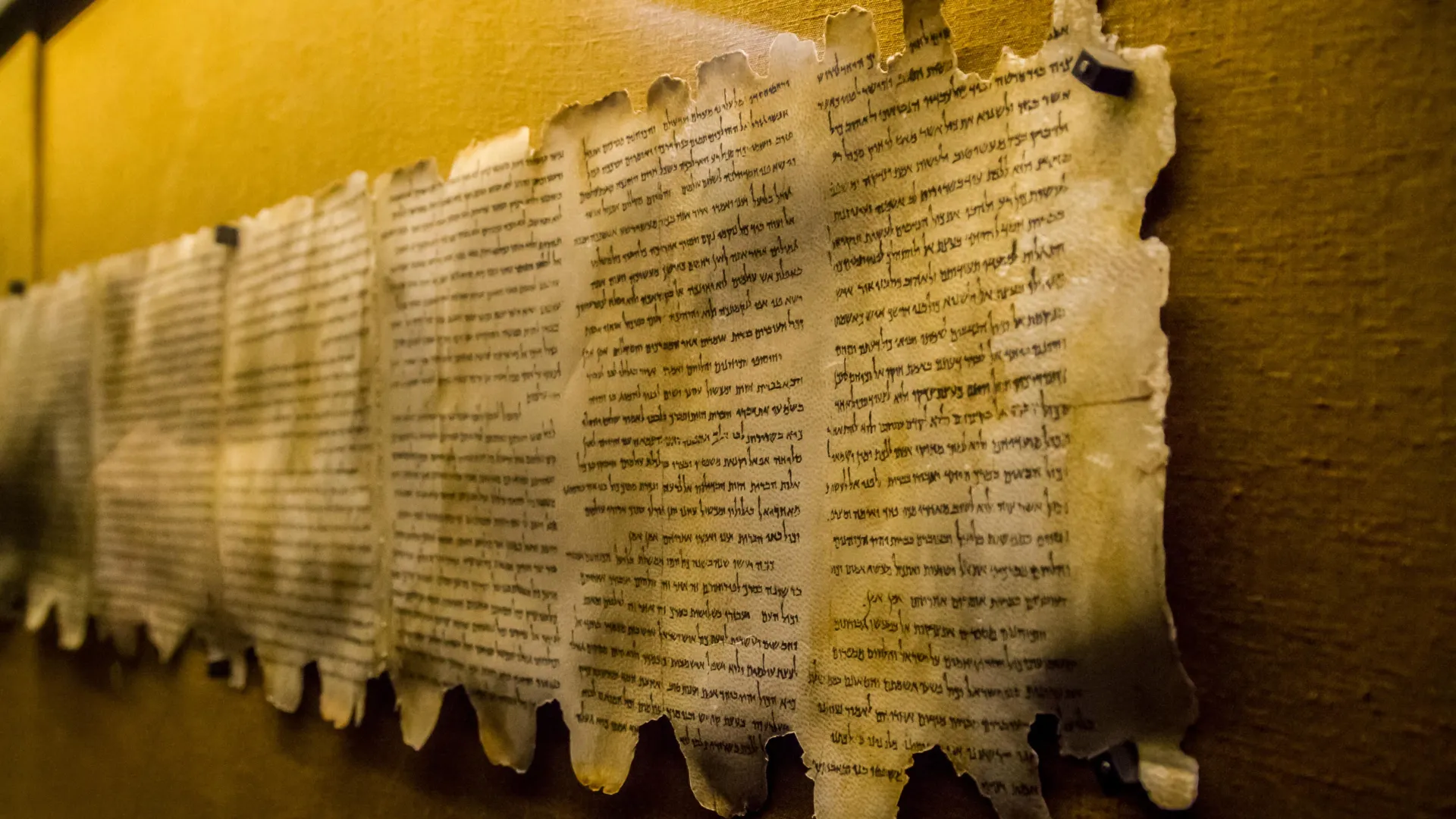
The new research, spearheaded by Professor Eshbal Ratzon of the Department of Jewish Philosophy and the Cohn Institute for the History and Philosophy of Science and Ideas at the Entin Faculty of Humanities, posits an elegant solution: both interpretations may hold a measure of truth, albeit at different points in the sect’s history. According to her meticulously reconstructed historical narrative, the Qumran community likely adhered to its distinctive calendar during its nascent stages, a period marked by profound theological disagreements over sacred time that fueled its schism from the prevailing Jerusalem religious establishment. However, as decades passed, this initially cherished system faced an insurmountable astronomical flaw and encountered shifting political currents with the Hasmonean leadership, particularly under the reign of Alexander Jannaeus, leading to its eventual practical abandonment. The findings, offering a nuanced perspective on one of the most perplexing aspects of Qumranic life, were recently published in the esteemed Tarbiz Quarterly for Jewish Studies, a leading academic journal in Jewish scholarship.
To fully appreciate the significance of Professor Ratzon’s work, it is crucial to understand the context of the Dead Sea Scrolls and the community associated with them. Discovered between 1947 and 1956 in caves near the ancient settlement of Qumran on the northwestern shore of the Dead Sea, these thousands of scroll fragments represent one of the most important archaeological finds of the 20th century. Comprising biblical manuscripts, apocryphal works, and sectarian texts unique to the Qumran community, they offer an unparalleled window into Jewish life, thought, and religious diversity during the Second Temple period (roughly 516 BCE to 70 CE). While the precise identity of the Qumran inhabitants remains a subject of debate, the prevailing scholarly consensus identifies them as a highly ascetic and sectarian group, often linked to the Essenes described by ancient historians like Josephus, Pliny the Elder, and Philo. Their texts reveal a community deeply concerned with purity, righteousness, strict adherence to divine law, and an apocalyptic worldview, believing themselves to be the "Sons of Light" preparing for a final cosmic battle.
A Calendar Built Around 52 Perfect Weeks: A Divine Blueprint
The Qumran calendar stood in stark contrast to the lunisolar calendar that dictated Jewish religious life in Jerusalem and among the wider populace during the Second Temple period. The mainstream calendar, still largely reflected in modern Jewish practice, harmonizes the cycles of the moon (for months) and the sun (for years). This required periodic adjustments, or intercalations – the addition of an extra month (a "leap month") approximately seven times every nineteen years – to prevent festivals from drifting significantly out of sync with their associated seasons. Such adjustments were typically determined by the priestly authorities in Jerusalem, who observed the ripening of barley for the Omer offering and the equinoxes.
In radical opposition, the Qumran calendar was a fixed solar system. Its year comprised precisely 364 days, a number chosen for its profound mathematical and theological properties. Critically, 364 is perfectly divisible by seven, yielding exactly 52 complete weeks every year. This mathematical elegance ensured that every religious festival and holy day consistently fell on the same day of the week, year after year. For instance, the Festival of Weeks (Shavuot) would always occur on a Sunday, as would the New Year.
For the members of the Qumran sect, this meticulously orderly structure was far more than a mere mathematical convenience; it was a profound theological statement. They regarded it as a direct reflection of a perfect, unchanging divine system, a cosmic order established by God at Creation itself. This calendar was perceived as the "true" calendar, the one observed by the angels in heaven and revealed by God to righteous figures like Enoch and Moses. It symbolized God’s immutable sovereignty and the preordained nature of sacred time, contrasting sharply with what they viewed as the flawed, human-manipulated calendar of the Jerusalem Temple.
Beyond its intrinsic theological appeal, the Qumran calendar carried immense political and religious significance. The power to determine important dates, particularly for festivals like Passover, Shavuot, and Sukkot, was a cornerstone of the authority wielded by the priestly establishment in Jerusalem. The Qumran sect vehemently rejected the notion that human leaders, whom they often regarded as corrupt and illegitimate, should possess such power. Their belief was that the sacred dates had been divinely established by God during the Creation of the world and were inscribed in the "heavenly tablets," therefore rendering any human alteration or adjustment not only unnecessary but sacrilegious. This calendar dispute was not merely an academic disagreement; it was a fundamental challenge to the legitimacy of the Jerusalem Temple priesthood and a core expression of the Qumran community’s sectarian identity and separation.
The Hidden Problem With 364 Days: A Slow, Inexorable Drift
The very feature that rendered the Qumran calendar so elegant and theologically compelling—its fixed, perfect 364-day cycle—also harbored a serious and ultimately intractable practical problem.
An astronomical year, defined as the time it takes for the Earth to complete one orbit around the sun, is approximately 365 and one-quarter days long (specifically, about 365.2425 days in a Gregorian year). The Qumran calendar, with its rigid 364 days, was therefore about one day and a quarter shorter than the actual solar year. This discrepancy, seemingly minor at first glance, was not static; it accumulated steadily over time.
If the 364-day system were followed without any form of correction or intercalation, the cumulative error would become significant within a relatively short period. After just four years, the calendar would be off by five days. Within twenty years, religious festivals would have shifted by nearly four weeks relative to the true astronomical seasons. Over several decades, the implications would have been profound and deeply disruptive: a festival intrinsically associated with the vibrancy of spring, such as the Festival of First Fruits (Shavuot), could eventually fall in the barrenness of winter or even the harvest season of autumn.
This seasonal drift would have been particularly troublesome for a community whose religious festivals were not merely abstract dates but were intimately connected with agriculture, harvests, first fruits, and the natural seasonal cycle. For example, the Festival of Unleavened Bread (Passover) and the Omer offering were tied to the barley harvest, Shavuot to the wheat harvest, and Sukkot to the ingathering of autumn fruits. A calendar that caused these festivals to drift away from their natural seasonal anchors would undermine their very meaning and practicality, creating a profound disconnect between religious observance and the agricultural realities of life.
Professor Ratzon draws a vivid analogy: the problem can be compared with a clock that consistently loses one minute every day. The error is barely noticeable initially, perhaps even dismissed as negligible. However, after enough time passes, the clock no longer reflects the actual time. It becomes progressively inaccurate and eventually useless as a reliable timekeeping device. Professor Ratzon’s study suggests that something similar, though on a grander scale, likely happened with the Qumran calendar. While conceptually elegant and mathematically orderly, its inherent flaw meant it gradually drifted farther and farther away from the natural seasonal cycle it was designed to organize and reflect, creating an escalating crisis of practicality and theological coherence.
Was the Calendar Ever Really Used? Previous Debates and Ratzon’s Novel Approach
The puzzle of the Qumran calendar’s inherent astronomical inaccuracy has long been a focal point of Dead Sea Scrolls scholarship, prompting various explanations over the years. Some scholars, seeking to reconcile the calendar’s existence with its practical flaw, proposed that the Qumran community must have periodically inserted additional days or even weeks to realign it with the seasons. This process, known as intercalation, would have been necessary to prevent the drastic seasonal drift. However, the Qumran texts themselves contain no explicit instructions or discussions of such intercalary practices, a significant silence given their detailed calendrical writings. Furthermore, the very theological premise of the 364-day calendar—its divine perfection and immutability—would seem to preclude human intervention through intercalation.
Another prominent school of thought argued that the 364-day system was never intended for everyday, practical use by the Qumran community. Instead, it functioned purely as an idealized religious framework, a theoretical construct representing a perfect divine order that existed in heaven or would be restored in the messianic age, but not for mundane earthly timekeeping. This view explained the lack of intercalation instructions and the calendar’s astronomical inaccuracy, but it struggled to account for the sheer volume and detail of calendrical texts found at Qumran, which often discussed practical applications and priestly rosters.
Professor Ratzon, however, argues that the Dead Sea Scrolls do not clearly support either of these previous explanations in isolation. She finds insufficient evidence for a system of intercalation within the texts, while the idea of a purely theoretical calendar contradicts the intense practical emphasis seen in other Qumran writings. Instead, she points to compelling evidence suggesting that the calendar was indeed deeply important to the sect’s religious identity and formed a major, non-negotiable part of its disagreement with the religious authorities in Jerusalem during its formative period.
The sheer volume of calendrical and astronomical texts among the Dead Sea Scrolls is striking. Nearly twenty scrolls discovered at Qumran explicitly address calendars and astronomy, an unusually large number that unequivocally indicates how significant these subjects were to the community. These texts include detailed lists of priestly courses (Mišmarot), astronomical observations, and theological justifications for their calendar. Works like the Astronomical Book of Enoch (1 Enoch) and the Book of Luminaries describe a fixed solar calendar of 364 days, attributing its revelation to the patriarch Enoch and emphasizing its divine origin.
Perhaps the most potent textual evidence comes from the Book of Jubilees, one of the most important works preserved in the Qumran library and a canonical text for the community. The Book of Jubilees not only describes the 364-day calendar in detail but also strongly criticizes the prevailing lunar calendar, condemning those who "observe the moon" and "corrupt the seasons and the years." It presents the 364-day system as the original, uncorrupted calendar, given by God to Moses on Mount Sinai and observed by the righteous patriarchs from the time of Creation. Such strong condemnations and assertions of divine origin underscore the calendar’s central role in the Qumran sect’s self-definition and its polemic against the Jerusalem establishment.
A Calendar at the Center of a Religious Conflict and its Evolution
Drawing on this wealth of evidence, Professor Ratzon proposes a nuanced and compelling historical scenario that integrates the seemingly contradictory aspects of the Qumran calendar.
She argues that the Qumran sect actively followed and utilized the 364-day calendar during its formative period in the second century BCE. This was a time of intense sectarian ferment in Judea, following the Maccabean Revolt and the rise of the Hasmonean dynasty. The Qumran community, often identified with the Essenes, emerged from profound disillusionment with the Hasmonean rulers who, despite their initial heroism, eventually combined the high priesthood with kingship, leading to perceived corruption and a departure from divine law. The dispute over how sacred time should be measured – the Qumranites’ adherence to a divinely ordained solar calendar versus the Jerusalem Temple’s human-adjusted lunisolar system – would have been a potent symbol of their broader conflict with the religious leaders in Jerusalem. This calendrical divergence would have intensified the sect’s isolation, marking them as distinct and righteous in their own eyes, committed to God’s true order. During this early phase, the astronomical drift, though present, might have been considered tolerable or perhaps not yet fully recognized as a fundamental flaw, especially if the community was relatively small and isolated.
However, as the decades passed and the Qumran community continued its separate existence, the growing mismatch between their fixed calendar and the actual seasons would have become increasingly difficult, if not impossible, to ignore. The practical implications for agricultural festivals, as well as the theological dissonance of celebrating spring festivals in winter, would have created immense pressure.
Crucially, political circumstances also underwent significant shifts. Relations between the Qumran sect and the ruling Hasmonean dynasty were not uniformly hostile throughout their existence. A notable change occurred during the reign of Alexander Jannaeus (103-76 BCE). Jannaeus, a controversial and often brutal Hasmonean king and high priest, was known for his fierce conflicts with the Pharisees, who represented a popular movement advocating for strict observance of oral law and democratic access to religious learning. In his opposition to the Pharisaic leadership, Jannaeus often found common ground with the Sadducees, and, significantly for Qumran, he also supported certain halakha (Jewish law) that were more aligned with the interpretations of the Qumran sect (and likely the Sadducees) than with the Pharisees. This period, therefore, saw a temporary improvement in political relations or at least a reduction in overt antagonism between the Hasmonean rulers and certain non-Pharisaic groups, potentially including Qumran.
According to Professor Ratzon’s study, this changing political environment may have provided a critical window of opportunity, making it easier for the Qumran sect to re-evaluate and eventually abandon its previously rigid calendrical position. The pressure from the seasonal drift, combined with a less hostile political climate, could have allowed for a pragmatic shift. Rather than continuing to adhere to a calendar that was demonstrably out of sync with the natural world and which constantly put them at odds with the wider Jewish community, the sect may have opted to adopt the more practical lunisolar calendar used at the Temple for their day-to-day observances. This would have been a significant concession, but perhaps a necessary one for the community’s long-term survival and integration, or at least a reduction of its extreme isolation.
Importantly, the sect’s original 364-day calendar did not necessarily disappear entirely from its religious thinking or texts. Instead, Professor Ratzon posits, it likely transitioned from a practical tool to a powerful religious ideal and a symbol of identity. It would have survived as the "true" calendar believed to have been valid during the Creation of the world and, significantly, destined to return in the eschatological End of Days, when God’s perfect order would be fully restored. This dualistic approach—a practical calendar for the present fallen world and an idealized, perfect calendar for the past and future—would have allowed the community to maintain its core theological beliefs while adapting to historical and astronomical realities. This concept aligns well with the Qumran community’s strong apocalyptic tendencies, where the present age was seen as corrupt, awaiting a divine intervention that would usher in a new era of perfect righteousness and order.
A Possible Solution to a Dead Sea Scrolls Mystery: A Nuanced Understanding
This innovative interpretation offered by Professor Ratzon provides a compelling explanation for what has long been considered a fundamental contradiction in Dead Sea Scrolls scholarship: why the 364-day calendar occupies such a prominent and detailed place in the Qumran writings, yet appears to have vanished from practical historical use, leaving no archaeological or external historical traces of its long-term application. Her model resolves this by proposing a dynamic evolution of the calendar’s role within the community.
In her concluding remarks, Professor Ratzon eloquently summarizes the profound implications of her findings: "The Qumran calendar has long been regarded as one of the Qumran sect’s defining features, but also as one of the most baffling mysteries of the Dead Sea Scrolls. This study proposes an alternative for the seeming contradiction between a functional calendar and a theoretical one. It is quite possible that the calendar was in fact used for a certain period of time, but then, losing its practical role due to both inherent problems and political changes, became a religious ideal and a symbol of identity. This would explain both its centrality in the Qumran scrolls and its gradual disappearance from historical reality."
This research not only offers a plausible solution to a longstanding enigma but also enriches our understanding of the Qumran community itself. It portrays a group that, while deeply committed to its unique theological principles and separated from mainstream Judaism, was not entirely impervious to practical realities and shifting historical circumstances. Their ability to adapt—to transform a functional calendar into an eschatological ideal—speaks to a nuanced blend of ideological rigidity and pragmatic flexibility, offering a more complex and human portrait of this influential ancient Jewish sect. As scholarship on the Dead Sea Scrolls continues to evolve, Professor Ratzon’s study stands as a testament to the power of interdisciplinary research in unlocking the secrets of the past, providing a clearer lens through which to view one of antiquity’s most fascinating religious movements.
