
 By admin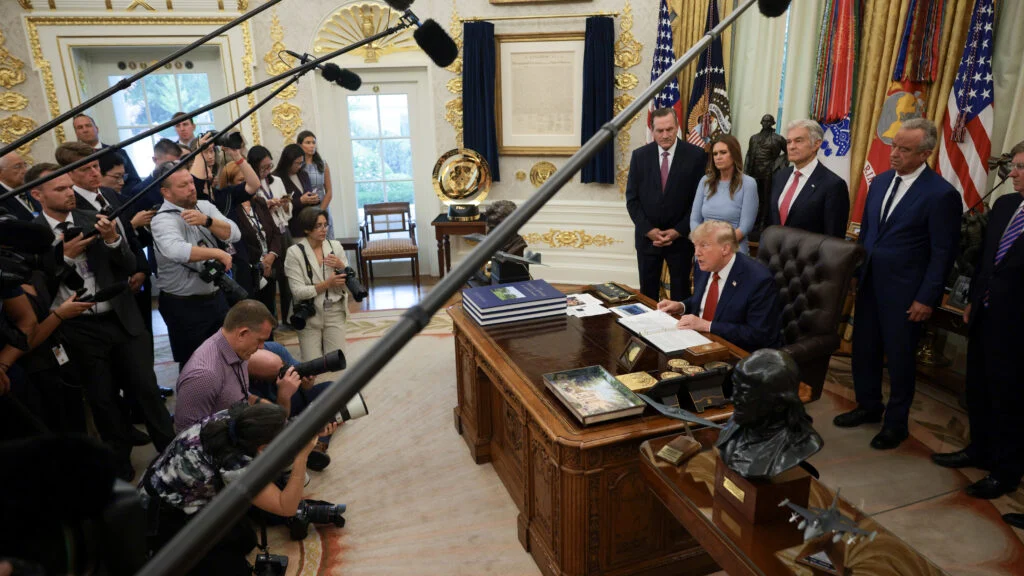
President Trump made an announcement Friday to tout one of his initiatives to lower drug prices, signaling a significant shift in how the federal government and states might collaborate to tackle the skyrocketing costs of prescription medications, yet the presentation left many questions unanswered regarding the technical execution and long-term viability of the plan. Standing in the White House, the President emphasized a new era of "fairness and transparency" in pharmaceutical billing, specifically targeting the Medicaid program, which serves millions of low-income Americans and represents a massive portion of both state and federal budgets. The centerpiece of this announcement was the GENEROUS model—an acronym for "Generating Encouragement for Necessary and Rewarding Outcomes Under State-based Medicaid programs"—designed to provide states with greater flexibility and leverage when negotiating prices with drug manufacturers.
According to the President’s initial remarks, all 50 states, Washington, D.C., and Puerto Rico will participate in the GENEROUS model, a claim that suggested a level of national consensus rarely seen in modern healthcare policy. Trump framed the initiative as a fulfillment of his long-standing promise to "drain the swamp" of pharmaceutical lobbyists and bring down the "out-of-control" costs that burden American taxpayers. However, the sweeping nature of the President’s statement was quickly nuanced by subsequent data released by administrative agencies. Later on Friday, the Centers for Medicare and Medicaid Services (CMS) clarified the status of the rollout, noting that while the administration maintains a goal of universal participation, the current landscape is more fragmented. CMS reported that 40 states and Puerto Rico had officially signed agreements to participate in the landmark payment model, while the remaining states have submitted applications or are in various stages of the vetting process. States that have not yet formalized their involvement have until the end of the month to sign the necessary agreements to be included in the initial implementation phase.
The GENEROUS model emerges at a critical juncture for the American healthcare system. For years, state Medicaid directors have sounded the alarm over the introduction of "blockbuster" drugs—particularly high-cost gene therapies and specialty medications for rare diseases—that can cost upwards of $2 million per single dose. Under traditional Medicaid rules, states are largely required to cover all drugs approved by the Food and Drug Administration (FDA) in exchange for receiving rebates from manufacturers. While this system ensures access, it often leaves state treasuries vulnerable to sudden, massive expenditures that can threaten other essential services like education and infrastructure. The GENEROUS model seeks to alleviate this pressure by moving away from a "volume-based" system to a "value-based" or "outcome-based" system.
Under the proposed framework, Medicaid programs would no longer be forced to pay the full price of a medication upfront if that medication fails to deliver the promised clinical results. Instead, states could enter into agreements where payment is contingent on patient recovery or specific health milestones. This shift is intended to align the interests of pharmaceutical companies with those of the patients and the public purse. If a drug works, the manufacturer is rewarded; if it fails to improve a patient’s condition, the financial risk is shared or shifted back to the company. While the concept of value-based purchasing (VBP) has been discussed in academic and policy circles for a decade, the Trump administration’s push to institutionalize it through the GENEROUS model represents the most aggressive federal attempt to date to operationalize these theories at scale.
Despite the optimism expressed by the White House, policy analysts and healthcare stakeholders have raised significant concerns about the lack of granular detail provided during the announcement. One of the primary unanswered questions involves the "best price" rule, a cornerstone of the Medicaid Drug Rebate Program. Historically, drug manufacturers have been hesitant to offer deep discounts or outcome-based rebates to individual states because federal law requires them to offer that same "best price" to all other Medicaid programs across the country. This creates a "floor" that prevents localized experimentation. While the Trump administration has suggested that the GENEROUS model includes regulatory waivers to bypass these hurdles, the specific legal mechanisms for doing so remain opaque. Without a clear path to navigate the best price requirements, critics argue that manufacturers may still be reluctant to offer the very discounts the GENEROUS model is designed to solicit.

Furthermore, the administrative burden of tracking patient outcomes in real-time presents a monumental challenge for state Medicaid agencies, many of which operate on antiquated IT systems. To prove that a drug has met a "value" threshold, states must collect and analyze complex clinical data over months or even years. This requires a level of coordination between pharmacies, hospitals, physicians, and state regulators that does not currently exist in a standardized format. Expert perspectives on the matter are divided. Some health economists praise the administration for taking a bold step toward modernization, noting that the current "pay-for-pill" model is unsustainable in an era of precision medicine. Others, however, view the announcement as a calculated political move ahead of the upcoming election cycle, designed to project action on drug prices without necessarily delivering immediate relief to consumers at the pharmacy counter.
The pharmaceutical industry’s reaction has been one of cautious observation mixed with underlying apprehension. Organizations like PhRMA (Pharmaceutical Research and Manufacturers of America) have long advocated for value-based arrangements, but they have also warned that such models should not be used as a "backdoor" to government price controls. Industry leaders argue that if the GENEROUS model becomes too restrictive or if the definition of "success" is set too high, it could stifle the very innovation that leads to life-saving cures. There is also the question of how these negotiations will impact the private insurance market. If Medicaid successfully drives down prices through this model, there is a risk that manufacturers might shift costs to private insurers and employers to maintain their profit margins, leading to higher premiums for the millions of Americans not covered by government programs.
The discrepancy between the President’s claim of 50-state participation and the 40 states reported by CMS also highlights the political friction inherent in Medicaid policy. Medicaid is a joint federal-state program, and governors—particularly those in "blue" states—have often been wary of Trump administration initiatives that they perceive as attempts to undermine the Affordable Care Act or reduce federal healthcare spending. The fact that 10 states have not yet signed on suggests that negotiations are ongoing and perhaps contentious. These holdout states may be seeking more specific guarantees regarding federal funding or expressing concerns about the potential for the model to limit patient access to certain medications if negotiations with manufacturers reach an impasse.
As the end-of-the-month deadline approaches, the pressure on state Medicaid directors is mounting. They must weigh the potential for long-term savings against the immediate costs of implementing a brand-new, unproven payment infrastructure. The GENEROUS model also raises questions about transparency. Will the details of these value-based contracts be made public? If a state negotiates a groundbreaking deal with a pharmaceutical giant, will other states be able to see the terms and demand the same? The administration has touted "transparency" as a goal, but the proprietary nature of drug pricing often leads to "black box" agreements that are shielded from public scrutiny under the guise of trade secrets.
Moreover, the timing of the announcement cannot be ignored. The Trump administration has faced consistent pressure to address the rising cost of insulin, EpiPens, and oncology drugs. While the GENEROUS model focuses on Medicaid, the administration is also pursuing other avenues, such as the "Most Favored Nation" rule, which would tie Medicare Part B drug prices to the lower prices paid in other developed nations. By launching the GENEROUS model simultaneously, the administration is attempting to demonstrate a multi-front war on high drug costs. However, the legal challenges facing these various initiatives are substantial. Previous attempts to mandate price disclosures in television advertisements were struck down by the courts, and it is likely that the GENEROUS model will face its own day in court if it is perceived as overstepping executive authority.
In the coming weeks, the healthcare industry will be looking for a formal "Rule" or a detailed "State Medicaid Director Letter" from CMS that outlines the specific requirements for participation. Until then, the GENEROUS model remains a provocative but largely undefined vision for the future of American healthcare. The 40 states and Puerto Rico that have signed on are essentially entering a pilot phase for a program that could either revolutionize the economics of medicine or become another footnote in the long history of stalled healthcare reforms. As the President continues to tout the initiative on the campaign trail, the reality on the ground will be determined by the technical experts at CMS and the state-level administrators who must turn a high-level announcement into a functional reality for the millions of Americans who depend on Medicaid for their survival. The success or failure of the GENEROUS model will ultimately be measured not by the number of states that sign an agreement by the end of the month, but by whether it actually results in lower out-of-pocket costs for patients and a more sustainable fiscal future for the states. For now, the healthcare world waits for the "unanswered questions" to be addressed with the precision that such a massive shift in policy demands.
