
 By Titik Puspa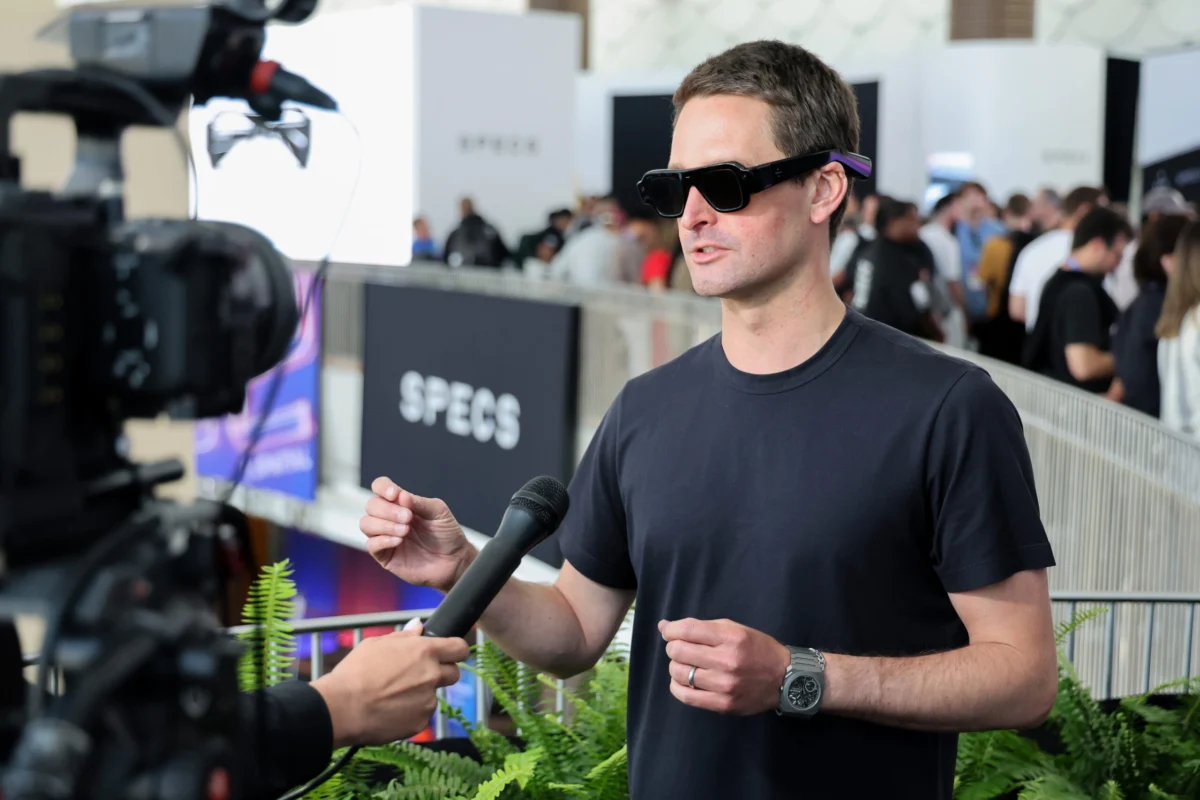
The much-anticipated launch of Snap’s ambitious AR glasses, dubbed "Specs," is now just weeks away, with a September event slated to mark the device’s public debut. However, during a recent earnings call, CEO Evan Spiegel strategically navigated investor inquiries regarding preorder demand for the high-priced wearable, a move that highlights the company’s confidence in its long-term vision while simultaneously acknowledging the significant hurdles ahead. The Specs, unveiled in June after over a decade of intensive development, carry a substantial price tag of $2,195, positioning them in a premium segment of the burgeoning augmented reality market. This price point is considerably higher than competitors like Meta’s Ray-Ban smart glasses, which start at approximately $350, but falls below the stratospheric $3,500 starting price of Apple’s Vision Pro.
Spiegel’s response to questions about preorder interest underscored a central tenet of Snap’s strategy for Specs: the importance of hands-on experience. "What we’re hearing from folks is really that they want to try Specs," he stated to investors. He elaborated that the $2,195 price tag positions it as a "high consideration purchase." Spiegel acknowledged that developers and those intimately familiar with Snap’s platform readily grasp the technical advancements embedded in this generation of Specs. However, he emphasized that for the broader public and mainstream consumers, "it’s going to be really important for folks to go hands-on." The upcoming launch event, he suggested, will serve as a crucial "starting point for that consumer-oriented journey." This approach suggests Snap is banking on the immersive and interactive nature of the Specs to overcome initial price resistance, a strategy that has proven effective in other high-tech product categories where initial adoption often hinges on demonstrating tangible value through direct user engagement.
The substantial investment in developing Specs over more than ten years speaks to Snap’s deep-seated belief in the transformative potential of augmented reality. The company’s foray into this space is not merely an opportunistic product launch but a strategic pivot aimed at establishing Snap as a key player in the next frontier of computing. Investors, however, were eager to probe the financial underpinnings of this ambitious undertaking. They pressed Spiegel on the viability of such a high-cost, singular hardware play for a company of Snap’s scale, particularly given the intense competition from established tech giants. Questions were raised about Snap’s decision to forge ahead independently rather than pursue strategic partnerships, a common approach in the capital-intensive hardware development landscape. Furthermore, investors sought to understand the source of Spiegel’s confidence in Snap’s ability to effectively compete with the formidable resources and market presence of Apple, Meta, and Alphabet (Google).
In addressing these critical concerns, Spiegel reiterated Snap’s conviction that the long-term opportunity to develop the "next computing platform" is "enormous." He sought to reframe the narrative around Specs, highlighting the inherent technical complexity of the product. "I think what some folks maybe don’t understand yet, especially because Specs are so new and we’re really the first mover in this category, is how difficult the product is to execute from a technical perspective," he explained. This statement implicitly draws a parallel to Snap’s early days in the social media arena. Spiegel recalled that when Snap initially entered the social space, it was a "late entrant." At that time, established platforms like Facebook, Instagram, and Twitter already dominated the landscape, compelling Snap to innovate aggressively to achieve growth. The current AR glasses venture, however, represents a distinct strategic advantage. "What’s so unique about this opportunity for us is really that we’re a first mover, and that really plays to our strengths as an innovator," Spiegel asserted. This "first mover" status, in his view, allows Snap to shape the market and define the user experience, rather than playing catch-up.
When questioned about the elusive concept of "product-market fit" for Specs, Spiegel offered a pragmatic outlook, suggesting that widespread consumer adoption is likely still several years away. He projected that significant mass-market penetration might not occur until "closer to the end of the decade." This forecast is contingent on further advancements in the technology itself. "I think things, for example, like weight and cost are going to have to come down to see you know unit volumes really meaningfully pick up," he conceded. This acknowledgment of the current limitations of the technology, particularly concerning user comfort and affordability, is a crucial part of managing investor expectations. However, Spiegel quickly pivoted to highlight a significant existing advantage: the developer ecosystem. "But we do have, I think, a real advantage here in that developers have been building on the Specs platform now for several years," he stated. This long-standing developer engagement suggests a robust pipeline of applications and experiences ready to leverage the capabilities of Specs upon wider release, a critical factor in driving user engagement and establishing long-term value.
The development of Specs represents a bold gamble for Snap, a company that has consistently prioritized innovation in the AR and camera-centric technology space. Unlike many of its peers that have focused on building out existing platforms or acquiring nascent technologies, Snap has committed substantial resources to pioneering its own hardware solutions. The company’s previous forays into hardware, such as the Spectacles camera glasses launched in 2016, met with mixed commercial success but provided invaluable lessons in product development, manufacturing, and consumer engagement with wearable technology. The evolution from those initial camera-focused devices to the more sophisticated AR capabilities of the new Specs signifies a maturation of Snap’s hardware ambitions and its commitment to pushing the boundaries of what’s possible in augmented reality.
The competitive landscape for AR glasses is rapidly intensifying. Apple’s Vision Pro, with its high-end features and premium price, has set a benchmark for immersive spatial computing, albeit for a niche market. Meta, under Mark Zuckerberg’s leadership, has made significant investments in its "metaverse" vision, with its Ray-Ban Stories glasses offering a more accessible entry point into smart eyewear, primarily focused on camera and audio functionalities. Google, a pioneer in AR with its Google Glass project, continues to explore various applications for augmented reality, though a mass-market consumer product has yet to materialize. Snap’s strategy with Specs appears to be carving out its own distinct niche, focusing on augmented reality experiences that are seamlessly integrated with social interaction and creative expression, the core strengths of the Snapchat platform.
The $2,195 price tag for Specs undoubtedly positions it as a premium product, likely targeting early adopters, developers, and creators who are eager to explore the capabilities of advanced AR. This strategy of launching with a higher price point and then gradually iterating towards more affordable and accessible models is a common playbook in the technology industry. For instance, early iterations of smartphones and tablets were significantly more expensive than their current counterparts. Snap’s success with Specs will likely depend on its ability to demonstrate compelling use cases that justify the investment for this initial cohort of users, thereby building momentum and fostering a vibrant developer community that can, in turn, drive demand for future, more mass-market versions.
The emphasis on developers is particularly crucial. A robust developer ecosystem can transform a hardware device from a mere gadget into a platform. By providing tools and resources for developers to create AR experiences for Specs, Snap can foster innovation and ensure a diverse range of applications that cater to various interests and needs. This not only enhances the value proposition for consumers but also creates a network effect, where the more valuable the platform becomes for users, the more attractive it is for developers, and vice versa. This cyclical growth is essential for long-term success, especially for a product aiming to define a new category.
Spiegel’s acknowledgment that features like weight and cost need to decrease for "meaningful" unit volume increases is a candid admission of the current limitations. However, it also signals a clear roadmap for future product iterations. The focus on weight reduction is critical for the comfort and wearability of AR glasses, a key factor for extended use. Cost reduction is paramount for achieving mass-market adoption, making the technology accessible to a broader consumer base. Snap’s history of iterative hardware development, as seen with its earlier Spectacles, suggests a commitment to refining its AR hardware over time.
Ultimately, Snap’s strategy with Specs is a long-term play. It’s a bet on the future of computing and the potential for augmented reality to become an integral part of our daily lives. While the immediate preorder demand remains somewhat of an enigma, Spiegel’s unwavering focus on the potential of AR, the technical innovation behind Specs, and the importance of user experience suggests a company that is willing to invest heavily in shaping the future. The upcoming launch event will be a pivotal moment, offering the first tangible glimpse of how Snap plans to bring its AR vision to life and convince consumers that the future of computing is, quite literally, in their hands – or perhaps, on their faces. The success of Specs will not only determine Snap’s trajectory in the AR space but could also signal a significant shift in how we interact with technology and the digital world.
