
 By admin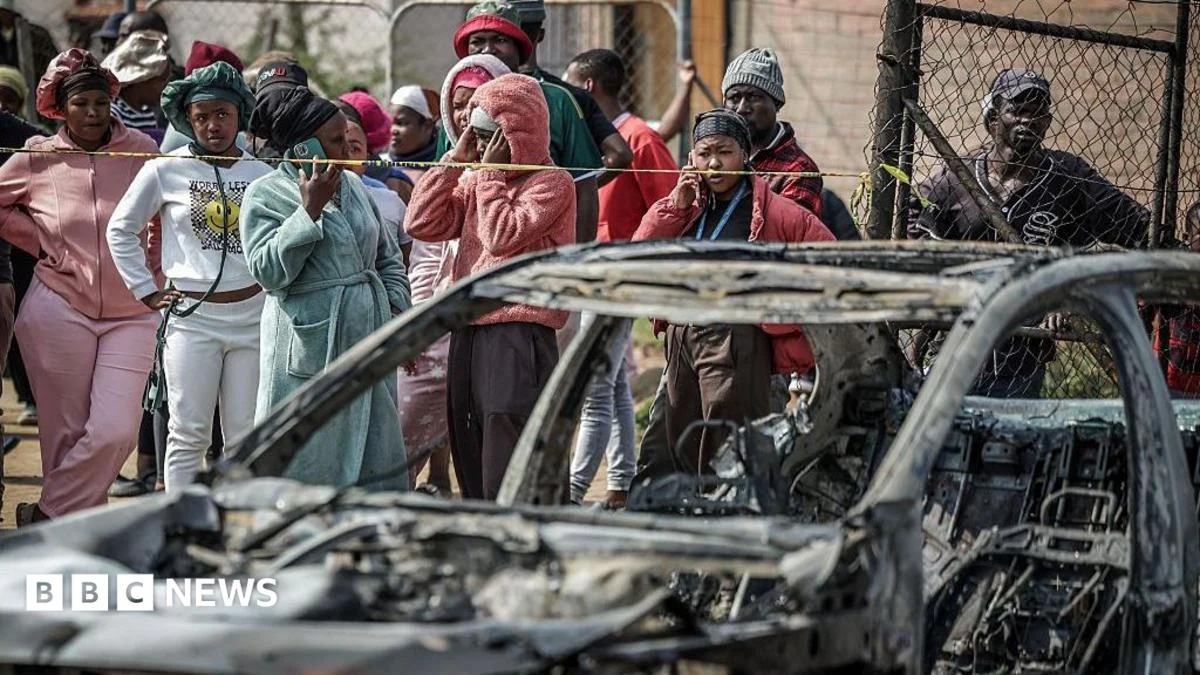
South Africa is once again grappling with the grim reality of escalating gun violence, as two horrific mass shootings, occurring mere hours apart, have claimed the lives of 27 individuals. The latest tragedies, one near Johannesburg and another on the outskirts of Cape Town, have sent shockwaves across a nation already burdened by one of the highest murder rates globally and a persistent struggle to contain rampant gang-related gun violence. These incidents underscore the persistent challenges faced by law enforcement and government in ensuring the safety and security of its citizens, adding to a disturbing pattern of mass casualty events that have plagued the country in recent months.
The first of these brutal attacks unfolded on Saturday evening in a tavern situated in the Orange Farm township, a peri-urban area south of Johannesburg. According to initial reports, a group of eight heavily armed gunmen descended upon the establishment, unleashing a hail of bullets upon unsuspecting patrons. The assailants reportedly began their assault outside the bar before storming inside, perpetuating the carnage. The perpetrators then fled the scene, leaving behind a devastating tableau of death and destruction. In the immediate aftermath, 17 people were confirmed dead, with an additional 15 individuals sustaining injuries. Subsequent details revealed that the deceased comprised thirteen men and four women, highlighting the indiscriminate nature of the violence.
Deputy provincial police commissioner Maj Gen Fred Kekana, speaking at the scene of the Johannesburg shooting, indicated that the motive behind this horrific act remained under investigation. However, he alluded to a potential retaliatory motive, suggesting the attack could be linked to an incident that occurred last month in which one person was killed and another wounded. This tentative link, reported by the AFP news agency, points towards a cycle of violence and revenge that frequently fuels criminal activity in the region. Maj Gen Kekana also conveyed a sense of urgency and determination from the police, stating that they possessed clear images and, in some instances, identified the suspects involved in the tavern massacre, vowing to bring them to justice. The attackers also reportedly set fire to two vehicles before making their escape, adding another layer of criminality to the already heinous act.
The nation had barely begun to absorb the horror of the Johannesburg shooting when a second, equally devastating incident occurred in the early hours of Sunday morning. This time, the tragedy struck in Khayelitsha, a densely populated township on the outskirts of Cape Town. Here, a group of assailants opened fire on individuals gathered outside an entertainment venue, resulting in the deaths of ten people. The violence was swift and brutal, with five victims succumbing to their injuries at the scene and another five tragically passing away later in hospital. In addition to the fatalities, 11 others were wounded in the attack, bringing the total number of casualties from both incidents to a staggering 27 dead and 26 injured. As of Sunday morning, no arrests had been made in connection with either shooting, a stark reminder of the challenges faced by law enforcement in apprehending perpetrators in such chaotic and violent environments.
The recurrence of such mass shootings in such close proximity to one another is particularly alarming and raises serious questions about the effectiveness of current crime prevention strategies. This latest wave of violence comes just days after another brutal attack in the city of Durban, where 11 people were killed when gunmen stormed a house in the KwaMakhutha township. This previous incident, reported on April 12th, involved assailants who reportedly broke into a residential property and opened fire on the occupants, further exacerbating the sense of insecurity and fear gripping the nation. The geographical spread of these attacks – from the economic heartland around Johannesburg to the popular tourist destination of Cape Town, and previously to the coastal city of Durban – indicates that the problem of gun violence is deeply entrenched and pervasive across South Africa.
South Africa has consistently ranked among countries with the highest homicide rates globally. According to various reports, including those from the World Health Organization and the Institute for Security Studies, the country’s murder rate has been a persistent concern for decades. This is often attributed to a complex interplay of factors, including high levels of inequality, poverty, unemployment, the proliferation of illegal firearms, and the pervasive influence of organized crime and gang activity. The availability of illegal firearms is a particularly critical issue. It is estimated that millions of illegal firearms are in circulation in South Africa, many of which are believed to have originated from state armouries or were smuggled across borders. This ease of access to weapons facilitates violent crime, making it easier for individuals and groups to carry out deadly attacks.
The socio-economic context of South Africa cannot be ignored when analyzing the root causes of such violence. Decades of apartheid-era policies have left a legacy of deep-seated inequality, with vast disparities in wealth and opportunity. While the country has made significant strides in establishing a democratic and inclusive society, the economic consequences of this historical injustice continue to manifest in high unemployment rates, particularly among young people. This can create fertile ground for criminal recruitment, as individuals, feeling disenfranchised and lacking legitimate avenues for economic advancement, may turn to gangs and criminal enterprises for a sense of belonging and financial gain. The townships, often characterized by underdevelopment and limited access to resources, can become hotspots for such activity.
Experts in criminology and sociology have long pointed to the need for a multi-faceted approach to address gun violence in South Africa. This includes not only stringent law enforcement measures but also addressing the underlying socio-economic drivers of crime. Dr. Amina Khan, a sociologist specializing in urban violence at the University of the Witwatersrand, commented, "These incidents are not isolated. They are symptomatic of deeper societal issues. While apprehending the perpetrators is crucial, we must also invest in community-based interventions, youth development programs, and efforts to reduce economic inequality. Without addressing the root causes, we will continue to see these cycles of violence repeat themselves."
The police, while facing immense pressure, have outlined strategies to combat the rising tide of violent crime. These often include increased police visibility, intelligence-led operations targeting criminal networks, and efforts to disrupt the flow of illegal firearms. However, the sheer scale of the problem and the often-sophisticated nature of criminal operations present significant challenges. The public’s trust in the police has also been a factor, with concerns sometimes raised about corruption and inefficiency within the force. Nevertheless, the commitment of individual officers on the ground, working under perilous conditions, is often acknowledged.
The impact of these mass shootings extends far beyond the immediate casualties. They create widespread fear and trauma within communities, affecting mental health, social cohesion, and economic activity. For families who have lost loved ones, the pain is immeasurable, compounded by the lack of immediate justice. The economic implications can also be significant, with potential impacts on tourism and investment, particularly in areas that are perceived as unsafe.
The South African government has, in the past, expressed its commitment to tackling violent crime. Following such incidents, there are often calls for increased police resources, stricter gun control measures, and more comprehensive social development programs. However, the implementation and sustained effectiveness of these measures remain a subject of ongoing debate and scrutiny. The political will to enact and enforce meaningful change, coupled with adequate budgetary allocations, is crucial.
As investigations into the Johannesburg and Cape Town shootings continue, the nation holds its breath, hoping for swift arrests and a glimmer of hope that these senseless acts of violence will be brought to an end. The recurring nature of these tragedies serves as a stark reminder of the urgent need for a comprehensive and sustained effort to address the complex web of factors contributing to gun violence in South Africa. The lives lost are not just statistics; they represent individuals, families, and communities forever scarred by the persistent shadow of violence. The challenge ahead for South Africa is immense, requiring a collective commitment from government, law enforcement, civil society, and citizens alike to forge a path towards a safer and more peaceful future. The international community also often watches with concern, offering support and expertise where possible, but the primary responsibility for finding solutions rests within South Africa itself. The resilience of the South African people will be tested once again as they navigate this period of profound grief and uncertainty, striving to overcome the pervasive threat of gun violence.
