
 By admin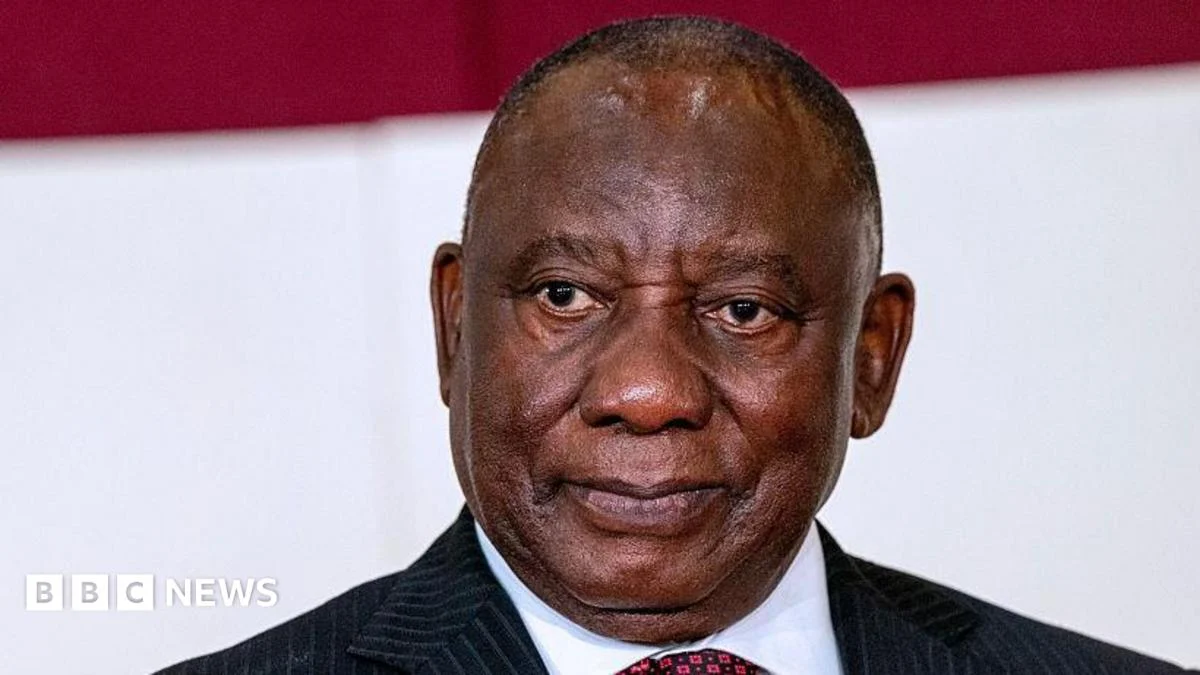
In a significant legal development that further complicates the political landscape of South Africa, a high court has granted President Cyril Ramaphosa a temporary reprieve, halting a parliamentary inquiry that was investigating whether he should be impeached over the infamous "Farmgate" scandal. This ruling, delivered by the Western Cape High Court, effectively suspends the impeachment proceedings pending the final determination of a separate legal challenge brought by the President against the findings of an independent panel that initially raised concerns about his conduct. The decision buys President Ramaphosa crucial time, a period he hopes to utilize to clear his name and navigate the increasingly complex political ramifications of the scandal.
The genesis of the "Farmgate" scandal dates back to 2020, when a significant amount of cash, reportedly exceeding $580,000 (approximately £430,000) in US dollar bills, was stolen from President Ramaphosa’s private farm, Phala Phala, located in the Limpopo province. The money, inexplicably, was allegedly stashed within a sofa. The details of this audacious robbery remained largely concealed for over two years until May 2022, when Arthur Fraser, the country’s former spy chief and a known ally of former President Jacob Zuma, brought the matter to light through a comprehensive dossier submitted to the police. Fraser’s revelations ignited a firestorm, accusing the President of failing to report the theft to the authorities and potentially contravening exchange control laws due to the foreign currency involved. President Ramaphosa, however, has consistently maintained that the stolen cash originated from the sale of buffaloes.
The initial independent panel, tasked with assessing whether President Ramaphosa had a case to answer regarding the scandal, concluded in 2022 that there were prima facie grounds for further investigation. This finding paved the way for Parliament to consider establishing an impeachment inquiry. However, at that juncture, Members of Parliament (MPs) voted against initiating such an inquiry, seemingly shelving the panel’s report. This decision, however, was later challenged. In May of the current year, the Constitutional Court delivered a landmark ruling, declaring Parliament’s decision to disregard the panel’s report as unlawful. This pivotal judgment effectively resurrected the impeachment process, compelling Parliament to reconsider the matter.
It is this subsequent revival of the impeachment proceedings, spurred by the Constitutional Court’s ruling, that President Ramaphosa sought to challenge in a separate court case scheduled to be heard in September. His legal team argued vehemently that allowing the parliamentary committee to proceed with its hearings while his own review case against the panel’s findings was pending would inflict "irreparable reputational harm" on the President. The Western Cape High Court, presided over by Judge Andre le Grange, agreed with this assessment. In a majority decision, with two out of three judges ruling in his favor, the court ordered a temporary halt to the parliamentary committee’s hearings. This injunction will remain in effect "pending the determination by this court of the applicant’s review," effectively pausing the impeachment process until the President’s challenge to the panel’s findings is adjudicated.
The timing of this ruling is particularly significant given the dramatically altered political landscape of South Africa. The 2024 general election saw a seismic shift in parliamentary power, with President Ramaphosa’s African National Congress (ANC) party losing its outright majority for the first time since the advent of democracy in 1994. The ANC now governs as part of a broad coalition, a scenario that introduces a new dynamic to the political maneuvering surrounding the impeachment inquiry. The opposition parties, sensing an opportunity, are likely to scrutinize the President’s actions with renewed vigor, while the coalition partners will be under pressure to demonstrate a commitment to good governance and accountability.
President Ramaphosa, in his legal challenge against the independent panel, has asserted that the panel "misconceived its mandate, misjudged the information placed before it and misinterpreted the four charges advanced against me." This indicates a deep-seated disagreement with the panel’s methodology and conclusions, which he aims to have thoroughly reviewed by the courts. The September hearing will therefore be a critical juncture, not only for the impeachment proceedings but also for the President’s personal and political standing.
The reactions to the Western Cape High Court’s ruling have been varied, reflecting the deep political divisions within South Africa. The Democratic Alliance (DA), the second-largest party within the governing coalition and a historically significant opposition force, acknowledged that the ruling was not entirely unexpected. However, a DA spokesperson emphasized that the decision did not preclude the parliamentary committee from continuing with "preparatory work" for its inquiry. This suggests a nuanced approach from the DA, balancing support for the President’s legal recourse with the ongoing need for parliamentary oversight.
In stark contrast, the uMkhonto weSizwe (MK) party, led by former President Jacob Zuma, has vehemently accused President Ramaphosa of employing the courts as a tactic to obstruct a legitimate process aimed at uncovering the truth behind the Phala Phala farm incident. This stance highlights the deep animosity that persists between factions loyal to Zuma and President Ramaphosa, with the "Farmgate" scandal serving as a focal point for their political battles. The MK party’s rhetoric underscores the perception among some that the President is attempting to evade accountability through legal means.
The ruling ANC, on the other hand, has welcomed the court’s decision, urging other political parties to "refrain from politically motivated distortions" as the legal process unfolds. This statement reflects the ANC’s desire to manage the narrative surrounding the scandal and to avoid further polarization while the legal avenues are being pursued. The party’s position suggests an attempt to project an image of adherence to due process and a commitment to allowing the legal system to function without undue political interference.
This protracted saga, with its roots in a brazen farm robbery and its branches extending into the highest echelons of South African politics, continues to unfold. The temporary halt to the impeachment inquiry, while offering President Ramaphosa a much-needed respite, has by no means resolved the underlying issues. The September court case will be pivotal in determining the future trajectory of the "Farmgate" scandal. The outcome of that legal challenge will have profound implications for President Ramaphosa’s presidency, the stability of the governing coalition, and the broader quest for accountability and transparency in South African public life. The nation watches with bated breath as this complex legal and political drama continues to play out, a stark reminder of the enduring challenges of governance and the pursuit of justice in a nation still grappling with its past and forging its future. The scandal, christened "Farmgate," has become a potent symbol of the ethical and legal questions that continue to cast a long shadow over the country’s leadership. The implications of this latest court ruling extend beyond the immediate pause in parliamentary proceedings, touching upon the very foundations of democratic accountability and the public’s trust in their elected officials. As the legal processes inch forward, the political ramifications are equally significant, with opposition parties poised to exploit any perceived weakness or misstep by the President. The coalition government, itself a product of complex negotiations, will also be keenly observing these developments, as any instability at the presidential level could have ripple effects throughout the administration. The "Farmgate" scandal, therefore, is not merely a legal or political issue; it is a test of South Africa’s commitment to the principles of good governance and the rule of law in a post-apartheid era. The protracted nature of these proceedings underscores the intricate interplay between the judiciary, the legislature, and the executive, a dynamic that is constantly being tested and redefined in the evolving landscape of South African democracy.
